How Do Indonesian Retailers Evaluate Pakistan Super Kernel White Rice Specifications?
Indonesian retailers should evaluate Super Kernel White Rice through grain length, broken percentage, moisture, purity, polish, packaging, and storage performance. Here is why: these specifications connect physical appearance with retail consistency, cooking performance, inventory stability, and procurement cost.
Indonesian retailers should first understand how Pakistani rice varieties differ before selecting a specification. This guide to Pakistani rice varieties exported to Indonesia explains the roles of 1121, Super Kernel, and 1509. Super Kernel occupies a strong middle position between premium presentation and controlled food cost.
Super Kernel White Rice is a milled Basmati product from Pakistan. The grain is dehusked, polished, graded, and sorted before export. Current published Pakistani specifications commonly place average grain length around 7.0–7.2 mm, moisture around 13% maximum, and broken grains around 2% maximum.
Retailers should evaluate the complete specification instead of focusing on grain length alone. A 7.2 mm grain with excessive broken kernels can deliver weaker shelf presentation. A low-moisture shipment with poor packaging can also lose commercial value during storage.
What specifications should Indonesian retailers compare first?
Retailers should compare seven core attributes: grain length, moisture, broken grains, chalky grains, purity, milling finish, and foreign matter. These measurements establish physical consistency, appearance, cooking behaviour, storage suitability, and commercial value before retailers approve bulk procurement.
Super Kernel White Rice normally receives double or silky polishing. The process removes bran layers and produces a clean white appearance. Some Pakistani suppliers also use optical colour sorting to remove discoloured kernels and foreign materials.
What does the seven-attribute comparison show?
| Attribute | Super Kernel White Rice | Retail relevance |
|---|---|---|
| Average grain length | 7.0–7.2 mm | Controls visual presentation |
| Moisture | Up to 13% | Supports storage stability |
| Broken grains | Up to 2% | Influences premium appearance |
| Chalky grains | Up to 3% | Affects visual uniformity |
| Damaged/yellow grains | Up to 1% | Supports clean retail appearance |
| Milling finish | Double/silky polished | Creates white, uniform kernels |
| Foreign matter | Low controlled level | Supports specification compliance |
S&P Global’s published Pakistan Super Kernel specification provides another benchmark. It lists maximum moisture of 13%, broken grains of 2%, chalky grains of 4%, and average head-rice length of 8 mm for its standardized assessment.
The difference between supplier specifications matters. Retailers should not assume that every Super Kernel quotation represents identical quality. The purchase contract should define the exact numerical limits before production.
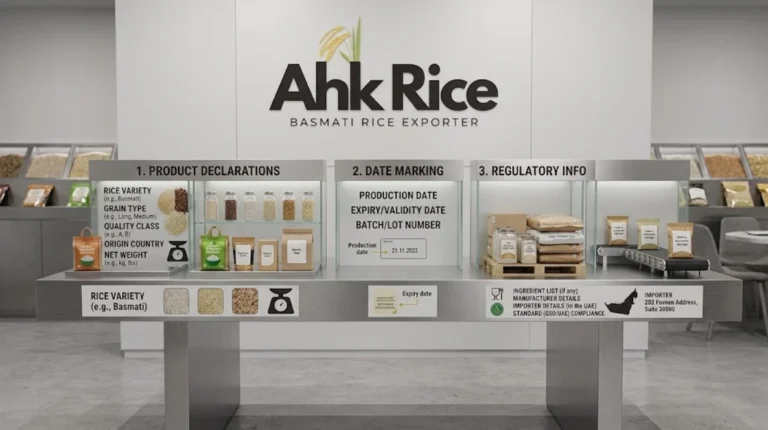
A specification sheet should also identify crop year, packaging, country of origin, inspection method, and applicable certificates. These fields create traceability between the approved sample and the commercial shipment.
With the seven core attributes established, the next comparison is how retailers should position Super Kernel against alternative Pakistani grades.
What are the available solutions for Indonesian retail buyers?
Indonesian retailers can choose Super Kernel White, 1121 Basmati, or 1509 according to positioning, price, grain presentation, and cooking requirements. Super Kernel provides the strongest balance between traditional Basmati characteristics and controlled procurement cost.
Super Kernel White suits retailers seeking recognizable Basmati aroma without paying entirely for the longest-grain segment. Its typical 7.0–7.2 mm profile creates a distinct retail appearance while maintaining traditional Basmati characteristics.
1121 Basmati targets a more premium presentation. Its average head-rice length can reach around 8 mm or more under defined export specifications. The longer grain supports premium retail packs and foodservice products where visual elongation matters.
1509 provides a value-oriented alternative. Prior Indonesian market specifications place 1509 Steam around $920–$1,050 per MT, while 1121 Steam can reach approximately $1,080–$1,280 per MT depending on specification and market conditions.
Super Kernel White currently carries an indicative FOB Karachi range of approximately $1,165–$1,205 per MT in published market information. The figure is an indicative benchmark, not a fixed Indonesian landed price.
The commercial comparison is therefore straightforward. Super Kernel generally costs more than value-focused 1509 but less than some premium 1121 specifications. Retailers should connect that price difference to pack positioning and expected consumer price.
Packaging creates another solution type. Retailers can use 1 kg, 2 kg, 5 kg, or 10 kg consumer packs for supermarket distribution. Larger 25 kg and 50 kg formats suit wholesale or foodservice channels. Pakistani exporters also offer PP, BOPP, and private-label formats.
The available solutions therefore differ by commercial objective rather than variety name alone. The next question is how those approaches perform across Indonesian retail regions.
How do Indonesian market regions compare?
Java and Bali support premium retail positioning, while Sumatra and Kalimantan can support broader wholesale and value-retail positioning. Super Kernel fits both, but packaging, price targets, and competing grades should change by channel.
Java contains Indonesia’s largest urban retail markets and major consumer centres. Premium supermarkets can place greater emphasis on grain appearance, aroma, polished finish, and packaging presentation. Super Kernel White fits this position when priced below an ultra-premium 1121 pack.
Bali has a strong hospitality and tourism economy. Retailers serving hotels, restaurants, expatriate consumers, and premium grocery channels can use Super Kernel where Basmati aroma and presentation matter. Smaller consumer packs can support premium shelf positioning.
Sumatra presents a broader combination of retail, wholesale, foodservice, and regional distribution. Retailers can use Super Kernel as a premium mainstream Basmati option. Larger packaging can also reduce packaging cost per kilogram for wholesale channels.
Kalimantan presents a similar distribution challenge. Longer supply chains make storage stability, packaging strength, and stock rotation important. Super Kernel remains suitable when the specification controls moisture and the packaging protects the rice during distribution.
| Indonesian region | Retail preference | Suitable grade | Indicative FOB comparison | Shelf-life planning |
|---|---|---|---|---|
| Java and Bali | Premium retail | Super Kernel White, 1121 | Super Kernel $1,165–$1,205/MT | 12–24 months |
| Sumatra and Kalimantan | Value-premium retail | Super Kernel, 1509 | 1509 $920–$1,050/MT | 12–18 months |
The shelf-life figures represent procurement planning ranges, not universal guarantees. One Pakistani Super Kernel specification lists a two-year shelf life, while actual storage performance depends on moisture, packaging, warehouse conditions, pests, and stock rotation.
The regional decision therefore depends on channel economics. Premium urban retail can justify tighter visual specifications. Broader distribution can prioritize price, pack efficiency, storage control, and repeatable supply.
With regional positioning established, retailers can compare the main procurement approaches directly.
How do different approaches compare?
Sample-led procurement offers the strongest balance of quality control and commercial flexibility. Specification-only buying is faster, while inspection-led procurement provides stronger shipment evidence for larger retail programs.
A specification-only approach starts with a written technical sheet. The buyer compares grain length, moisture, broken percentage, polish, packaging, and price. This method works for experienced buyers with established suppliers.
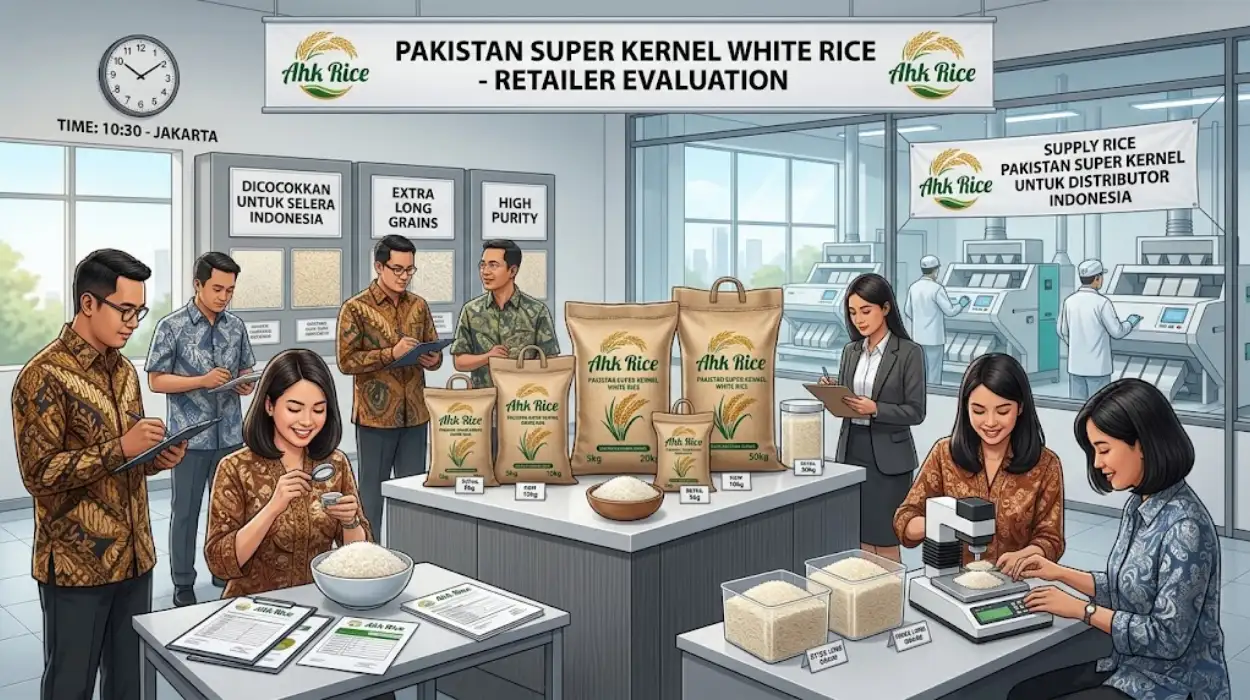
A sample-led approach adds physical evaluation. Retailers inspect raw grains, cooked appearance, aroma, texture, separation, colour, and packaging. The approved sample then becomes the reference for bulk production.
An inspection-led approach adds independent verification. A quality inspector samples the finished lot before loading. The inspection can connect laboratory results with the actual shipment rather than relying only on a supplier’s general product sheet.
A layered approach combines all three methods. The retailer defines specifications, approves a physical sample, and verifies the production lot before loading. This creates stronger protection for repeat supermarket procurement.
The strongest approach depends on order value and retail risk. A small trial order can begin with a specification and sample. A large private-label program benefits from sample approval plus pre-shipment inspection.
With procurement approaches compared, the next question is which method suits different Indonesian retail cases.
Which method works best for different retail cases?
Premium supermarket programs should use sample approval and batch inspection, while established wholesale buyers can use specification-led purchasing. New importers should combine samples, testing, and independent inspection.
Premium supermarket retail
Premium supermarkets should prioritize grain uniformity, low broken percentage, clean colour, packaging quality, and cooking performance. Super Kernel White can fit this channel when the approved sample demonstrates consistent appearance.
A 2% maximum broken specification provides a measurable commercial target. Lower agreed broken percentages can create a more uniform pack. Tighter specifications usually require stricter grading and sorting.
Regional wholesale distribution
Wholesale buyers should prioritize price per MT, packaging cost, moisture stability, and repeatability. Super Kernel provides a practical balance when a retailer wants Basmati positioning without moving entirely into the highest-priced grain segment.
Larger bags can lower packaging costs per kilogram. The buyer should still compare the landed cost rather than FOB price alone.
Private-label retail
Private-label programs need stronger specification control. The retailer should approve the product, packaging artwork, pack weight, labelling, and finished appearance before production.
AHK Rice provides processing, grading, sorting, custom packaging, and export handling from Punjab. Its rice processing and export service can therefore be assessed alongside the Super Kernel specification.
Trial procurement
Trial procurement should focus on sample performance before container commitment. Retailers should cook the sample using their normal preparation method. The evaluation should record grain separation, aroma, texture, appearance, and yield.
This approach reduces the risk of selecting a product solely from a technical sheet. Physical cooking performance remains a critical retail consideration.
The best method therefore changes with retail exposure, order size, and brand positioning. The next section weighs the practical advantages and limitations.
What are the pros and cons of Super Kernel White Rice?
Super Kernel White offers strong aroma, attractive grain appearance, controlled broken percentage, and competitive premium positioning. Its limitations include higher pricing than value grades and specification variation between suppliers.
Super Kernel’s main advantage is balance. The variety provides traditional Pakistani Basmati characteristics with a grain length around 7.0–7.2 mm. It can support premium positioning without requiring the highest-priced extra-long-grain specification.
Another advantage is processing flexibility. White, Sella, and Brown versions exist across the Super Kernel category. Retailers can therefore build different product lines around the same underlying variety.
A further advantage is packaging flexibility. Pakistani exporters offer consumer and bulk formats, including 5 kg, 10 kg, 25 kg, and 50 kg options. Private-label packaging can support Indonesian retail branding.
The main limitation is specification variation. Published supplier sheets show differences in moisture, broken grains, foreign matter, and grain-length measurements. Retailers must therefore compare numerical specifications rather than product names alone.
Another limitation is price sensitivity. Super Kernel costs more than some 1509 specifications. A retailer targeting a low consumer price may achieve stronger margins with a value-oriented grade.
The correct response is specification control. The buyer should approve the precise limits before production and connect the quotation to that specification.
What decision factors should Indonesian retailers use?
Retailers should rank specification consistency, landed cost, grain appearance, cooking performance, moisture, packaging, shelf-life planning, inspection, and supplier repeatability. Price should remain important, but it should not override product consistency.
| Decision factor | Buyer question | Priority |
|---|---|---|
| Specification | Are all seven core attributes documented? | Critical |
| Price | What is the complete landed cost per MT? | Critical |
| Sample | Does bulk rice match the approved sample? | Critical |
| Storage | Does moisture and packaging support planned inventory? | High |
| Inspection | Can the production lot receive independent verification? | High |
Specification consistency should come first. A retailer cannot compare two suppliers fairly when one uses 13% maximum moisture and another uses 14%.
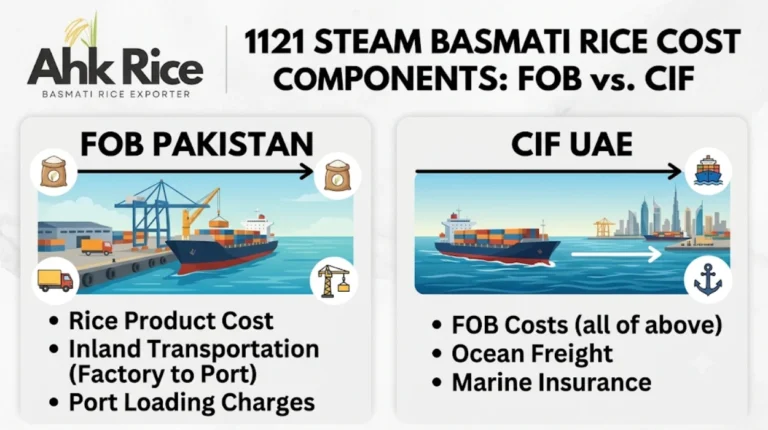
Landed cost should come second. FOB Karachi represents the origin rice price. Freight, insurance, port charges, inspection, packaging, duties, customs, and inland delivery can change the final Indonesian cost.
Sample performance should come third. The retailer should cook the sample and document the result. The same criteria should apply to future shipments.
Storage planning should come fourth. Indonesian distribution requires attention to moisture, packaging integrity, warehouse conditions, pest control, and stock rotation.
Inspection should come fifth. Independent testing becomes more valuable as order value and retail exposure increase.
This framework gives retailers a repeatable way to compare Pakistani Super Kernel suppliers without relying on generic descriptions.
What should Indonesian retailers request before placing an order?
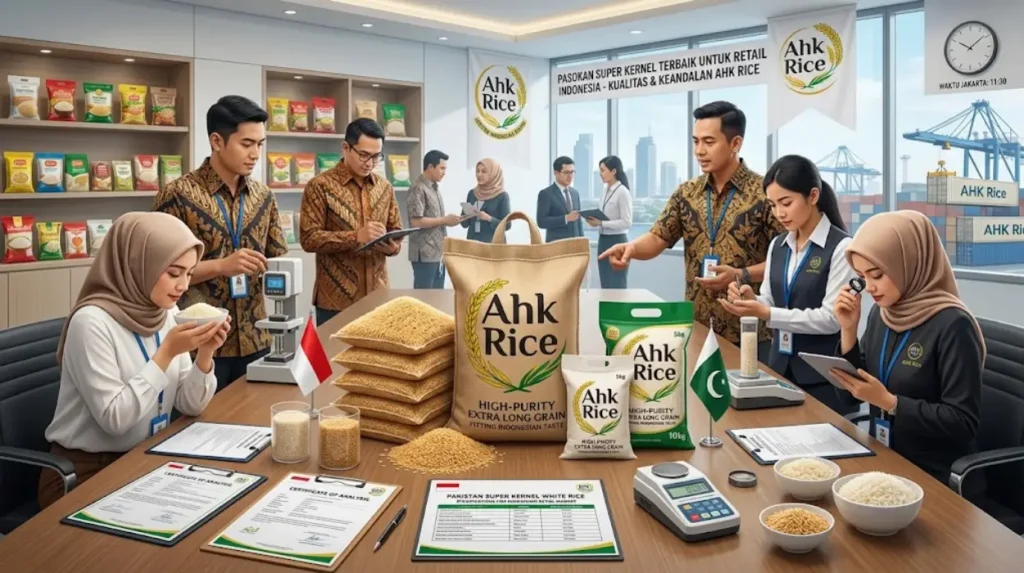
Retailers should request a technical specification, physical sample, batch testing plan, packaging details, inspection requirements, certificates, and commercial quotation before approving bulk production. These documents create measurable control from sample approval through shipment.
The technical specification should state variety, processing grade, average grain length, moisture limit, broken percentage, chalky grains, damaged grains, foreign matter, polish, crop year, and packaging.
The physical sample should represent the exact product proposed for bulk supply. The buyer should record raw appearance and cooked performance.
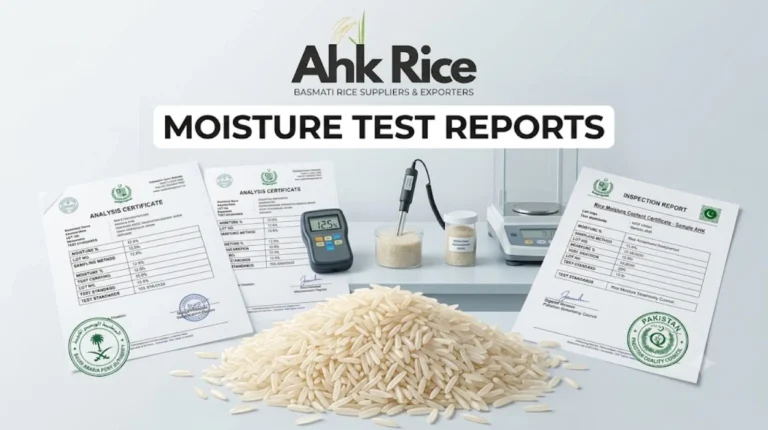
The testing plan should define sampling points and accepted methods. Moisture should receive particular attention because it affects storage stability and contractual compliance.
The packaging specification should identify bag material, weight, printing, labelling, palletization, and private-label requirements. Indonesian retail distribution can require different pack sizes from foodservice distribution.
The inspection requirement should identify whether supplier testing, buyer inspection, laboratory testing, or independent pre-shipment inspection controls final acceptance.
AHK Rice supplies Pakistani Basmati varieties including Super Kernel, 1121, and 1509. Its operation includes processing, grading, colour sorting, custom packaging, and export handling.
The result is a procurement process based on measurable attributes rather than generic claims. Indonesian retailers can then compare suppliers using the same commercial framework.
What is the final recommendation for Indonesian retailers?
Super Kernel White Rice is the strongest balanced choice for Indonesian retailers seeking traditional Basmati aroma, approximately 7.0–7.2 mm grain length, low broken percentage, and competitive premium positioning.
Java and Bali premium retailers should emphasize polished appearance, packaging, aroma, and cooking performance. Sumatra and Kalimantan buyers should emphasize landed cost, storage planning, packaging strength, and supply consistency.
Retailers should compare Super Kernel with 1121 when longer grain presentation justifies higher pricing. They should compare it with 1509 when lower procurement cost has greater commercial importance.
The best purchasing model remains sample-led and specification-controlled. The retailer should approve the physical product, document the numerical limits, test the production batch, and confirm packaging before shipment.
Super Kernel White therefore works best as a balanced retail specification. It connects traditional Pakistani Basmati characteristics with measurable commercial controls and flexible packaging options.
Frequently Asked Questions
What is Super Kernel White Rice?
Super Kernel White Rice is a Pakistani Basmati variety that has been dehusked, polished, graded, and sorted. Typical specifications show approximately 7.0–7.2 mm average grain length and up to 2% broken grains.
What moisture level should retailers request?
A common export specification uses 13% maximum moisture. Retailers should place the exact moisture limit in the purchase contract and verify the actual production lot through documented testing.
Is Super Kernel better than 1121?
Neither grade is universally better. Super Kernel suits balanced premium positioning, while 1121 suits products where extra-long grain presentation supports a higher retail price.
What is the typical Super Kernel price per MT?
A current published FOB Karachi benchmark places Super Kernel White around $1,165–$1,205 per MT. Indonesian landed cost will differ after freight, duties, port charges, inspection, packaging, and inland logistics.
How long can Super Kernel White Rice be stored?
One Pakistani product specification lists a two-year shelf life. Retailers should treat shelf life as a product-and-storage specification and verify packaging, moisture, warehouse conditions, and stock rotation.
What packaging works for Indonesian retail?
Five-kilogram and ten-kilogram packs suit many consumer retail applications. Twenty-five-kilogram and fifty-kilogram formats suit wholesale and foodservice distribution. Private-label packaging can support branded supermarket programs.
Should Indonesian retailers inspect the shipment before loading?
Yes. Pre-shipment inspection provides stronger evidence that the actual production lot matches the approved specification. It is particularly valuable for larger retail orders and private-label programs.