AHK Rice Pakistan Quality-Verified Basmati Supply for Indonesian Importers
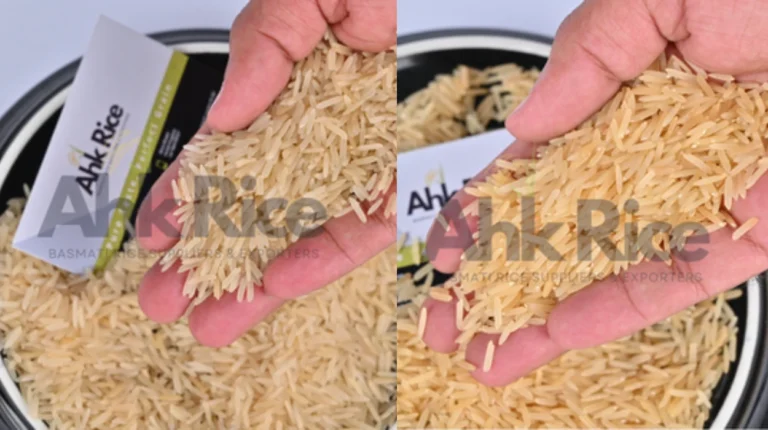
AHK Rice provides Indonesian importers with quality-verified Pakistani Basmati rice, documented specifications, and export coordination. Here is why: 1121, Super Kernel, and 1509 Basmati rice offer distinct grain profiles, processing options, and commercial applications. AHK Rice connects these grades with inspection, packaging, and shipment planning for Indonesian wholesale, retail, and foodservice buyers.
What is the best solution for Indonesian importers seeking verified Basmati rice?
A documented pre-shipment specification, approved sample, and inspection process gives Indonesian importers the strongest basis for procurement. Here is why: rice quality depends on grain length, moisture, broken percentage, processing, packaging, and shipment handling.
Indonesian buyers need more than a supplier quotation. They need a specification that the supplier can reproduce across commercial shipments. The specification should identify the Basmati variety, processing grade, grain characteristics, moisture limit, broken percentage, foreign matter limit, and packaging format.
Which Basmati grades suit Indonesian commercial buyers?
1121 Basmati suits premium retail and foodservice applications. Here is why: its long grain profile supports premium presentation and differentiated product positioning.
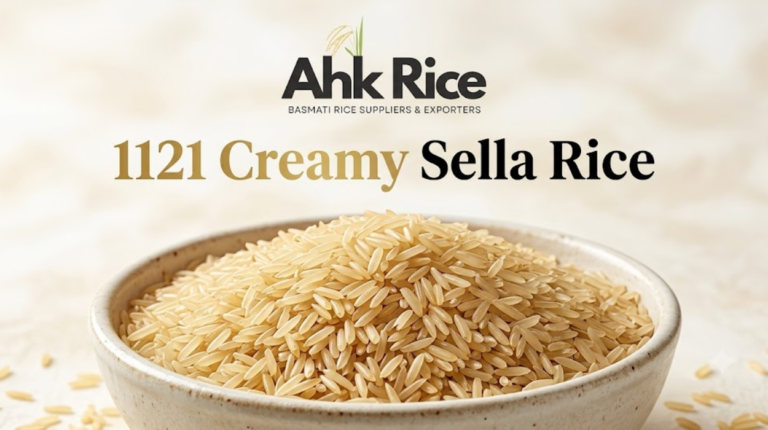
Super Kernel Basmati suits buyers seeking a traditional premium grain profile. Its appearance and cooking characteristics support wholesale and foodservice applications.
1509 Basmati suits buyers seeking a commercial balance between quality and procurement cost. Its processing options allow importers to develop specifications for mid-premium retail and foodservice distribution.
Each grade requires a separate specification. A buyer should not approve 1121, Super Kernel, and 1509 under one generic quality description.
The selected grade establishes the commercial target, while the next section explains how AHK Rice supports that target through quality verification.
Why choose AHK Rice for Pakistani Basmati supply?
AHK Rice combines Pakistani Basmati sourcing with processing, packaging, inspection, and export coordination. Here is why: Indonesian importers receive one supply process instead of managing separate quality and logistics arrangements.
AHK Rice operates from Punjab, Pakistan, and supplies Pakistani Basmati rice to international markets. Its product range includes 1121, Super Kernel, and 1509 varieties. Buyers can discuss grade selection, processing requirements, packaging, and shipment arrangements through one supplier.
What quality controls should the supplier provide?
A commercial specification should identify measurable grain and processing requirements before production begins. Here is why: measurable requirements create a reference for sample approval, inspection, and shipment acceptance.
AHK Rice can structure a buyer specification around the following attributes:
| Quality attribute | Procurement purpose |
|---|---|
| Basmati variety | Confirms the selected product identity |
| Grain length | Establishes the required appearance |
| Moisture | Supports storage and shipment planning |
| Broken percentage | Controls yield and presentation |
| Foreign matter | Supports cleanliness requirements |
| Processing grade | Defines Steam, Sella, or other selected treatment |
| Packaging format | Matches retail, wholesale, or foodservice distribution |
The buyer should approve these values before commercial production. The supplier should then use the approved specification during processing and inspection.
What processing steps support quality verification?
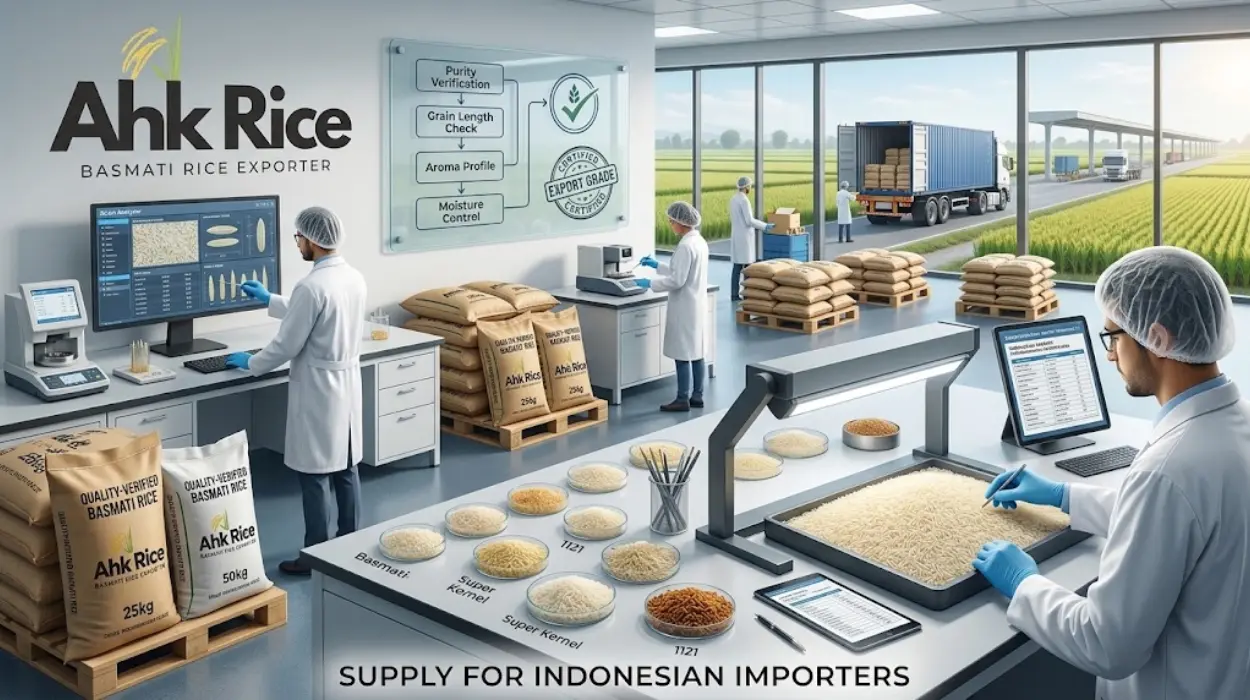
A documented processing sequence connects raw paddy quality with the finished rice specification. Here is why: each stage affects cleanliness, appearance, grain integrity, and final consistency.
AHK Rice uses the following processing activities for commercial Basmati preparation:
- Clean the paddy.
- De-husk the grain.
- Polish the rice.
- Grade the rice.
- Sort the grain.
- Remove unsuitable material.
- Process the selected grade.
- Inspect the finished product.
- Pack the approved rice.
The exact sequence depends on the selected variety and processing grade. Indonesian importers should approve the processing method before placing the commercial order.
With the quality specification established, the next decision concerns evidence and shipment performance.
What results can Indonesian importers expect from a quality-verified supply process?
Importers can expect clearer purchasing decisions, fewer specification misunderstandings, and better shipment preparation. Here is why: the supplier and buyer agree on product requirements before commercial dispatch.
A quality-verified process does not guarantee that every shipment will satisfy every buyer requirement. It creates a documented basis for checking whether the shipment matches the approved order.
How does the sample approval process work?
A commercial sample should represent the proposed grade, processing method, and packaging specification. Here is why: a buyer cannot evaluate a shipment accurately from a product name alone.
The process begins with a buyer inquiry. The importer identifies the required variety, processing grade, quantity, packaging, destination, and quality parameters. AHK Rice reviews these requirements and prepares a suitable product proposal.
The supplier then provides a sample for evaluation. The importer checks appearance, grain length, cooking performance, broken percentage, and other agreed requirements. The buyer records the approved specifications and confirms the commercial order.
What does a sample process cost?
A sample budget should cover product preparation, packaging, documentation, and courier delivery. Here is why: sample expenses depend on the required quantity and destination.
The following example illustrates a planning budget for an Indonesian importer:
| Sample cost component | Illustrative budget |
|---|---|
| Product sample preparation | US$25 |
| Sample packaging | US$15 |
| Documentation and handling | US$20 |
| International courier | US$90 |
| Estimated total | US$150 |
These are planning figures, not a confirmed AHK Rice quotation. Actual costs depend on sample weight, destination, courier service, and packaging requirements.
How long does shipment take to Indonesia?
A practical planning window is approximately 25–40 days from commercial dispatch to Indonesian port arrival. Here is why: the timeline includes cargo preparation, export clearance, ocean freight, and destination handling.
The following planning ranges help importers build procurement schedules:
| Market | Planning window |
|---|---|
| Jakarta | 25–35 days |
| Surabaya | 28–40 days |
| Other Indonesian ports | 30–45 days |
These ranges are estimates. Actual transit depends on the selected port, vessel schedule, cargo readiness, customs clearance, and destination handling.
The sample process establishes product approval, while the next section explains how pricing and commercial decisions should be managed.
What factors affect the price of Pakistani Basmati rice?
Grade, processing, packaging, order volume, and shipping terms determine the final procurement cost. Here is why: a 1121 Steam order and a 1509 order can require different production and commercial arrangements.
The selected Basmati variety affects the price. Premium grain specifications usually require tighter selection and more controlled procurement. Processing also affects the cost because Steam, Sella, and other grades involve different production requirements.
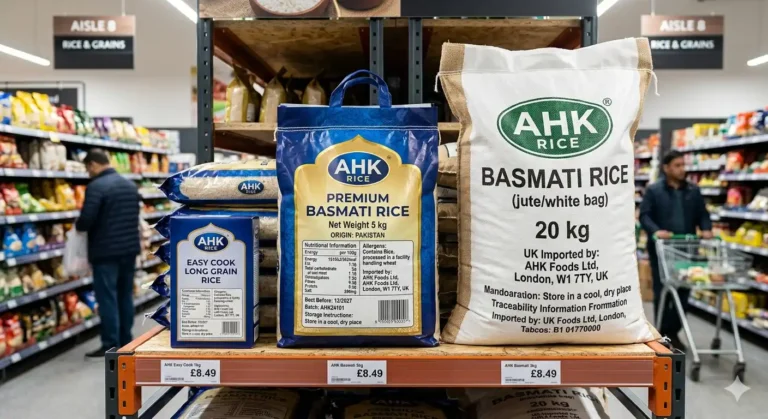
Packaging changes the final quotation. A buyer requesting branded retail bags needs artwork, packaging materials, packing arrangements, and possibly additional approval. A wholesale buyer using standard bags may require a simpler arrangement.
Order volume also affects commercial planning. A full-container order allows the supplier to plan production and loading around a defined quantity. Smaller orders may require different arrangements.
Which pricing information should buyers request?
A complete quotation should identify the product, specification, quantity, packaging, shipping term, and validity period. Here is why: a price without these details does not establish a comparable procurement offer.
Indonesian importers should request the following information:
- Product variety and processing grade.
- Grain length and quality parameters.
- Packaging material and bag weight.
- Quantity and container requirements.
- FOB or CIF shipping term.
- Estimated dispatch schedule.
- Payment and documentation requirements.
The quotation should match the approved sample. Buyers should avoid comparing prices across different grades or packaging formats.
How can Indonesian importers get started with AHK Rice?
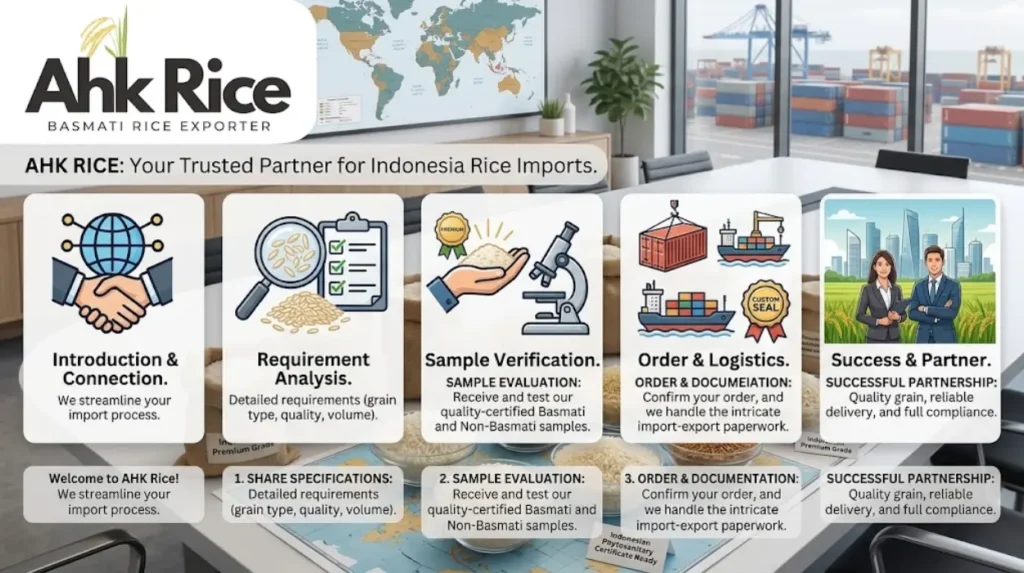
Start with a written specification, request a representative sample, and approve the commercial quotation before production. Here is why: the process gives both parties a clear reference for quality, cost, and delivery.
What information should the buyer provide?
The buyer should provide the preferred Basmati variety, processing grade, quantity, packaging size, destination port, and target quality parameters. The buyer should also identify whether the rice is intended for retail, wholesale, or foodservice distribution.
AHK Rice can then review the requirements and recommend a suitable product specification. The importer can evaluate the sample before confirming the commercial order.
What documents support the order?
The buyer should request the commercial invoice, packing list, certificate of origin, and applicable inspection or quality documents. Additional documentation depends on Indonesian import requirements and the agreed shipping arrangement.
The supplier should confirm the required documents before dispatch. The importer should also verify destination customs and food import requirements before shipment.
For a quotation based on your required Basmati grade, packaging, quantity, and Indonesian destination, contact AHK Rice through the request-a-quote page.
Frequently Asked Questions
Which Pakistani Basmati grade should Indonesian importers choose?
1121 suits premium retail and foodservice applications. Super Kernel suits traditional premium positioning. 1509 suits buyers seeking a commercial balance. The correct choice depends on the buyer’s specification, target market, and budget. AHK Rice can help match the grade to the intended application.
How does AHK Rice verify Basmati rice quality?
AHK Rice supports a documented specification and sample approval process. Buyers can define grain length, moisture, broken percentage, foreign matter, and processing requirements. The approved sample becomes the reference for commercial production. Inspection and documentation support shipment verification.
What does a Basmati rice sample cost?
Sample costs depend on product quantity, packaging, documentation, and courier delivery. A planning example totals US$150. This figure is not a confirmed quotation. AHK Rice should confirm the actual cost after reviewing the buyer’s requirements and destination.
How long does Pakistani Basmati rice take to reach Indonesia?
A planning window of 25–40 days covers many shipments to Indonesian ports. Jakarta and Surabaya may follow different schedules. Actual delivery depends on vessel availability, export clearance, ocean freight, and destination handling. Importers should confirm the schedule before placing an order.
How can Indonesian buyers request a quotation?
Indonesian importers should provide the selected variety, processing grade, quantity, packaging, destination port, and quality requirements. AHK Rice can review these details and prepare a suitable proposal. Buyers should approve the sample and quotation before commercial production. The final shipping schedule should be confirmed before dispatch.