Super Kernel Basmati Rice Cooking Results and Texture Guide
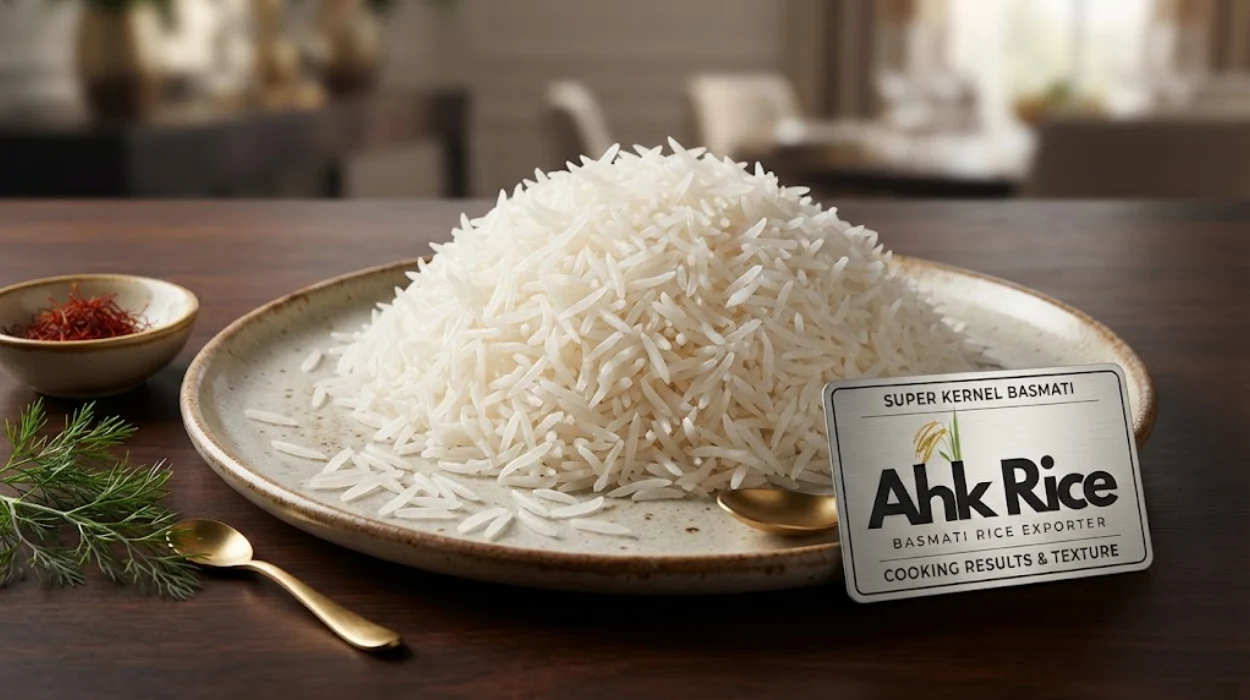
Super Kernel Basmati Rice produces long, aromatic, separate grains with a soft-to-firm texture after cooking. Here is why: its long slender kernel, starch composition, milling quality, moisture level, and cooking method directly influence grain elongation, separation, aroma, and final mouthfeel.
Super Kernel Basmati is a traditional Pakistani Basmati variety cultivated mainly in Punjab. Commercial specifications commonly place raw grain length around 7.0–7.5 mm, while cooked grain length reaches approximately 13.5–16 mm depending on the specification and cooking method.
Pakistan’s Punjab region provides the main production base for Super Kernel Basmati. Research on Pakistani Basmati varieties shows that growing location affects grain length, cooking characteristics, and other quality traits.
What Is Super Kernel Basmati Rice?
Super Kernel Basmati is a long-grain aromatic Pakistani rice variety known for 7.0–7.5 mm raw grains, strong aroma, visible elongation, and separate cooked kernels. Its cooking performance makes it suitable for biryani, pulao, rice dishes, restaurants, retail, and foodservice.
Super Kernel Basmati is also commonly called Super Basmati in the rice trade. The variety belongs to the traditional Basmati category and differs from newer extra-long varieties through its characteristic grain profile, aroma, and cooking behavior.
The raw kernel has a long, slender appearance. Properly processed grain expands lengthwise during cooking rather than becoming excessively wide. This produces the elongated appearance expected from Basmati rice.
Commercial specifications vary by mill and contract. Examples include 7.0–7.2 mm, 7.2–7.5 mm, and higher specifications above 8 mm. Buyers therefore use a certificate of analysis to verify the actual contracted grain specification.
With the variety defined, the next question is how processing and cooking create its final texture.
How Does Super Kernel Basmati Rice Produce Its Cooking Texture?
Super Kernel Basmati produces separate, elongated grains through controlled milling, moisture management, starch behavior, rinsing, water absorption, and heat application. Correct processing preserves kernel integrity, while correct cooking controls softness, separation, and final grain length.
How Is Super Kernel Basmati Processed?
Processing begins with harvested paddy rather than finished white rice. Mills remove unwanted material before converting paddy into edible kernels.
- Clean the paddy to remove stones, dust, straw, and other foreign material.
- De-husk the grain to remove the outer rice husk while protecting the kernel.
- Separate the brown rice from remaining husk and immature material.
- Polish the grain to achieve the required surface finish and appearance.
- Grade the rice according to grain size, broken percentage, and physical quality.
- Sort the kernels through optical colour sorting and mechanical separation.
- Test the finished rice for moisture, broken grains, foreign matter, and other contract specifications.
- Pack the rice according to the required retail, wholesale, or foodservice format.
Export specifications commonly include moisture around 12–13%, broken grain limits around 1–2%, and defined grain-length requirements. Exact values depend on the contracted grade.
Which Factors Control Texture?
Grain integrity controls separation. Broken kernels release more surface starch during cooking and can increase clumping.
Moisture controls storage stability and cooking consistency. Excessive moisture changes milling behavior, while controlled moisture supports stable commercial quality.
Starch behavior controls softness and firmness. Basmati rice generally produces a less sticky result than short-grain rice because the grains retain stronger individual structure after cooking.
The processing stage therefore establishes the foundation for cooking performance. The next section explains the physical components that determine the final result.
What Are the Key Cooking Components of Super Kernel Basmati Rice?
The key components are grain length, kernel integrity, moisture, starch behavior, water absorption, cooking temperature, resting time, and processing type. Each component changes grain separation, softness, aroma release, elongation, and resistance to breakage during cooking.
Grain Length
Raw grain length provides the first visual quality indicator. Super Kernel commonly measures around 7.0–7.5 mm in commercial specifications. Cooked length frequently reaches 13.5–16 mm.
Kernel Integrity
Whole kernels maintain their structure during boiling. Broken grains absorb water rapidly and lose their visual separation more easily.
Moisture
Moisture affects both milling and storage. Commercial specifications frequently set maximum moisture around 12–13%.
Water Absorption
Water enters the kernel during heating. Controlled absorption produces a soft interior while maintaining the grain’s external structure.
Cooking Temperature
Boiling temperature drives water absorption and starch gelatinization. Excessive agitation during boiling increases mechanical breakage.
Resting Time
Resting allows absorbed moisture to distribute through the kernel. A short resting period also reduces surface moisture and improves grain separation.
Processing Type
Super Kernel exists in different processing forms. White rice receives standard milling and polishing. Steam and Sella forms receive additional heat treatment that changes cooking behavior.
These components explain why two Super Kernel samples can produce different textures. The next section connects those differences to practical benefits.
What Are the Benefits of Super Kernel Basmati Rice After Cooking?
Super Kernel provides long visible grains, natural Basmati aroma, separated kernels, soft-to-firm texture, and reliable presentation across traditional rice dishes. These characteristics support household cooking, restaurant preparation, catering, retail products, and wholesale foodservice applications.
Super Kernel’s aroma is a defining quality attribute. Natural aromatic compounds become noticeable during heating and contribute to the sensory identity of cooked Basmati rice.
Grain separation supports dishes that require visible individual kernels. Biryani and pulao depend on this characteristic because the finished rice needs structural definition rather than a sticky mass.
Cooked elongation improves visual presentation. A raw kernel around 7.2 mm can produce a cooked grain above 13 mm under suitable cooking conditions. Commercial specifications list cooked lengths of approximately 13.5–16 mm.
Texture also supports different preparation styles. White Super Kernel generally delivers a soft and fluffy result, while steam or parboiled processing produces a firmer grain structure.
The cooking benefits become clearer when matched with specific food applications.
Where Is Super Kernel Basmati Rice Used?
Super Kernel is used in biryani, pulao, pilaf, household meals, restaurant kitchens, catering, hospitality, retail packs, and foodservice distribution. Its aroma, elongation, and separated texture make it suitable for dishes where cooked grain appearance directly affects presentation.
Biryani
Biryani uses Super Kernel for long visible grains and aromatic flavor. The grain needs enough firmness to remain intact during layering, steaming, and final mixing.
Pulao
Pulao benefits from separate kernels because spices, vegetables, meat, or stock distribute across individual grains. Super Kernel’s structure supports this presentation.
Restaurant Foodservice
Restaurants use Basmati rice across repeated cooking cycles. Consistent milling and grain specifications help kitchens maintain similar cooking results between batches.
Retail Cooking
Retail consumers use Super Kernel for everyday rice meals, pilaf, biryani, and side dishes. Commercial product specifications commonly identify it as suitable for these applications.
International Markets
Pakistani Super Kernel Basmati is traded across markets including the Gulf, Europe, the United Kingdom, and other regions. Export suppliers commonly position the variety for retail and foodservice channels.
Buyers comparing aromatic rice varieties also evaluate grain shape, aroma, cooking texture, and market positioning. This makes a structured comparison useful before selecting a variety.
For readers evaluating Super Kernel against another aromatic long-grain variety, the comparison between [Super Kernel and Jasmine rice for global markets](INSERT MOFU ARTICLE LINK HERE) provides the next level of context.
What Are the Common Cooking Problems With Super Kernel Basmati Rice?
Common problems include sticky grains, broken kernels, uneven softness, insufficient elongation, excessive water, and weak aroma. These problems usually result from incorrect water ratios, excessive agitation, poor grain quality, unsuitable processing, or inconsistent cooking control.
Sticky Rice
Sticky results often develop from excess surface starch and excessive water. Rinsing removes loose surface starch and supports cleaner grain separation.
Broken Kernels
Broken grains absorb water differently from whole kernels. High broken percentages therefore change the texture of the cooked batch.
Uneven Cooking
Uneven cooking occurs when water distribution, heat, soaking, or grain quality varies. Consistent grain sizing supports more uniform absorption.
Excessive Softness
Excessive water produces a softer structure. Controlled water absorption preserves the characteristic separate-grain texture.
Limited Elongation
Limited elongation can result from the rice variety, grain quality, processing, cooking method, or insufficient hydration. Super Kernel’s expected cooked length depends on the contracted specification and preparation method.
Weak Aroma
Aroma depends on variety, storage, processing, and cooking. Super Kernel is recognized for its natural Basmati fragrance, but aroma intensity varies between lots and grades.
These problems show why the variety name alone does not define cooking performance. Grain specification, processing, and preparation must be evaluated together.
Which Super Kernel Basmati Rice Grade Fits Different Cooking Results?
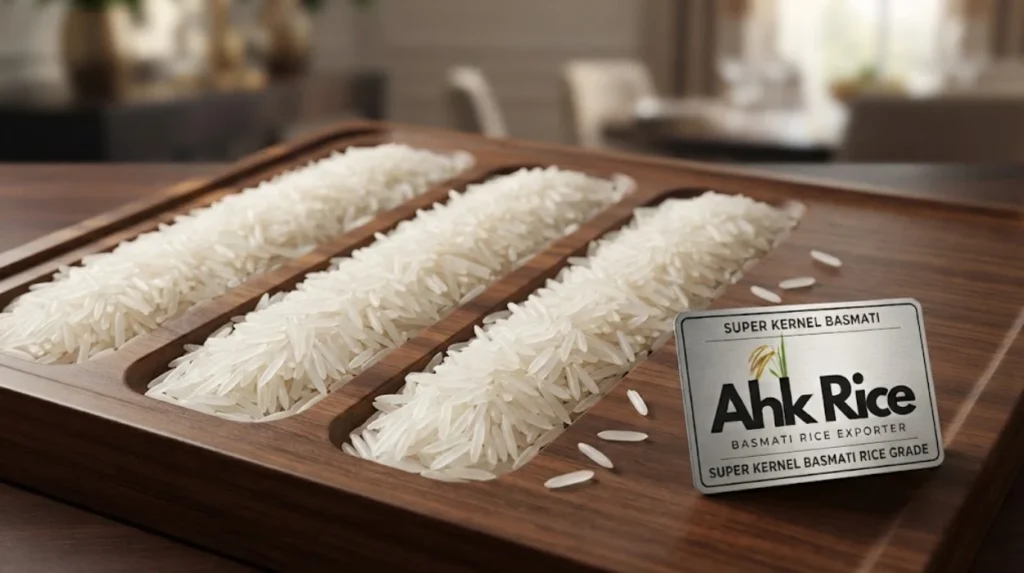
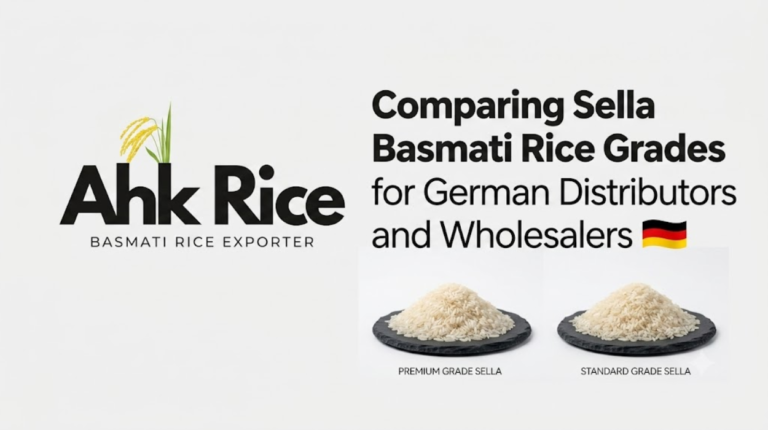
White Super Kernel provides a soft, fluffy result, while Steam and Sella forms provide firmer structures and stronger grain integrity. Grade selection therefore depends on whether the dish requires softness, separation, holding stability, or extended foodservice performance.
Super Kernel White
White Super Kernel is milled and polished to produce a clean white appearance. Its cooked texture is generally soft, fluffy, aromatic, and separate when properly prepared.
Super Kernel Steam
Steam processing applies controlled heat before final milling. The resulting grain generally develops firmer cooking characteristics and stronger resistance to breakage.
Super Kernel Sella
Sella refers to parboiled rice. Parboiling changes starch structure and improves kernel firmness. This form suits applications that require stronger grains and longer holding during foodservice preparation.
Super Kernel Brown
Brown Super Kernel retains the bran layer after dehusking. Its texture remains firmer because the bran layer changes water absorption and cooking behavior.
Grade selection therefore connects directly to the desired cooking result. Processing type, grain specification, and cooking method should be assessed as one system.
What Certifications and Quality Checks Apply to Super Kernel Basmati Rice?
Super Kernel export quality is verified through specifications, laboratory testing, inspection, food-safety systems, and destination requirements. Common commercial controls include moisture testing, broken-grain analysis, foreign-matter inspection, phytosanitary certification, and third-party inspection.
Moisture testing verifies the contracted moisture limit. Broken-grain testing verifies the percentage of damaged kernels. Colour sorting removes discoloured grains and foreign material.
Export documentation varies by destination. Common documentation includes certificates of analysis, certificates of origin, phytosanitary certificates, and inspection reports. Some exporters also operate under systems such as HACCP, ISO 9001, or BRC-based food-safety programs.
Destination-country requirements determine the final documentation set. Buyers should therefore specify the market, grade, processing type, packaging, and required testing before shipment.
Super Kernel Basmati cooking quality ultimately depends on the complete chain from cultivation and milling to preparation. Understanding that chain helps buyers and consumers interpret grain length, texture, aroma, and cooking results accurately.
Frequently Asked Questions
What does Super Kernel Basmati Rice taste like?
Super Kernel has the characteristic natural aroma associated with Pakistani Basmati. Its cooked flavor is aromatic and delicate, making it suitable for biryani, pulao, pilaf, and everyday rice dishes.
How long does Super Kernel Basmati Rice become after cooking?
Commercial specifications commonly report cooked lengths around 13.5–16 mm, although the final length depends on the raw grain specification and cooking method.
Is Super Kernel Basmati Rice sticky after cooking?
Properly processed and correctly cooked Super Kernel produces separated grains rather than a sticky mass. Rinsing and controlled water absorption help maintain grain separation.
What is the difference between Super Kernel White and Sella?
Super Kernel White is conventionally milled and generally produces a soft, fluffy texture. Sella is parboiled and produces firmer grains with stronger structural integrity.
Is Super Kernel Basmati Rice good for biryani?
Yes. Its aromatic profile, grain elongation, and separated cooked texture make Super Kernel suitable for biryani. Whole-kernel quality and controlled cooking are important for maintaining the finished grain structure.