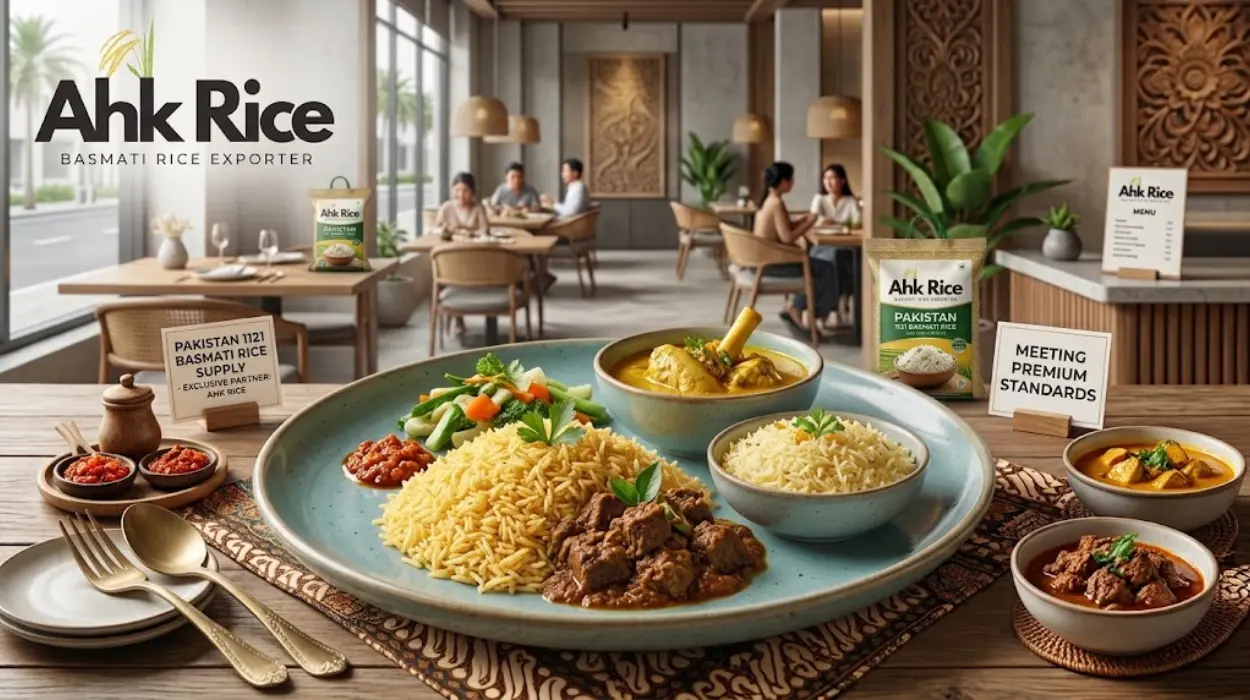
AHK Rice Pakistan 1121 Basmati Rice Supply for Indonesian Restaurants
AHK Rice Pakistan 1121 Basmati is the strongest choice for Indonesian restaurants needing extra-long grain, reliable cooking performance, and export-ready supply. Here is why: 1121 Steam suits fresh premium dishes, while 1121 Golden Sella suits bulk cooking and longer storage.
Indonesian restaurants need rice that performs consistently from shipment to kitchen. Grain breakage, inconsistent cooking, moisture exposure, and delayed replenishment can increase food cost. The right supplier must control specifications before loading and maintain those specifications through dispatch.
For background on Pakistan–Indonesia rice trade, see Pakistan rice export to Indonesia. Pakistan exported $408.3 million of rice to Indonesia in 2024, covering 714.6 million kilograms (source: World Bank WITS, 2024).
What is the best solution for Indonesian restaurant rice supply?
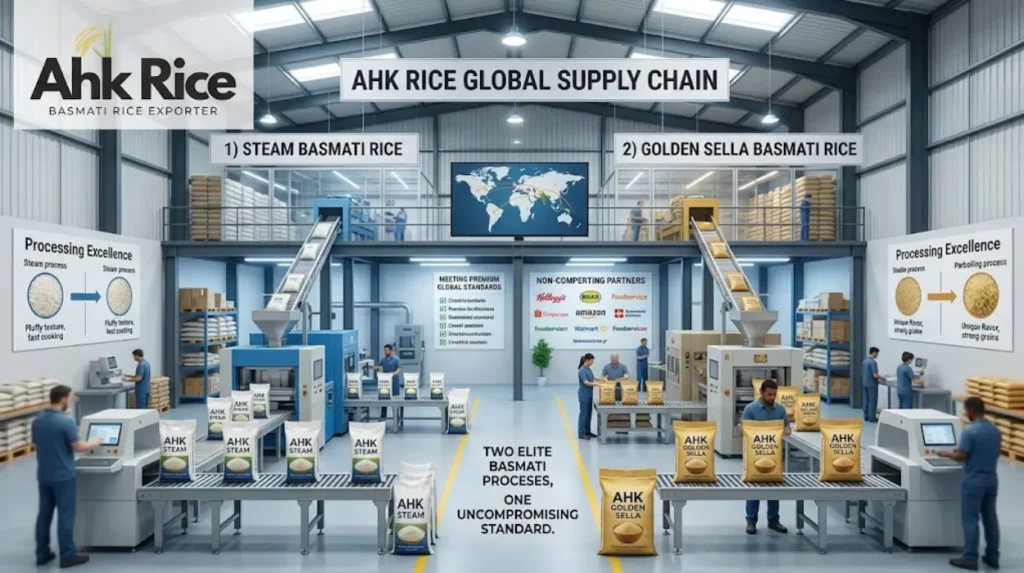
The best solution is 1121 Steam for premium fresh service and 1121 Golden Sella for bulk cooking, holding, and storage. Both provide extra-long grains, while processing determines texture, strength, aroma, and operational performance.
Which 1121 grade fits a restaurant operation?
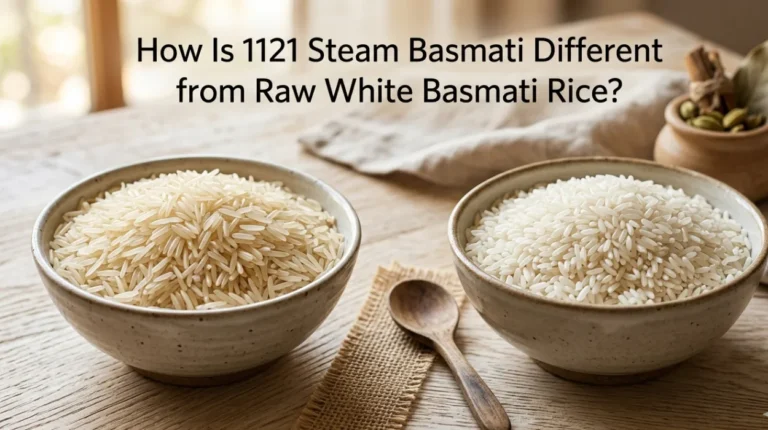
1121 Steam provides a bright appearance, strong aroma, and softer cooked texture. The grade suits restaurants preparing biryani, pilaf, rice platters, and premium made-to-order dishes.
1121 Golden Sella provides firmer grains and stronger resistance to handling. The grade suits restaurants cooking large batches before service or holding cooked rice during busy periods.
A restaurant serving small premium batches can therefore prioritize Steam. A restaurant operating multiple branches can prioritize Golden Sella for consistency and handling tolerance.
| Specification | 1121 Steam | 1121 Golden Sella |
|---|---|---|
| Processing | Steam treated | Parboiled |
| Raw grain | About 8.3 mm | About 8.2–8.4 mm |
| Texture | Soft, separate | Firm, separate |
| Aroma | High | Medium-high |
| Bulk cooking | High | Very high |
| Reheating | Moderate-high | Very high |
| Storage profile | Shorter | Longer |
AHK Rice also supplies other Basmati formats when restaurant menus require different cooking characteristics. The commercial decision should start with the kitchen requirement rather than the variety name alone.
The next step is selecting an exporter capable of matching that specification consistently.
Why choose AHK Rice for Indonesian restaurant supply?
AHK Rice combines specification control, sample approval, export documentation, custom packing, and shipment coordination into one purchasing workflow. This reduces specification uncertainty before production and gives Indonesian restaurant buyers measurable checkpoints before committing to volume.
AHK Rice Pakistan rice export service provides inquiry handling, sample dispatch, contract preparation, production scheduling, packing, and shipment coordination.
AHK Rice can provide samples before bulk commitment. The published process allows samples up to 20 kg, while the buyer covers courier and phytosanitary costs. Samples can be dispatched through DHL or the buyer’s courier account within 3–5 days.
What quality points should restaurants approve?
Restaurant buyers should approve grain length, broken percentage, moisture, colour, foreign matter, aroma, cooking texture, and packaging before signing the final specification.
AHK Rice can align the commercial specification with the approved sample. This matters because the restaurant evaluates cooked performance, not simply the appearance of uncooked grain.
Quality control should also include representative laboratory testing. Requested laboratory analysis can add an estimated $25–$60, while courier delivery commonly falls around $40–$90 for international samples.
Indonesia also regulates rice quality and labelling. Indonesian food authorities maintain specific rice quality and label requirements under Peraturan Bapanas No. 2 Tahun 2023.
Indonesian rice imports also remain subject to agricultural import controls. Current Indonesian regulations specifically regulate rice imports and related agricultural commodities.
With supplier capability established, the next decision is whether the approved sample delivers the expected restaurant result.
What results can Indonesian restaurants expect?
Approved 1121 rice should deliver consistent grain separation, strong visual presentation, predictable cooking, and lower breakage during commercial preparation. The exact result depends on grade, cooking method, storage conditions, and the restaurant’s production volume.
1121 Steam works particularly well for premium plated dishes. Its softer texture and aroma support restaurants where freshly cooked rice is a central part of presentation.
1121 Golden Sella performs better in large production kitchens. Parboiling strengthens the kernel and improves resistance to overcooking, handling, and repeated preparation.
AHK Rice’s restaurant-focused comparison data places 1121 Steam in fine-dining use and Golden Sella in catering and chain operations.
How should buyers compare Steam and Golden Sella?
Restaurant buyers should compare both grades through the same cooking test. Use the same water ratio, cooking equipment, batch size, resting period, and service window.
For a detailed grade decision, review our 1121 Steam versus Golden Sella comparison before approving the commercial specification.
A practical restaurant trial should measure five outcomes:
- Measure raw grain length and broken percentage.
- Cook identical quantities under controlled conditions.
- Record cooking time and water absorption.
- Inspect grain separation and appearance after resting.
- Evaluate texture after the restaurant’s normal service period.
This test converts a sample into a measurable purchasing decision. It also prevents a restaurant from choosing a grade solely because its uncooked appearance looks premium.
The next consideration is the landed purchasing cost and the factors that change the final quotation.
How much does 1121 Basmati rice supply cost?
Current indicative FOB pricing places 1121 Steam around $1,160–$1,200 per metric ton and 1121 Sella around $1,135–$1,175. Final Indonesian pricing changes with quantity, packaging, freight, inspection, payment terms, and destination charges.
FOB pricing covers the commercial value at the agreed Pakistan export point. Indonesian restaurant buyers should request CIF or another delivered basis when comparing suppliers on landed cost.
Freight changes with vessel availability and destination port. Tanjung Priok and Surabaya are important Indonesian receiving points, with published Pakistan–Indonesia sailing estimates around 18–28 days.
What affects the final purchase price?
| Cost factor | Commercial effect |
|---|---|
| Rice grade | Steam and Sella have different values |
| Broken percentage | Lower broken grades increase premium |
| Quantity | Larger orders can improve unit economics |
| Packaging | Custom bags increase preparation requirements |
| Freight | Vessel and route conditions change rates |
| Inspection | Third-party testing can add cost |
| Payment terms | L/C and T/T structures affect transaction cost |
AHK Rice can also coordinate packaging around the buyer’s intended restaurant or distributor channel. Packaging may use standard export bags or buyer-supplied artwork.
What are typical shipping times by market?
Indonesia remains the priority market for this supply program, but benchmark transit times help buyers compare Pakistan’s export reach.
| Market | Main port | Indicative transit |
|---|---|---|
| Indonesia | Jakarta / Surabaya | 18–28 days |
| UAE | Jebel Ali | 4–10 days |
| Saudi Arabia | Jeddah / Dammam | 14–30 days |
| UK | Felixstowe | 24–40 days |
These are indicative shipping periods, not guaranteed delivery dates. Vessel schedules, transshipment, port congestion, customs clearance, and documentation can change the final arrival date.
Cost becomes clearer when buyers separate rice price, freight, compliance, and destination charges rather than comparing one headline number.
How can an Indonesian restaurant get started with AHK Rice?
Start with the restaurant’s grade, quantity, packaging, destination port, and quality specification, then approve a representative sample before confirming the commercial order. This sequence reduces purchasing risk and creates a measurable basis for production approval.
What is the complete sample process?
- Submit the required 1121 grade, quantity, packaging, and Indonesian destination.
- Confirm the commercial specification with the exporter.
- Request 1121 Steam, Golden Sella, or both samples.
- Test the rice for appearance, moisture, grain length, and cooking performance.
- Compare the cooked sample against the restaurant’s menu requirements.
- Approve the final grade and specification.
- Confirm packaging, quantity, payment terms, and delivery basis.
- Sign the sales contract and proforma invoice.
- Schedule milling, sorting, inspection, packing, and container loading.
- Dispatch the approved shipment through the selected vessel schedule.
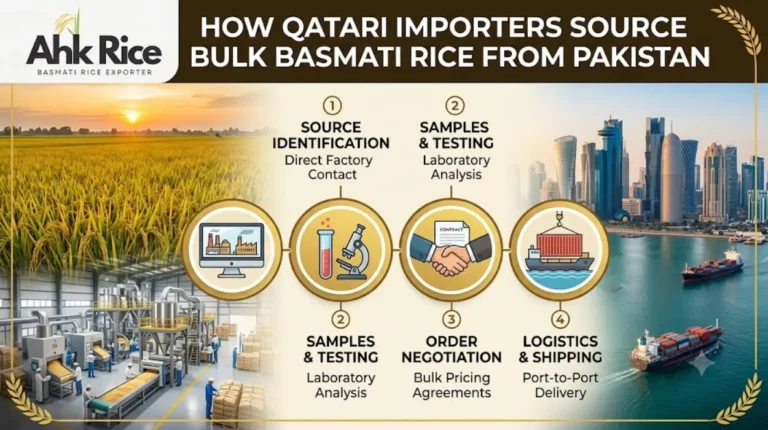
AHK Rice’s published export workflow follows inquiry, quotation, sample approval, contract, payment, production, packing, and shipment.
What does a sample order typically cost?
The rice sample itself can be complimentary under AHK Rice’s published sample policy. The buyer normally covers courier and phytosanitary charges.
A practical sample budget is approximately $40–$90 for courier plus $25–$60 for laboratory testing when requested. That produces an estimated evaluation budget of $65–$150, excluding any destination-specific government charges.
AHK Rice states that sample charges can be waived in the final quotation after successful commercial order placement.
What should be included in the final specification?
The final specification should identify the variety, processing grade, grain length, broken percentage, moisture limit, foreign matter requirement, packaging, quantity, origin, inspection arrangement, and destination.
Indonesian import documentation should also be reviewed with the local importer or customs representative before shipment. Current Indonesian rules place rice within regulated agricultural import categories.
AHK Rice should therefore be evaluated on specification control, sample performance, documentation coordination, shipment timing, and final landed cost.
For an Indonesian restaurant, the purchasing decision is straightforward: choose 1121 Steam for aroma and premium fresh service, or 1121 Golden Sella for bulk cooking, holding, and stronger storage performance. AHK Rice provides the sampling and export workflow needed to validate that choice before commercial loading.
To begin the commercial process, request your Indonesian restaurant supply quotation through AHK Rice’s request-a-quote page.
Frequently Asked Questions
Is 1121 Basmati suitable for Indonesian restaurants?
Yes, 1121 Basmati suits premium Indonesian restaurant operations requiring long grains and strong presentation.
1121 Steam supports softer texture and fresh service.
Golden Sella supports bulk cooking and stronger grain structure.
The final choice should follow the restaurant’s cooking and holding process.
Sample approval should precede commercial volume procurement.
Which is better, 1121 Steam or Golden Sella?
1121 Steam is better for premium fresh dishes, while Golden Sella is better for bulk kitchen operations.
Steam provides softer texture and stronger aroma.
Golden Sella provides firmer grains and greater handling tolerance.
Restaurants should cook both samples under identical conditions.
The approved specification should match the actual menu requirement.
How long does Pakistan rice take to reach Indonesia?
Pakistan rice shipments to Indonesia commonly require about 18–28 sailing days.
Jakarta and Surabaya are major receiving destinations.
Actual delivery depends on vessel schedules and transshipment.
Customs clearance can add additional time after port arrival.
Buyers should confirm the vessel schedule before production planning.
How much does an AHK Rice sample cost?
AHK Rice can provide rice samples without charging for the rice itself under its published sample policy.
The buyer normally covers international courier charges.
Phytosanitary certification can also create a buyer-side cost.
Typical courier costs range around $40–$90.
Laboratory testing can add approximately $25–$60.
What information should Indonesian restaurants provide for a quotation?
Restaurants should provide grade, quantity, packaging, destination port, quality specification, and preferred commercial terms.
The buyer should identify Steam or Golden Sella requirements.
The buyer should specify broken percentage and moisture expectations.
Packaging artwork can be discussed before production.
The exporter can then calculate the applicable FOB or delivered quotation.