What Gives Basmati Rice Its Natural Aroma?
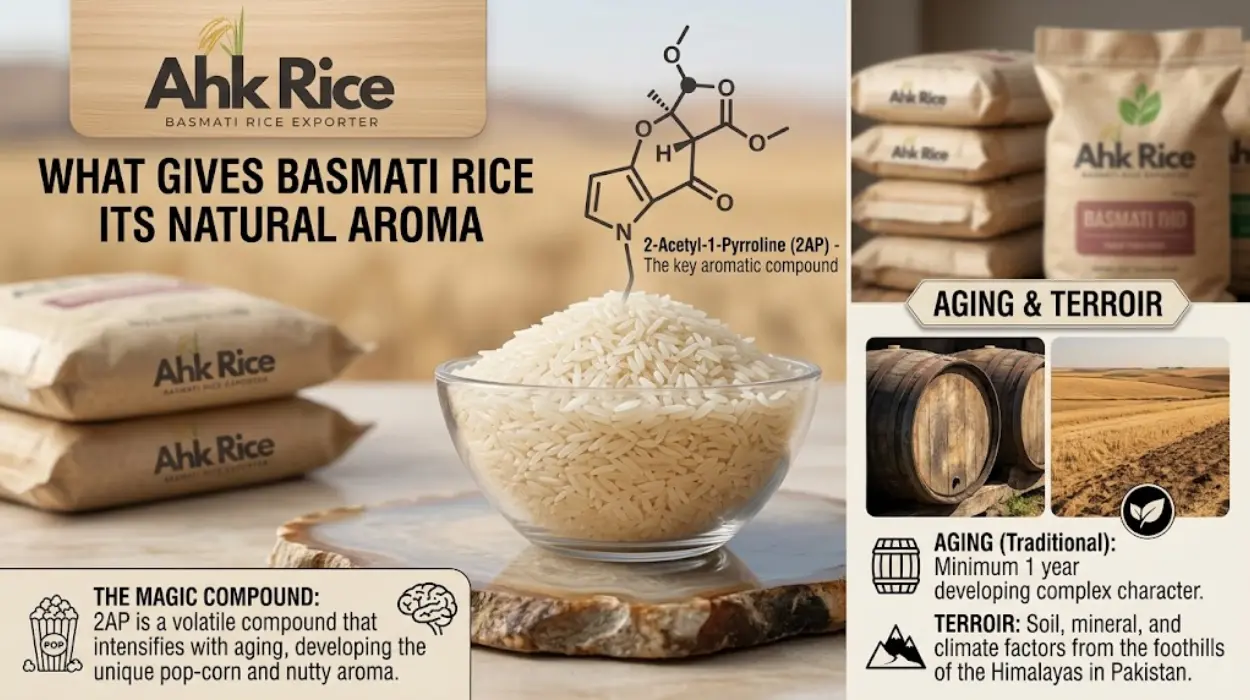
Basmati rice gets its characteristic aroma mainly from 2-acetyl-1-pyrroline (2AP), a naturally occurring volatile compound that produces a distinctive popcorn-like fragrance. Rice variety, growing conditions, grain maturity, processing and storage influence the aroma perceived in raw grains and cooked rice.
Basmati is a group of aromatic, long-grain rice varieties traditionally associated with the Punjab region of Pakistan and India. Pakistani Basmati is cultivated mainly in Punjab, including areas around Gujranwala, Hafizabad, Sheikhupura, Narowal and Sialkot.
Unlike ordinary non-aromatic rice, Basmati develops a recognizable fragrance before and during cooking. Its aroma combines roasted, nutty and popcorn-like notes. The fragrance becomes easier to detect when the grains absorb hot water and release volatile compounds into the surrounding air.
The compound 2-acetyl-1-pyrroline, commonly abbreviated as 2AP, is the principal chemical contributor to this distinctive smell. Other volatile compounds also contribute to the overall aroma, but 2AP is particularly important in explaining why authentic aromatic rice smells different from many other rice types.
Natural aroma is a characteristic of the rice itself. Perfume-like additives are not necessary to create the traditional fragrance of properly cultivated Basmati.
How Does Basmati Rice Develop Its Natural Aroma?
Basmati develops its natural aroma through genetic traits that regulate the production of aromatic compounds, especially 2-acetyl-1-pyrroline. Plant metabolism, growing conditions, grain development and post-harvest handling influence the final fragrance retained in milled rice and released during cooking.
The process begins with the plant’s genetic makeup. Aromatic rice varieties carry genetic differences associated with reduced activity of the BADH2 gene, which normally suppresses the accumulation of 2AP. This genetic characteristic allows aromatic compounds to accumulate in the plant and grain.
Environmental conditions also influence the final aroma profile. Temperature, water availability, soil characteristics, crop management and grain maturity affect plant development. These factors interact with the variety’s genetic potential rather than replacing it.
After harvest, the grain passes through drying, cleaning, milling and grading. Each operation affects how well the rice retains its original quality. Excessive heat, unsuitable moisture levels and poor storage conditions accelerate quality deterioration and reduce the freshness of the aroma.
Cooking releases the volatile compounds held within the grain. Hot water softens the grain structure, while steam carries aromatic molecules into the air. This explains why the fragrance becomes particularly noticeable when a pot of Basmati rice is opened after cooking.
What Are the Key Components Responsible for Basmati Aroma?
Basmati aroma results from a combination of volatile organic compounds, genetic characteristics and grain condition. The principal contributor is 2-acetyl-1-pyrroline, while other aroma compounds, grain moisture, kernel structure and storage history influence fragrance intensity and perception.
2-Acetyl-1-pyrroline
2AP is the best-known aroma compound associated with Basmati rice. It produces a popcorn-like, roasted fragrance and occurs naturally in several aromatic foods. Its presence helps explain the recognizable smell of Basmati during cooking.
The compound is volatile, meaning it readily enters the air. Heat makes its fragrance easier to detect, but prolonged exposure to unsuitable storage conditions can contribute to aroma loss.
Other volatile compounds
Other volatile substances contribute secondary notes to rice aroma. These compounds create a more complex sensory profile that includes nutty, grain-like and cooked-rice characteristics.
The exact aroma profile varies by variety, cultivation conditions, grain age and preparation method. No single compound completely explains every aspect of the smell perceived by a consumer.
Grain genetics and maturity
Genetics determine much of a variety’s potential to develop fragrance. Grain maturity and crop management influence the quality of the harvested kernels.
Harvesting at the appropriate maturity supports consistent grain quality. Immature, damaged or poorly handled grains produce a less uniform product, even when the crop belongs to an aromatic variety.
Moisture and kernel condition
Moisture affects grain stability during storage. Excess moisture encourages mould growth, heating and deterioration, while unsuitable drying conditions cause grain damage and affect cooking performance.
Intact kernels also support a more consistent cooking experience. Broken grains release starch more readily, changing texture and potentially altering how the cooked rice releases its aroma.
Where Is Aromatic Basmati Rice Grown?
Aromatic Basmati is traditionally grown in the Himalayan foothill plains of Pakistan and India. Pakistan’s main Basmati-producing areas lie in Punjab, where climate, irrigation, soils, crop varieties and established farming practices support the cultivation of fragrant, long-grain rice.
Pakistan’s Basmati-growing belt includes districts such as Hafizabad, Gujranwala, Sheikhupura, Narowal and Sialkot. Farmers cultivate established aromatic varieties under regional agricultural conditions that support grain development and characteristic fragrance.
The relationship between geography and aroma is important, but location alone does not guarantee quality. Variety selection, seed purity, planting practices, water management, harvest timing and post-harvest handling all affect the final product.
Different Basmati varieties also have distinct physical and sensory characteristics. 1121 is known for its exceptional cooked-grain elongation, while Super Kernel is associated with traditional Basmati aroma and a recognizable grain profile. The 1509 variety combines long grains with a shorter crop maturity period than traditional Basmati types.
Buyers assess these varieties according to grain length, aroma, broken-grain percentage, moisture, appearance and cooking performance. These measurable properties help distinguish a premium aromatic product from rice that simply has long kernels.
How Do Processing and Ageing Affect Basmati Aroma?
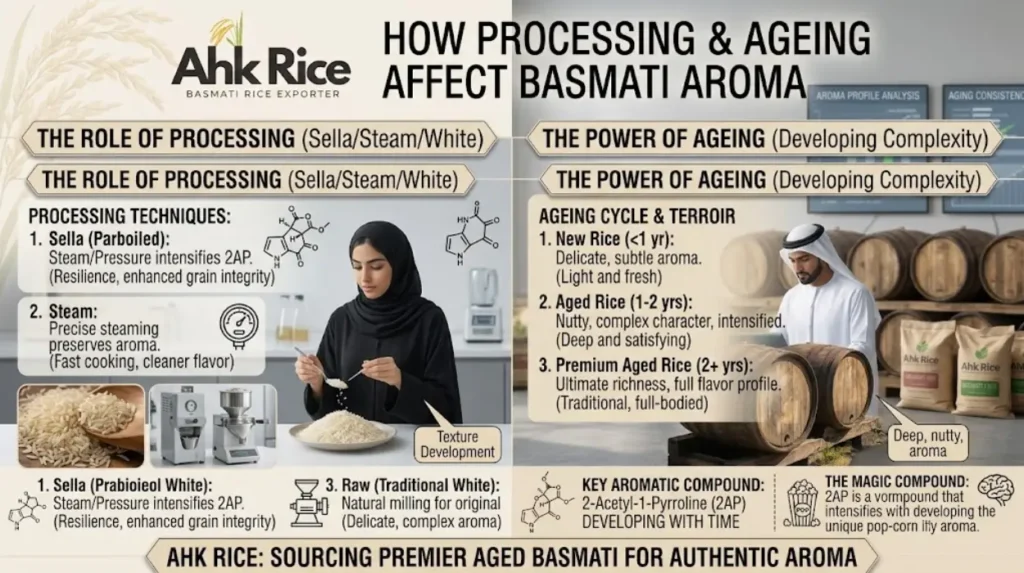
Processing protects Basmati’s existing natural aroma rather than creating its genetic fragrance. Proper drying, cleaning, milling, grading and moisture-controlled storage reduce avoidable quality losses, while controlled ageing changes grain cooking properties and can influence how consumers perceive the cooked rice.
Step 1: Harvesting
Farmers harvest mature paddy when the crop reaches the appropriate stage. Timely harvesting supports grain quality and reduces losses associated with immature kernels, shattering and weather exposure.
Step 2: Drying
Freshly harvested paddy contains more moisture than is suitable for stable long-term storage. Controlled drying reduces moisture to an appropriate storage level without exposing the grain to damaging heat.
Rapid or uneven drying increases the risk of fissures and breakage. These defects affect milling recovery and the appearance of the finished rice.
Step 3: Cleaning and dehusking
Cleaning removes foreign materials such as stones, dust, straw and other unwanted matter. Dehusking removes the outer husk while retaining the edible rice kernel.
Careful handling during these operations protects grain integrity and helps maintain consistent quality.
Step 4: Milling and grading
Milling removes the bran layers to produce white rice, while polishing intensity affects the final appearance. Grading separates grains by size, length and other quality parameters.
Milling does not manufacture 2AP. Its purpose is to prepare the grain for consumption while limiting unnecessary breakage and quality loss.
Step 5: Ageing
Ageing involves holding rice under controlled conditions for a defined period after harvest or milling, depending on the production system. It changes grain physicochemical properties and often improves cooked-grain firmness, separation and water-absorption behaviour.
Ageing does not automatically increase aroma in every batch. Aroma retention depends on variety, initial quality, temperature, moisture, packaging and storage duration.
Step 6: Packaging
Packaging protects rice from moisture exchange, contamination, pests and environmental exposure. Suitable food-grade packaging and intact seals help preserve quality during transport and distribution.
The packaging material should match the shipment conditions, storage duration and destination climate. A product stored in a humid warehouse requires stronger moisture management than one held in a dry, controlled environment.
What Are the Benefits of Natural Basmati Aroma?
Natural Basmati aroma improves sensory appeal, strengthens variety identity and supports the traditional character of rice dishes. Its fragrance complements grain elongation, texture and separation, making aroma an important quality attribute for households, restaurants, retailers and commercial food-service operations.
Aroma contributes to the overall eating experience before the first bite. The smell released during cooking helps consumers identify Basmati and distinguish it from many conventional long-grain rice varieties.
The fragrance also complements dishes in which rice is a central ingredient. Examples include biryani, pulao, kabsa and steamed rice served with curries or grilled meat.
For retailers, a consistent aroma profile supports repeat purchasing and product differentiation. For restaurants and catering businesses, fragrance works alongside cooked-grain appearance, firmness and separation to determine whether a variety suits the intended menu.
However, aroma alone does not establish food safety or overall quality. Buyers must also assess cleanliness, moisture, broken-grain percentage, pesticide-residue compliance, packaging integrity and traceability.
Which Basmati Varieties Are Known for Their Aroma?
Pakistani Basmati varieties differ in grain length, aroma, processing style and cooking behaviour. 1121, Super Kernel and 1509 serve different market requirements, so buyers assess fragrance alongside elongation, grain integrity, broken percentage, moisture and the intended cooking application.
1121 Basmati
1121 is recognized for its extra-long grain and pronounced elongation after cooking. It is available in forms such as white rice, Steam, Golden Sella, Creamy Sella, brown rice and broken grades.
Its cooked appearance makes it suitable for premium biryani, catering and food-service applications. Aroma intensity still depends on the specific lot, its condition and its handling history.
Super Kernel Basmati
Super Kernel is a traditional aromatic Pakistani Basmati variety valued for its fragrance and characteristic long-grain appearance. It suits retail, wholesale and food-service markets that prioritize traditional Basmati flavour.
Its performance depends on grade specifications, moisture control, milling quality and preparation method. Buyers should evaluate a representative sample rather than judging a shipment by variety name alone.
1509 Basmati
1509 is a long-grain variety known for its shorter crop maturity period and commercial versatility. It is supplied in forms such as white, Steam and parboiled rice, depending on the product specification.
Its appeal includes long grain appearance and efficient production. Its aroma profile and cooked performance must be assessed against the buyer’s requirements rather than assumed to match every premium 1121 or Super Kernel lot.
White, Steam and Sella processing styles
White rice undergoes milling to remove the husk and bran. Steam rice receives a steaming treatment during processing, while Sella rice is parboiled before milling.
These treatments affect grain structure, colour, texture and cooking behaviour. They do not turn a non-aromatic variety into authentic aromatic Basmati or guarantee stronger fragrance. The underlying variety and processing conditions remain important.
How Should Basmati Rice Be Stored to Preserve Its Aroma?
Store Basmati in clean, dry, cool conditions inside sealed, food-grade packaging. Protect it from humidity, direct sunlight, heat, pests and strong odours. Stable storage conditions reduce moisture changes and help preserve the rice’s characteristic fragrance throughout distribution and retail handling.
Airtight packaging limits exposure to outside air and helps prevent moisture exchange. Storage areas should remain clean, ventilated and free from leaks, pest activity and chemical odours.
Heat and oxygen exposure contribute to quality deterioration over time. Strong odours can also be absorbed by rice, affecting its natural sensory profile.
For shipments destined for the United Arab Emirates, warehouse and transport conditions require particular attention because high ambient temperatures and humidity increase the importance of moisture protection. Rice must remain dry during loading, transit, unloading and retail storage.
Exporters and importers should inspect container cleanliness, packaging condition, moisture specifications and evidence of water exposure. Containers should be dry, free from foreign odours and suitable for food cargo.
Storage duration should follow the product specification and validated shelf-life conditions. Rice does not have one universal aroma-retention period because packaging, processing, moisture and storage temperature vary.
What Are the Common Misconceptions About Basmati Aroma?
Basmati aroma does not depend on grain length alone, and strong fragrance does not automatically prove authenticity. Natural aroma comes primarily from the variety’s chemistry, while processing, ageing, storage, cooking and product condition determine how clearly consumers perceive it.
One misconception is that longer grains always smell stronger. Grain length and aroma are separate characteristics. A long-grain variety can have a different aroma profile from another long-grain variety.
Another misconception is that ageing always increases fragrance. Ageing often improves cooking characteristics, but poor storage and prolonged exposure to heat can reduce aroma retention.
A third misconception is that every Basmati variety has identical fragrance. Genetic differences and growing conditions create variation between varieties and individual lots.
Some buyers also mistake added fragrance for natural aroma. A reliable assessment combines sensory inspection with traceability, product documentation and appropriate laboratory testing when authenticity or adulteration is in question.
Finally, natural fragrance is not a substitute for food-safety compliance. Importers must verify applicable residue limits, hygiene requirements, phytosanitary documentation and other destination-specific rules.
How Can Importers Evaluate Basmati Aroma Before Purchasing?
Importers evaluate Basmati aroma by checking a representative sample in both raw and cooked conditions. They compare fragrance, grain elongation, texture, separation and broken percentage against written specifications, then verify the lot’s documentation, safety requirements and storage history before approving commercial quantities.
A structured sample assessment reduces the risk of receiving rice that does not match the intended market. The sample should represent the proposed variety, processing style and commercial grade.
First, inspect the raw rice for uniformity, foreign matter, colour and visible damage. Smell the sample in a clean environment without strong surrounding odours.
Next, cook the rice using a recorded water ratio, soaking period and cooking method. Consistent preparation allows buyers to compare batches fairly.
Evaluate the fragrance when the rice is hot, then assess grain elongation, separation, firmness and texture. Record the results instead of relying on memory or a single sensory impression.
Finally, compare the sample with the commercial specification and applicable import requirements. Relevant checks include moisture, broken percentage, purity, pesticide residues and other tests required by the destination market.
For UAE buyers, the next stage is to understand how the exporter protects the approved quality during drying, processing, packing and transport. The guide on [how processing and storage preserve Basmati aroma from Pakistani mill to UAE shelf] can explain the controls that connect sample approval with the quality received at destination.
Natural Basmati aroma begins with the rice variety and its genetic characteristics. Careful cultivation, controlled processing, suitable ageing, moisture protection and consistent cooking practices help preserve that aroma from the field to the consumer’s plate.
Frequently Asked Questions
What gives Basmati rice its natural aroma?
The main compound responsible for Basmati rice’s natural aroma is 2-acetyl-1-pyrroline (2AP). It produces the distinctive popcorn-like fragrance associated with aromatic rice varieties.
Does ageing make Basmati rice more aromatic?
Ageing changes grain structure and cooking characteristics, often improving firmness and separation. It does not always increase aroma. Temperature, moisture, packaging and storage conditions influence fragrance retention.
Which Pakistani Basmati variety has the strongest aroma?
Aroma varies by variety, growing conditions and individual batch. Super Kernel and 1121 are established aromatic Basmati varieties, but buyers should compare representative cooked samples to identify the fragrance profile they prefer.
Does parboiling affect Basmati rice aroma?
Yes. Parboiling changes the grain’s physical structure, colour and cooking behaviour. Its effects on aroma depend on the variety and processing conditions. Golden Sella and white Basmati can have different sensory profiles.
How can importers preserve Basmati aroma during shipping to the UAE?
Importers should use suitable sealed packaging, maintain dry storage conditions, inspect containers for moisture and foreign odours, and protect shipments from heat and humidity. Proper warehouse handling also supports aroma retention.