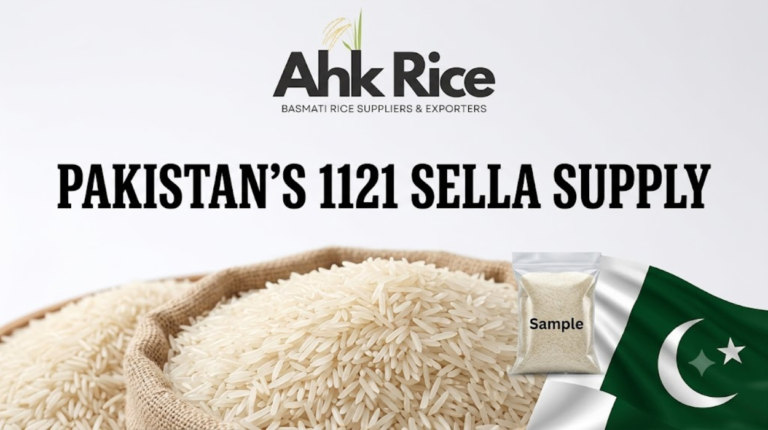
Pakistan USA Rice Export Value and Halal Market Opportunity
Pakistan’s U.S. rice opportunity combines established Basmati exports, a growing halal-focused retail segment, and demand for premium aromatic rice. Here is why: Pakistan exported US$31 million of Basmati rice to the United States in FY2024, representing 22,276 MT, while total U.S. imports from Pakistan reached US$5.42 billion in 2025 across all goods. The opportunity therefore depends on moving from commodity supply toward defined grades, halal positioning, retail packaging, and consistent specifications.
The U.S. market already imports substantial quantities of aromatic rice from Asia. USDA reports that the United States imports about 1.3 million tonnes of rice annually, with Asian aromatic rice representing an important part of those imports. Buyers evaluating Pakistan’s Basmati rice export markets and product specifications can therefore connect national export value with actual grade-level demand.
What are the available solutions for the U.S. rice market?
The main solutions are premium Basmati, value-oriented long-grain rice, parboiled products, private-label packs, and halal-positioned retail products. Each solution targets a different buyer requirement. Premium Basmati focuses on aroma, grain length, appearance, and cooking performance. Value-oriented rice focuses on cost per kilogram and volume distribution. Parboiled grades target foodservice and institutional users requiring firm cooked grains.
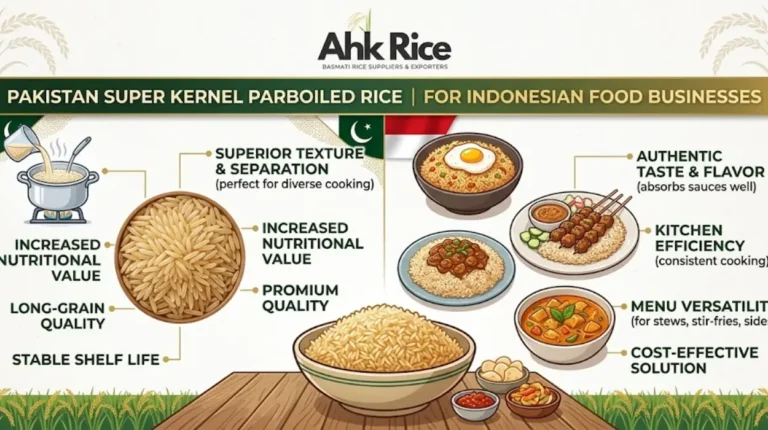
AHK Rice supplies 1121, Super Kernel, and 1509 varieties from Punjab. These varieties create different commercial positions rather than competing as identical products. 1121 supports premium long-grain positioning. Super Kernel combines traditional Basmati aroma with premium foodservice and ethnic retail applications. 1509 supports price-sensitive volume distribution.
Halal positioning adds another commercial layer. Rice is naturally plant-based and does not require animal slaughter for production. However, U.S. halal buyers can still evaluate certification, processing integrity, ingredients, handling, packaging, and supplier documentation. USDA guidance distinguishes foods that are halal certified from foods that are inherently acceptable without certification.
The strongest solution therefore combines rice variety + processing grade + packaging + halal positioning + documented quality. This approach gives importers a specification that retailers and distributors can reproduce across multiple containers.
With the available product routes established, the next question is how their specifications and commercial values compare.
How do Pakistani rice approaches compare for U.S. buyers?
1121 offers the strongest premium positioning, Super Kernel balances aroma and value, while 1509 provides a more cost-focused route for volume distribution. The comparison should consider grain characteristics, processing, application, packaging, shelf life, and price rather than variety names alone.
| Attribute | 1121 Basmati | Super Kernel | 1509 Basmati |
|---|---|---|---|
| Market position | Premium | Premium-value | Value-volume |
| Main advantage | Long grain and aroma | Aroma and cooking quality | Cost efficiency |
| Typical applications | Premium retail, foodservice | Ethnic retail, restaurants | Wholesale, catering, foodservice |
| Processing options | White, Steam, Sella, Golden Sella | White, Steam, Sella | White, Steam, Sella |
| Grain profile | Extra-long Basmati | Traditional aromatic Basmati | Long-grain Basmati |
| Packaging | Retail and bulk | Retail, bulk, private label | Bulk and retail |
| Buyer priority | Premium appearance | Aroma-to-price balance | Landed cost and volume |
Pakistan’s Basmati export base supports this segmentation. REAP records 808,643 MT of Basmati exports worth US$830.57 million in FY2024-25, with an average export value of US$1,027.11 per MT.
The United States accounted for US$31 million of Pakistan’s Basmati exports in FY2024, with volume reaching 22,276 MT. The average value works out to roughly US$1,391 per MT, indicating a higher-value destination mix than Pakistan’s overall Basmati average for that year.
Price comparison must therefore use the same specification and Incoterm. A premium 1121 shipment cannot be compared directly with commercial 1509 rice. Freight, packaging, inspection, processing, and destination costs also change the final landed value.
Shelf life also depends on processing, moisture, packaging, warehouse conditions, and storage controls. Parboiled Sella products provide strong physical stability for commercial distribution. White rice also supports long storage under controlled conditions. Buyers should establish a contracted shelf-life specification rather than rely on a generic variety name.
With the basic specification comparison complete, regional buyer behaviour shows where each solution fits commercially.
Which U.S. market regions prefer different Pakistani rice grades?
Northeast and Midwest markets favour premium ethnic retail and foodservice formats, while West Coast and Southern distribution emphasises broader wholesale and multicultural demand. Regional segmentation helps importers select packaging, grain grade, and pricing strategy before ordering containers.
Northeast and Midwest
Northeast markets contain established South Asian, Middle Eastern, and Muslim consumer networks. New York, New Jersey, Illinois, Michigan, and surrounding states support ethnic grocery, restaurant, catering, and wholesale channels.
1121 and Super Kernel fit premium retail and restaurant demand. Five-kilogram and ten-pound consumer formats support branded retail. Twenty-five-kilogram and fifty-pound formats support foodservice and wholesale distribution.
Indicative premium Pakistani Basmati pricing can sit above standard commercial rice because grain length, aroma, processing, and sorting add value. A U.S. buyer should compare the complete landed price rather than FOB value alone.
West Coast and Southern markets
California, Texas, and other Southern markets provide large multicultural food channels. These regions also support wholesale distribution into restaurants, independent groceries, foodservice businesses, and private-label programmes.
1509 and Super Kernel provide stronger options for buyers balancing price with cooking performance. 1509 can support volume-oriented distribution. Super Kernel supports customers seeking stronger traditional Basmati aroma.
U.S. importers should also account for port differences. New York, Savannah, Houston, Los Angeles, and other gateways produce different freight and inland transportation costs. A specification-based quotation therefore needs the destination port and final delivery point.
The regional comparison shows why one national U.S. strategy does not fit every channel. Product selection should now connect directly with buyer use cases.
Which method works best for different U.S. buyer cases?

Premium retail works best with 1121, ethnic wholesale favours Super Kernel, and cost-sensitive foodservice can use 1509 or commercial Basmati grades. The correct choice depends on the buyer’s sales channel, target consumer, packaging requirement, and acceptable landed cost.
Premium retail
1121 suits premium supermarkets, specialty grocers, and private-label brands. Its long-grain appearance supports shelf differentiation. Steam, Sella, and Golden Sella formats create additional positioning options.
Ethnic grocery
Super Kernel suits South Asian and Middle Eastern grocery channels. Its traditional aroma connects directly with biryani, pulao, pilaf, and household rice dishes.
Foodservice
1509 and Super Kernel can serve restaurants, caterers, and institutional kitchens. Buyers should prioritise cooking consistency, broken percentage, moisture, and pack size.
Halal-focused retail
Halal-focused retail benefits from clear product identity and transparent certification information. USDA guidance notes that halal-certified foods maintain certification integrity through the relevant processing facility.
Shelf-stable rice also fits halal distribution logistics. USDA specifically identifies rice as a shelf-stable grain that can be stored alongside non-halal products with clear identification, although separate identification can strengthen consumer trust.
These cases establish the product fit. The next step is evaluating the advantages and limitations of each approach.
What are the pros and cons of each Pakistani rice solution?
Premium Basmati delivers stronger value per tonne but requires tighter quality control, while commercial grades reduce procurement cost but compete more directly on price. Buyers should match the product’s strengths with the economics of their sales channel.
| Solution | Advantages | Limitations | Best example |
|---|---|---|---|
| 1121 | Premium appearance, aroma, strong retail positioning | Higher procurement cost | Premium supermarket |
| Super Kernel | Strong aroma, balanced value, versatile applications | Requires consistent grading | Ethnic grocery chain |
| 1509 | Cost efficiency, volume suitability | Less premium positioning | Foodservice distributor |
| Sella | Firm cooking, commercial stability | Different consumer appearance | Catering |
| Private label | Brand differentiation and margin control | Higher packaging coordination | Retail importer |
Premium Basmati can create stronger retail differentiation. The trade-off is stricter specification management. A shipment should define grain length, broken percentage, moisture, purity, processing type, packaging, and inspection requirements.
Super Kernel provides a balanced proposition. Its traditional aromatic profile supports premium ethnic demand without requiring every buyer to select the highest-priced Basmati grade.
1509 provides a cost-oriented route. Its shorter cultivation cycle and strong yield profile support commercial availability. The grade fits buyers who prioritise volume economics over maximum premium positioning.
The pros and cons become clearer when procurement teams apply a consistent decision framework.
What factors should U.S. importers use before choosing Pakistani rice?
U.S. buyers should evaluate specification, halal requirements, landed cost, packaging, documentation, and supply consistency before approving a Pakistani rice product. These factors connect product quality with actual commercial performance.
| Decision factor | Buyer question | Best evaluation |
|---|---|---|
| Specification | Does the grain match the target market? | Sample and COA |
| Halal status | Does the buyer require certification? | Certification review |
| Landed cost | What is the complete U.S. cost? | FOB plus freight and import costs |
| Packaging | Does the format fit the sales channel? | Retail or bulk specification |
| Supply consistency | Can repeat containers match the sample? | Contracted tolerances |
U.S. food imports also require regulatory planning. FDA requirements cover imported food safety, facility registration, Prior Notice, and applicable labelling obligations. The U.S. importer also has responsibilities under the Foreign Supplier Verification Program where applicable.
Halal compliance should therefore remain separate from general FDA compliance. FDA regulates food safety and U.S. import requirements. Halal certification addresses religious dietary requirements and certification integrity.
The best procurement process starts with a product specification. Buyers then request a representative sample, review laboratory results, approve packaging, confirm documentation, and contract the same specification for commercial shipment.
The decision framework shows why price alone is insufficient. A low FOB figure can produce a higher landed cost when freight, packaging, inspection, inland delivery, or inconsistent quality increases total expenditure.
What is the 2026 halal opportunity for Pakistani rice in the USA?
The halal opportunity centres on certified supply, trusted labelling, ethnic retail, foodservice, private label, and premium Basmati products serving Muslim and multicultural consumers. USDA recognises the importance of respecting halal dietary practices and distinguishes certified foods from products that consumers consider acceptable without certification.
Halal retail creates a commercial opportunity beyond Muslim-only distribution. Pakistani Basmati also serves consumers seeking aromatic rice for South Asian, Middle Eastern, Mediterranean, and multicultural meals.
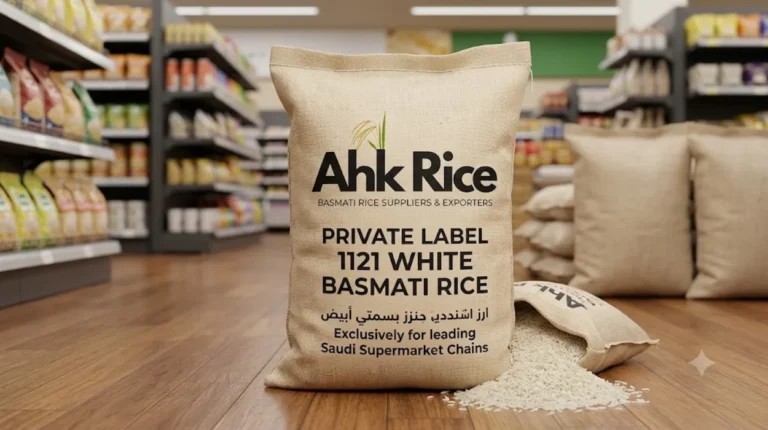
Private-label halal rice provides another route. A U.S. importer can combine Pakistani origin with a U.S.-focused brand, approved packaging, defined Basmati grade, and halal certification.
Premium positioning works best when certification supports rather than replaces product quality. A halal label does not compensate for inconsistent grain length, excessive broken rice, poor packaging, or unstable cooking performance.
The strongest opportunity therefore combines halal integrity + premium Basmati specifications + consumer-ready packaging + reliable supply. This combination connects Pakistani export capacity with U.S. retail demand.
For buyers moving from market opportunity toward specific products, the next decision is which Pakistani grades fit halal-certified and premium U.S. segments.
Frequently Asked Questions
What was Pakistan’s Basmati rice export value to the USA?
Pakistan exported approximately US$31 million of Basmati rice to the United States in FY2024, with exports reaching 22,276 MT. (Source: Pakistan Bureau of Statistics, FY2024)
What Pakistani rice varieties suit the U.S. market?
1121, Super Kernel, and 1509 provide three distinct commercial positions. 1121 suits premium retail. Super Kernel suits aromatic ethnic retail and foodservice. 1509 supports cost-sensitive volume distribution.
Is Pakistani rice suitable for halal consumers?
Yes. Rice is a plant-based food, and plain rice does not involve animal slaughter. Halal-focused buyers can still require certification, controlled handling, and documented processing practices.
Does halal certification increase the value of Pakistani rice?
Halal certification can strengthen market positioning for buyers who require verified halal status. USDA notes that halal-certified foods maintain certification integrity through the certified processing facility.
Which Pakistani rice is best for premium U.S. retail?
1121 Basmati provides the strongest premium positioning through long grain, aroma, and visual presentation. Super Kernel provides another premium aromatic option with a different value proposition.
Which Pakistani rice suits U.S. foodservice?
Super Kernel and 1509 suit foodservice applications where cooking consistency, volume economics, and pack size matter. The final choice should follow the restaurant or catering specification.
How should U.S. buyers compare Pakistani rice prices?
Compare the same variety, processing grade, grain specification, broken percentage, moisture, packaging, quantity, Incoterm, destination port, freight, inspection, and import costs.
What is the U.S. rice import opportunity for Pakistan?
The opportunity is supported by an established Pakistani Basmati trade and the broader U.S. demand for Asian aromatic rice. USDA reports around 1.3 million tonnes of annual U.S. rice imports.