What is the best solution for sourcing Halal-certified Basmati rice for UAE buyers?
The best solution is to select a Pakistani exporter that can verify the applicable Halal certification, match rice specifications to the buyer’s requirements, provide representative samples, and coordinate documented shipments. This approach reduces approval delays, specification disputes, and uncertainty before commercial orders.
UAE rice importers need more than a competitive price per metric tonne. Retail distributors require consistent grain appearance, dependable cooking performance, suitable packaging, and documentation that supports local compliance checks. Hotels, restaurants, caterers, and institutional kitchens also need reliable bulk supply, repeatable results, and clear delivery schedules.
AHK Rice is a Pakistani Basmati rice exporter based in Punjab, supplying 1121, Super Kernel, and 1509 varieties to international buyers. Its sourcing, processing, grading, packaging, and export coordination provide a framework for discussing product specifications before shipment. Buyers can review the AHK Rice export and supply service when evaluating available grades and export arrangements.
Before selecting a supplier, buyers should understand whether Halal certification is required for rice imported into the UAE. This distinction matters because ordinary milled rice is a plant-based product, while certification expectations can depend on the product, processing arrangements, buyer policy, and applicable UAE requirements. Importers should verify the exact rules for their shipment rather than assume every rice consignment follows identical certification requirements.
Why should UAE importers choose AHK Rice for retail and food service?
A suitable export partner provides traceable product specifications, consistent grading, clear documentation, and packaging aligned with the buyer’s sales channel. AHK Rice helps buyers assess Pakistani Basmati varieties against commercial requirements before approving samples and arranging bulk shipments.
The correct grade depends on the intended use. Retail brands often prioritise aroma, grain length, cooking appearance, and consumer recognition. Food-service operators focus on cooked yield, grain separation, portion consistency, and cost per serving. Wholesale distributors need specifications that remain consistent across repeat orders.
AHK Rice supplies three relevant Basmati options for UAE buyers:
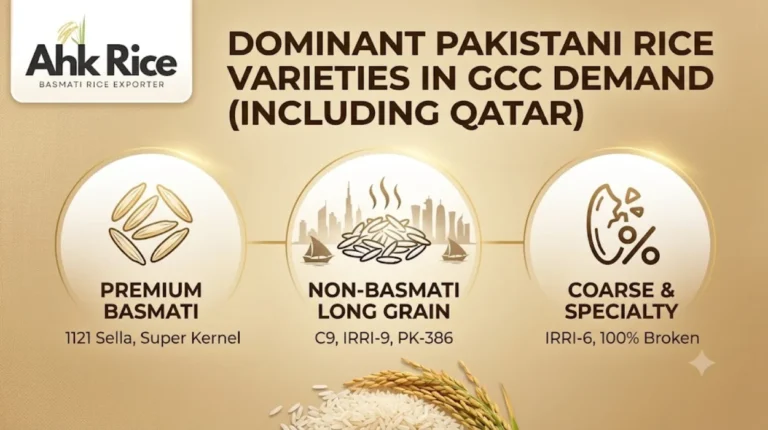
- 1121 Basmati: A premium option for retailers, restaurants, and catering businesses that prioritise long grains and attractive cooked presentation.
- Super Kernel Basmati: A traditional aromatic variety suited to ethnic grocery distribution, wholesale channels, and food service seeking a balance between aroma and purchasing cost.
- 1509 Basmati: A commercially relevant option for buyers comparing grain length, cooking performance, and bulk purchasing economics.
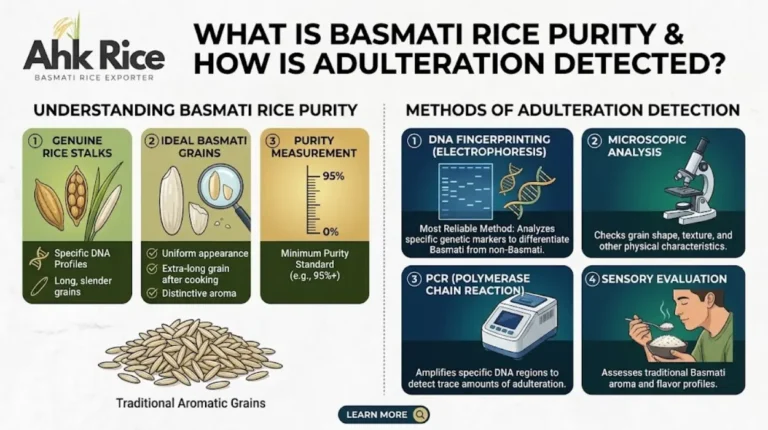
AHK Rice can discuss raw grain length, moisture, broken percentage, purity, processing type, and packaging requirements against the buyer’s specification sheet. Final limits must be agreed for the particular grade and order rather than assumed from the variety name alone.
Importantly, buyers should request evidence for any claimed Halal certification. A supplier’s general assurance does not automatically establish that a specific product, processing facility, or shipment falls within the scope of a certificate.
Which Basmati grade is best for UAE retail and food service?
1121 suits premium presentation, Super Kernel supports aromatic everyday positioning, and 1509 offers another option for value-conscious bulk purchasing. Buyers should compare actual specifications, cooking-test results, certification scope, and landed cost before selecting a grade for their channel.
| Specification | 1121 Basmati | Super Kernel Basmati | 1509 Basmati |
|---|---|---|---|
| Main commercial positioning | Premium retail and catering | Aromatic retail and wholesale | Value-focused bulk supply |
| Raw grain length | Commonly around 8.0–8.3 mm, depending on grade | Approximately 7.0–7.5 mm | Approximately 8.1–8.5 mm |
| Key selling point | Long cooked grains | Traditional aroma | Yield and purchasing economics |
| Processing options | White, Steam, Golden Sella, subject to availability | Confirm selected processing type | White, Steam and other agreed grades |
| Typical buyer | Premium distributor or caterer | Ethnic retailer or wholesaler | Bulk distributor or food-service buyer |
| Quality checks | Length, broken percentage, moisture, purity | Aroma, broken percentage, moisture, purity | Length, processing, broken percentage, moisture |
| Final approval | Specification and sample approval | Specification and sample approval | Specification and sample approval |
These are indicative commercial descriptions, not guaranteed shipment specifications. AHK Rice should confirm the available grade, processing type, measured grain length, and contractual tolerances before the buyer issues a purchase order.
For UAE retail, packaging can range from small consumer packs to larger wholesale bags. Food-service buyers often prefer bulk formats that support kitchen handling and reduce packaging costs per kilogram. A buyer should also confirm Arabic and English labelling needs, country-of-origin details, batch identification, and any applicable local requirements with its UAE importer or compliance adviser.
How does Halal certification affect Pakistani rice imports into the UAE?
Halal certification should be assessed against the exact product, certification scope, processing arrangements, and applicable UAE rules. Buyers should verify certificate validity and acceptance before ordering, rather than treating a supplier statement or unrelated certificate as sufficient evidence.
Rice is a plant-based food, so its Halal compliance considerations differ from those of products containing animal-derived ingredients. However, buyers may still require certification for procurement policies, retail listings, food-service contracts, or particular processing and handling arrangements.
Before confirming an order with AHK Rice, request the relevant certificate and verify:
- The issuing certification body and its validity.
- Whether the product and processing facility are covered.
- Whether the certificate applies to the requested grade and processing type.
- Whether the certificate is accepted for the intended UAE market and transaction.
- Whether the supporting documents match the product and shipment details.
Importers should also confirm applicable UAE food registration, customs, labelling, and inspection requirements. Halal certification does not replace food-safety documentation or other mandatory import approvals.
For a deeper explanation of certification scope, verification, and exporter documentation, read how Halal certification works for Pakistani Basmati rice exports to the GCC. This helps procurement teams distinguish between having a certificate and demonstrating that the certificate meets the requirements of their intended transaction.
AHK Rice buyers should settle these document checks before production or final packing. Early verification reduces the risk of approving a sample only to discover that the documentation does not satisfy a distributor, retailer, or importing authority.
What shipping time should UAE buyers expect?
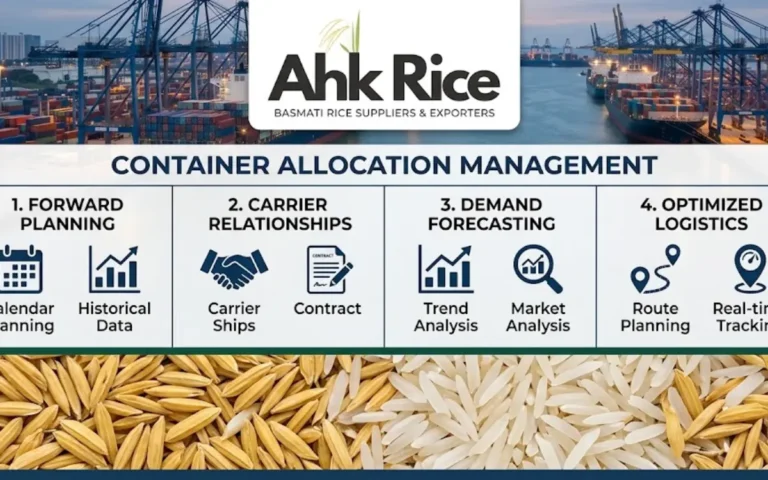
Shipment planning depends on vessel schedules, port availability, customs clearance, document readiness, and the selected Incoterm. Buyers should distinguish sea transit from total delivery time and obtain a shipment-specific estimate before confirming a delivery commitment.
For planning purposes, a sea shipment from Karachi to a UAE port such as Jebel Ali may have an indicative port-to-port transit window of approximately 3–7 days. This is a planning estimate, not a guaranteed schedule. Vessel routing, transshipment, congestion, and carrier changes can extend transit.
The complete order timeline also includes sample approval, commercial negotiations, production or stock allocation, inspection, export documentation, vessel booking, and destination clearance. These stages can take considerably longer than the sea journey itself.
Before ordering from AHK Rice, the buyer should confirm:
- The agreed production or dispatch date.
- The vessel booking and estimated departure.
- The expected arrival date and destination port.
- Responsibility for freight, insurance, and clearance under the agreed Incoterm.
- The documents required before the shipment arrives.
UAE buyers should avoid treating an estimated arrival date as a guaranteed warehouse delivery date. A port arrival does not mean that customs clearance, food-related checks, and final transport have been completed.
What is the sample process, and how much does it cost?
A commercial sample should represent the proposed grade and processing type. Buyers should agree sample quantity, courier responsibility, applicable charges, and evaluation criteria before dispatch, then approve the specification and documentation before authorising bulk production.
AHK Rice buyers can use a structured sample-to-order process to reduce uncertainty.
Step 1: Submit the purchasing specification. State the preferred variety, processing type, raw grain length, broken percentage, moisture limit, packaging format, intended quantity, and UAE delivery destination.
Step 2: Confirm the sample arrangement. AHK Rice has previously offered up to 20 kg of Super Kernel Basmati for sampling, with the buyer covering courier shipping and applicable phytosanitary charges. Confirm current availability, sample eligibility, destination restrictions, and the final quantity directly before proceeding.
Step 3: Confirm the cost. The sample rice may be offered without a product charge under the applicable offer, but courier and other applicable charges remain payable by the buyer. The total cost depends on sample weight, courier service, destination, handling, and any required permits or phytosanitary arrangements. Obtain a written cost confirmation; do not assume a fixed courier fee.
Step 4: Conduct the cooking test. Assess aroma, water absorption, grain separation, elongation, texture, breakage, and consistency after cooking. Retail buyers should also assess visual appearance, while food-service teams should test the rice under their actual kitchen preparation method.
Step 5: Approve the commercial specification. Record the accepted sample, quality tolerances, packaging, certification requirements, inspection arrangements, and documentation. Ensure that the final commercial batch matches the approved specification.
Step 6: Confirm the order and shipment. Agree the price, quantity, payment terms, Incoterm, production schedule, freight arrangements, and documents before dispatch.
Sample approval is not a substitute for final shipment inspection. Buyers should define how the commercial consignment will be checked and how any discrepancy will be handled contractually.
What determines the price per metric tonne and shelf life?
The final price depends on variety, processing, grade, broken percentage, packaging, order volume, freight, and delivery terms. Shelf life depends on the product specification, packaging, storage conditions, and declared date information, so buyers should obtain written confirmation for each order.
For UAE procurement, compare quotations on the same basis. An FOB Karachi offer excludes costs that a buyer may incur after loading, while a CIF offer generally includes ocean freight and insurance to the named destination port. Neither automatically includes every destination clearance, handling, duty, or inland delivery charge.
Ask AHK Rice to itemise the quotation using the following factors:
- Variety and processing type.
- Grain length, purity, moisture, and broken percentage.
- Retail or bulk packaging and printing requirements.
- Order volume and shipment size.
- Inspection, certification, and documentation requirements.
- Freight, insurance, port charges, and agreed Incoterm.
- Payment terms and quotation validity.
Do not compare prices per metric tonne without matching specifications. A lower-priced product may have a different broken percentage, processing method, or packaging standard.
Shelf life should also be confirmed from the product specification and packaging declaration. Store rice in a clean, dry, cool environment, protected from moisture, pests, direct sunlight, and strong odours. UAE buyers should consider warehouse humidity and temperature, stock rotation, and packaging integrity when setting inventory targets.
How should a UAE buyer decide whether to place an order?
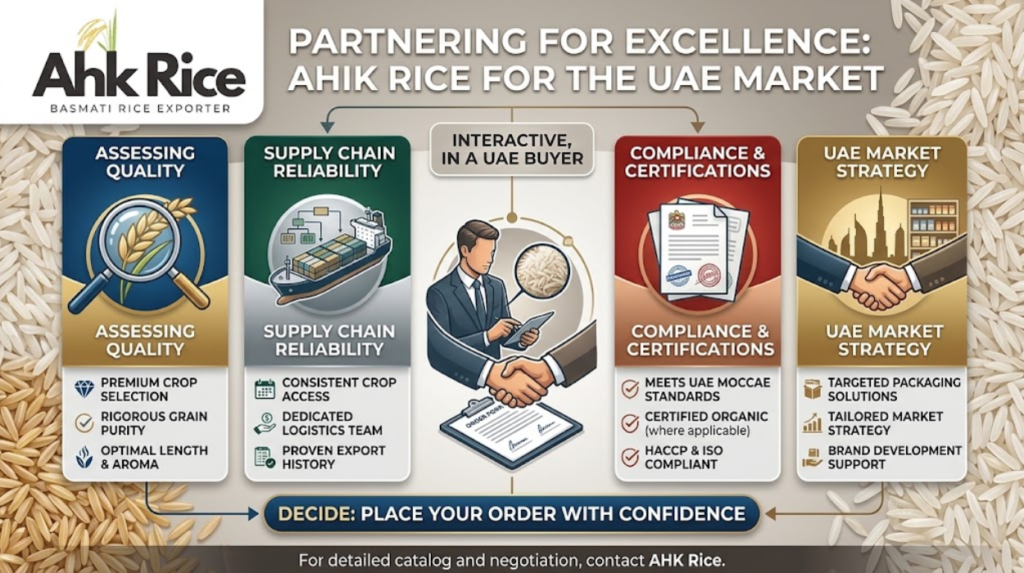
Place the order only after the grade, sample, certification evidence, price basis, packaging, and delivery schedule meet the purchasing requirements. A documented approval process gives retailers and food-service operators a clearer basis for repeat orders and supplier performance reviews.
Use this decision framework before committing to a commercial shipment.
| Decision factor | Evidence required | Approval condition |
|---|---|---|
| Product suitability | Specification sheet and sample | Grade meets intended use |
| Halal compliance | Valid certificate and scope verification | Accepted for the transaction |
| Food quality | Cooking test and agreed tolerances | Results meet buyer standards |
| Commercial value | Comparable quotation per MT | Landed cost fits budget |
| Shipment readiness | Packing, documents, and schedule | Delivery plan is acceptable |
AHK Rice buyers should retain the approved specification, sample assessment, quotation, certification evidence, and shipment documents in one procurement file. This creates a reference for subsequent orders and helps identify deviations before goods reach the UAE warehouse.
The decision should ultimately reflect the buyer’s sales channel. Premium retail may justify a higher purchase cost for grain appearance and positioning, while catering and wholesale operations should weigh cooking yield, portion cost, and repeatability. Certification and compliance remain separate approval checks, not substitutes for commercial performance.
For UAE retailers, distributors, restaurants, and catering companies, the practical next step is to request a specification-matched quotation and confirm current certification documentation before placing the order.
Ready to source Pakistani Basmati rice for UAE retail or food service? Send your grade, quantity, packaging, destination, and certification requirements through the AHK Rice request-a-quote page.
Frequently asked questions
Is Halal certification always mandatory for imported Basmati rice in the UAE?
Requirements depend on applicable UAE rules, the product, and the transaction. Buyers should confirm the current requirements with the relevant UAE authority or importer compliance team before shipment.
Which Pakistani Basmati grade is best for UAE restaurants?
1121 is suitable for premium presentation, Super Kernel for aromatic dishes, and 1509 for buyers prioritising purchasing economics. A cooking test should determine the final choice.
How much does a rice sample from AHK Rice cost?
AHK Rice has offered up to 20 kg of Super Kernel Basmati free for sampling. The buyer covers courier shipping and applicable phytosanitary charges; confirm current terms and total costs before dispatch.
How long does shipping from Pakistan to the UAE take?
Sea transit from Karachi to a UAE port may take approximately 3–7 days, depending on the sailing. Booking, documentation, and destination clearance add time.
What should buyers verify before bulk ordering?
Confirm the grade, sample results, Halal certificate scope, applicable import documents, packaging, agreed price, Incoterm, inspection requirements, and delivery schedule.