What Packaging Options Are Available for Exported Basmati Rice?
Exported Basmati rice uses packaging designed to protect grain quality, maintain product identity, support international transport and meet destination-market requirements. Common options include jute bags, non-woven polypropylene bags, woven polypropylene (PP) bags, BOPP-laminated bags, polyethylene liners and bulk packaging. The correct choice depends on rice variety, shipment size, storage conditions, retail positioning and buyer specifications.
What Is Basmati Rice Export Packaging?
Basmati rice export packaging is the system of food-contact materials, bags, liners and labels used to protect rice from contamination, moisture exposure, physical damage and handling losses. Export packaging ranges from 1 kg retail packs to 50 kg commercial sacks and larger bulk containers.
Packaging performs several functions beyond holding rice. It protects milled grains during storage and transport, identifies the variety and grade, displays the net weight and supports traceability through the supply chain. Suitable packaging also helps importers handle, stack, store and distribute rice efficiently.
Basmati rice is an aromatic long-grain rice traditionally grown in Pakistan and India. Pakistani production is concentrated in Punjab, including districts such as Hafizabad, Sheikhupura, Gujranwala, Narowal and Sialkot. Export varieties include1121, Super Kernel, and 1509 Basmati rice.
These varieties pass through harvesting, drying, milling, grading, sorting and quality inspection before packing. Packaging requirements apply to white rice, steamed rice, parboiled rice such as Golden Sella, brown rice and broken rice. Each product requires packaging that matches its moisture level, handling requirements and intended market.
How Does Basmati Rice Packaging Work From Milling to Export?
Rice packaging starts after milling, grading and quality checks confirm that the batch meets its specification. The packing line fills approved bags, verifies weight, seals openings, applies labels, checks finished packs and prepares the consignment for warehouse storage and container loading.
1. Cleaning, milling and grading
Paddy rice passes through cleaning and dehusking before milling removes the bran layers. Machines separate broken grains, foreign material and other unwanted particles. Grading establishes the commercial specification, including grain length, broken percentage, variety and appearance.
2. Quality inspection and moisture control
Quality personnel inspect the finished rice for moisture, colour, aroma, visible defects and conformity with the agreed specification. Moisture is commonly controlled at or below 13%, depending on the buyer’s specification and applicable requirements. Laboratory tests address food-safety risks identified by the destination market and contract.
3. Bag selection and filling
The packing team selects a suitable bag material and size. Automated or semi-automated equipment fills each bag to the declared net weight. Checkweighing identifies packs that fall outside the permitted weight tolerance.
4. Sealing, labelling and inspection
Heat sealing, stitching or another compatible closure method secures the bag. Labels identify the product, net weight, origin, batch or lot code and other required information. The team checks the seal, printed details, bag condition and packing accuracy before dispatch.
5. Palletising and container loading
Finished bags are stacked on pallets or arranged according to the loading plan. Dry, clean containers protect cargo from external contamination and water ingress. Container inspection, secure stowage, moisture management and shipping documentation help reduce damage during international transit.
What Are the Main Components of Export Rice Packaging?
Export rice packaging combines the bag material, food-contact surface, closure, printed label and outer transport protection. Each component serves a different purpose, from containing the grain and preventing contamination to identifying the shipment and supporting safe handling across the distribution chain.
Bag material
The material determines strength, flexibility, appearance, print quality and resistance to handling damage. Common materials include natural jute fibres, woven polypropylene, non-woven polypropylene and laminated films.
Inner liner
A polyethylene liner provides an additional barrier against external contamination and moisture exposure. Its effectiveness depends on film thickness, closure quality and the integrity of the entire pack. A liner does not replace proper drying or suitable warehouse conditions.
Closure system
Stitching, heat sealing and sewn closures suit different bag constructions. Heat sealing works with compatible thermoplastic films, while stitching is common for woven sacks. Closures must remain secure throughout handling and transport.
Label and printing
Packaging artwork communicates product identity, variety, grade, net weight, origin, batch information and importer details where required. Retail packs often include cooking instructions, nutritional information, storage guidance and barcode details. Legal declarations depend on the destination market.
Outer protection
Cartons, pallets, stretch wrap and container liners support bulk handling and shipment stability. Their use depends on the shipment configuration, transport conditions and buyer’s warehouse procedures.
Which Types of Bags Are Used for Exported Basmati Rice?
Four common bag categories are jute, non-woven polypropylene, woven polypropylene and BOPP-laminated polypropylene. They differ in texture, durability, print quality, moisture protection and cost. Exporters select materials according to pack size, retail presentation, transport demands and importer specifications.
Jute bags
Jute bags are made from natural plant fibres. Their coarse texture and traditional appearance suit selected specialty and traditional rice markets. Jute sacks provide practical handling strength, but the fabric is not a moisture barrier. A suitable food-grade liner is necessary when the packaging specification requires additional protection.
Non-woven bags
Non-woven polypropylene bags use bonded fibres rather than the interlaced tapes found in woven sacks. They support flexible shapes and printed designs for promotional or retail applications. Their load capacity, seam strength and food-contact suitability depend on the construction and material specification.
Woven PP bags
Woven polypropylene bags are manufactured by interlacing polypropylene tapes. They offer good tensile strength and are widely used for 5 kg, 10 kg, 25 kg and 50 kg rice packs. Laminated or lined versions provide additional protection when the design and closure are suitable.
BOPP-laminated PP bags
BOPP means biaxially oriented polypropylene, a film stretched in two directions to improve its mechanical and visual properties. In rice packaging, the printed BOPP film is laminated to a woven PP base. This combination supports sharp graphics, branding and a durable sack structure.
Polyethylene bags and liners
Polyethylene, or PE, is a flexible plastic used in inner liners and smaller retail packs. Its barrier performance depends on the polymer, thickness, seal and packaging design. A PE liner can be combined with a woven PP sack to create a layered packaging system.
Bulk packaging
Bulk shipments use large-capacity flexible intermediate bulk containers (FIBCs) or other approved bulk systems when the buyer’s handling equipment supports them. The packaging specification must account for safe working load, lifting arrangements, contamination controls and unloading procedures.
What Packaging Sizes and Formats Are Used in Rice Export Markets?
Rice exporters commonly supply retail bags of 1 kg, 2 kg and 5 kg, family packs of 10 kg, and commercial sacks of 25 kg and 50 kg. Larger bulk systems serve industrial buyers. Final sizes depend on local demand, buyer contracts and handling equipment.
Small bags suit supermarkets, speciality grocers and household consumers. Their design prioritises shelf appearance, readable product information, easy storage and convenient opening. BOPP-laminated PP and food-grade flexible packs are common choices where presentation matters.
Medium bags serve family consumption, wholesalers and cash-and-carry businesses. Ten-kilogram packs balance handling convenience with purchasing efficiency. Importers often specify the bag dimensions, carrying features, print design and stacking requirements.
Large sacks suit wholesalers, restaurants, caterers, distributors and institutional kitchens. Twenty-five-kilogram and 50-kilogram packs reduce the number of individual units handled per tonne. Their seams, lifting points and stacking strength must match the actual load.
Bulk packaging suits processors and large-volume food-service operations with appropriate receiving and storage systems. Buyers compare total delivered cost, handling efficiency and product protection rather than packaging material price alone.
What Are the Benefits of Choosing the Right Rice Packaging?
Correct packaging protects rice during handling, supports consistent presentation, improves warehouse efficiency and communicates the product specification. It also helps importers manage inventory and retail distribution. These benefits depend on suitable materials, secure closures, correct filling weights and controlled storage conditions.
Packaging reduces exposure to dust, pests and handling contamination when the bag design and storage practices are appropriate. Durable sacks also reduce tears, spillage and product loss during loading and unloading.
Clear labels help distributors distinguish 1121, Super Kernel and 1509 Basmati, as well as white, steam, Golden Sella and brown rice products. Accurate lot identification supports traceability when a quality concern arises.
Printed packaging supports brand recognition and retail presentation. BOPP-laminated sacks allow high-resolution graphics and product information, while simpler woven sacks prioritise functional strength. The choice depends on the channel and the buyer’s expectations.
Appropriate pack sizes improve stock management. Retailers handle individual consumer units, while food-service distributors move larger sacks. Standardised bag dimensions also support stable stacking and more predictable warehouse planning.
Packaging does not improve the intrinsic grade of rice or correct excessive moisture, poor milling or contamination. It preserves quality only when the rice is already suitable for packing and the packaging system remains intact.
Which Packaging Options Suit Different Export Markets?
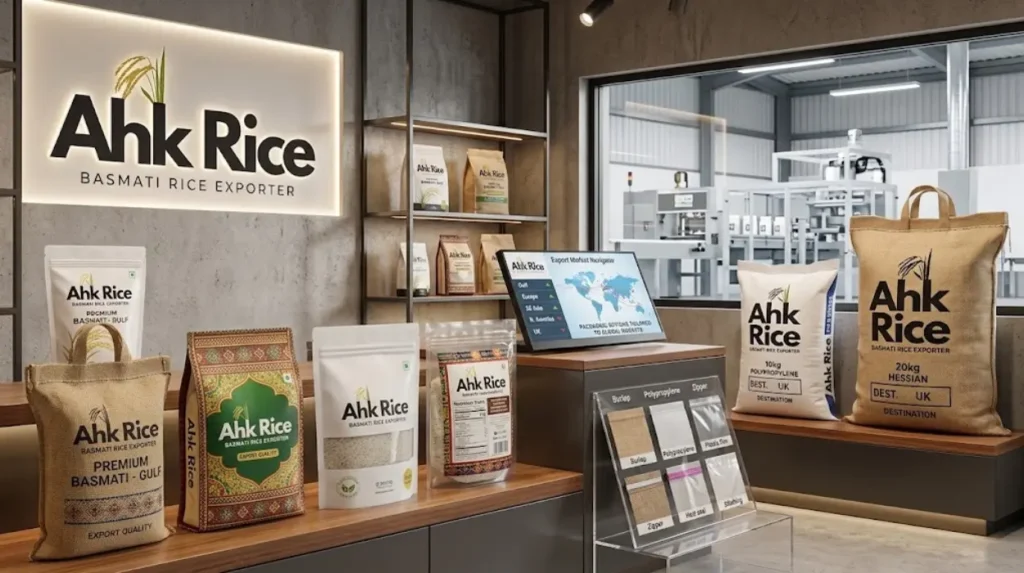
Packaging decisions depend on retail habits, climate, transport routes, import rules and distribution channels. Retail-focused markets often favour printed smaller packs, while wholesalers prioritise strength and cost per tonne. Importers must confirm material suitability and labelling requirements before approving production.
UAE retail and wholesale markets
The United Arab Emirates serves as a retail, wholesale, food-service and re-export hub. Supermarkets and speciality grocery stores use consumer-sized packs, while distributors and restaurants frequently purchase larger sacks.
BOPP-laminated woven PP suits branded retail products that require durable construction and detailed printing. Plain or printed woven PP sacks suit bulk distribution where functional strength and cost matter most. Inner liners provide an additional layer when the specification calls for it.
Hot conditions and humidity make warehouse practices important. Importers should check container dryness, bag integrity, storage ventilation and moisture conditions during transit. Packaging alone does not prevent condensation caused by temperature changes inside a container.
Other international markets
Gulf markets often require a mix of retail packs and larger commercial sacks. African wholesale channels commonly value durable packaging and clear grade identification. European and North American buyers also assess food-contact compliance, traceability, label declarations and applicable food-safety controls.
No single bag material is mandatory across every market. The importer must confirm the applicable regulations, packaging declarations, language requirements and customer specifications before the exporter prints or fills the final bags.
What Certifications and Compliance Requirements Apply to Rice Packaging?
Rice packaging must meet applicable food-contact material rules and destination-market labelling requirements. Relevant controls include material declarations, migration testing where required, traceability and hygiene procedures. ISO 22000, HACCP and BRCGS certification relate to food-safety management or packaging operations, depending on scope and certification.
Food-contact packaging must be suitable for its intended use. Buyers should request supplier declarations and test reports that match the material, intended food contact, use conditions and destination requirements. Testing requirements vary by market and packaging construction.
HACCP identifies and controls food-safety hazards through a documented process. ISO 22000 specifies a food-safety management system. BRCGS standards cover defined areas of food safety or packaging materials, depending on the standard and certified operation. These certifications do not automatically establish that every bag complies with every destination’s legal requirements.
Export labels must follow the rules of the destination country. Required information can include product name, net quantity, country of origin, importer details, lot identification, storage instructions and date marking where applicable. Importers should verify mandatory declarations before approving artwork.
For shipments to the UAE, the importer should confirm current local food-registration, label and packaging requirements with the relevant authorities. Pakistani export documentation and destination-market compliance are separate responsibilities that must be coordinated before dispatch.
What Common Problems Occur With Basmati Rice Export Packaging?
Common packaging failures include torn sacks, weak seams, inaccurate net weights, unsuitable liners, condensation damage and incorrect labels. Prevention requires material specifications, verified filling weights, secure closures, dry containers, proper stacking and pre-shipment checks against the approved packing specification.
Moisture and condensation
Rice absorbs moisture from its surroundings. Damp bags, wet container floors and temperature-driven condensation can affect grain quality and increase mould risk. Dry rice, sound containers, appropriate loading practices and moisture-management measures reduce these risks.
Bag tears and broken seams
Low-strength fabric, poor stitching, sharp pallet edges and excessive stacking loads can cause bag failures. Importers should define minimum bag strength, seam quality and handling requirements. Loading inspections should identify damaged sacks before the container doors close.
Incorrect material selection
A low-cost unlined sack does not provide the same protection as a suitable lined or laminated bag. Conversely, premium printing adds little value to a shipment sold only through bulk wholesale channels. Packaging should match the product’s actual distribution requirements.
Misleading packaging claims
Terms such as recyclable, biodegradable, compostable and food-grade have specific meanings and depend on material composition, testing and applicable rules. A natural-fibre jute bag is not automatically a complete moisture barrier, and a plastic bag is not automatically suitable for food contact.
Label and weight errors
Incorrect variety names, missing lot codes, wrong net weights and outdated artwork can delay acceptance. A final label review and calibrated checkweigher reduce these errors. The approved artwork and packing specification should match the commercial documents.
How Should Importers Compare Jute, Non-Woven, PP and BOPP Bags?
Importers should compare bag strength, food-contact suitability, moisture protection, print quality, pack size, total cost and destination requirements. Jute prioritises traditional appearance, non-woven PP supports selected retail uses, woven PP offers practical strength, and BOPP-laminated PP combines strength with high-quality printing.
A practical comparison begins with the sales channel. Retail products need readable labels and attractive presentation. Wholesale sacks need reliable seams, suitable lifting and stacking strength, and cost-efficient handling. Bulk packaging requires equipment-compatible dimensions and documented safe working loads.
Next, assess the complete packaging system rather than the outer bag alone. Confirm whether the pack requires a liner, whether the closure maintains its integrity, and whether the material meets the intended food-contact conditions.
Finally, calculate total delivered packaging cost. Include bag price, printing, liners, packing labour, storage, palletisation, transport losses and any compliance testing. A cheaper sack becomes expensive when damage, rejected labels or rework increase the shipment’s total cost.
For UAE buyers comparing jute, non-woven, PP and BOPP formats, the next step is to match each material to the intended sales channel, climate exposure and importer requirements. A clear specification prevents confusion between appearance, durability and actual barrier performance.
Frequently Asked Questions
What is the best packaging for exported Basmati rice?
BOPP-laminated woven PP bags suit branded retail rice because they combine strength with high-quality printing. Plain woven PP sacks suit wholesale shipments where durability and cost efficiency are priorities.
What bag sizes are available for Basmati rice exports?
Common sizes include 1 kg, 2 kg, 5 kg, 10 kg, 25 kg and 50 kg. Bulk buyers can also specify larger-capacity packaging systems.
Are jute bags suitable for exporting Basmati rice?
Yes. Jute bags suit selected traditional and specialty markets. Since jute fabric does not provide a reliable moisture barrier, a suitable food-grade liner is necessary when additional protection is required.
What is the difference between PP and BOPP rice bags?
Woven PP bags use interlaced polypropylene tapes. BOPP bags for rice typically combine a woven PP base with a printed BOPP film, providing stronger visual presentation and durable construction.
Which rice packaging is suitable for UAE markets?
BOPP-laminated PP bags suit branded retail products, while woven PP sacks suit wholesale and food-service distribution. The final choice depends on the buyer’s specifications, food-contact compliance, storage conditions and labelling requirements.