What Packaging Options Are Available for Basmati Rice Exported to the USA?
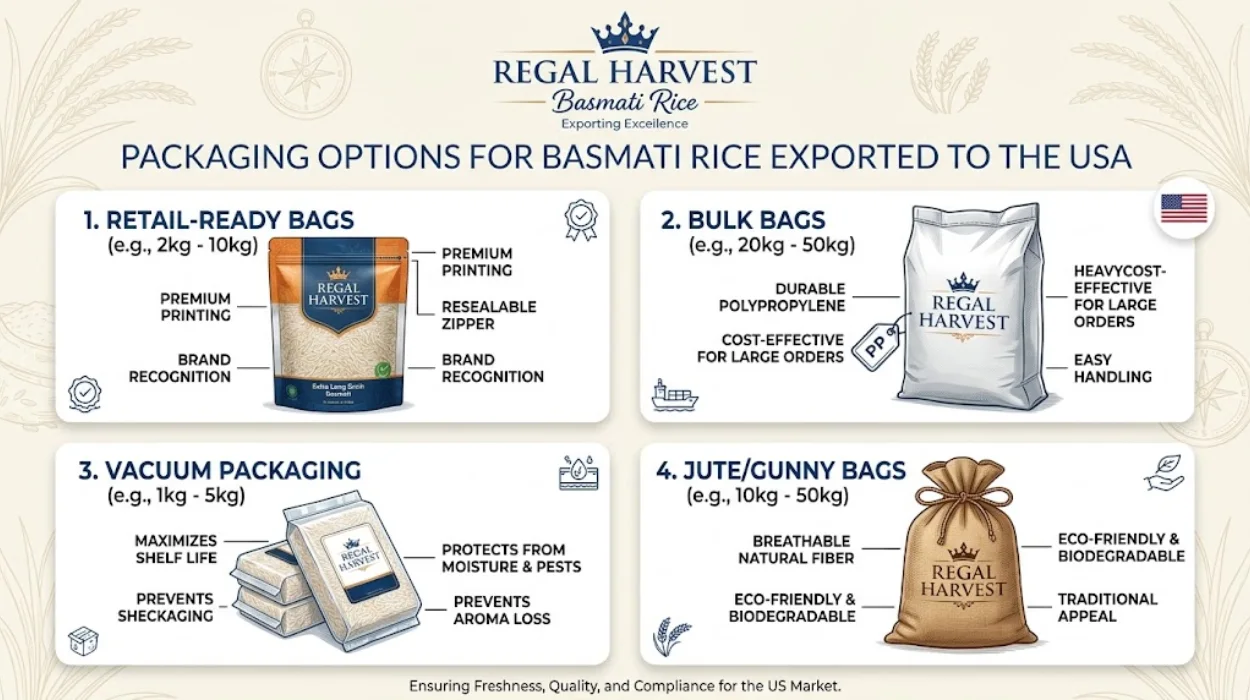
Basmati rice exported to the USA uses packaging formats such as woven polypropylene (PP) sacks, BOPP laminated bags, non-woven bags, jute sacks, polyethylene liners, and resealable zipper pouches. The correct format depends on shipment volume, retail positioning, moisture protection, food-contact safety, labeling requirements, and distribution conditions.
Pakistani Basmati rice varieties, including 1121, Super Kernel, and 1509 Basmati rice, serve different retail, wholesale, restaurant, and institutional markets. Their packaging must protect grain quality during storage and transportation while presenting accurate product information to American buyers. Packaging selection also affects shipping efficiency, shelf presentation, traceability, and compliance with applicable United States food-labeling requirements.
What Is Basmati Rice Export Packaging?
Basmati rice export packaging is the system of food-contact materials, bags, closures, labels, and shipping containers used to protect rice from contamination, moisture, physical damage, and handling losses during international distribution. It includes consumer-sized retail packs, wholesale sacks, and secondary transport packaging.
Export packaging has three main levels. Primary packaging directly contains the rice, such as a 2 kg zipper pouch or a 25 kg woven polypropylene bag with a suitable food-contact liner. Secondary packaging groups individual retail packs into cartons or bundles. Tertiary packaging uses pallets, stretch film, and shipping containers to move larger quantities efficiently.
For example, a US supermarket brand selling premium 1121 Basmati rice uses a printed 2 kg retail pouch, while a restaurant distributor purchases 20 kg or 25 kg sacks. Both formats protect the same food product, but their handling requirements, label layouts, and purchasing purposes differ.
Packaging also communicates the rice variety, net weight, country of origin, storage instructions, and responsible business details. These details help importers, retailers, warehouse operators, and consumers identify the product throughout the supply chain.
Which Packaging Options Are Available for Basmati Rice Exported to the USA?
Common Basmati rice packaging options include woven polypropylene sacks, BOPP laminated bags, non-woven bags, jute sacks, polyethylene pouches, and zipper pouches. Each option provides a different balance of strength, appearance, moisture protection, convenience, and cost.
1. Woven Polypropylene Bags
Woven polypropylene bags use interlaced plastic tapes to create a strong, lightweight sack. Exporters commonly use them for 5 kg, 10 kg, 20 kg, and 25 kg rice packs. Larger industrial formats also serve bulk distribution.
These bags withstand repeated handling and support efficient warehouse stacking. A food-grade inner liner provides an additional barrier when the woven material alone does not meet the required moisture or hygiene specifications. Woven sacks suit wholesale distributors, restaurant suppliers, and foodservice operators.
2. BOPP Laminated Bags
Biaxially oriented polypropylene (BOPP) bags use a printed polypropylene film laminated to a woven or other suitable substrate. The outer surface supports high-quality graphics, product information, and brand identification.
BOPP packaging suits supermarket shelves and ethnic grocery stores that need clear product presentation. For example, a 5 kg bag of Super Kernel Basmati rice can display grain imagery, cooking instructions, net weight, and origin information. The complete structure must provide the required sealing strength and food-contact suitability.
3. Non-Woven Polypropylene Bags
Non-woven polypropylene packaging uses bonded plastic fibers rather than interlaced woven tapes. Its appearance and surface texture differ from conventional woven sacks. These bags suit selected retail and promotional applications where presentation matters.
Buyers must distinguish reusable shopping bags from packaging designed to contain food directly. A non-woven outer bag requires a suitable food-contact inner package when its material, construction, or cleanliness does not meet direct-contact requirements.
4. Jute Bags
Jute bags are made from natural plant fibers and provide a traditional, textured appearance. They suit specialty retail, gift packs, and selected premium food presentations.
Jute is not automatically moisture-resistant or suitable for direct food contact. A clean, food-contact-compliant inner liner helps separate the rice from fibers, dust, odors, and external moisture. Importers also assess stitching, cleanliness, storage conditions, and the potential for contamination before selecting jute packaging.
5. Polyethylene Pouches
Polyethylene pouches provide a flexible package for rice in consumer and commercial quantities. Their protective performance depends on the film type, thickness, seals, and any additional barrier layers.
These pouches suit simple retail packs and applications that prioritize compact storage. They require strong seals and suitable food-contact documentation. Transparent designs allow consumers to inspect grain appearance, while printed designs provide space for product identification and instructions.
6. Zipper Pouches
Zipper pouches feature a resealable closure that allows consumers to open and close the package after purchase. Common applications include 1 kg, 2 kg, and 5 lb retail packs, depending on the target market.
A zipper improves convenience but does not automatically make a package airtight or moisture-proof. The primary heat seal, film structure, zipper quality, and closure design determine the actual protection. Importers should evaluate package integrity and shelf-life performance before approving the format.
How Does Basmati Rice Packaging Work During Export?
Basmati rice packaging works through a controlled sequence of product inspection, filling, weighing, sealing, labeling, case packing, and container loading. Each stage reduces contamination risks, maintains declared net weight, and supports traceability from the processing facility to the US importer.
Step 1: Inspect and Grade the Rice
Processors assess the rice against the agreed specification. Checks cover grain length, broken percentage, moisture content, foreign matter, appearance, and aroma where relevant. Laboratory testing addresses the food-safety parameters required by the buyer and destination market.
For example, a shipment of 1121 Basmati rice follows its agreed grain and purity specifications before packaging begins. Packaging cannot correct poor grading or replace food-safety testing.
Step 2: Select the Packaging Structure
The exporter and importer establish the pack size, material, liner, closure, artwork, and carton configuration. The specification identifies the intended use, food-contact requirements, and transport conditions.
A retail pouch needs different graphics and opening features from a wholesale sack. Both require suitable materials and a design that preserves rice quality throughout the intended distribution period.
Step 3: Fill, Weigh, and Seal
Automated or controlled filling equipment places the rice into the selected bags. Weighing systems verify the declared quantity, while sealing equipment closes the package.
Quality checks examine seal consistency, leakage, stitching, damaged bags, and weight variation. Packaging records connect the finished lot with the relevant production batch and inspection documentation.
Step 4: Apply Labels and Prepare Cartons
Retail labels identify the food and provide the information required for the product’s US market category. Depending on the product and applicable requirements, labels include the statement of identity, net quantity, ingredient declaration where applicable, responsible business information, and Nutrition Facts.
For example, a packaged rice product sold in a US supermarket requires a label review appropriate to its classification and any applicable exemptions. Country-of-origin marking and customs documentation also need to be addressed separately from retail food labeling.
Step 5: Inspect and Load the Shipment
Finished packages are checked before they enter export cartons, pallet configurations, or shipping containers. Loading teams inspect container cleanliness, dryness, odor, structural condition, and suitability for food cargo.
The loading plan prevents crushing and excessive movement. Appropriate container liners, moisture-control measures, and secure palletization help reduce condensation and handling damage during ocean transport.
Which Packaging Components Protect Exported Basmati Rice?
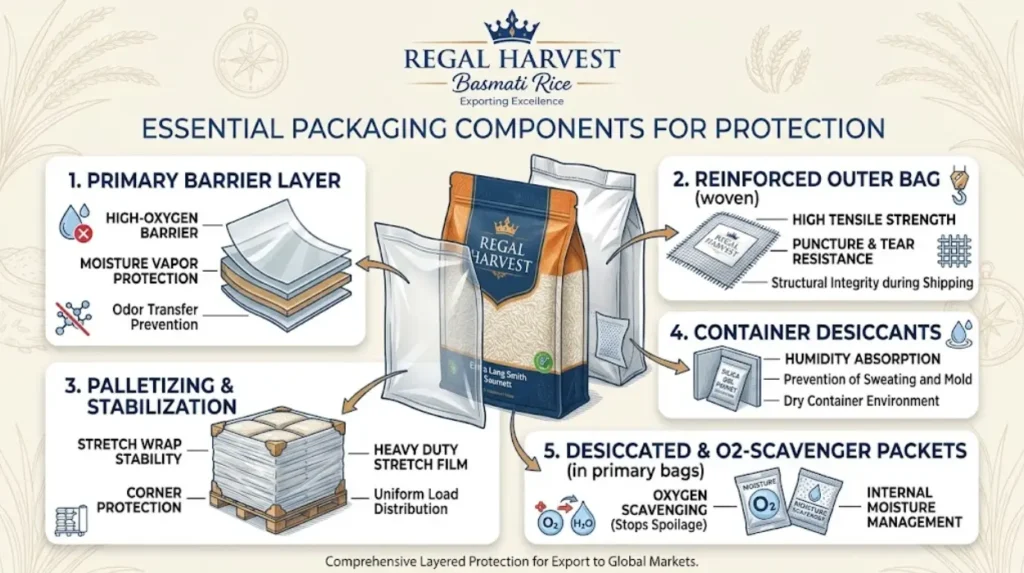
Effective Basmati rice packaging combines a suitable food-contact layer, a protective outer structure, a secure closure, accurate labeling, and appropriate transport materials. The complete system must protect the rice without introducing contamination or misleading product information.
Food-Contact Layer
The inner layer directly touches the rice. It must be suitable for its intended food-contact conditions and comply with applicable US requirements. Polyethylene and polypropylene are common materials, but compliance depends on the specific formulation and intended use.
Protective Outer Layer
The outer layer provides mechanical strength, printability, or additional barrier performance. Woven polypropylene, laminated films, and paper-based components serve different purposes. Material selection considers puncture resistance, stacking, humidity exposure, and handling conditions.
Closure and Sealing System
Heat seals, stitched closures, and resealable zippers serve different package formats. A secure closure prevents accidental opening and limits exposure to external contaminants. Testing verifies the seal’s strength and consistency under expected transport conditions.
Labels and Traceability
Labels communicate product identity and required consumer information. Lot codes, production records, and shipment documents support traceability. Packaging artwork must match the actual rice variety, declared quantity, origin information, and applicable labeling rules.
Secondary and Tertiary Packaging
Cartons, pallets, stretch film, and protective liners stabilize the shipment. Correct stacking reduces compression damage and improves warehouse handling. Exporters also select materials and pallet configurations according to the importer’s receiving equipment and distribution system.
What Are the Benefits of Choosing the Right Rice Packaging?
Suitable rice packaging protects grain quality, supports food safety, improves handling, communicates product information, and reduces avoidable transport losses. Its value depends on matching the package to the rice grade, sales channel, storage environment, and distribution requirements.
Moisture-resistant packaging helps control unwanted moisture exposure, although no package eliminates every risk of condensation or improper storage. Strong sacks reduce tearing during loading and unloading. Reliable seals limit contamination from external sources, while clear labels help buyers distinguish rice varieties and pack sizes.
Retail packaging also influences consumer convenience. Zipper pouches allow resealing, and printed BOPP bags provide room for clear product identification. Wholesale sacks prioritize handling efficiency, storage, and economical distribution.
For US importers, standardized packaging supports inventory management and retail replenishment. Consistent pack dimensions simplify pallet planning, while readable lot codes help trace individual batches. Correctly designed packaging therefore supports product quality, supply-chain efficiency, and accurate communication.
Which Packaging Options Suit Different US Rice Markets?
Retail supermarkets generally prioritize presentation and consumer convenience, while wholesalers and foodservice distributors prioritize strength, efficient storage, and handling. Specialty retailers also consider material appearance, pack size, and the expectations of their target customers.
Supermarkets and Grocery Stores
Printed BOPP bags and flexible retail pouches suit packaged Basmati rice sold in supermarkets. Common formats include 1 kg, 2 kg, 5 lb, and 10 lb packs. The final choice depends on consumer demand, shelf dimensions, price positioning, and retailer requirements.
Premium 1121 Basmati rice often uses packaging that emphasizes long grains, aroma, and cooking quality. Super Kernel products also benefit from clear grade identification and accurate product descriptions.
Restaurants and Foodservice Distributors
Restaurants, caterers, and institutional kitchens purchase larger packs that simplify storage and kitchen replenishment. Woven polypropylene sacks with appropriate food-contact liners are common choices for 20 kg and 25 kg formats.
The buyer prioritizes package strength, manageable handling, consistent specifications, and clear lot identification. Packaging must also suit the distributor’s warehouse and delivery system.
Specialty and Gift Retail
Jute outer bags and premium zipper pouches serve selected specialty retail applications. These formats emphasize appearance and convenience. Any decorative outer material must remain separate from the food unless it independently meets the applicable food-contact requirements.
Private-Label Importers
Private-label importers require packaging artwork that matches their brand guidelines and product specifications. They coordinate pack dimensions, label information, barcode placement, case quantities, and pallet configuration before production. Final artwork approval helps prevent discrepancies between the packaging and the imported product.
What US Requirements Apply to Basmati Rice Packaging?
Basmati rice packaging for the US market must meet applicable food-contact, food-labeling, and import requirements. The exact obligations depend on the package materials, product classification, importer arrangements, and whether the rice is sold directly to consumers or through commercial channels.
The US Food and Drug Administration (FDA) regulates food safety and relevant labeling requirements. Materials that contact food must comply with applicable food-contact provisions. Importers and suppliers should maintain suitable documentation for the actual material and intended conditions of use.
Consumer packages generally require a clear statement of identity and net quantity, along with other applicable label information. Nutrition Facts requirements depend on the product and available exemptions. The responsible business information and country-of-origin marking must also be reviewed under the relevant rules.
Imported food shipments are subject to applicable FDA import procedures, including Prior Notice requirements. Facilities involved in manufacturing, processing, packing, or holding food for US consumption must assess applicable FDA registration requirements and exemptions. The US importer also evaluates its obligations under the Foreign Supplier Verification Programs (FSVP) rule.
Packaging alone does not establish that a rice shipment complies with every US import requirement. Importers coordinate packaging review with food-safety documentation, customs procedures, and any applicable retailer specifications before dispatch.
What Common Problems Occur with Basmati Rice Export Packaging?
Common packaging problems include moisture exposure, weak seals, torn sacks, inaccurate net weights, incorrect labels, and unsuitable food-contact materials. These issues arise when specifications, packaging equipment, storage conditions, or pre-shipment inspections fail to meet the requirements agreed with the importer.
Moisture exposure and container condensation can damage packaging and affect rice quality. Exporters reduce these risks through dry storage, suitable container inspections, appropriate loading practices, and carefully selected protective materials.
Weak seams and damaged closures create handling and contamination risks. Consistent sealing checks, sack-strength assessments, and inspection of finished packages help identify defects before shipment.
Incorrect labels create avoidable compliance and receiving problems. Importers should approve artwork before printing and verify product identity, net weight, country-of-origin marking, and applicable US labeling details. The final packaging specification should also match the sales contract.
A frequent misconception is that every attractive bag is suitable for direct food contact. Decorative jute and non-woven bags require separate evaluation. Another misconception is that a zipper alone guarantees freshness. Actual protection depends on the complete packaging structure and its performance under expected storage conditions.
How Should Importers Compare Rice Packaging Options Before Ordering?
Importers should compare packaging materials by food-contact suitability, moisture protection, mechanical strength, pack size, labeling space, cost, and distribution requirements. A written packaging specification helps exporters and buyers agree on the finished product before bulk production and shipment.
The specification should identify the rice variety, net weight, bag dimensions, material structure, liner requirements, closure type, artwork version, and number of packs per carton. It should also define inspection criteria for package integrity and labeling accuracy.
Retail buyers should evaluate shelf presentation, readability, consumer convenience, and storage after opening. Wholesale buyers should prioritize durability, lifting and stacking requirements, and compatibility with warehouse operations.
Importers should request material declarations and supporting food-contact documentation where applicable. Packaging samples allow teams to inspect print quality, sealing, bag strength, and actual dimensions before approving production. These checks reduce misunderstandings and help maintain consistent packaging across repeat orders.
Basmati rice packaging for the USA ranges from woven polypropylene sacks for bulk distribution to BOPP laminated bags, polyethylene pouches, zipper packs, and lined jute bags for selected retail applications. Each format serves a different combination of protection, presentation, convenience, and handling requirements.
The best choice depends on the rice variety, sales channel, pack size, food-contact suitability, storage conditions, and US labeling obligations. Importers who establish clear specifications and approve packaging samples before production improve quality control and reduce avoidable shipping and receiving problems.
Understanding the differences between jute, non-woven, BOPP, and zipper pouch packaging provides a practical starting point for comparing retail and bulk formats. The next step is to match each material to the intended distribution channel and the technical requirements of the rice product.
Frequently Asked Questions
What packaging options are available for Basmati rice exported to the USA?
Common options include woven polypropylene sacks, BOPP laminated bags, non-woven bags, jute bags with suitable inner liners, polyethylene pouches, and resealable zipper pouches. The best option depends on the intended sales channel, package size, food-contact suitability, and storage requirements.
Which rice packaging is best for US supermarkets?
BOPP laminated bags and flexible retail pouches are suitable options for US supermarkets. They support product identification, attractive printing, and clear labeling. Zipper pouches also provide convenient resealing for consumers.
Are jute bags suitable for exporting Basmati rice?
Jute bags suit selected specialty retail and gift-packaging applications. Because jute is not inherently moisture-resistant or suitable for every direct food-contact application, a suitable food-grade inner liner is often necessary.
What is the difference between BOPP and non-woven rice bags?
BOPP bags use a printed polypropylene film, often laminated to a woven substrate, to provide a smooth surface for graphics. Non-woven bags use bonded fibers rather than interlaced woven tapes. Their strength, barrier properties, and suitability for direct food contact depend on the complete material structure.
What packaging sizes are commonly used for exported Basmati rice?
Common retail sizes include 1 kg, 2 kg, 5 lb, and 10 lb packs. Wholesale and foodservice formats often include 10 kg, 20 kg, and 25 kg sacks. Actual sizes depend on importer requirements and the target distribution channel.