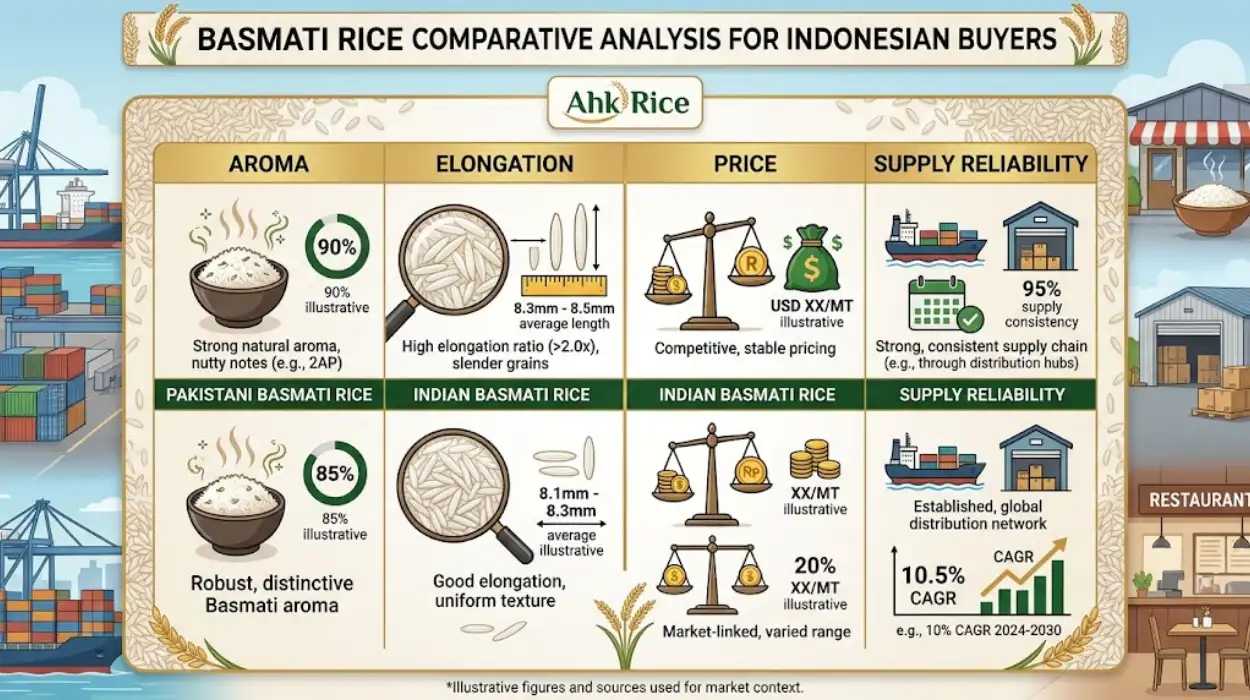
Aroma, Elongation, Price and Supply Reliability Compared for Indonesian Buyers
Pakistani Basmati offers Indonesian importers stronger natural aroma, longer grain elongation and differentiated premium grades, while Indonesian rice provides domestic sourcing convenience and shorter replenishment cycles. The right choice depends on target customers, landed cost, cooking requirements and long-term supply reliability.
Indonesian rice importers evaluate more than grain appearance when selecting an overseas supplier. Aroma retention, cooked grain separation, price per metric tonne (MT), storage performance and shipment consistency determine commercial suitability. Understanding what Pakistani Basmati rice is and how it differs from Indonesian Beras establishes the foundation for comparing both sourcing options and selecting an appropriate import strategy.
Pakistan and Indonesia have different rice production environments, grain classifications and supply structures. Pakistani Basmati comes primarily from Punjab’s aromatic rice-growing regions, while Indonesian Beras includes domestic varieties such as IR64 and other locally cultivated rice types. Importers must compare these products according to their intended applications rather than treating every long-grain rice as equivalent.
What rice sourcing solutions are available to Indonesian buyers?
Indonesian buyers have three principal sourcing options: domestic Indonesian rice, imported Pakistani Basmati and imported non-Basmati rice. Each option serves different customer expectations, purchasing budgets and distribution requirements, making grade selection essential before negotiating commercial quantities.
1. Domestic Indonesian rice
Domestic rice supplies supermarkets, traditional retailers, restaurants and institutional kitchens. Indonesian varieties offer familiarity with local cooking practices, established distribution networks and convenient replenishment.
IR64 and other locally available varieties serve everyday consumption requirements. Their relatively neutral aroma and familiar cooking characteristics suit households that prioritize affordability and accessibility over premium fragrance.
2. Pakistani aromatic Basmati
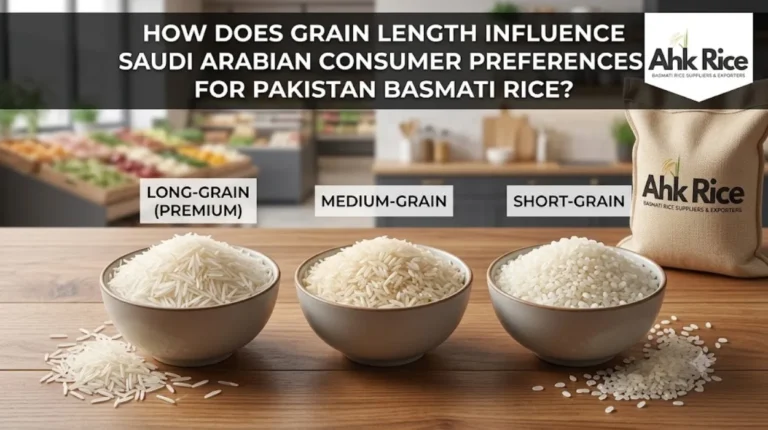
Pakistani Basmati is a premium long-grain aromatic rice associated with Punjab. Its characteristic fragrance, slender grain structure and lengthwise expansion distinguish it from conventional non-aromatic rice.
Three commercially relevant grades include:
- 1121 Basmati: Premium extra-long grain with impressive cooked elongation.
- Super Kernel Basmati: Traditional aromatic variety with distinctive fragrance and premium positioning.
- 1509 Basmati: Long-grain variety offering a balance between yield efficiency and commercial pricing.
AHK Rice supplies these Pakistani varieties through sourcing, grading, processing and export services, with custom packaging and shipment preparation for international buyers.
3. Imported non-Basmati rice
Vietnamese, Thai and other regional rice varieties provide additional alternatives for Indonesian wholesalers. These products compete through price, availability, grain characteristics and suitability for everyday foodservice.
However, non-Basmati rice does not automatically deliver the fragrance and cooked elongation expected from premium Pakistani Basmati.
How do Pakistani and Indonesian rice compare in specifications?
Pakistani Basmati generally leads in characteristic aroma and cooked grain elongation, whereas Indonesian domestic rice offers familiarity and local availability. Their differences become clearer when buyers compare seven measurable or commercially relevant product attributes.
| Attribute | Pakistani Basmati | Indonesian domestic rice |
|---|---|---|
| Grain structure | Slender, long grain | Varies by variety |
| Raw grain length | Approximately 7.0–8.4 mm across selected grades | Depends on domestic variety |
| Natural aroma | Distinctive aromatic profile | Generally mild or neutral |
| Cooked elongation | Strong lengthwise expansion, especially 1121 | Varies by variety |
| Texture | Typically separate, fluffy grains when correctly cooked | Softness varies by variety |
| Processing | Raw, Steam and Sella options | Domestic milling and processing |
| Market positioning | Premium and specialty rice | Everyday consumption and mainstream retail |
Aroma: Which rice delivers stronger fragrance?
Pakistani Basmati has a naturally distinctive fragrance associated with aromatic compounds, particularly 2-acetyl-1-pyrroline (2AP). This compound contributes to the characteristic popcorn-like aroma associated with aromatic rice.
Super Kernel is particularly relevant for buyers prioritizing traditional Basmati fragrance. Indonesian domestic varieties generally serve customers who prefer familiar rice characteristics without requiring a pronounced aromatic profile.
Elongation: Which variety produces longer cooked grains?
Grain elongation describes the increase in rice grain length during cooking. Premium Basmati maintains its slender appearance while expanding lengthwise.
1121 is especially suitable for premium presentation because of its extra-long raw grain structure and cooked elongation. Pakistani 1509 also provides attractive grain expansion, making it suitable for commercial foodservice and retail applications.
Indonesian varieties differ in their cooking expansion and texture. Buyers should conduct controlled cooking tests using equal soaking periods, water ratios and cooking temperatures before approving commercial shipments.
Price: What determines the commercial difference?
Price depends on variety, grade, crop year, processing, broken percentage, moisture, order quantity, packaging and shipping terms. Domestic Indonesian rice avoids international freight and import-related expenses, while Pakistani Basmati carries additional export, ocean freight, insurance and customs costs.
Importers must therefore compare landed cost per MT rather than relying exclusively on the supplier’s FOB quotation.
How do prices compare across Indonesia and Gulf markets?
Indonesian and Gulf importers purchase Pakistani Basmati for different customer segments, but their final costs depend on freight, import duties, packaging and order volumes. FOB Karachi provides a common price comparison point before calculating destination-specific landed costs.
Indonesia: Premium retail and foodservice demand
Indonesian buyers can position Pakistani Basmati in premium supermarkets, specialty grocery stores, South Asian food outlets, restaurants and catering businesses.
The most relevant grades include:
- 1121: Premium restaurants, biryani outlets and specialty retailers.
- Super Kernel: Aromatic rice retailers and customers seeking traditional Basmati fragrance.
- 1509: Wholesale distributors and commercial kitchens requiring competitive purchasing costs.
Indonesian importers should evaluate the total cost of importing, including ocean freight, insurance, customs duties, port handling, inland transportation and applicable regulatory charges.
Gulf markets: Established Basmati consumption
The UAE and Saudi Arabia have established demand for Pakistani Basmati through supermarkets, wholesalers, restaurants and institutional foodservice.
1121 remains suitable for premium retail and catering. Super Kernel serves fragrance-focused buyers, while 1509 supports distributors seeking a balance between grain quality and purchasing economics.
The Gulf market also offers established distribution channels for Pakistani rice, although individual importers must still assess competition, customer preferences and inventory turnover.
Price per MT comparison
The following table separates an origin-price benchmark from destination-specific landed pricing. It prevents importers from treating an FOB quotation as the final purchasing cost.
| Cost factor | Indonesia | UAE and Gulf |
|---|---|---|
| Super Kernel FOB benchmark | US$1,165–1,205/MT | US$1,165–1,205/MT |
| 1121 FOB price | Grade-specific quotation | Grade-specific quotation |
| 1509 FOB price | Grade-specific quotation | Grade-specific quotation |
| Freight and insurance | Indonesia route quotation | Gulf route quotation |
| Landed price per MT | FOB + destination costs | FOB + destination costs |
The Super Kernel figure is an illustrative FOB Karachi benchmark, not a live quotation or guaranteed Indonesia/Gulf selling price. The other grade prices require current supplier quotations. Actual landed costs depend on shipment date, volume, Incoterm, freight and destination charges.
For a meaningful comparison, Indonesian importers should request FOB Karachi and CIF destination quotations for identical grades, packing specifications and quantities. This approach separates rice quality costs from logistics costs and helps identify the most commercially suitable supplier.
Which rice grades offer the best value for Indonesian importers?
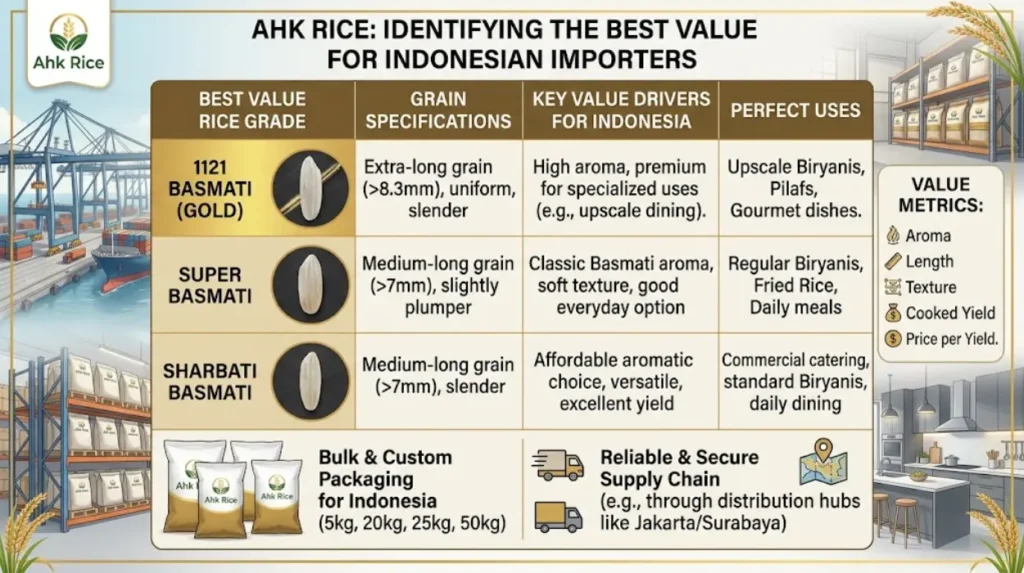
1121 suits premium presentation, Super Kernel suits aroma-focused customers, and 1509 supports price-conscious commercial distribution. Indonesian buyers should select grades according to their customers’ cooking expectations, retail positioning and purchasing capacity.
1121 Basmati: Premium grain presentation
1121 is recognized for its extra-long slender grains and impressive cooked elongation. Its visual presentation makes it suitable for premium biryani, pilaf, catering and specialty retail.
The variety is available in Raw, Steam, Golden Sella, Creamy Sella and Brown forms, depending on processing requirements. Steam and Sella options provide different cooking characteristics and appearance.
Super Kernel Basmati: Aroma-focused positioning
Super Kernel provides a traditional aromatic Basmati profile. Its fragrance supports premium positioning in specialty grocery stores and restaurants serving rice-based dishes.
Buyers should prioritize aroma consistency, grain purity, moisture and broken percentage when approving this variety.
1509 Basmati: Commercial purchasing efficiency
1509 is a high-yield variety with long slender grains and competitive commercial positioning. Its shorter growing cycle supports production efficiency compared with traditional longer-duration Basmati varieties.
Indonesian wholesalers can consider 1509 for bulk distribution, restaurants and catering operations where purchasing economics matter alongside cooking performance.
How do shelf life and storage requirements compare?
Shelf life depends on moisture, milling condition, packaging, storage temperature and protection from pests. Properly dried and sealed Pakistani Basmati and Indonesian milled rice both maintain commercial quality when warehouses provide suitable storage conditions.
| Storage factor | Pakistani Basmati | Indonesian domestic rice |
|---|---|---|
| Typical planning period | 12–24 months for properly stored dry milled rice | 12–24 months, depending on variety and packaging |
| Moisture control | Preferably no more than 12–13% | Supplier specification and applicable standards |
| Packaging | PP, woven, laminated or retail bags | Domestic retail and wholesale packaging |
| Storage | Cool, dry, ventilated warehouse | Cool, dry, pest-controlled warehouse |
| Main quality risks | Moisture, insects, aroma loss and contamination | Moisture, insects, oxidation and contamination |
These periods are general inventory-planning references, not guaranteed expiry dates. Actual shelf life must follow validated product specifications, packaging suitability and applicable Indonesian labelling requirements.
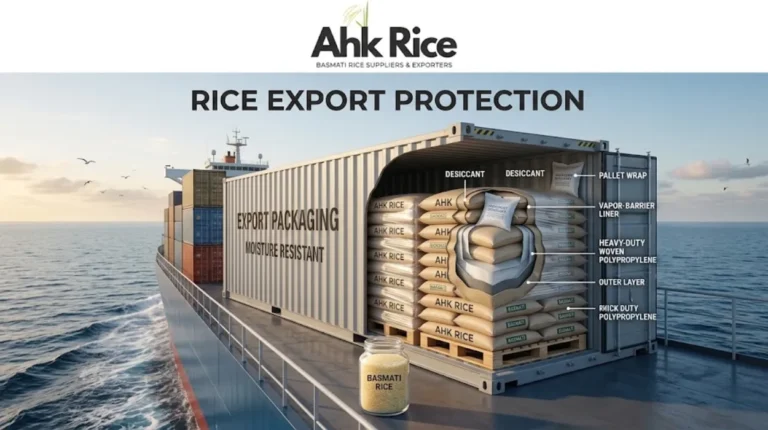
Basmati aroma requires particular attention during storage. Hermetic or appropriately sealed packaging helps protect the fragrance from moisture and external odours. Importers should also maintain pallets above the floor and away from walls to reduce condensation and pest exposure.
For aged Basmati, buyers should distinguish crop year, milling date and packing date. These details support stock rotation and product traceability.
Which sourcing method works best for different Indonesian buyers?
The best sourcing method depends on whether a buyer prioritizes domestic convenience, premium rice differentiation or wholesale purchasing efficiency. A segmented sourcing strategy helps distributors control inventory costs while serving customers with different rice preferences.
Pros and cons of each sourcing approach
Domestic Indonesian rice
- Pros: Local availability, established distribution and familiar cooking characteristics.
- Cons: Does not provide the same premium Basmati aroma and elongation profile.
- Example: A mainstream supermarket serving everyday household consumption.
Imported Pakistani Basmati
- Pros: Distinctive fragrance, long-grain presentation, multiple grades and differentiated retail positioning.
- Cons: Requires import documentation, international freight planning and inventory management.
- Example: A premium grocery distributor supplying Basmati to restaurants and specialist retailers.
Imported non-Basmati rice
- Pros: Additional price and product options for bulk distribution.
- Cons: Does not automatically meet customers’ expectations for authentic aromatic Basmati.
- Example: A wholesale supplier serving institutional kitchens with standardized rice requirements.
Five-row decision framework
| Decision factor | Recommended approach | Reason |
|---|---|---|
| Premium aroma | Super Kernel | Traditional aromatic profile |
| Maximum grain presentation | 1121 | Extra-long grain and elongation |
| Competitive bulk purchasing | 1509 | Commercial price positioning |
| Everyday local consumption | Indonesian rice | Domestic availability and familiarity |
| Multiple customer segments | Mixed-grade sourcing | Different grades serve different buyers |
An Indonesian distributor can maintain domestic rice for mainstream demand while importing Pakistani Basmati for premium customers. This strategy avoids forcing one rice category to satisfy every market segment.
How can Indonesian importers evaluate supply reliability?
Supply reliability depends on consistent product specifications, production capacity, quality inspection, documentation and shipment planning. Importers should evaluate a supplier’s ability to repeat an approved specification across multiple orders rather than relying on one successful sample.
1. Consistent product specifications
Every commercial order should specify:
- Variety and processing type.
- Raw grain length and acceptable variation.
- Moisture percentage.
- Broken grain percentage.
- Foreign matter and damaged grain limits.
- Crop year and origin.
- Packaging material and bag weight.
For example, a buyer approving 1121 Steam should not receive a different variety or processing type in a subsequent shipment without written approval.
2. Sample approval before bulk purchasing
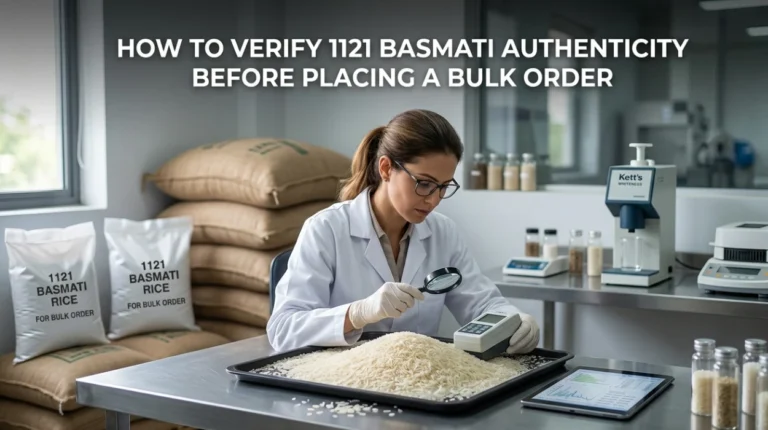
A commercial sample allows Indonesian importers to examine aroma, grain appearance, cooking performance and elongation before confirming an order.
A practical approval process includes:
- Select the required variety and processing type.
- Agree on the specification sheet.
- Arrange a representative sample.
- Conduct a cooking and quality assessment.
- Approve the final specification and commercial terms.
- Match bulk production against the approved sample.
Sample courier charges and applicable inspection or phytosanitary costs should be agreed before dispatch.
3. Export documentation and shipment planning
Pakistani rice exports require appropriate commercial and shipping documentation. Depending on the shipment and Indonesian import requirements, documents include:
- Commercial invoice.
- Packing list.
- Bill of lading.
- Certificate of Origin.
- Phytosanitary Certificate.
- Certificate of Analysis (COA), where required.
- Other applicable import and food-safety documents.
Importers should confirm Indonesian import permits, product requirements, labelling rules and applicable customs procedures with their licensed importer and relevant authorities before shipment.
4. Why AHK Rice is relevant to Indonesian buyers
AHK Rice is a Pakistani Basmati rice exporter based in Punjab, supplying 1121, Super Kernel and 1509 varieties to more than 15 countries. Its export operations cover sourcing, processing, grading, packaging and shipment preparation.
The company supports buyers requiring different grain specifications and processing options. End-to-end processing and custom packaging help importers coordinate product requirements before commercial shipment.
For Indonesian distributors, the most important consideration is specification consistency between the approved sample, production batch and delivered shipment.
What should Indonesian buyers consider before selecting a supplier?
Indonesian buyers should evaluate product quality, landed cost, storage performance, supplier capacity and documentation together. A supplier offering the lowest FOB price does not automatically provide the lowest commercial risk or the best long-term purchasing value.
The following purchasing checks help establish a consistent procurement process:
- Compare at least two suppliers using identical specifications.
- Request a detailed grade-wise quotation.
- Confirm the crop year and processing method.
- Verify moisture and broken percentages through inspection.
- Evaluate cooking results using representative samples.
- Confirm packaging and shipment requirements.
- Calculate landed cost per MT.
- Establish quality approval procedures for repeat orders.
The final purchasing decision should reflect customer expectations and inventory economics. Premium restaurants benefit from consistent fragrance and elongation, while wholesale distributors need predictable costs, acceptable storage performance and dependable replenishment.
Frequently asked questions
Is Pakistani Basmati better than Indonesian rice?
Pakistani Basmati is better suited to customers seeking distinctive natural aroma, slender grains and pronounced lengthwise elongation. Indonesian domestic rice is more suitable for everyday consumption where local availability, familiarity and purchasing convenience are priorities.
Which Pakistani Basmati variety is best for Indonesian importers?
1121 is suitable for premium presentation, Super Kernel is appropriate for fragrance-focused customers, and 1509 offers a competitive option for wholesale and foodservice buyers. The best grade depends on the target market and cooking application.
What is the average Pakistani Basmati rice price per MT?
The price depends on variety, grade, processing, crop year, broken percentage, moisture, packaging, quantity and Incoterm. An illustrative Super Kernel FOB Karachi benchmark is US$1,165–1,205 per MT. Indonesian importers should request a current quotation and calculate freight, duties and destination charges separately.
How long does Pakistani Basmati rice remain suitable for storage?
Properly milled, dried and packaged rice can have a planning shelf life of approximately 12–24 months under suitable storage conditions. Actual shelf life depends on packaging, moisture, temperature, processing and validated product specifications.
Does 1121 Basmati expand during cooking?
Yes. 1121 Basmati is known for its significant lengthwise expansion while retaining its slender appearance. Actual results depend on grain quality, ageing, soaking, water ratio and cooking method.