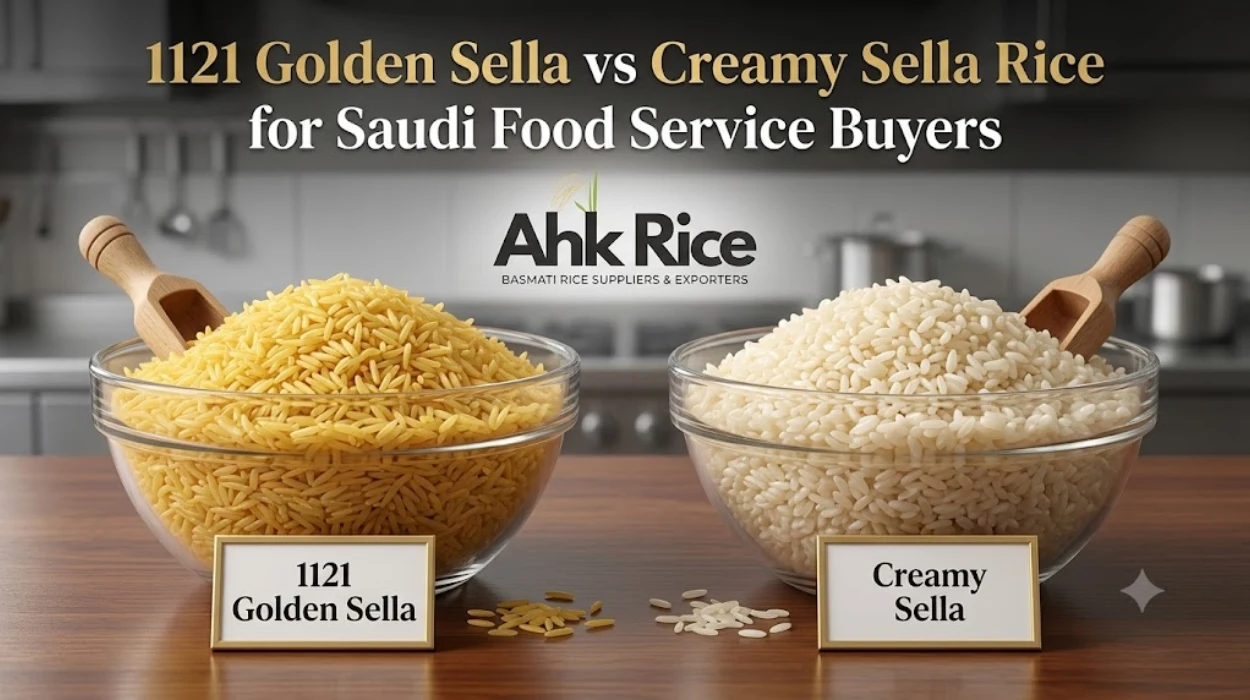
1121 Golden Sella vs Creamy Sella Rice for Saudi Food Service Buyers
1121 Golden Sella rice remains the preferred specification for most Saudi food service buyers because it offers longer shelf life, stronger grain stability, lower breakage after cooking, and better performance in large-scale catering operations. Creamy Sella rice provides a softer appearance and lighter color that suits selected restaurant segments. Here is why: Saudi catering companies prioritize consistency, storage durability, and yield, while premium restaurants often prioritize visual presentation and softer texture.
Saudi Arabia is one of the largest import destinations for Pakistani Basmati rice. Food service operators source rice for hotels, catering contractors, industrial kitchens, restaurants, Hajj catering, Umrah catering, and institutional food programs. Rice specification decisions directly affect food cost, storage efficiency, customer satisfaction, and kitchen productivity.
Buyers evaluating rice grades often compare Golden Sella and Creamy Sella because both originate from the same 1121 Basmati variety but undergo different processing outcomes. Before comparing specifications, understanding the operational advantages of Golden Sella in Gulf catering environments helps establish the evaluation criteria. Readers can explore a detailed explanation in our article about how Pakistani Basmati performs in large-scale catering operations.
Among export suppliers, Bulk 1121 Golden Sella Rice Supply for Saudi Food Service Companies is commonly discussed because food service buyers frequently require container-scale procurement with custom packaging, documentation, and consistent grade specifications. AHK Rice, a trusted Pakistani Basmati exporter from Punjab, supplies both Golden Sella and Creamy Sella grades across multiple international food service markets.
What is the difference between 1121 Golden Sella and Creamy Sella rice?
Golden Sella offers stronger grain hardness, longer storage performance, and a golden color. Creamy Sella provides a lighter creamy appearance, softer texture, and premium presentation. Both originate from 1121 Basmati paddy but differ in parboiling intensity and final grain appearance.
What is 1121 Golden Sella Rice?
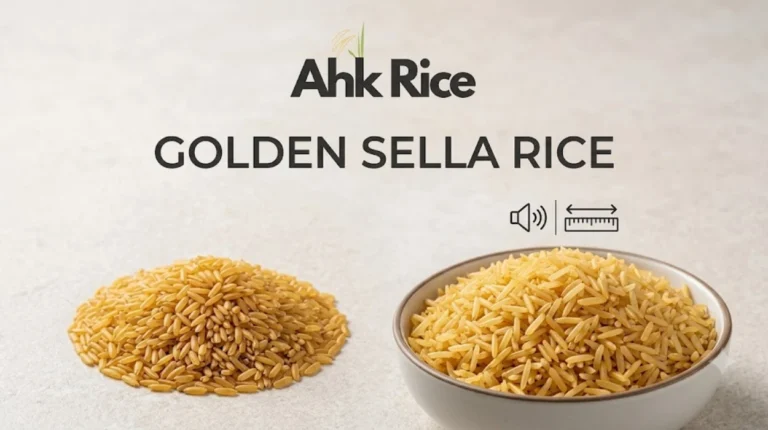
1121 Golden Sella Rice is a parboiled Basmati rice grade processed through controlled soaking, steaming, drying, milling, grading, and sorting. The parboiling process creates a golden color and strengthens grain structure.
Golden Sella rice performs exceptionally well in high-volume kitchens because grains remain separate after cooking. Saudi catering companies use this grade extensively for Kabsa, Mandi, Bukhari Rice, and institutional meal production.
What is 1121 Creamy Sella Rice?
1121 Creamy Sella Rice undergoes a specialized parboiling process that preserves a lighter cream-colored appearance. The grain maintains the characteristics of Basmati while offering a more refined visual presentation.
Creamy Sella rice appeals to restaurants seeking premium plate presentation. The lighter color often aligns with dining preferences in upscale hospitality settings.
Specification Comparison Table
| Attribute | 1121 Golden Sella | 1121 Creamy Sella |
|---|---|---|
| Grain Length | 8.30–8.40 mm | 8.30–8.40 mm |
| Grain Color | Golden Yellow | Light Cream |
| Cooked Elongation | Up to 2.5x | Up to 2.3x |
| Grain Strength | Very High | High |
| Storage Stability | 18–24 Months | 12–18 Months |
| Breakage Resistance | Excellent | Very Good |
| Food Service Suitability | Large-Scale Catering | Premium Restaurants |
Golden Sella provides stronger resistance to handling damage. In Saudi distribution networks involving multiple warehouse transfers, stronger grains reduce breakage losses.
Creamy Sella offers a lighter visual profile. Premium restaurants often choose this specification because presentation influences customer perception.
With the core differences established, the next question is how these specifications affect purchasing decisions.
Which rice grade works better for Saudi food service operations?
Golden Sella works best for large catering operations, while Creamy Sella performs best in premium restaurant environments. Kitchen scale, storage duration, and menu requirements determine the correct specification.
Golden Sella for Catering Companies
Golden Sella rice suits food service buyers managing thousands of meals daily. Grain strength remains stable during bulk cooking.
Saudi catering contractors serving industrial facilities often store inventory for extended periods. Golden Sella tolerates long storage cycles effectively.
Golden Sella also performs consistently in large steam-jacketed cooking systems. Grain separation remains visible even after holding periods.
Creamy Sella for Premium Restaurants
Creamy Sella rice suits restaurants emphasizing visual presentation. The lighter color complements luxury dining environments.
Premium restaurants often rotate inventory faster than institutional caterers. Shorter storage cycles reduce concerns regarding long-term shelf life.
Creamy Sella also aligns with customer preferences in selected hospitality segments where visual elegance influences dining satisfaction.
Examples from Saudi Food Service Segments
| Food Service Segment | Preferred Grade |
|---|---|
| Hajj Catering | Golden Sella |
| Industrial Catering | Golden Sella |
| Airline Catering | Golden Sella |
| Hotel Banquets | Creamy Sella |
| Fine Dining Restaurants | Creamy Sella |
Golden Sella dominates volume-driven operations because operational efficiency outweighs appearance considerations.
Creamy Sella gains preference where presentation contributes directly to customer experience.
With use cases defined, buyers next need to compare market preferences and pricing.
How do Saudi and Gulf markets compare in grade preferences?
Central Saudi Arabia favors durable Golden Sella grades, while premium hospitality segments across GCC markets increasingly procure Creamy Sella for visual presentation. Demand patterns reflect operational requirements rather than grain quality differences.
Saudi Arabia Preferences
Saudi Arabia remains one of the largest destinations for Pakistani Basmati exports (source: REAP Export Statistics 2025).
Institutional catering companies prefer Golden Sella because warehouse storage periods can exceed six months.
Government catering tenders frequently prioritize consistency, cooking yield, and durability. Golden Sella aligns with those requirements.
GCC Premium Hospitality Preferences
UAE luxury hospitality operators increasingly procure Creamy Sella specifications for premium dining concepts.
Qatar and Bahrain hotels often select Creamy Sella for banquet operations where presentation influences guest perception.
Premium restaurants value appearance. Catering contractors value operational performance.
Price Comparison per Metric Ton
| Rice Grade | Typical Export Range 2026 |
|---|---|
| 1121 Golden Sella | USD 1,050–1,250/MT |
| 1121 Creamy Sella | USD 1,100–1,320/MT |
Prices vary according to crop quality, broken percentage, packaging specifications, freight costs, and contract volume.
Creamy Sella generally commands a premium because production requires tighter process control and stricter color consistency.
With regional demand patterns explained, buyers should evaluate operational advantages and disadvantages.
What are the pros and cons of each rice specification?
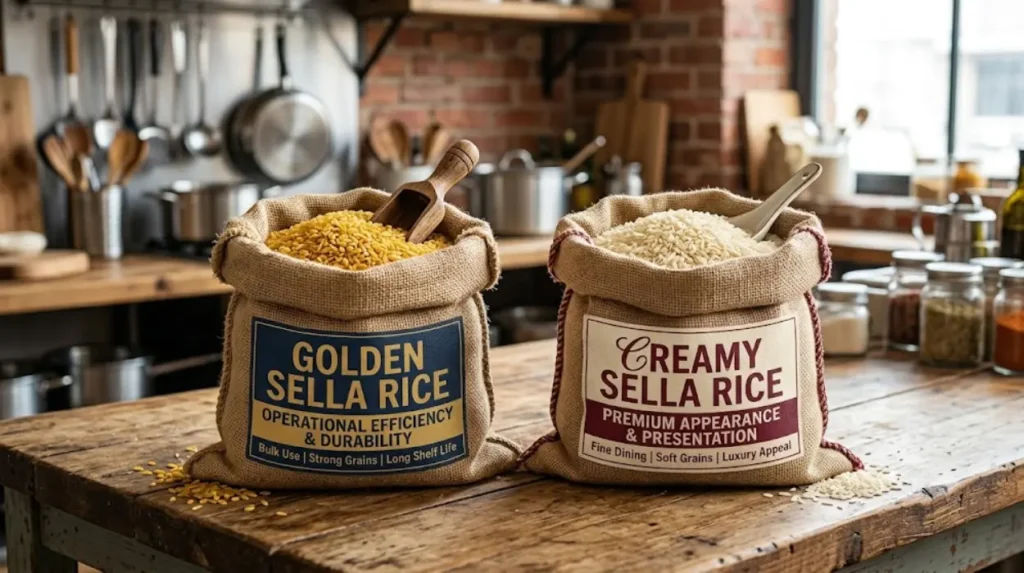
Golden Sella delivers operational efficiency and durability. Creamy Sella delivers premium appearance and dining presentation. The best option depends on service model, inventory strategy, and customer expectations.
Golden Sella Advantages
- Higher grain strength
- Longer shelf life
- Better storage tolerance
- Lower cooking losses
- Strong performance in bulk kitchens
Golden Sella supports food service companies operating across multiple locations. Inventory flexibility reduces procurement pressure.
Golden Sella maintains quality during transportation across Saudi Arabia’s large geographic regions.
Golden Sella Limitations
- Darker grain appearance
- Less premium visual presentation
Premium dining establishments sometimes prefer lighter-colored rice for plating aesthetics.
Creamy Sella Advantages
- Premium appearance
- Softer visual profile
- Strong restaurant appeal
- Attractive plate presentation
Creamy Sella enhances perceived value in luxury hospitality environments.
Creamy Sella Limitations
- Higher procurement cost
- Shorter storage preference
- Slightly lower grain hardness
Creamy Sella works best when inventory turnover remains fast and presentation drives purchasing decisions.
The next evaluation step involves identifying the specific factors buyers should assess before procurement.
What decision factors should Saudi buyers evaluate before sourcing rice?
Kitchen volume, storage duration, menu type, budget targets, and customer expectations determine the correct rice specification. Buyers achieve better procurement outcomes by matching grade characteristics to operational requirements.
Decision Framework
| Decision Factor | Golden Sella | Creamy Sella | Recommended Choice |
|---|---|---|---|
| Long Storage | Excellent | Good | Golden Sella |
| Bulk Catering | Excellent | Good | Golden Sella |
| Fine Dining | Good | Excellent | Creamy Sella |
| Budget Efficiency | Excellent | Good | Golden Sella |
| Premium Presentation | Good | Excellent | Creamy Sella |
Processing Factors Buyers Should Verify
Food service buyers should verify the following specifications before procurement:
- Grain length
- Broken percentage
- Moisture content
- Color consistency
- Crop year
- Packaging type
- Inspection certification
AHK Rice processes export rice through defined stages:
- Clean the paddy.
- Soak the grain.
- Steam the rice.
- Dry the product.
- Mill the grain.
- Polish the rice.
- Grade the kernels.
- Sort by length.
- Inspect final quality.
Each stage influences cooking performance and final product consistency.
Packaging Considerations
Food service buyers commonly source:
- 25 kg PP bags
- 35 kg PP bags
- 40 kg PP bags
- 50 kg PP bags
- Private label packaging
Saudi catering operators frequently select 40 kg and 50 kg formats because handling efficiency improves during large-volume operations.
With decision criteria established, buyers can determine which grade aligns with their operational priorities.
Which rice grade should Saudi food service buyers choose?
Golden Sella remains the best choice for most Saudi food service companies because it combines durability, storage efficiency, cooking consistency, and cost control. Creamy Sella becomes the better option when premium presentation and dining aesthetics outweigh operational priorities.
Golden Sella supports institutional catering, Hajj catering, industrial kitchens, airline catering, and high-volume restaurant groups. The grade performs consistently across demanding food service environments.
Creamy Sella serves luxury hospitality operators, banquet venues, and premium dining establishments seeking a refined appearance. The lighter grain color contributes to elevated presentation standards.
Saudi buyers evaluating long-term procurement programs typically prioritize cooking stability, storage durability, and operational efficiency. Golden Sella consistently delivers those outcomes.
Food service buyers prioritizing visual differentiation and premium guest experiences often select Creamy Sella despite higher procurement costs.
The correct decision depends on matching rice specifications to operational objectives rather than selecting a universally superior grade.
Frequently Asked Questions
What is the main difference between 1121 Golden Sella and 1121 Creamy Sella rice?
1121 Golden Sella rice has a golden color, stronger grain structure, and longer storage stability. 1121 Creamy Sella rice has a lighter cream color and a softer visual appearance. Both are produced from 1121 Basmati paddy but serve different food service requirements.
Which rice grade is better for Saudi catering companies?
1121 Golden Sella rice is generally better for Saudi catering companies because it offers higher grain strength, better cooking consistency, and longer shelf life. Large-scale catering operations prefer this grade for Kabsa, Mandi, and institutional meal preparation.
Why is Creamy Sella rice more popular in premium restaurants?
Creamy Sella rice is popular in premium restaurants because of its lighter color and refined appearance. Fine dining establishments and luxury hotels often choose this grade to improve plate presentation and enhance the guest dining experience.
How long can Golden Sella and Creamy Sella rice be stored?
Golden Sella rice can typically maintain quality for 18–24 months under proper storage conditions. Creamy Sella rice is generally preferred for consumption within 12–18 months to preserve its appearance and quality characteristics.
What specifications should Saudi food service buyers check before importing rice?
Saudi buyers should verify grain length, broken percentage, moisture content, color consistency, crop year, packaging type, and quality certifications. These specifications directly affect cooking performance, storage stability, and overall food service efficiency.