How Does Pakistan Basmati Rice Grain Length Matter to Indonesian Buyers?
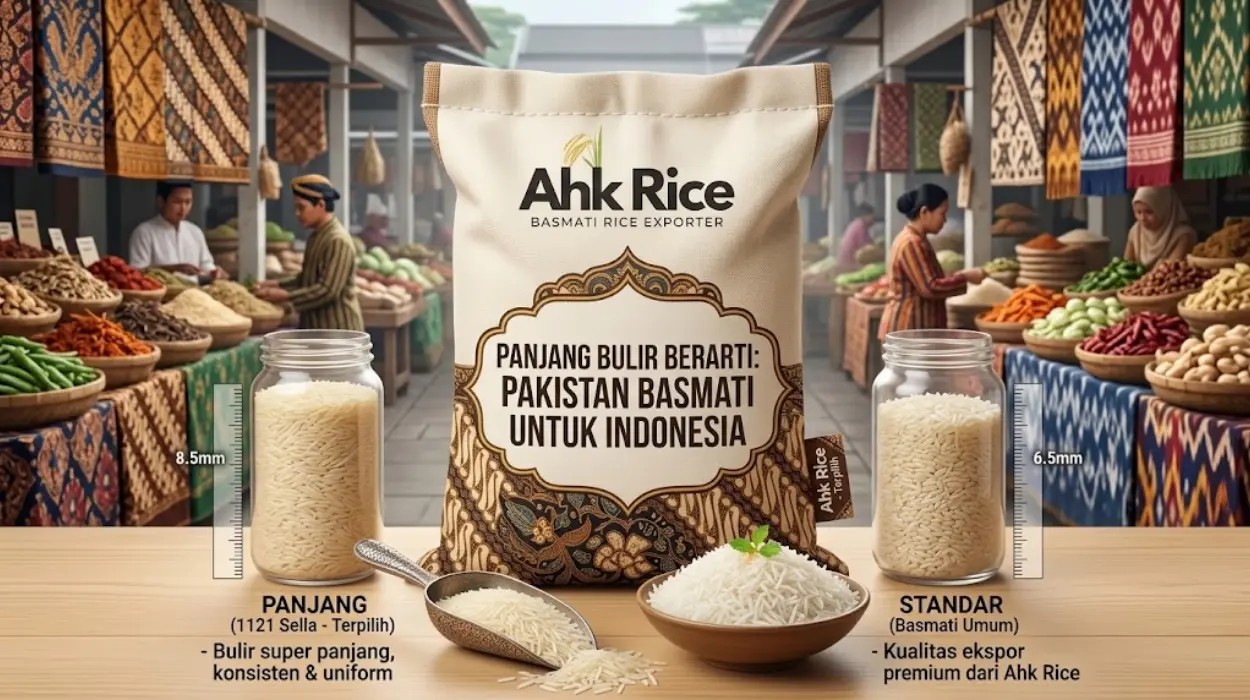
Pakistan Basmati rice grain length matters to Indonesian buyers because length affects cooking appearance, product positioning, grade selection, packaging claims, and buyer expectations. Long, slender grains are a defining feature of premium Basmati rice, while different Pakistani varieties provide distinct length, texture, and processing characteristics.
What Is Pakistan Basmati Rice Grain Length?
Pakistan Basmati rice grain length describes the measured physical length of a milled rice kernel, usually assessed before or after cooking to determine appearance, grade, and suitability for specific commercial requirements. Indonesian buyers use this specification when evaluating Basmati quality.
Rice grain length is measured in millimeters. The measurement normally refers to the individual kernel rather than the whole rice sample. Export specifications also examine broken grains, chalkiness, moisture, foreign matter, milling quality, and other physical characteristics.
Pakistan produces several Basmati and long-grain rice varieties. Important commercial varieties include 1121 Basmati, Super Kernel Basmati, and 1509. These varieties differ in kernel dimensions, elongation after cooking, aroma, texture, and processing characteristics.
Grain length becomes particularly important when Indonesian importers compare suppliers. A longer raw kernel creates a different visual profile after cooking. The cooked grain also retains its identity more clearly when the rice has good milling quality and appropriate moisture.
For Indonesian buyers, grain length is therefore one specification within a larger quality system. It should not be treated as the only measure of rice quality.
Why Is Grain Length Important in Basmati Rice?
Grain length influences the visual identity of cooked Basmati rice. Long, separate grains are associated with premium rice presentations. Restaurants, caterers, wholesalers, and retail brands often use this appearance when positioning rice for consumers.
Grain length also supports product segmentation. A buyer sourcing premium Basmati for restaurants can require a different specification from a buyer sourcing rice for mass-market foodservice. The required specification determines which Pakistani variety and grade fits the application.
How Is Grain Length Measured in Pakistan Basmati Rice?
Grain length is measured by examining individual kernels and recording their dimensions in millimeters, while commercial specifications also evaluate broken percentage, moisture, milling recovery, purity, and cooking performance to establish the overall grade.
The process begins with representative sampling. A sample is taken from the rice lot so the measurement reflects the shipment rather than one selected kernel.
Individual grains are measured using appropriate grain-measuring equipment. Export laboratories and quality-control departments can assess kernel length, width, length-to-width ratio, broken grains, damaged grains, chalky grains, and other physical attributes.
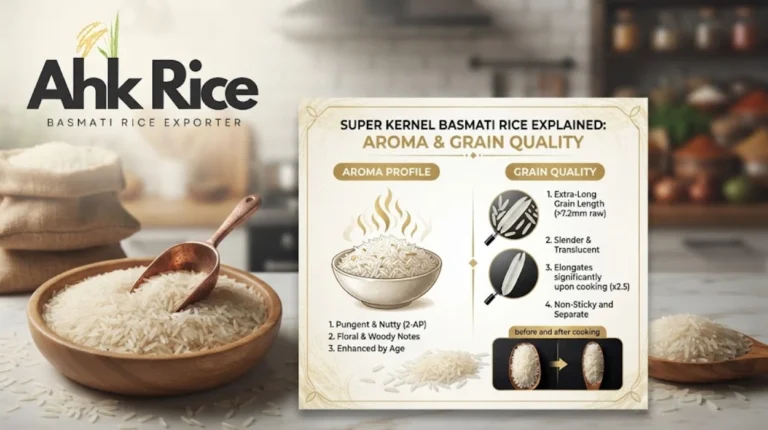
Raw grain measurement is different from cooked grain measurement. Cooking causes rice to absorb water and expand. Basmati is particularly known for elongation during cooking, so buyers often examine both raw appearance and cooked performance.
A commercial specification can therefore include several related measurements. These include average grain length, percentage of broken kernels, moisture content, and cooking characteristics.
What Does Grain Elongation Mean?
Grain elongation describes the increase in kernel length that occurs during cooking. Basmati rice is valued for substantial elongation while maintaining a long, slender appearance.
For example, a raw long-grain kernel can become visibly longer after cooking. The final appearance depends on variety, milling condition, moisture, cooking method, and storage history.
This distinction matters because two rice samples with similar raw dimensions can show different cooked results. Indonesian buyers evaluating premium Basmati should therefore assess both physical specifications and cooking performance.
Which Pakistani Basmati Varieties Have Different Grain-Length Profiles?
Pakistan’s major commercial Basmati varieties include 1121, Super Kernel, and 1509, with each offering a different combination of raw grain dimensions, cooking elongation, aroma, texture, maturity period, and processing characteristics for international markets.
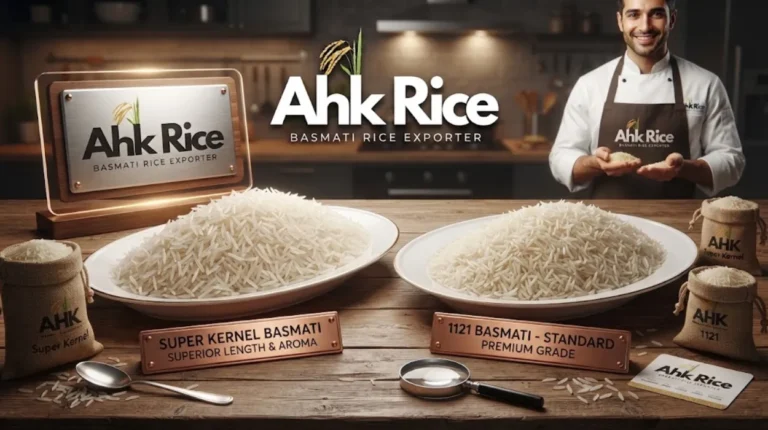
1121 Basmati is widely recognized for its exceptionally long, slender kernel and strong cooking elongation. It is available in forms such as White, Steam, Golden Sella, Creamy Sella, and Brown rice.
Super Kernel Basmati has a long, slender grain and is strongly associated with traditional Pakistani Basmati characteristics. It is available as White, Steam, Sella, and Parboiled rice.
1509 Basmati is another long-grain variety used in export markets. It is commonly processed into White, Steam, and Golden Sella forms. Its commercial appeal includes long grain appearance and cooking performance.
Processing changes the physical and cooking characteristics of rice. White rice, Steam rice, and Sella rice therefore require separate specifications even when they originate from the same variety.
How Does 1121 Compare With Super Kernel and 1509?
1121 is generally selected when maximum long-grain appearance and strong elongation are priorities. Super Kernel provides a traditional Basmati profile with long, slender kernels. 1509 offers another long-grain option with distinct processing and commercial characteristics.
The correct comparison requires more than kernel length. Buyers should examine broken percentage, moisture, milling degree, grain uniformity, aroma, cooking elongation, and packaging requirements.
How Is Pakistan Basmati Rice Processed Before Export?
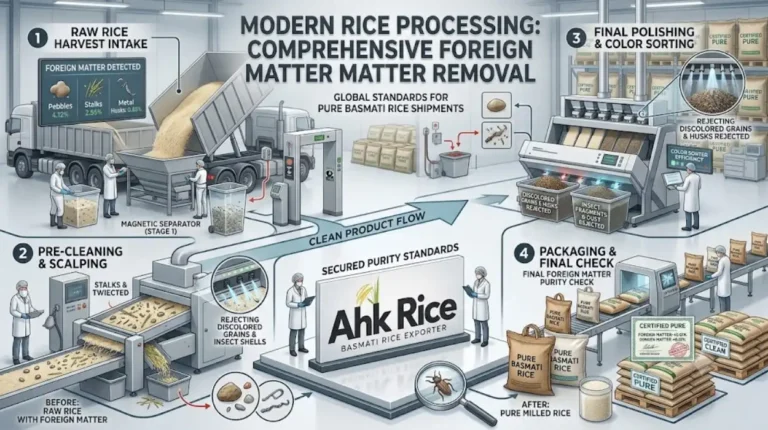
Pakistan Basmati rice passes through cleaning, de-stoning, grading, milling or parboiling, optical sorting, quality inspection, weighing, packaging, and export documentation before shipment to an international buyer.
The first stage is cleaning. Raw paddy contains materials such as stones, straw, dust, immature grains, and other field matter. Cleaning removes these materials before further processing.
The paddy can then undergo de-stoning and grading. De-stoning separates heavier particles, while grading separates grains according to physical characteristics.
For White Basmati rice, milling removes the husk and bran layers. For Steam and Sella rice, controlled heat and moisture treatment are applied before or during the milling sequence. These processes influence texture, cooking behavior, color, and grain strength.
After milling, optical sorting identifies and removes selected defective or discolored grains. Final grading controls the specification of whole kernels and broken grains.
The finished rice is inspected against the purchase specification. Typical checks include moisture, broken percentage, foreign matter, grain length, grain appearance, and packaging accuracy.
Why Does Processing Affect Grain-Length Performance?
Processing affects kernel integrity. Excessive breakage reduces the percentage of whole long grains in a shipment. Controlled processing preserves kernel structure and supports consistent cooking performance.
Storage also matters. Moisture control and appropriate warehouse conditions help preserve the physical condition of rice before export.
Which Grades Are Relevant to Indonesian Buyers?
Indonesian buyers can evaluate White, Steam, Golden Sella, Creamy Sella, and Brown Basmati grades according to their cooking method, foodservice application, retail positioning, color preference, texture requirements, and required grain appearance.
White Basmati has a natural white appearance after milling and is commonly used for everyday cooking and foodservice.
Steam Basmati undergoes steam treatment that influences grain strength and cooking characteristics.
Golden Sella Basmati is parboiled and has a distinctive golden appearance. It produces firm, separate cooked grains and suits applications where grain separation is important.
Creamy Sella Basmati has a lighter appearance than Golden Sella while retaining parboiled characteristics.
Brown Basmati retains more of the outer grain layers and has a different color, texture, and cooking profile.
Grade selection should match the buyer’s product specification. Grain length alone does not determine whether a grade is suitable.
Which Indonesian Markets Use Long-Grain Basmati Rice?
Long-grain Basmati serves Indonesian restaurants, hotels, caterers, wholesalers, distributors, specialty retailers, and consumers seeking aromatic rice with long cooked grains and a premium visual presentation.
Foodservice buyers can prioritize cooked grain separation and visual presentation. Restaurants serving biryani, pulao, and other rice-based dishes often require consistent grain appearance across repeated batches.
Wholesale distributors usually evaluate broader commercial specifications. These include price per metric ton, packaging formats, shipment quantity, shelf life, milling quality, and buyer-specific grade requirements.
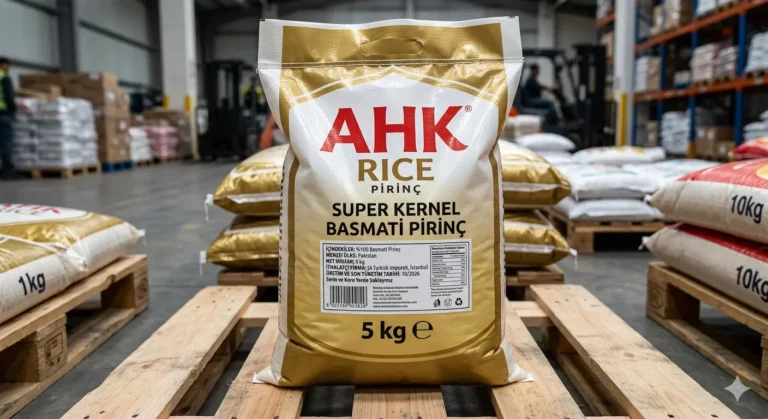
Retail buyers focus on packaging, cooking instructions, grain appearance, origin information, and consistency. Product specifications must support the claims made on the packaging.
Indonesian buyers also need to consider import documentation and applicable regulatory requirements. Export shipments commonly involve commercial invoices, packing lists, certificates of origin, phytosanitary documentation where required, and laboratory or quality certificates.
Which Certifications and Documents Apply to Pakistani Basmati Rice Exports?
International rice shipments commonly use food-safety certifications, halal documentation, phytosanitary certificates, certificates of origin, laboratory reports, and product specifications, with exact requirements determined by the destination market and shipment terms.
Food-safety systems can include HACCP, ISO 22000, and BRCGS, depending on the supplier, facility, customer specification, and destination requirements.
Halal certification is relevant to buyers serving markets and consumers that require halal verification. A certificate of origin establishes the declared country of origin.
A phytosanitary certificate verifies plant-health compliance when required by the importing authority. A Certificate of Analysis, or COA, provides laboratory results for specified quality parameters.
Importers should distinguish between certifications held by a processing facility and documents required for an individual shipment. The buyer’s purchase specification should identify the exact documentation required before loading.
What Are the Common Problems and Misconceptions About Grain Length?
The most common misconception is that longer grain automatically means better Basmati rice; actual quality also depends on variety, broken percentage, purity, moisture, milling quality, cooking elongation, aroma, and consistency across the complete shipment.
A longer grain does not automatically guarantee better cooking performance. A shipment with long kernels and excessive broken rice does not deliver the same value as a uniform shipment with a controlled broken percentage.
Another misconception is that raw grain length equals cooked grain length. Cooking changes kernel dimensions. Basmati quality includes the ability to elongate while retaining grain structure.
Buyers also sometimes compare varieties using length alone. A better approach compares the full specification. The variety, processing method, grade, moisture, broken percentage, and intended application should be assessed together.
What Should Indonesian Buyers Check Before Comparing Suppliers?
Indonesian buyers should request a written specification sheet. The document should identify variety, grade, grain length, broken percentage, moisture, foreign matter, milling specification, crop information, packing format, and required certificates.
Samples should be evaluated using the same cooking method. This creates a consistent comparison between 1121, Super Kernel, and 1509.
For buyers comparing suppliers by grain specifications, the next step is understanding how each Pakistani variety performs against Indonesian purchasing requirements. A useful comparison is covered in how Indonesian buyers compare grain length across Pakistan Basmati varieties.
What Are the Main Use Cases for Different Grain-Length Profiles?
Long-grain Basmati is used where cooked appearance, grain separation, aroma, and premium presentation matter, including restaurants, hotels, catering operations, wholesale distribution, retail packs, biryani production, and specialty rice products.
Restaurants often prioritize cooked length and separation because the final plate determines consumer perception. Hotels and catering companies also require repeatable cooking results across large batches.
Retail brands can use long-grain Basmati for premium positioning. Wholesalers and distributors can select different varieties based on regional demand, customer budgets, and preferred processing styles.
The specification should therefore begin with the end use. A buyer seeking a premium restaurant rice has different priorities from a buyer supplying a broad wholesale network.
How Should Indonesian Buyers Evaluate Pakistan Basmati Grain Length?
Indonesian buyers should compare raw grain length, cooked elongation, broken percentage, moisture, variety, processing type, milling quality, and certification documents together instead of selecting rice from grain length alone.
A practical evaluation starts with the required product profile. The buyer then identifies the variety and grade that meet those requirements.
The next step is sample testing. Buyers should measure physical characteristics and cook the samples under controlled conditions. Results should be compared against the agreed specification.
Finally, the complete shipment specification should be documented. This includes product name, variety, grade, grain-length requirement, broken percentage, moisture limit, packaging, certificates, and inspection requirements.
Grain length is therefore a commercial specification and a quality indicator. It becomes meaningful when it is connected to variety, processing, cooking performance, and the Indonesian buyer’s intended application.
Frequently Asked Questions
What grain length is associated with Pakistani Basmati rice?
Pakistani Basmati includes long, slender kernels, with commercial varieties such as 1121, Super Kernel, and 1509 offering different physical and cooking characteristics. Buyers should use the supplier’s specification sheet for the exact contracted measurement.
Is 1121 Basmati longer than Super Kernel?
1121 is generally recognized for its exceptionally long grain and strong cooking elongation. Super Kernel is also a long, slender Basmati variety. Exact dimensions depend on the grade and specification being compared.
Why does grain length matter after cooking?
Cooked grain length affects plate appearance, grain separation, and premium presentation. Basmati is valued for elongation during cooking, so buyers evaluate cooked performance alongside raw kernel dimensions.
Is longer Basmati rice always better?
No. Grain length is only one quality parameter. Broken percentage, moisture, purity, milling quality, aroma, cooking elongation, variety, and consistency also determine commercial suitability.
Which Pakistani Basmati varieties are relevant to Indonesian buyers?
Major commercial options include 1121 Basmati, Super Kernel Basmati, and 1509 Basmati. Each has different characteristics and can be processed into White, Steam, Sella, or other grades.
Which documents should Indonesian Basmati buyers request?
Buyers commonly request product specifications, Certificate of Analysis, certificate of origin, phytosanitary documentation where required, halal documentation where applicable, and evidence of relevant food-safety systems or certifications.