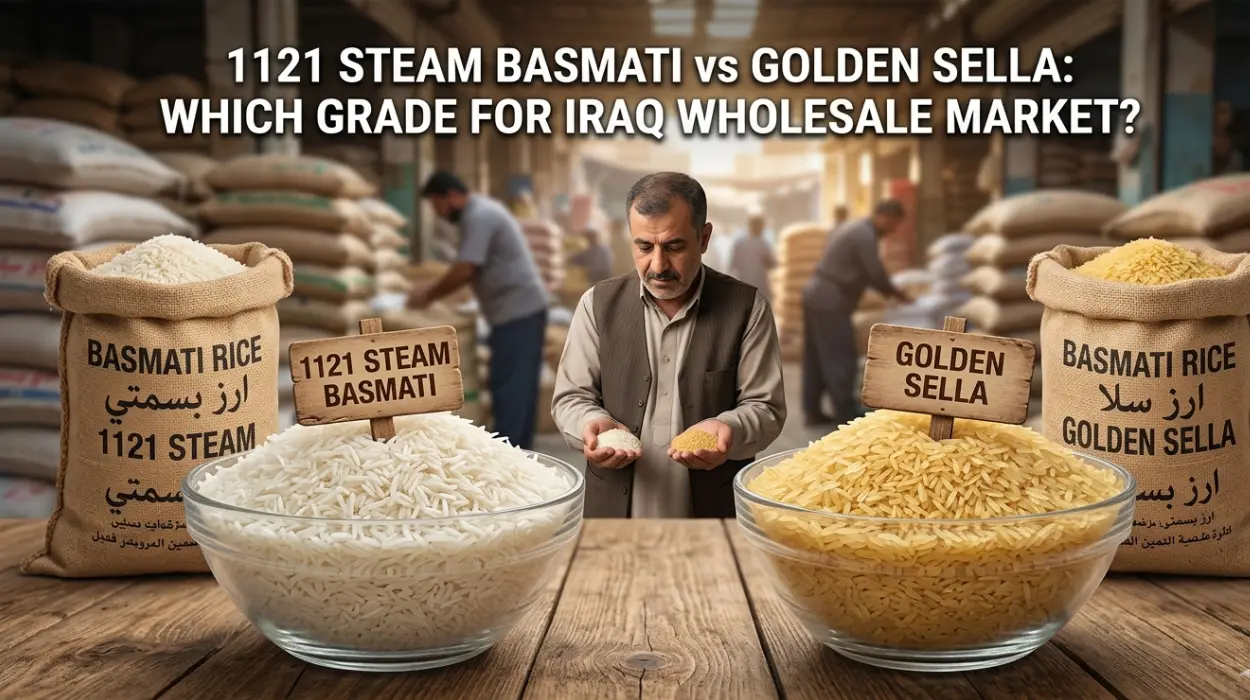
1121 Steam Basmati vs Golden Sella: Which Grade for Iraq Wholesale Market?
1121 Steam Basmati fits Iraq wholesale buyers who prioritise premium aroma and long-grain presentation, while Golden Sella fits buyers who prioritise firmer texture, higher yield, and stronger value control. The better choice depends on the buyer’s channel, target plate quality, and price sensitivity.
For product supply context, AHK Rice’s 1121 Steam Basmati export process and packing standards sit at the centre of this comparison because the market decision depends on processing quality as much as on the varietal name.
What are the available solutions?
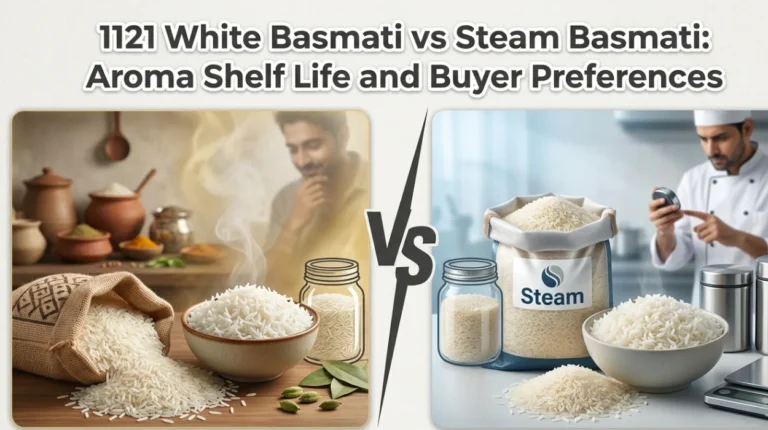
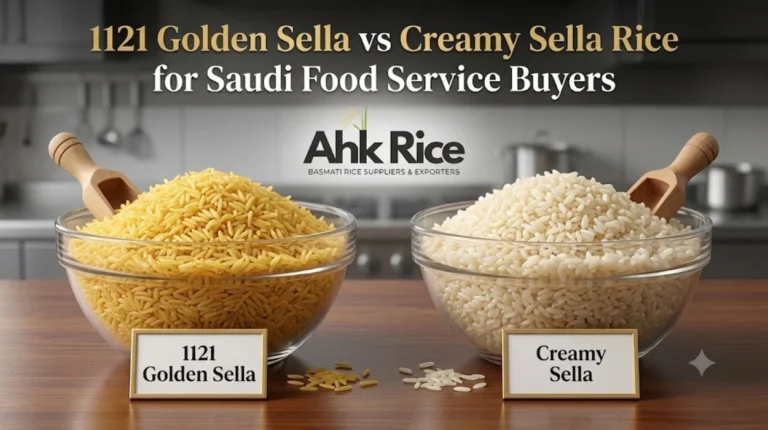
The two main solutions are 1121 Steam Basmati and Golden Sella Basmati, both exported from Pakistan but processed differently. 1121 Steam gives a softer aromatic finish, while Golden Sella gives a firmer, more polished grain with stronger cooking yield and wholesale stability.
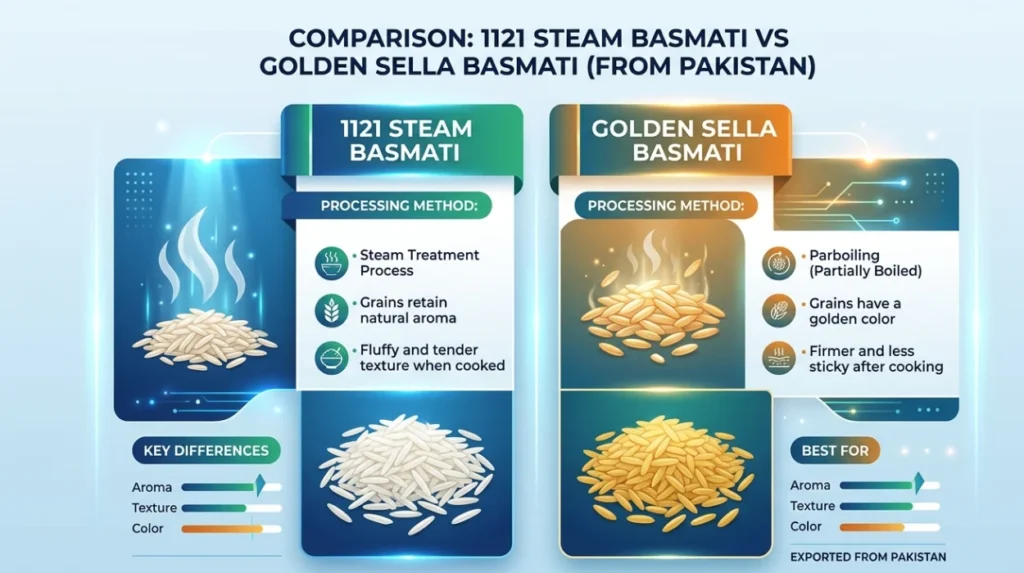
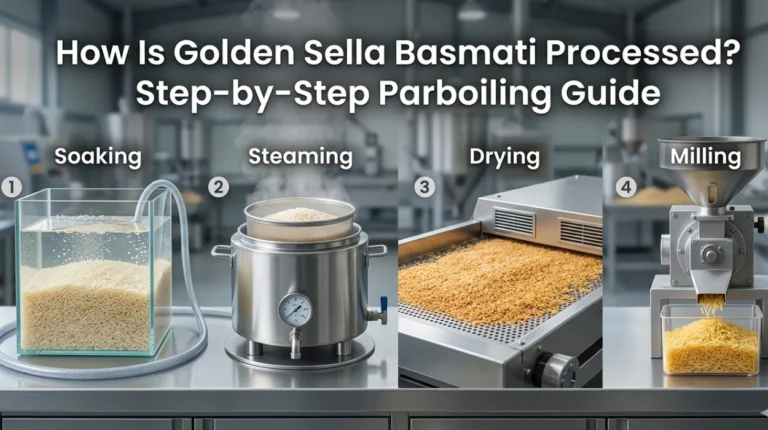
1121 Steam Basmati is a steam-treated extra-long grain rice grade made from the 1121 variety. It is known for aroma, elongation, and a clean premium look after cooking. Golden Sella is a parboiled rice grade. The paddy is steamed in husk before milling, which locks in colour, hardens the grain surface, and improves recovery. Both grades trade actively in Iraq, but they serve different buying logic.
Iraq wholesale markets often buy according to end use. Retail packs, foodservice supply, and catering each require a different balance of appearance, texture, and cost. That is why the decision is not just “which rice is better”. It is “which grade fits the buyer’s channel and cooking outcome”. For that reason, the comparison must include grain structure, shelf life, shipping behaviour, and price per metric tonne. The market also values continuity of supply, so documentation and processing consistency matter at least as much as the variety itself.
How do different approaches compare?
1121 Steam Basmati and Golden Sella differ most in aroma, texture, yield, and market positioning. Steam grade leads on premium appearance and fragrance, while Golden Sella leads on firmness, cooking resilience, and price control for wholesale and catering buyers.
The strongest comparison point is cooking behaviour. 1121 Steam produces a softer, more aromatic plate result with long separated grains. Golden Sella produces firmer grains that hold shape well after boiling and resists overcooking better. That makes Golden Sella a safer choice in high-volume kitchens where consistency matters more than premium fragrance. Steam grade suits buyers who sell quality perception. Golden Sella suits buyers who sell portion control and yield.
The second point is market acceptance. In Iraq, importers and distributors often separate premium retail supply from institutional and catering supply. 1121 Steam sits higher in the premium segment because the grain length and aroma create visible value. Golden Sella sits stronger in broad wholesale channels because it balances cost and performance. That difference shapes purchasing decisions across Erbil, Baghdad, Basra, and surrounding distribution routes where channel economics vary.
The third point is price structure. Steam grade generally trades above Golden Sella because it commands more attention from premium consumers and branded retailers. Golden Sella generally sits lower on a per-MT basis because the parboiling process adds stability and makes it easier to position for bulk trade. The exact spread changes with crop availability, freight, and destination demand, but the relative pattern remains stable. Premium buyers pay for aroma and elongation. Wholesale buyers pay for yield and versatility.
Specification comparison table
| Attribute | 1121 Steam Basmati | Golden Sella |
|---|---|---|
| Grain type | Extra-long aromatic Basmati | Parboiled long-grain Basmati |
| Cooking texture | Soft, separated, fragrant | Firmer, stable, resilient |
| Aroma level | High | Medium to high |
| Grain elongation | Strong | Strong, with firmer body |
| Breakage tolerance | Moderate | Higher |
| Wholesale positioning | Premium retail and premium foodservice | Bulk wholesale and catering |
| Typical market price per MT | Higher, often around USD 950 to USD 1,150 per MT depending on crop and freight | Lower, often around USD 850 to USD 1,000 per MT depending on crop and freight |
Which method works best for different cases?
1121 Steam Basmati works best for premium retail, restaurant plating, and brand-led import programmes. Golden Sella works best for catering, budget-sensitive wholesale, and large-volume distribution where firmness, shelf stability, and consistent yield drive purchase decisions.
For premium retail packs, 1121 Steam has the stronger commercial signal. Consumers see long grains, fragrant cooking, and a refined plate result. This makes it suitable for 1 kg, 5 kg, and 10 kg packs sold through supermarkets and ethnic retailers. It also performs well in branded campaigns where appearance influences repeat purchase. If the buyer wants product identity and a premium shelf story, steam grade wins.
For catering and institutional buying, Golden Sella is often the more practical choice. The parboiled grain holds up well during batch cooking, transport, and holding time. In kitchens serving weddings, hotels, labour canteens, and large family events, that stability reduces waste and improves service control. Iraq’s catering trade values these features because volume service depends on predictable texture, not just aroma. Golden Sella also gives operators a more forgiving cooking window.
For mixed wholesale programmes, the choice depends on customer profile. If the buyer distributes to both premium shops and foodservice operators, a split allocation often works better than a single-grade strategy. Steam grade can cover premium shelves, while Golden Sella covers high-volume channels. That approach reduces risk and matches the product to use case. It also protects margins because each grade serves a distinct commercial tier.
Use-case decision matrix
| Buyer case | Better grade | Reason |
|---|---|---|
| Premium supermarket packs | 1121 Steam Basmati | Stronger aroma and shelf appeal |
| Restaurant and plated dining | 1121 Steam Basmati | Better presentation and fragrance |
| Catering and banqueting | Golden Sella | Firmer texture and higher cooking tolerance |
| Bulk wholesale distribution | Golden Sella | Lower landed cost and stronger yield |
| Mixed retail-plus-institutional supply | Both grades | Segment the market by end use |
What are the pros and cons?
1121 Steam Basmati leads on premium appeal, aroma, and plate quality, while Golden Sella leads on firmness, storage resilience, and cost efficiency. The right choice depends on whether the buyer prioritises consumer perception or operational control.
1121 Steam’s main advantage is its premium consumer value. The aroma is strong, the grain length is striking, and the cooked appearance supports high-end positioning. That helps in retail and restaurant channels where the final plate drives buyer satisfaction. Its limitation is price. Buyers pay more per MT, and the softer cooked finish does not suit every bulk kitchen. That means the grade performs best where quality perception justifies the spend.
Golden Sella’s main advantage is functional stability. The parboiled structure improves cooking resilience and reduces breakage during handling. This makes it suitable for long distribution chains and kitchens that need consistent output under pressure. Its limitation is that it does not carry the same fragrance-led premium as 1121 Steam. Some consumers see it as more utilitarian. That reduces its appeal in the top retail tier, even though it performs strongly in wholesale.
The commercial logic is simple. Steam grade sells the experience of Basmati. Golden Sella sells reliability of output. Iraq wholesale buyers decide based on which of those two forms of value matches their customer base.
Pros and cons summary
- Use 1121 Steam when the end customer values aroma, grain length, and premium appearance.
- Use Golden Sella when the end customer values firmness, lower landed cost, and cooking stability.
- Avoid using Steam for price-only channels where premium value is not recognised.
- Avoid using Golden Sella for premium shelf claims that depend on fragrance-led differentiation.
- Match the grade to the end-user, not only to the import invoice.
What do Iraq market buyers prioritise?
Iraq buyers prioritise price stability, cooking performance, container consistency, and market fit by channel. Premium importers focus on steam grade, while wholesale distributors and caterers often choose Golden Sella for stronger yield and lower procurement pressure.
Iraq is a price-sensitive but quality-aware market. Wholesale buyers compare landed cost, freight volatility, and local selling price before they commit. They also look closely at grain behaviour after cooking because restaurants and caterers protect their service reputation through consistency. That gives Golden Sella an advantage in many bulk situations. It keeps its shape and helps operators manage output.
At the same time, Iraqi consumers recognise premium Basmati quality. That creates a market for 1121 Steam in branded retail and higher-end foodservice. Where buyers want fragrance and visual appeal, steam grade commands attention. This is especially true when the product is sold in smaller packs with visible labelling and quality claims. In that segment, the premium supports margin.
The import decision also depends on supply continuity. Large buyers prefer a grade they can source repeatedly from the same export system. AHK Rice supplies 1121, Super Kernel, and 1509 from Punjab with end-to-end processing and export handling, which gives buyers a clear supply framework when they compare grades by channel. In practice, the market does not reward abstract quality alone. It rewards quality that arrives consistently, in spec, and on time.
How do shelf life and storage compare?
Golden Sella generally offers stronger storage tolerance, while 1121 Steam offers premium quality but requires tighter handling discipline. Shelf life depends on moisture control, packaging, and warehouse conditions, yet the parboiled structure of Golden Sella adds practical resilience in wholesale storage.
HACCP certified shelf life in rice trade is not just a matter of time. It depends on moisture content, packaging material, warehouse humidity, insect control, and the way the cargo moves through the supply chain. Steam grade stores well when packed correctly, but its premium sensory profile depends on careful handling. Golden Sella gives buyers more margin for distribution and storage because the parboiled process stabilises the grain.
For Iraq wholesale, this matters because cargo often moves through multiple handling points before final sale. A grade with stronger storage tolerance reduces the risk of quality loss between export loading and wholesale delivery. Golden Sella therefore works well in channels where timing is less predictable. Steam grade works best when warehousing and turnover are controlled. Both grades can perform well, but the risk profile is different.
A practical comparison helps. In controlled storage, both grades retain commercial quality for 12 months under correct conditions. In less controlled environments, Golden Sella usually holds its market texture more reliably. That makes it easier to move through long distribution chains. Steam grade still performs strongly, but it rewards tighter control. The buyer’s warehouse discipline directly affects the commercial outcome.
Which price and margin structure fits each grade?
1121 Steam Basmati usually commands the higher price per MT, while Golden Sella usually delivers better margin flexibility for bulk buyers. The right pricing choice depends on whether the buyer sells premium value or volume efficiency in the Iraq market.
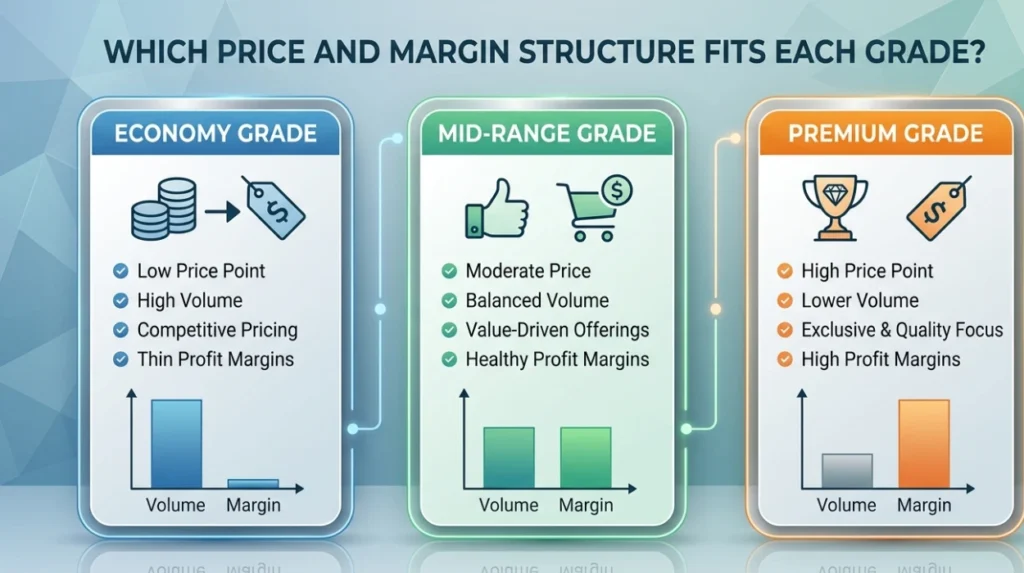
In wholesale trade, price per MT shapes the entire profit model. Steam grade often lands in a higher bracket because its market identity is stronger in premium channels. That price supports retailers who sell higher-value packs and cater to consumers willing to pay for aroma and visual quality. It also supports restaurants that present rice as part of the dining experience.
Golden Sella usually trades at a lower MT cost, which improves procurement flexibility. That matters in bulk distribution because the buyer can preserve margin even when local selling prices tighten. It also allows caterers to maintain cost discipline while still offering a branded Basmati product. For procurement teams, this difference is decisive. A lower import cost often creates better movement in wholesale channels.
The best pricing strategy is not always the cheapest import. It is the grade that matches the buyer’s resale model. If the channel rewards premium perception, 1121 Steam supports stronger price realisation. If the channel rewards volume and consistency, Golden Sella creates better working margin. Iraq wholesale buyers use both models depending on city, customer type, and contract size.
Final decision framework
1121 Steam Basmati wins when the buyer sells premium appearance, aroma, and brand value. Golden Sella wins when the buyer prioritises storage resilience, price discipline, and catering performance. Iraq wholesale success comes from matching grade to channel, not from selecting one grade for every use.
5-row decision framework table
| Decision factor | Choose 1121 Steam | Choose Golden Sella |
|---|
| Decision factor | Choose 1121 Steam | Choose Golden Sella |
|---|---|---|
| Target channel | Premium retail and plated service | Catering and bulk wholesale |
| Budget pressure | Low to medium | Medium to high |
| Cooking outcome | Fragrant and visually premium | Firm and operationally stable |
| Storage model | Controlled turnover | Long distribution chain |
| Margin goal | Premium resale | Volume efficiency |
For Iraq wholesale buyers, the decision is straightforward once the customer type is defined. Steam grade fits premium demand and brand-led selling. Golden Sella fits volume-driven supply and cooking stability. The strongest procurement result comes from aligning grade selection with end-use, shelf strategy, and price band.