What Is 1121 Sella Basmati Rice? How It Differs from White and Steam
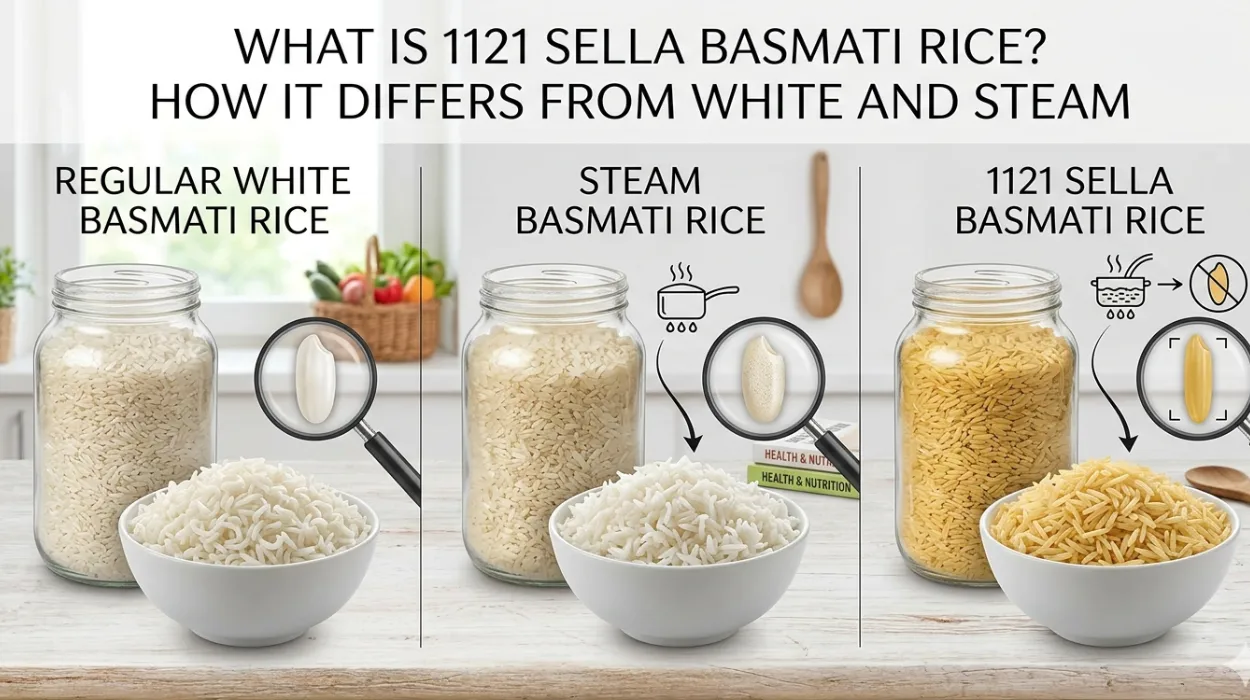
1121 Sella Basmati Rice is parboiled, steam‑treated 1121 basmati that has been dried, milled, and polished to a golden‑amber finish, which gives it a firmer texture and higher head‑rice recovery than standard 1121 white basmati. The term “sella” refers to grains that are soaked, steamed, and dried inside the husk before milling, which changes the starch behaviour and colour while preserving the kernel’s length. This product sits between raw‑milled white basmati and fully steam‑treated steam‑rice in terms of appearance, digestion speed, and export‑grade positioning.
What is 1121 Sella basmati rice?
1121 Sella Basmati Rice is long‑grain parboiled 1121 basmati that has been steam‑treated and dried in the husk, then milled to a golden‑amber finish with low breakage and high length retention. This is not a new rice variety. It is a defined processing category applied to 1121 grains grown in Punjab‑style conditions, usually across the Indus‑basin rice‑belt.
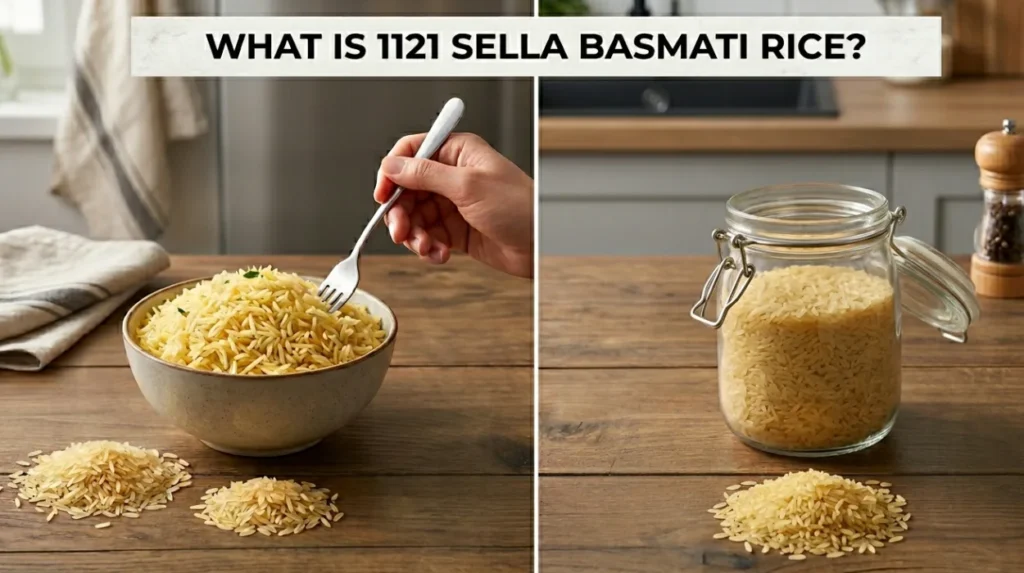
Botanically, 1121 Sella still falls under Oryza sativa, with the same aromatic profile that defines 1121 basmati. The “sella” designation stems from the manufacturing step where the paddy is soaked, then exposed to steam so that the starch partially gelatinises while the grain is still in the husk. After drying, the paddy is milled, polished, and graded to export standards.
The visual effect is a light‑to‑medium‑golden grain that is longer and more stable than raw‑milled 1121. The processing layer adds value for export channels that want a balance between quicker cooking than brown rice and better grain integrity than fully white rice. In trade language, this is one of several 1121 parboiled formats, including Golden Sella and Creamy Sella, each with its own colour and cooking profile.
How does 1121 Sella differ from 1121 white basmati?
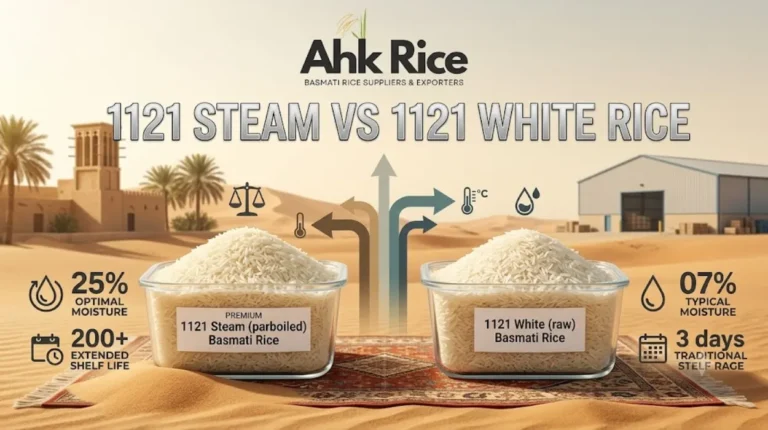
1121 Sella differs from 1121 white basmati because it is parboiled and steam‑treated while the grain is still in the husk, which changes starch structure, texture, and head‑rice recovery. White 1121 is usually milled directly after drying, with the husk, bran, and germ removed without prior heat treatment. That creates a softer, faster‑digesting product with a higher tendency to overcook and break.
In 1121 Sella, the steam‑treatment causes the starch inside the grain to partially gelatinise. Some nutrients and colour move from the outer layers into the endosperm. The grain then hardens as it dries, which improves milling strength and reduces breakage. After milling, the grain keeps a longer, firmer structure that separates more cleanly than white 1121 under similar cooking conditions.
The practical differences for the cook are clear. 1121 Sella tends to hold its shape better in biryani, pulao, and mixed‑rice dishes. It resists mushiness more than white 1121, which is why it is often preferred in foodservice and export‑grade channels. White 1121, by contrast, can still deliver good aroma and length, but it is more prone to softening when cooked for longer periods or reheated.
How does 1121 Sella differ from 1121 steam rice?
1121 Sella differs from 1121 steam rice because steam rice usually receives a more intense steam treatment and a higher‑intensity colour shift, while 1121 Sella sits in a mid‑range finish with strong grain integrity. Steam‑rice versions sometimes appear darker and more uniformly golden, depending on the mill and soaking formula. The Sella profile is usually a bit lighter and more variable in tone while still clearly parboiled.
Both products share the same origin concept: 1121 paddy soaked, steamed, dried, then milled. The key difference is the processing intensity and the target grade. Steam rice is often positioned as a max‑golden‑finish export format, where the visual premium is higher. 1121 Sella maintains a balance between colour and texture, which suits buyers who prioritise cooking performance as much as appearance.
Consumers may not distinguish the terms clearly, but in trade terms the differences matter. Steam rice can command a higher per‑MT rate if the export market values deeper colour. Sella often fits buyers who want a stable, long‑grain product that will not over‑soften in high‑volume kitchens. That is why many importers evaluate 1121 Sella, Golden Sella, and Creamy Sella in a three‑way comparison to see how processing and finish affect price and performance.
How is 1121 Sella processed step by step?
1121 Sella Basmati Rice is processed through paddy cleaning, soaking, steam treatment, drying, husking, polishing, grading, and packing, with each stage shaping the final grain length, colour, and head‑rice recovery. The process is standardised for export‑grade consistency, so each batch behaves similarly in the mill, in the container, and in the pot.
The first stage is paddy cleaning, where foreign matter, broken husk, immature grains, and dust are removed. The second stage is soaking, where the paddy is immersed in water to absorb moisture. The third stage is steam treatment, where heated steam penetrates the husk‑covered grain, causing partial starch gelatinisation and internal migration of nutrients. The fourth stage is drying, where the moisture is reduced to a safe milling level.
After drying, the rice is husked to remove the outer shell, then polished to create a smooth, golden‑amber kernel. The polished rice goes through colour sorting and grading, where broken grains, off‑length kernels, and coloured particles are separated. The final product is packed in export‑grade bags, with moisture controlled to preserve the grain structure over long‑term storage. This end‑to‑end sequence is why 1121 Sella is seen as a stable, repeatable specification for international buyers.
What are the key components that define 1121 Sella?
The key components that define 1121 Sella are the 1121 variety base, the parboiled/steam treatment, the golden‑amber colour, and the export‑grade head‑rice recovery and moisture control. These attributes combine to create a rice that is longer, more stable, and visually distinct from both white 1121 and darker steam‑rice formats.
The 1121 variety base provides long grains, good aroma, and a predictable elongation pattern after cooking. The parboiled/steam treatment modifies the starch so that the grain is harder and less porous. The colour arises from the Maillard‑type reactions and internal migration of pigments during the heat‑and‑moisture treatment, giving the grain a golden‑amber tone rather than a pure‑white finish.
Grading components include head‑rice percentage, broken‑grain content, and foreign‑material limits. Export‑grade 1121 Sella usually targets low breakage, such as under 2–3%, and minimal coloured or shrivelled grains. Moisture control, typically below 13%, ensures the grain remains stable in tropical and temperate shipping environments. These technical parameters matter because they determine how well the rice withstands freight, handling, and extended storage.
What are the benefits of 1121 Sella basmati?
1121 Sella Basmati Rice offers stronger grain integrity, firmer cooked texture, better head‑rice recovery, and more stable export‑grade performance than many white 1121 formats. These benefits support home cooks, foodservice kitchens, and importers who must manage consistency and appearance without losing aromatic flavour. The rice also fits markets that value a slightly slower‑digesting, parboiled profile.
The texture and separation benefits are the most noticeable. 1121 Sella stays firm and separate after cooking, which suits dishes where the rice must not become mushy, such as restaurant‑style biryani or mixed‑grain platters. The grain‑length and low‑breakage also improve shelf‑appearance in retail, where broken or short‑length rice looks less premium.
For importers, the advantage is logistical. A harder grain resists breakage during milling, handling, and container transport, which improves yield and reduces losses. The export‑grade moisture control supports longer shelf life, especially in humid climates, while the colour‑finish helps differentiate the product from generic parboiled rice. These factors make 1121 Sella a practical choice for buyers who want quality, consistency, and recognisable identity in one product.
Where is 1121 Sella used?
1121 Sella Basmati Rice is used in households, foodservice kitchens, and export markets that value long‑grain separation, consistent flavour, and a clearly defined parboiled finish. It fits dishes where the rice must remain firm and separate after cooking, such as biryani, pulao, and one‑pot rice meals. The product also suits bottled‑rice and ready‑meal channels that need stable grain behaviour during processing and reheating.
In export terms, 1121 Sella is traded into regions such as the Middle East, North Africa, Europe, and parts of Southeast Asia, where basmati has a clear premium identity. Importers use the product for both branded retail and foodservice supply, depending on the packing format. The grain works well in both 1‑kg consumer packs and 25–50 kg bulk sacks.
The name “sella” is used more in export trade than in everyday home‑cooking language. Consumers may see terms like Golden Sella or Creamy Sella on the package and understand them as premium parboiled basmati, even if the technical process is not widely known. That is why a clear 1121 Sella vs Golden Sella vs Creamy Sella is useful for buyers who must choose between these closely related formats.
What are the common problems and misconceptions?
Common misconceptions are that 1121 Sella, Golden Sella, and Creamy Sella are the same product and that all parboiled 1121 behaves identically in cooking and digestion. In reality, the different grades serve distinct market segments, and processing intensity changes texture, colour, and even the parboiled vs white‑rice GI profile. These differences matter in both consumer use and trade‑grade decisions.
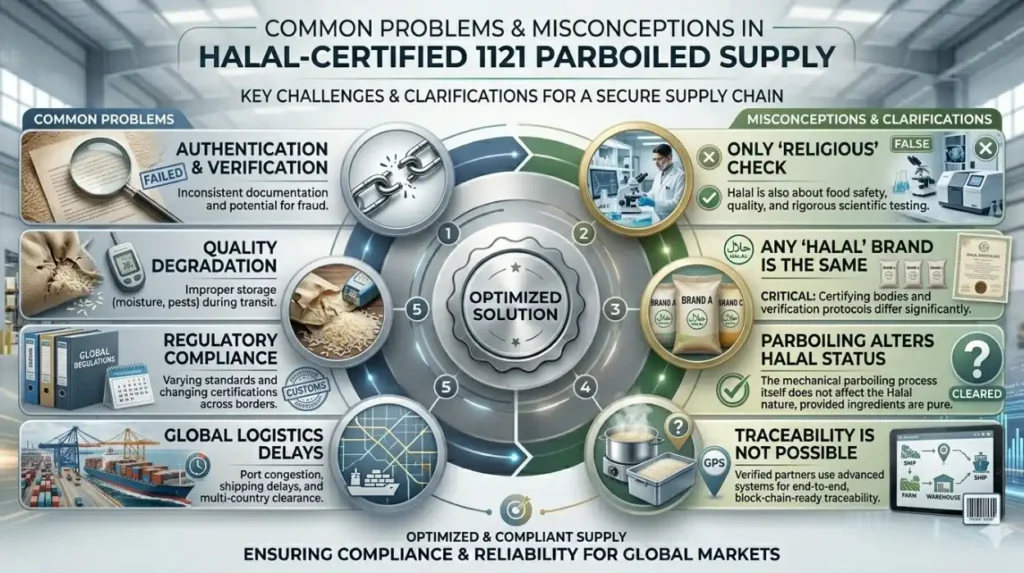
One misconception is that “sella” is only about colour. The term actually reflects the parboiled process, not just the finish. Another misconception is that 1121 Sella is interchangeable with 1121 white in all dishes. The texture difference can be noticeable, especially in dishes that rely on very soft grains or short‑grain behaviour. Buyers who assume all 1121 is the same may find that Sella performs differently in their existing recipes.
Another problem is handling. Buyers who store large quantities of 1121 Sella in humid conditions without proper moisture control may see clumping, off‑odours, or grain‑breakage, which is often misinterpreted as a product defect rather than a storage failure. The rice is designed for dry, controlled storage, and deviations from this standard affect the cooking outcome. That is why product documentation, including moisture limits and packaging guidance, is important for long‑term performance.
How do available grades differ?
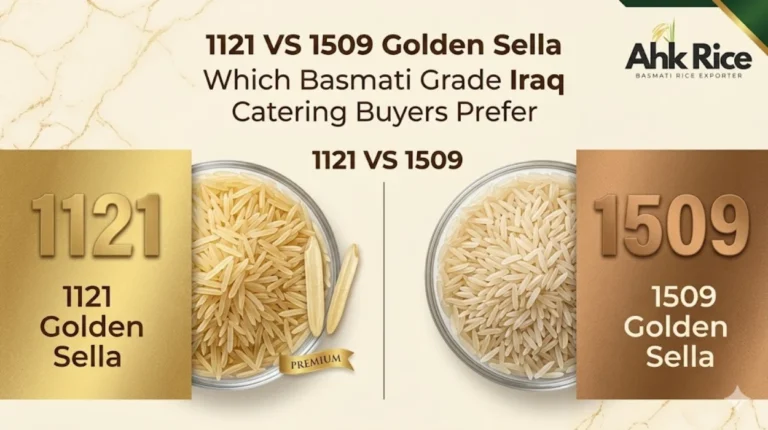
Available grades differ in colour intensity, grain appearance, and market positioning, with 1121 Sella, Golden Sella, and Creamy Sella each targeting a slightly different export and retail segment. 1121 Sella usually sits in the mid‑range, with a clear golden‑amber finish but not the deepest‑golden tone. Golden Sella emphasises a stronger, more uniform colour for visual premium. Creamy Sella sometimes uses a softer, paler finish aimed at markets that still want a “cream‑coloured” parboiled rice.
The core 1121 variety is often the same across these grades. The supplier changes the processing intensity and grading criteria to create distinct packaging lines. Golden Sella may require stricter colour‑sorting and lower broken‑grain thresholds. Creamy Sella may accept a wider colour range but still keep the parboiled benefits.