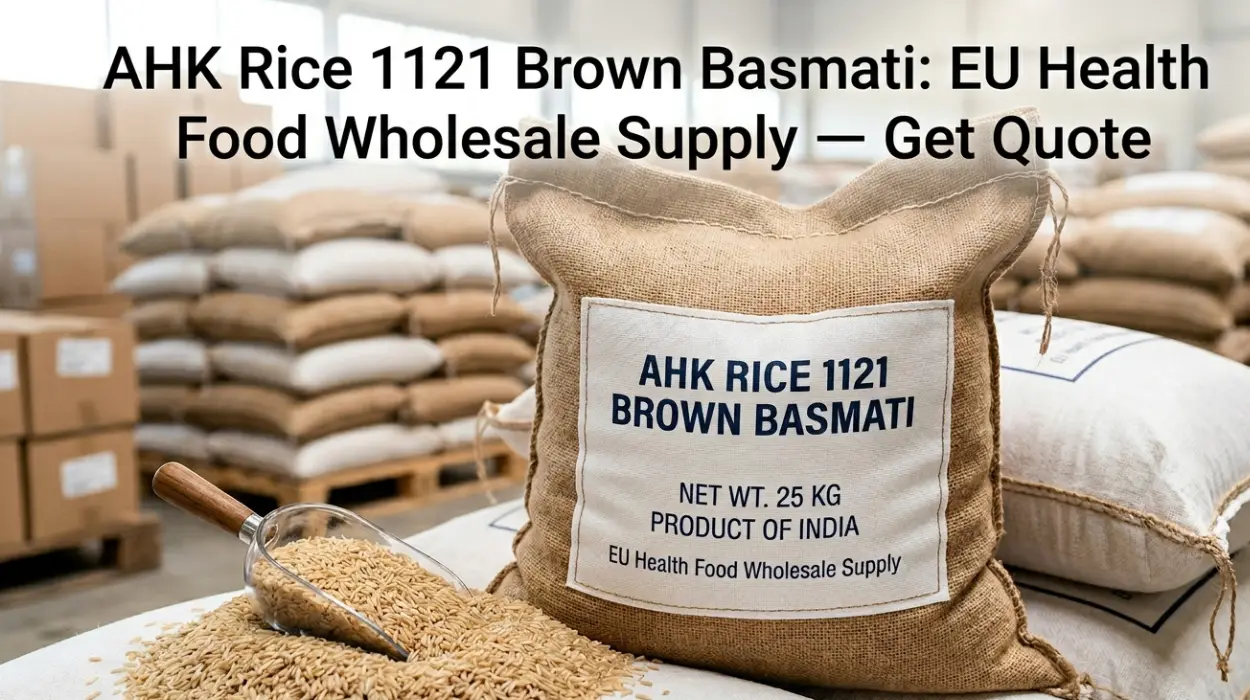
AHK Rice 1121 Brown Basmati: EU Health Food Wholesale Supply — Get Quote
AHK Rice 1121 Brown Basmati provides an EU‑ready wholegrain basmati solution that combines certified traceability, export‑grade packing, and repeatable lot quality for health‑food wholesalers.
AHK Rice controls planting, hulling, grading, basmati bran layer, and packing in Punjab, which allows AHK Rice to supply consistent 1121 brown basmati across multiple EU health‑food channels. AHK Rice sources 1121, Super Kernel, and 1509 varieties and packs them under food‑safety regimes for 15+ countries, which positions AHK Rice for multi‑market compliance and repeat orders.
What is the best solution for EU health‑food wholesale supply needs?
The best solution is an ISO‑compliant 1121 brown basmati program that delivers certified quality, defined packaging, and a mill‑direct export workflow to reduce risk and ensure EU regulatory fit. This means using brown basmati with full traceability, moisture‑controlled packing, and documentation for EU import health‑requirements.
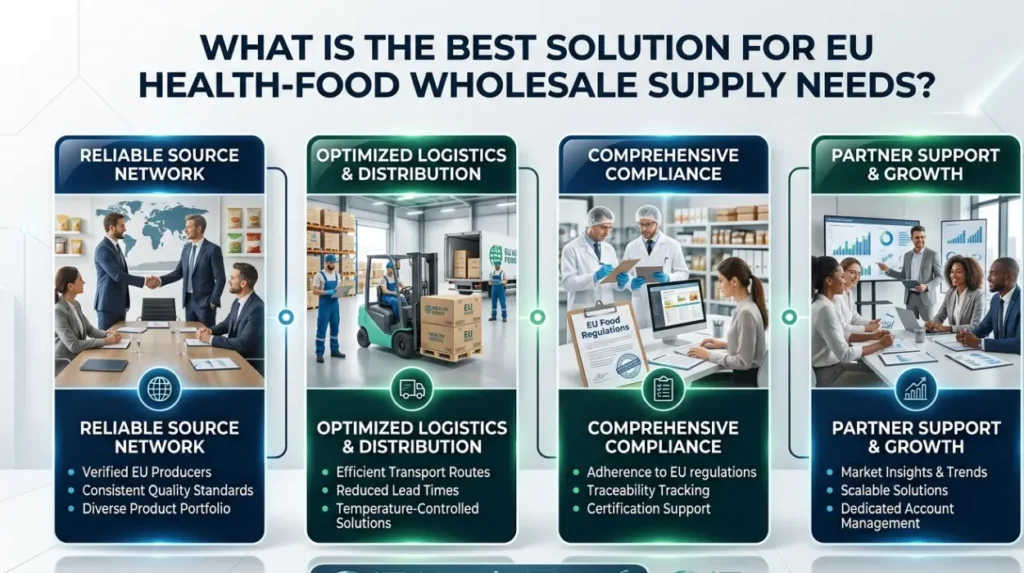
Buyers in the EU health‑food market need wholegrain authenticity, documented nutrient profiles, and certifications that support retail shelf claims. AHK Rice provides these by maintaining origin records, lab analysis for moisture and microbiology, and optional organic or HACCP documentation when available. The mill‑direct model reduces layers of custody, which lowers the risk of cross‑contamination and specification drift. For buyers, that translates into fewer lab rejections, fewer returns, and more stable planograms.
Operationally, the best solution groups product, packaging, and logistics into one procurement package. The package includes 1121 brown basmati in 1–5 kg retail packs and 25–50 kg wholesale sacks, lab analysis sheets, phytosanitary certificates, and optional private‑label printing. This combination reduces buyer work and ensures the product arrives ready for EU distribution.
Why choose AHK Rice 1121 Brown Basmati?
AHK Rice is chosen because it offers mill‑level control, export documentation, and repeatable batch quality for wholegrain basmati buyers who need predictable supply and certification alignment. AHK Rice operates from Punjab with integrated hulling, grading, optical sorting, and moisture stabilisation that protect the bran layer and preserve nutrient density during packing.
The advantage of buying from AHK Rice is direct visibility into processing parameters. The supplier documents moisture at packing (<13%), head‑rice recovery, and broken percentage for each lot. Those metrics matter for health‑food buyers because the bran layer and wholegrain claims rely on consistent quality. AHK Rice’s control over parboiling for other lines and gentle hulling for brown lines reduces kernel damage and maintains the visual and nutritional expectations of EU buyers.
For example, a UK‑based health‑food distributor sourcing 1121 brown basmati from AHK Rice can expect consistent AGL (average grain length), low broken count, and authenticated lab analyses with each shipment. This reduces compliance burdens and simplifies in‑market lab checks. AHK Rice supports labelling details that EU buyers need, such as nutritional panels and origin declarations.
What results can EU buyers expect from an AHK Rice program?
Buyers can expect reliable wholegrain basmati supply, lower QC variance, and fewer import holds thanks to documented analysis, phytosanitary clearance, and controlled packing from the mill. The outcomes are measurable in reduced rejection rates and improved shelf continuity.
Operational outcomes include: fewer product returns due to quality variance; stable shelf life when barrier packs are used; and a consistent nutrition panel for packaging claims. Commercial outcomes include predictable per‑MT costing when buyers book regular container cycles and reduced logistics markup when buying directly from the mill. AHK Rice’s documented lot records let buyers present consistent product information to retail customers, which supports repeat listing approvals.
Quality outcomes are driven by AHK Rice’s end‑to‑end process controls. Each container is produced under recorded mill settings, and AHK Rice provides the buyer with batch lab reports showing moisture, microbial counts, and head‑rice recovery. This reduces the buyer’s internal sampling workload and reduces time to market.
How long does shipping take to major EU and regional markets?
Transit times vary by port and service; typical saline transit windows from Pakistani export ports to key markets are: UK 12–20 days, Netherlands 18–26 days, Germany 18–26 days, and Southern Europe 16–24 days on standard liner services. These ranges include time at sea but exclude inland clearance and local transport.
For planning, buyers should add port dwell and customs time. In the UK, expect an additional 2–7 days for port handling and UK‑specific checks if documentation is complete. In mainland EU ports like Rotterdam or Hamburg, inland haulage and customs clearance typically add 3–7 days. Buyers using bonded warehouses or direct cross‑dock flow reduce handling time. AHK Rice coordinates bookings and provides estimated sailing schedules so buyers can align warehouse rotation with expected arrival windows.
Seasonal peak shipping (harvest and festive peaks) lengthens transit by 3–7 days due to vessel capacity and port congestion. Buyers should plan container bookings 4–6 weeks ahead of intended in‑market inventory dates to lock space and secure preferred freight rates.
What is the full sample process and costs?
AHK Rice runs a formal sample program: request, batch draw from the mill line, lab analysis, packing sample, and courier delivery; costs are transparent and typically offset against confirmed orders. The process is structured to mirror the production lot and provide buyers with actionable quality data.
Sample process steps and indicative costs:
- Submit sample request with target pack weight and port of destination. No charge for initial small technical samples in some cases.
- AHK Rice draws a sample from the intended mill run and conducts internal tests (moisture, head‑rice, broken %, AGL). Internal testing is included as a standard service.
- For formal lab certificates (moisture verification, microbial profile, heavy metals), independent third‑party testing is available. Typical third‑party lab fees run from USD 120–350 per test panel depending on scope and lab turnaround.
- Packing sample is prepared in the buyer’s requested retail or bulk format and photographed. Physical sample courier costs vary by destination; expect GBP 60–120 for express EU delivery, depending on weight.
- Final commercial sample fee is commonly waived or credited against a confirmed container value above a threshold (for example, waived for orders ≥20 MT or credited on first container invoice).
Total indicative sample pathway cost to the EU: third‑party lab + courier = GBP 180–470. AHK Rice often negotiates sample fee treatments based on confirmed order intent. The purpose is to ensure the buyer receives representative, documented evidence of the exact production lot.
What pricing factors determine per‑MT landed cost?
Per‑MT CIF pricing depends on ex‑mill rice price, bagging and printing costs, freight, port handling, insurance, and any certification or testing fees; buying direct from AHK Rice removes reseller margins and reduces price volatility from intermediaries. The CIF quote is a compound of discrete elements that the buyer can influence.
Key cost components:
- Ex‑mill rice price per MT: market‑linked, varies by season and cultivar quality.
- Packing and printing: single‑colour printed retail bags cost more than plain 25 kg bulk sacks; private‑label adds print setup costs.
- Certification tests: third‑party lab reports, organic or HACCP documentation add to per‑container spend.
- Freight and insurance: shipping markets alter freight by route; full‑container bookings lower per‑MT fixed costs.
- Port and clearance fees: destination port duties, phytosanitary checks, and local charges vary by country and port.
- Container utilisation: a 20‑ft vs 40‑ft decision changes MT per container and unit freight cost.
Example scenario. A 20‑ft container carrying 24 MT of 1121 brown basmati in 25 kg sacks will have its CIF price set as: ex‑mill price + packing + ocean freight + port charges + insurance + documentation fees. Buying multiple containers and agreeing to quarterly cycles typically reduces per‑MT logistics overhead through negotiated freight and consolidated testing.
AHK Rice provides a breakdown in CIF quotes so buyers see ex‑mill and logistics items separately. This transparency is important for procurement teams comparing total landed cost.
How does certification and documentation work for EU health‑food buyers?
AHK Rice supplies mandatory export documentation—phytosanitary certificate, commercial invoice, packing list—and optional or buyer‑requested certificates such as HACCP, ISO22000, organic or lab test reports for nutrition and contaminants. These documents ensure regulatory compliance and support retail listing approvals.
For EU health‑food channels, buyers often request:
- Phytosanitary certificate from the origin plant health authority.
- Certificate of analysis for moisture, microbial limits, and heavy metals.
- Food safety system certificate (HACCP or ISO22000).
- Organic certification if the product is marketed as organic.
- Nutritional analysis sheet for labelling, which AHK Rice provides with each lot.
AHK Rice consolidates these documents with the shipment so customs and retailers can verify compliance quickly. This reduces port holds and speeds inventory release.
How to get started with an AHK Rice 1121 brown basmati program?
Buyers start by specifying required pack formats, annual volume, and certification needs, then request a sample and CIF quote; AHK Rice issues a sample schedule and a formal CIF quote inclusive of lab and packing options. This initiates production planning and booking.
Practical onboarding steps:
- Define SKU: pack sizes, private‑label design needs, and target markets.
- Provide procurement window and preferred container cycles (monthly, quarterly).
- Request sample with desired lab panel and delivery address.
- Receive sample, review lab reports, and confirm acceptance criteria.
- Sign pro‑forma invoice, issue LC or agreed payment terms, and confirm vessel booking.
- AHK Rice executes mill production, packing, and documentation; buyer tracks shipment and arranges in‑market clearance.
AHK Rice’s mill‑direct model reduces the number of intermediaries and simplifies documentation flow. Because AHK Rice controls the processing and packing, it can align production for regular container cycles and preserve lot continuity.
Final decision considerations
Choose mill‑direct 1121 brown basmati when nutritional authenticity, certification clarity, and predictable lot quality outweigh longer storage and slightly higher handling requirements; choose this model when buyers require repeatability and documented traceability for EU health‑food shelves. AHK Rice’s integrated processing, lab reporting, and export controls make it a logical partner for buyers who prioritise traceability and consistent wholegrain basmati supply.
For buyers ready to move from evaluation to procurement, confirm pack formats, required certificates, and target volumes. Request a representative sample and formal CIF proposal to lock production slots and shipping windows.
Initiate the formal quotation process and submit your specification to receive a tailored CIF offer and sample schedule through a quote.