1121 Creamy Sella vs 1509 Creamy Sella: Which Grade Offers Better Margins?
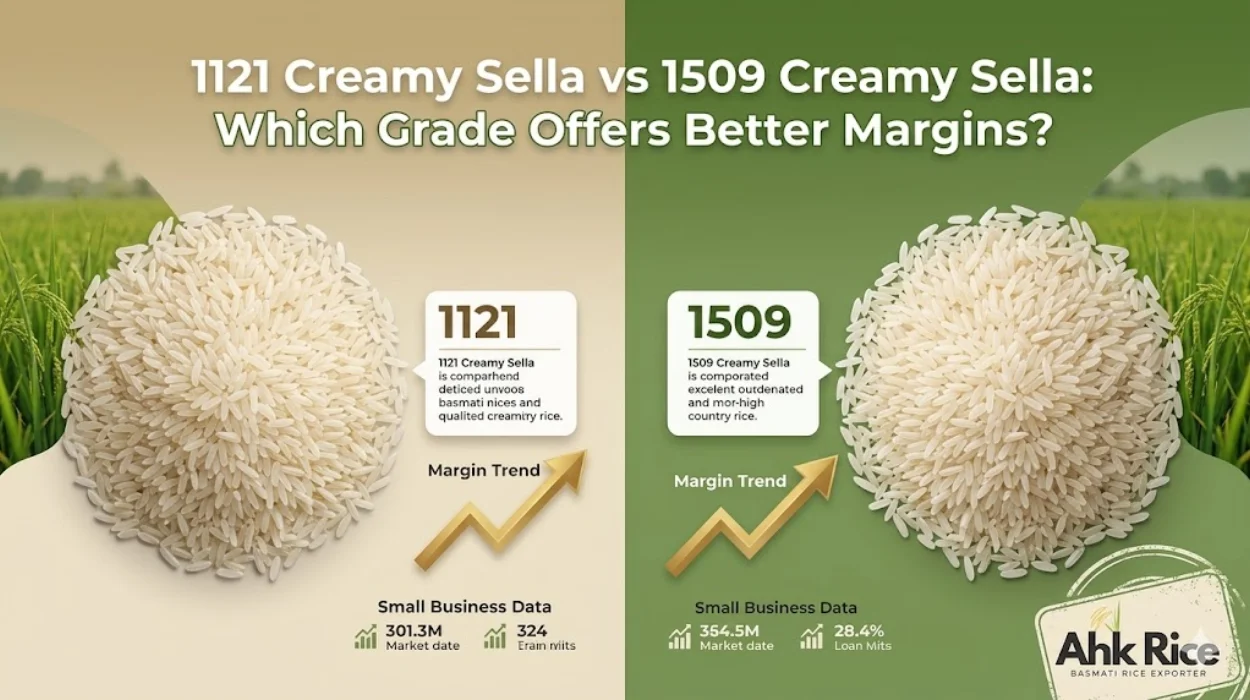
1121 Creamy Sella delivers higher export margins in premium Gulf and EU catering markets, while 1509 Creamy Sella offers stronger cost efficiency and faster turnover in price-sensitive African and institutional supply chains. Here is why: 1121 has longer grain, stronger elongation, and higher aroma retention, while 1509 provides faster crop cycles, lower procurement cost, and stable bulk demand in commodity-driven markets.
The margin gap between both depends on market positioning, milling yield, and buyer segmentation strategy. Importers using structured grading and contract segmentation consistently extract 8–15% higher profit from 1121, while 1509 ensures 5–10% faster sales cycles in bulk tenders.
For foundational processing clarity, review this basmati grading context in the TOFU article: basmati rice processing and grade fundamentals for exporters. This builds the technical base before evaluating margin strategy.
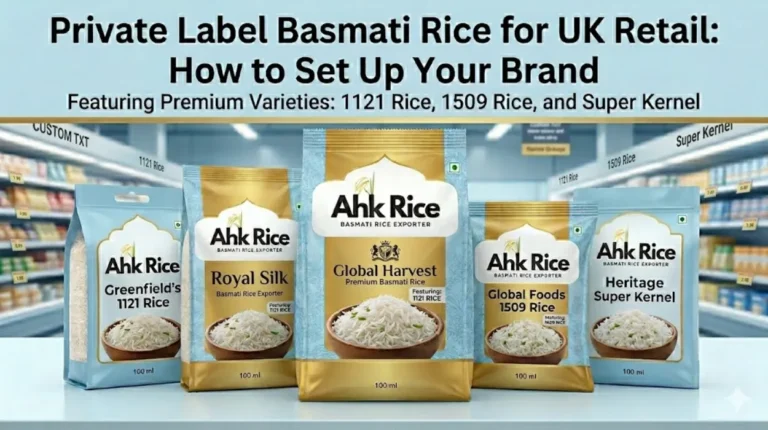
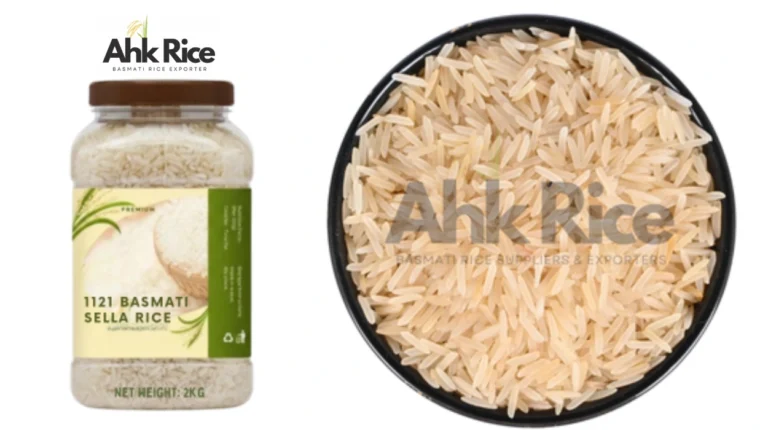
AHK Rice supports both grades through integrated milling, polishing, grading, and export dispatch systems designed for consistent export compliance and container optimization. In the first decision point, importers often evaluate the BOFU product: AHK Rice 1121 creamy sella free sample container, which helps validate grain behavior before contract finalization.
What are the available solutions in creamy sella sourcing?
Importers choose between three sourcing solutions: grade-focused procurement, blended-grade optimization, and contract-based export supply chains. Grade-focused procurement prioritizes single-variety export lots, blended optimization balances cost and performance, and contract supply ensures stable long-term shipment scheduling for institutional buyers and distributors.
Grade-focused sourcing targets a single variety such as 1121 or 1509. It ensures uniform grain behavior during cooking and packaging. Importers prefer this when serving branded retail or catering specifications.
Blended-grade sourcing mixes compatible long-grain basmati variants. It reduces landed cost per metric ton. It increases flexibility in price negotiations with wholesalers and distributors.
Contract-based sourcing stabilizes supply across harvest cycles. It uses pre-agreed milling standards, shipment schedules, and quality inspection protocols. This approach reduces procurement volatility in high-volume import markets.
Clean paddy is sourced from Punjab cultivation belts where climatic conditions support long grain formation. De-husked grains are polished, parboiled, and graded into creamy sella categories before export dispatch.
Bridge: With sourcing models defined, the next step is understanding how 1121 and 1509 differ in commercial performance and export behavior.
How do 1121 and 1509 creamy sella approaches compare?
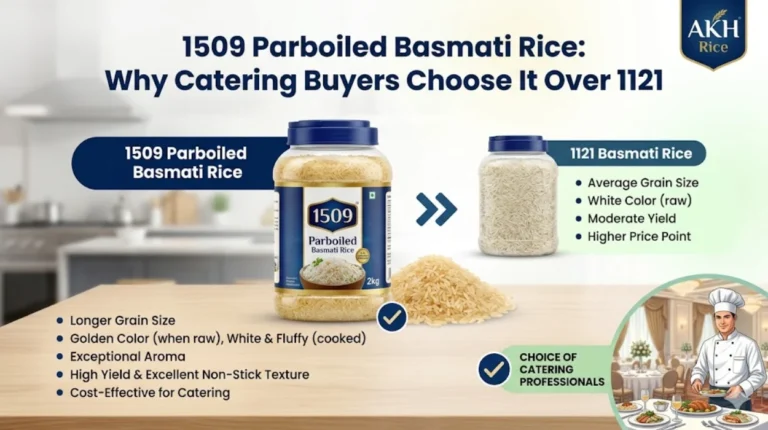
1121 Creamy Sella generates higher per-ton export margins due to premium grain elongation and aroma retention, while 1509 Creamy Sella reduces procurement cost and increases turnover speed, making it more efficient for bulk institutional buyers and low-margin commodity contracts across African and Middle Eastern import markets.
Specification comparison table (7 attributes)
| Attribute | 1121 Creamy Sella | 1509 Creamy Sella |
|---|---|---|
| Grain length | 8.3–8.5 mm | 8.0–8.2 mm |
| Aroma intensity | High aromatic retention | Moderate aroma |
| Cooking elongation | 2.1x expansion | 1.9x expansion |
| Milling yield | Lower breakage ratio | Higher yield efficiency |
| Market price per MT | $1,250–$1,550 | $950–$1,200 |
| Shelf life | 18–24 months | 14–18 months |
| Export demand type | Premium retail & catering | Bulk institutional supply |
1121 processing involves slower aging, controlled parboiling, and tighter grading standards. This improves grain integrity and export consistency.
1509 processing uses faster maturation cycles and optimized parboiling efficiency. It reduces cost per ton while maintaining acceptable export quality standards.
1121 achieves higher price realization in value-driven markets. 1509 performs better in tender-based procurement systems where cost dominates decision-making.
Bridge: With structural differences established, the next section evaluates which grade performs best across key importing regions and buyer segments.
Which method works best for different cases?
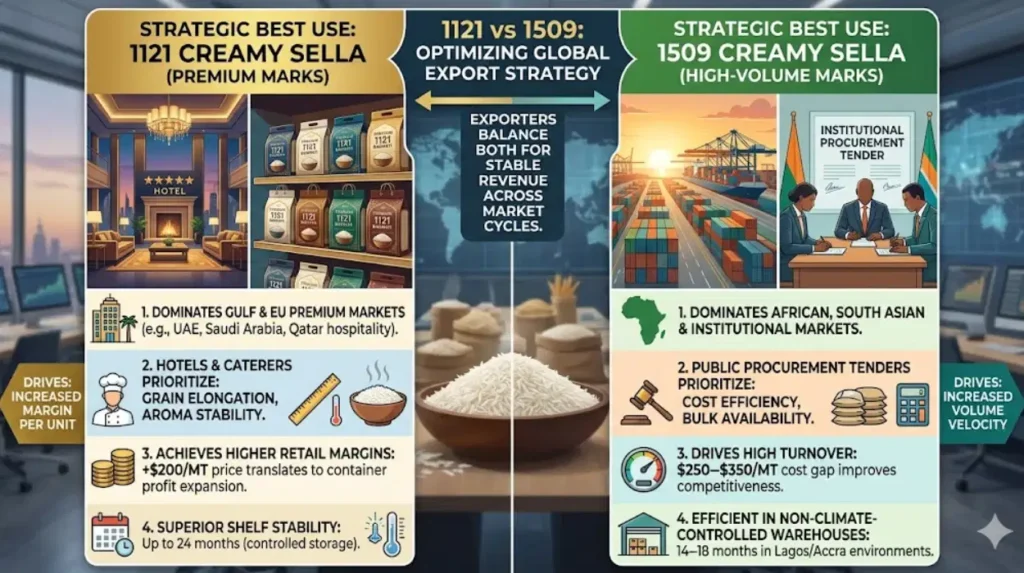
1121 Creamy Sella works best in premium Gulf, EU, and high-end catering markets where branding and grain appearance determine pricing power, while 1509 Creamy Sella works best in African, South Asian, and institutional procurement systems where cost efficiency and bulk availability determine contract awards.
Gulf and EU premium markets
1121 dominates UAE, Saudi Arabia, and Qatar hospitality segments. Hotels and catering chains prioritize grain elongation and aroma stability.
1121 pricing achieves higher margin spreads in retail packaging. A $200 difference per MT translates into strong per-container profit expansion.
1121 shelf stability reaches up to 24 months under controlled storage. In Dubai logistics hubs, this enables long inventory cycles without quality degradation.
African and institutional markets
1509 dominates West Africa, East Africa, and public procurement tenders. Buyers prioritize cost per ton and consistent availability.
1509 pricing advantage allows faster turnover. A $250–$350 per MT cost gap improves tender competitiveness significantly.
1509 performs efficiently in non-climate-controlled warehouses. In Lagos and Accra storage environments, it maintains acceptable quality for 14–18 months.
Market comparison summary
1121 increases margin per unit. 1509 increases volume velocity. Exporters balance both to stabilize revenue across cycles.
Bridge: With market applications defined, the next section evaluates operational pros and cons affecting importer profitability.
What are the pros and cons of each grade?
1121 Creamy Sella delivers higher profit margins, stronger branding value, and better cooking performance, while 1509 Creamy Sella delivers lower acquisition cost, faster turnover, and stronger participation in price-sensitive tenders, making each suitable for different export strategies and buyer segmentation models.
1121 Creamy Sella advantages
Higher grain length improves retail positioning. It increases shelf appeal in packaged goods.
Stronger aroma retention enhances catering value. It supports premium restaurant positioning.
Lower breakage ratio improves milling efficiency. It reduces rejection rates in export inspection.
1121 Creamy Sella limitations
Higher procurement cost reduces entry for low-budget buyers. It limits participation in ultra-low-margin tenders.
Longer aging requirement extends production cycles. It delays shipment readiness.
1509 Creamy Sella advantages
Lower cost improves tender win probability. It increases competitiveness in bulk markets.
Faster crop cycles improve availability. It stabilizes supply during demand spikes.
Higher yield efficiency reduces wastage. It supports high-volume logistics planning.
1509 Creamy Sella limitations
Lower aroma intensity reduces premium appeal. It limits retail branding value.
Shorter shelf life reduces storage flexibility. It requires faster inventory turnover.
Bridge: With strengths and weaknesses established, the next section focuses on decision factors that determine importer profit optimization.
What are the key decision factors for maximizing sella grade profit?
Importers maximize profit by evaluating five factors: target market pricing sensitivity, container load economics, milling yield consistency, storage infrastructure capability, and contract duration strategy, which together determine whether 1121 or 1509 generates higher overall sella grade profit.
Decision framework table (5 rows)
| Factor | 1121 Creamy Sella | 1509 Creamy Sella |
|---|---|---|
| Market sensitivity | Premium-focused buyers | Price-sensitive buyers |
| Container yield value | Higher per-container profit | Higher volume turnover |
| Storage requirement | Climate-controlled preferred | Flexible storage tolerance |
| Contract stability | Long-term retail contracts | Short-term tender contracts |
| Profit structure | High margin per ton | High rotation per ton |
Market sensitivity defines pricing power. Premium buyers absorb higher costs for quality consistency.
Container yield value defines logistics profitability. 1121 maximizes revenue per shipment container.
Storage requirement determines operational flexibility. 1509 performs better in less controlled environments.
Contract stability defines cash flow cycles. 1121 supports structured retail supply agreements.
Profit structure defines strategy direction. Exporters choose margin optimization or turnover acceleration models.
Regional strategy application
Gulf importers prioritize 1121 for branding consistency. EU buyers align with certification-driven procurement standards.
African importers prioritize 1509 for government tenders. South Asian wholesalers prefer cost stability over aroma performance.
Bridge: With decision factors clarified, the final section consolidates strategic insights for importer selection and margin optimization.
Conclusion: Which grade creates better long-term margins?
1121 Creamy Sella creates higher long-term margins in premium export markets. 1509 Creamy Sella creates stronger short-term turnover in bulk commodity trade.
Exporters using segmented procurement strategies achieve dual benefits. They capture premium margins from 1121 and maintain volume stability with 1509.
AHK Rice integrates both grades through controlled milling, polishing, grading, and export dispatch systems in Punjab. This ensures consistent quality across 15+ international destinations.
Importers validating procurement strategies typically begin with product sampling through AHK Rice 1121 creamy sella free sample container, which reduces risk before bulk contracting.
Frequently Asked Questions
What is the main difference between 1121 Creamy Sella and 1509 Creamy Sella?
1121 Creamy Sella delivers longer grain, stronger aroma, and higher export pricing, while 1509 Creamy Sella offers faster crop cycles, lower procurement cost, and stronger suitability for bulk institutional trade. 1121 is positioned for premium retail and catering markets where appearance and elongation drive pricing. 1509 is positioned for cost-driven markets where volume and tender competitiveness matter more than aroma intensity.
Which grade gives higher profit margins for importers?
1121 Creamy Sella generates higher per-ton profit margins, typically 8–15% higher than 1509 in premium markets, while 1509 generates faster turnover and lower risk exposure in bulk commodity trade environments. 1121 performs better in UAE, Saudi Arabia, and EU retail channels. 1509 performs better in African government tenders and wholesale distribution systems where price sensitivity dominates buying decisions.
Which creamy sella grade has a longer shelf life?
1121 Creamy Sella offers a longer shelf life of around 18–24 months, while 1509 Creamy Sella generally maintains quality for 14–18 months depending on storage conditions and humidity control. 1121 maintains stability in controlled warehouses and long shipping routes. 1509 performs well in faster distribution cycles where inventory moves quickly and storage duration is shorter.
Which grade is better for bulk export contracts?
1509 Creamy Sella is better for bulk export contracts due to lower cost per metric ton, higher yield efficiency, and faster availability from cultivation cycles in Punjab rice-growing regions. It is widely used in large-scale institutional procurement where tender price determines contract awards. 1121 is less competitive in these scenarios due to its premium pricing structure.
Can both grades be used together in export strategy?
Yes, combining 1121 and 1509 creates a dual-margin export strategy where 1121 captures premium profit markets while 1509 ensures consistent volume flow in commodity-driven regions. Exporters often balance both grades to stabilize revenue. 1121 secures high-margin buyers, while 1509 maintains continuous shipment cycles and reduces dependency on single-market demand fluctuations.