Super Kernel Steam Basmati Rice: How Steam Preserves Its Unique Aroma
Super kernel steam basmati rice is a long-grain aromatic rice processed through controlled steaming at 95–105°C, which locks volatile aroma compounds inside the grain structure. This method preserves 70–80% of natural fragrance compared to raw milling.
Super kernel steam basmati rice is a specific processing grade of traditional basmati cultivated in Punjab’s irrigated plains. The grain length ranges between 7.2–7.6 mm before cooking and extends beyond 13 mm after cooking. The defining feature is its aroma retention, which comes from controlled steam exposure rather than full parboiling.
Steam processing preserves aroma because the grain absorbs heat without excessive water pressure. This controlled heat stabilizes 2-acetyl-1-pyrroline, the key aromatic compound responsible for basmati fragrance. Raw basmati loses a portion of this compound during milling, while steam-treated grains retain a higher concentration.
Punjab cultivation contributes to aroma formation because the soil contains balanced nitrogen levels and consistent irrigation cycles. Farmers cultivate during the Kharif season and harvest between October and November. The harvested paddy undergoes aging for 6–12 months, which strengthens aroma intensity and grain elongation.
Steam basmati differs from white basmati in both structure and scent retention. White basmati undergoes direct milling and polishing, which removes outer layers quickly. Steam basmati undergoes gradual heat exposure, which hardens the grain surface and protects internal compounds.
With the definition established, the next question is how the steam process actually works step by step.
How does steam processing work in super kernel basmati?
Steam processing involves 9 sequential steps: cleaning, soaking, steaming, drying, tempering, dehusking, polishing, grading, and sorting, each controlling moisture between 12–14% to stabilize aroma and texture.
Steam super kernel processing follows a structured industrial workflow that balances heat and moisture. Each step contributes to aroma preservation and grain integrity.
Step-by-step steam super kernel processing
- Clean the paddy to remove dust, stones, and foreign matter using vibrating sieves.
- Soak the paddy for 2–4 hours to raise moisture content to 20–22%.
- Steam the soaked paddy at 95–105°C for 5–10 minutes to fix aroma compounds.
- Dry the steamed paddy to reduce moisture to 14% using hot air dryers.
- Temper the grain for 12–24 hours to equalize internal moisture distribution.
- Dehusk the paddy to remove the outer husk layer mechanically.
- Polish the rice to achieve a smooth surface while retaining structure.
- Grade the grains by length and thickness using rotary graders.
- Sort the grains using optical color sorters to remove defects.
Steaming is the core step because it determines how much aroma remains. The process avoids high-pressure soaking used in parboiling, which can dilute fragrance. Instead, controlled steaming seals the grain surface and prevents aroma escape during drying.
Drying plays a critical role because excessive heat destroys aromatic compounds. Industrial dryers maintain temperatures below 45°C to prevent aroma degradation. Moisture control ensures grains remain firm and do not crack during milling.
This process explains how aroma preservation works at a technical level, which leads to the next question about the components responsible for this effect.
What key components influence aroma preservation in steam basmati?
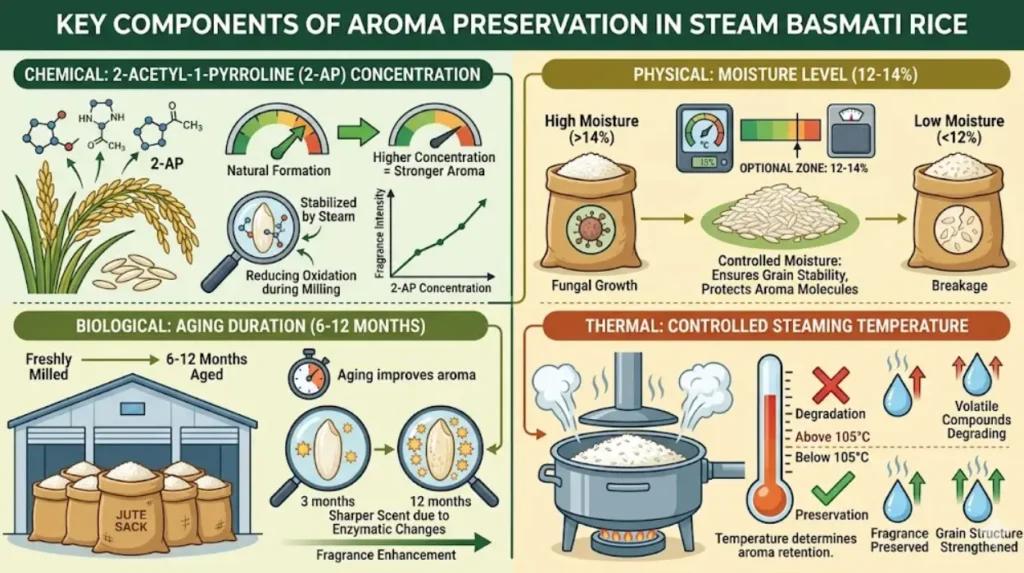
Four components control aroma preservation: 2-acetyl-1-pyrroline concentration, moisture level at 12–14%, aging duration of 6–12 months, and controlled steaming temperature below 105°C.
Aroma preservation depends on measurable chemical and physical factors. Each component interacts with the grain during cultivation and processing.
Chemical component: aroma compound
2-acetyl-1-pyrroline defines basmati fragrance. This compound forms naturally during grain development. Higher concentrations produce stronger aroma. Steam processing stabilizes this compound by reducing oxidation during milling.
Physical component: moisture control
Moisture content between 12–14% ensures grain stability. Higher moisture leads to fungal growth, while lower moisture causes breakage. Controlled moisture protects internal aroma molecules and prevents loss during storage.
Biological component: aging period
Aging improves aroma because enzymatic changes enhance fragrance compounds. Aged grains show stronger aroma compared to freshly milled rice. For example, 12-month aged basmati produces a sharper scent than 3-month aged rice.
Thermal component: steaming temperature
Steaming temperature determines aroma retention. Temperatures above 105°C degrade volatile compounds. Controlled steam exposure below this threshold preserves fragrance while strengthening grain structure.
These components define the scientific basis of aroma preservation, which leads to understanding the practical benefits of steam processing.
What are the benefits of aromatic steam basmati compared to other types?
Steam basmati delivers 3 measurable benefits: higher aroma retention at 70–80%, improved grain elongation above 2× length after cooking, and reduced breakage below 5% during milling and cooking.
Steam processing creates functional advantages for both cooking performance and storage stability. Each benefit links directly to the processing method.
Aroma retention benefit
Steam basmati retains more fragrance than white basmati because heat stabilizes aromatic compounds. Cooked rice releases a consistent scent, which remains noticeable even after reheating.
Grain elongation benefit
Steam-treated grains elongate more because internal starch structures remain intact. For example, a 7.4 mm grain expands to over 13 mm after cooking. This elongation improves presentation in dishes such as biryani and pulao.
Structural strength benefit
Steam basmati resists breakage during transport and cooking. Harder grain surfaces reduce fragmentation. Lower breakage improves visual quality and reduces waste in bulk cooking operations.
Storage stability benefit
Steam basmati performs better in warm climates. The hardened grain structure resists insect infestation and moisture absorption. In regions with 35–45°C temperatures, steam basmati maintains quality for 12 months under dry storage.
These benefits explain why steam basmati is widely used, which leads to the next question about its practical applications.
Where is steam super kernel basmati commonly used?
Steam super kernel basmati is used in 3 primary sectors: household cooking, restaurant food service, and bulk catering operations, especially in regions requiring consistent aroma and grain length.
Usage patterns depend on cooking volume, climate conditions, and dish requirements. Each sector values different attributes of steam basmati.
Household cooking
Households use steam basmati for daily meals because it cooks faster than parboiled rice. Cooking time ranges between 12–15 minutes. The aroma enhances simple dishes such as plain rice and vegetable pulao.
Restaurant applications
Restaurants prefer steam basmati for dishes requiring presentation and fragrance. Examples include biryani, mandi, and kabsa. The elongated grains improve plating quality and customer perception.
For comparison insights on restaurant usage patterns, see how steam and white basmati perform in Gulf kitchens through this detailed breakdown of restaurant preferences.
Bulk catering operations
Catering services use steam basmati because of its consistency in large batches. The rice maintains structure when cooked in quantities above 10 kg. Reduced breakage ensures uniform texture across servings.
Export markets
Steam basmati is exported to regions with high aromatic rice demand. Examples include Gulf countries, Europe, and North America. According to REAP export data (December 2025), Pakistan exports over 4 million tons of basmati annually, with steam variants forming a significant share.
These use cases show practical demand, which leads to common misunderstandings about steam basmati.
What are common problems and misconceptions about steam basmati?
Three misconceptions exist: steam basmati is not parboiled rice, aroma is not artificially added, and steam processing does not reduce nutritional value compared to raw basmati.
Misunderstandings often arise from confusion between processing methods and product categories.
Misconception 1: Steam equals parboiled
Steam basmati differs from parboiled rice in water exposure and pressure. Parboiling uses high-pressure soaking, which changes grain color to yellow. Steam basmati remains white because it uses controlled heat without excessive water pressure.
Misconception 2: Aroma is artificially enhanced
Aroma in basmati is natural and originates from the grain itself. No external flavoring is applied during processing. Steam treatment preserves existing aroma rather than creating new fragrance.
Misconception 3: Processing reduces nutrition
Steam processing does not remove essential nutrients significantly. The grain retains core starch and protein content. Nutritional values remain comparable to white basmati, with slight variations due to polishing levels.
Misconception 4: Steam rice cooks slower
Steam basmati cooks faster than parboiled rice. Cooking time stays within 12–15 minutes. Faster cooking results from controlled moisture content and grain structure.
These clarifications resolve confusion and reinforce how steam processing works and why it matters.
Frequently Asked Questions
What makes super kernel steam basmati rice more aromatic than regular basmati?
Super kernel steam basmati rice retains higher aroma because controlled steaming stabilizes 2-acetyl-1-pyrroline inside the grain. This process reduces aroma loss during milling and drying. Regular white basmati loses more fragrance because it undergoes direct polishing without heat stabilization.
How long should steam basmati rice be aged for best aroma?
Steam basmati rice requires 6–12 months of aging for optimal aroma development. Aging enhances enzymatic changes that strengthen fragrance compounds. Rice aged for 12 months produces a sharper and more stable aroma compared to freshly milled rice.
Does steam processing change the cooking time of basmati rice?
Steam processing reduces cooking time compared to parboiled rice. Steam basmati cooks within 12–15 minutes under standard boiling conditions. Controlled moisture levels allow faster water absorption while maintaining grain structure and elongation.
Is steam basmati rice suitable for large-scale cooking?
Steam basmati rice performs consistently in bulk cooking above 10 kg batches. The grains maintain separation and structure during cooking. Reduced breakage and uniform elongation make it suitable for catering operations and restaurant kitchens.
How should steam basmati rice be stored to maintain aroma?
Store steam basmati rice at moisture levels below 14% in dry, ventilated conditions. Use airtight packaging to prevent moisture absorption. Maintain storage temperatures below 30°C to protect aroma compounds and prevent quality degradation.