1509 Basmati vs Super Kernel: Which Rice Has Better Aroma?
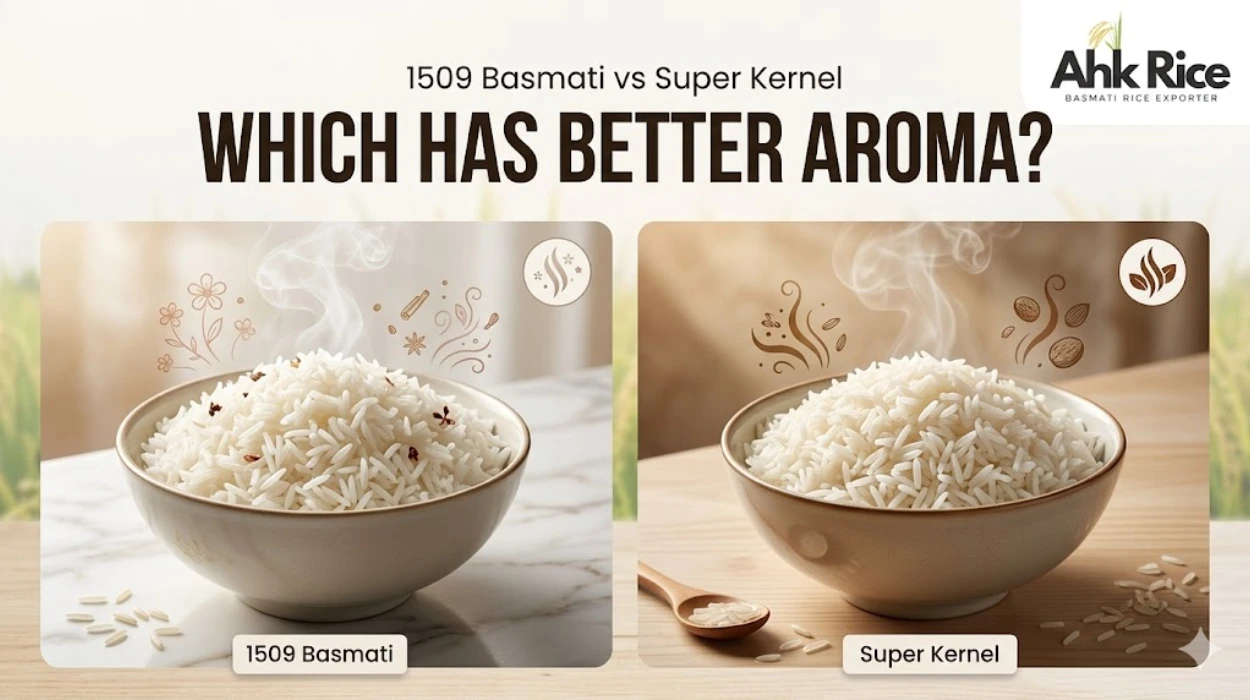
1509 Basmati delivers a stronger fresh aroma immediately after cooking, while Super Kernel provides a deeper traditional Basmati fragrance preferred in premium retail markets. The better choice depends on buyer expectations, target market preferences, and intended food applications. Here is why: aroma intensity, aging characteristics, grain structure, and cooking performance differ significantly between these two Pakistani Basmati varieties.
Importers, wholesalers, and food service buyers often compare these two varieties before placing large-volume orders. Buyers researching Pakistani aromatic rice varieties can first understand how modern Basmati grades evolved through our guide on different Pakistani Basmati rice varieties and export specifications. Understanding those foundations makes the comparison between 1509 and Super Kernel much easier.
AHK Rice is a trusted Pakistani Basmati rice exporter based in Punjab, supplying 1121, Super Kernel, and 1509 varieties to more than 15 countries. The company manages cultivation sourcing, milling, grading, packaging, inspection, and export documentation through an end-to-end process.
What Makes Rice Aroma Different Between 1509 Basmati and Super Kernel?
1509 Basmati produces a stronger immediate fragrance, while Super Kernel develops a richer traditional aroma through aging. Both varieties contain natural aromatic compounds, but grain structure and maturation characteristics create noticeable differences during cooking and consumption.
Rice aroma comes primarily from a naturally occurring compound called 2-Acetyl-1-Pyrroline (2AP). This compound creates the signature fragrance associated with premium Basmati rice.
1509 Basmati was developed as an improved variety with shorter cultivation cycles and higher productivity. The variety retains strong aromatic characteristics while producing longer grains after cooking.
Super Kernel Basmati belongs to the traditional premium Basmati category. Buyers often associate it with classic Pakistani Basmati fragrance because the variety responds exceptionally well to controlled aging.
Aroma Development Comparison
| Attribute | 1509 Basmati | Super Kernel |
|---|---|---|
| Fresh Aroma Intensity | High | Medium-High |
| Aged Aroma Strength | High | Very High |
| Fragrance Persistence | High | Very High |
| Traditional Basmati Notes | Medium | Excellent |
| Sweet Aromatic Notes | High | High |
| Premium Retail Preference | High | Very High |
| Catering Sector Preference | Very High | Medium |
1509 Basmati releases aroma rapidly during cooking. Restaurants often prefer this characteristic because customers immediately notice the fragrance.
Super Kernel develops complexity during storage and aging. Premium retail brands frequently choose this variety because consumers associate the aroma with traditional Basmati rice.
Aroma alone does not determine purchasing decisions. Grain specifications also influence market selection, which leads directly to the next comparison.
How Do 1509 Basmati and Super Kernel Compare in Specifications?
1509 Basmati offers longer cooked grain length and higher yield, while Super Kernel delivers traditional grain characteristics and premium fragrance perception. Both varieties satisfy different commercial requirements.
Rice buyers evaluate specifications before evaluating aroma. Grain dimensions influence cooking performance, presentation, and consumer acceptance.
Specification Comparison Table
Export Specification Data
| Attribute | 1509 Basmati | Super Kernel Basmati |
|---|---|---|
| Average Grain Length | 8.30–8.50 mm | 7.20–7.60 mm |
| Cooked Grain Length | 16–18 mm | 13–15 mm |
| Grain Shape | Extra Long Slender | Long Slender |
| Aroma Type | Fresh Floral | Traditional Basmati |
| Cooking Expansion | High | Medium-High |
| Crop Duration | Shorter | Longer |
| Export Demand Growth | High | Stable Premium |
1509 Basmati attracts buyers seeking visual appeal. Long grain elongation creates attractive presentations in biryani, pilaf, and banquet dishes.
Super Kernel attracts buyers seeking authenticity. Traditional Basmati consumers recognize its distinctive grain appearance and fragrance profile.
These specification differences influence market preferences across different regions.
Which Markets Prefer 1509 Basmati and Which Prefer Super Kernel?
Gulf markets generally prefer 1509 Basmati for catering and hospitality operations, while premium Middle Eastern and European retail sectors often prefer Super Kernel for traditional Basmati positioning.
Market preference depends on consumer habits, storage conditions, and pricing expectations.
Gulf Cooperation Council Markets
Countries such as United Arab Emirates, Saudi Arabia, and Qatar consume large volumes of Basmati rice.
1509 Basmati performs exceptionally well in catering operations. Hotels and restaurants value grain elongation, visual appearance, and cost efficiency.
Large-scale food service operators often prioritize consistency over traditional aroma complexity. 1509 satisfies this requirement effectively.
European and Premium Retail Markets
Countries such as United Kingdom, Germany, and France frequently import premium Basmati products.
Super Kernel performs strongly in branded retail packaging. Consumers purchasing premium Basmati often associate traditional fragrance with higher quality.
Retail brands benefit from Super Kernel’s reputation and established consumer recognition.
Regional preferences affect pricing, which is another critical purchasing factor.
What Is the Price Difference Per Metric Ton?
1509 Basmati generally offers lower procurement costs and higher yield efficiency, while Super Kernel commands premium pricing because of traditional aroma characteristics and market positioning.
Export prices fluctuate according to crop conditions, freight costs, and seasonal demand.
Typical Export Price Comparison
| Category | 1509 Basmati | Super Kernel |
|---|---|---|
| Market Position | Value Premium | Premium |
| Relative Price Level | Lower | Higher |
| Catering Suitability | Excellent | Good |
| Retail Suitability | Very Good | Excellent |
| Margin Potential | High Volume | Premium Margin |
A Gulf catering importer serving thousands of meals daily often benefits from 1509 Basmati because longer cooked grains improve perceived value.
A specialty retail importer targeting premium consumers often benefits from Super Kernel because traditional aroma supports premium shelf positioning.
Price should never be evaluated separately from shelf life and storage performance.
Which Rice Has Better Shelf Life and Storage Performance?
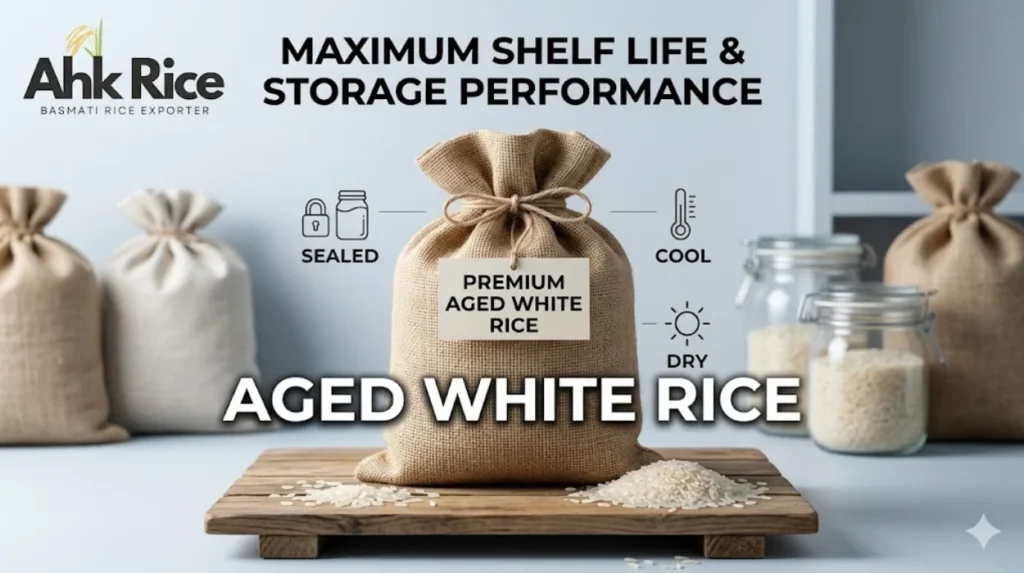
Both varieties maintain quality for up to 24 months under proper storage conditions, but Super Kernel often improves in aroma through aging while 1509 maintains stronger fresh-crop characteristics.
Shelf life depends on moisture control, packaging quality, warehouse conditions, and fumigation practices.
Shelf Life Comparison
| Storage Factor | 1509 Basmati | Super Kernel |
|---|---|---|
| Recommended Moisture | 12–13% | 12–13% |
| Typical Shelf Life | 24 Months | 24 Months |
| Aging Benefits | Moderate | Significant |
| Aroma Stability | High | Very High |
| Retail Storage Suitability | High | Very High |
Super Kernel responds exceptionally well to controlled aging.
Premium rice traders often store aged Super Kernel inventory because fragrance intensity increases over time.
1509 remains highly stable during storage. Catering buyers frequently prefer predictable cooking performance rather than aged aroma development.
Storage performance naturally leads to evaluating advantages and disadvantages.
What Are the Pros and Cons of Each Rice Variety?
1509 Basmati excels in grain length, yield, and catering applications, while Super Kernel excels in traditional aroma, premium positioning, and aged fragrance development.
1509 Basmati Advantages
Pros
- Longer cooked grain appearance
- Higher cooking expansion
- Strong fresh aroma
- Better catering suitability
- Competitive procurement costs
- High export demand
Cons
- Less traditional fragrance profile
- Lower premium retail perception
- Limited aging benefits
Super Kernel Advantages
Pros
- Traditional Basmati aroma
- Strong premium positioning
- Excellent aging response
- High retail acceptance
- Recognized global reputation
Cons
- Higher procurement costs
- Shorter cooked grain length
- Lower catering efficiency
A Dubai catering company serving wedding events benefits from 1509 because grain elongation creates attractive food presentation.
A UK premium retail brand benefits from Super Kernel because traditional fragrance supports premium consumer expectations.
Understanding strengths and weaknesses makes the final selection process easier.
Which Rice Works Best for Different Buyer Types?
1509 Basmati works best for food service, catering, and high-volume importers, while Super Kernel works best for premium retail brands, specialty distributors, and traditional Basmati markets.
Decision Framework
| Buyer Type | Recommended Variety | Primary Reason |
|---|---|---|
| Catering Importer | 1509 Basmati | Grain elongation |
| Hotel Supplier | 1509 Basmati | Presentation quality |
| Wholesale Distributor | 1509 Basmati | Volume efficiency |
| Premium Retail Brand | Super Kernel | Traditional aroma |
| Specialty Food Importer | Super Kernel | Premium positioning |
Buyer objectives determine the correct variety.
Food service operators focus on consistency, cooking yield, and appearance.
Retail brands focus on aroma, consumer perception, and shelf differentiation.
Distributors serving multiple customer categories often stock both varieties to address different demand segments.
The final decision depends on balancing aroma expectations with commercial requirements.
What Is the Best Choice Between 1509 Basmati and Super Kernel?
1509 Basmati offers the better immediate aroma experience and stronger grain elongation, while Super Kernel delivers the better traditional Basmati fragrance and premium retail appeal. Neither variety is universally superior because each serves a different commercial purpose.
1509 Basmati represents the strongest option for catering companies, wholesalers, hospitality suppliers, and volume-focused importers.
Super Kernel represents the strongest option for premium retail brands, specialty distributors, and buyers targeting traditional Basmati consumers.
Importers selecting rice primarily for visual presentation and operational efficiency should choose 1509.
Importers selecting rice primarily for authentic Basmati fragrance and premium branding should choose Super Kernel.
For buyers evaluating export-ready 1509 specifications, packaging options, processing grades, and international supply capabilities, “detailed export specifications and sourcing options for 1509 Basmati rice“.
Frequently Asked Questions
Does 1509 Basmati have stronger aroma than Super Kernel?
Yes. 1509 Basmati produces a stronger immediate aroma after cooking, while Super Kernel develops a deeper traditional fragrance through aging.
Why do premium retailers prefer Super Kernel?
Premium retailers prefer Super Kernel because consumers recognize its traditional Basmati aroma and established reputation.
Which rice is better for restaurants?
1509 Basmati is generally better for restaurants because of longer grain elongation, strong aroma, and consistent cooking performance.
Which variety offers better value for importers?
1509 Basmati often offers better value for high-volume importers because it combines competitive pricing with strong cooking yield.
Can both varieties be exported worldwide?
Yes. Both varieties are widely exported and can be supplied in customized packaging formats according to market requirements.