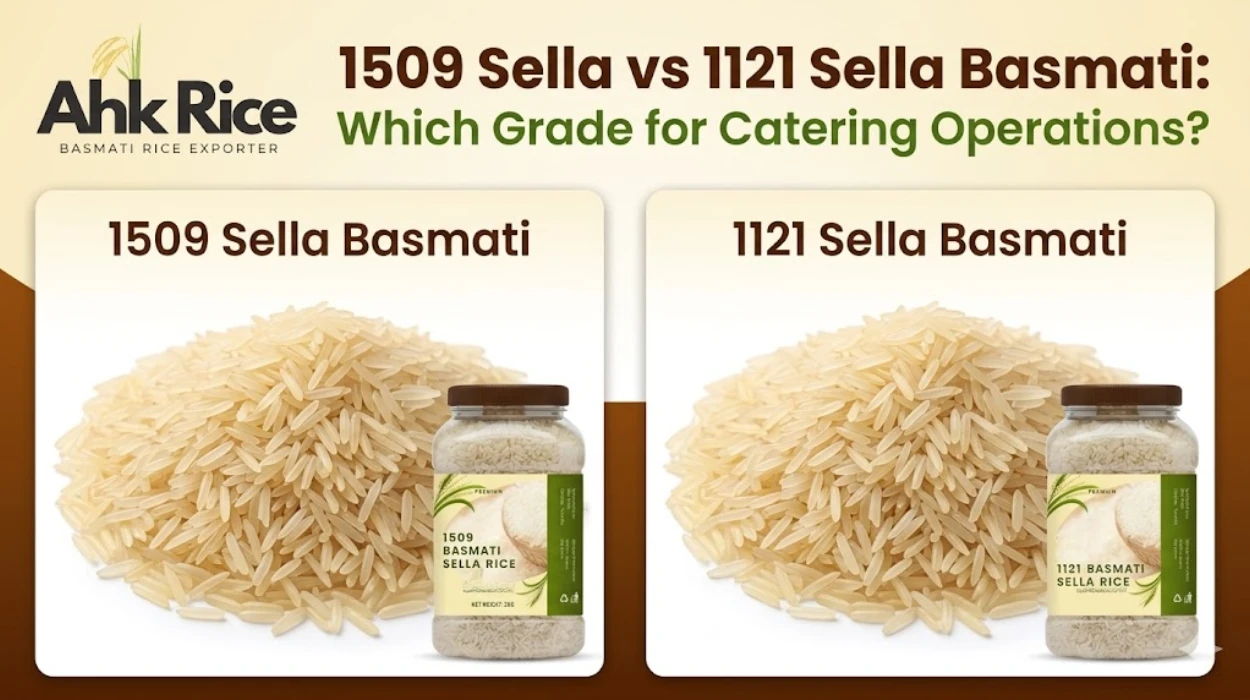
1509 Sella vs 1121 Sella Basmati: Which Grade for Catering Operations?
1121 Sella Basmati is the better choice for premium catering scale and plate presentation, while 1509 Sella Basmati is the correct specification for high-volume, cost-controlled catering operations. Here is why: 1121 delivers longer grain length and visual appeal, while 1509 delivers faster cooking cycles and lower cost per serving.
Catering buyers choose between consistency, cost efficiency, and presentation value. Both grades meet industrial cooking requirements, but each fits a different operational model. This comparison explains the exact specification differences, operational impact, and purchasing decision logic.
For a full understanding of how parboiled rice grades are processed and classified, refer to our educational guide on sella basmati processing methods before evaluating these grades in detail.
What are the available solutions for catering-grade Sella Basmati?
Two core solutions exist: 1121 Sella for premium presentation catering and 1509 Sella for high-efficiency bulk catering operations, each optimized for different cooking cycles, cost structures, and service formats.
Catering operations require rice that performs under pressure. Kitchens cook in bulk. Storage conditions vary. Service speed matters. The correct grade must align with these operational constraints.
1121 Sella Basmati
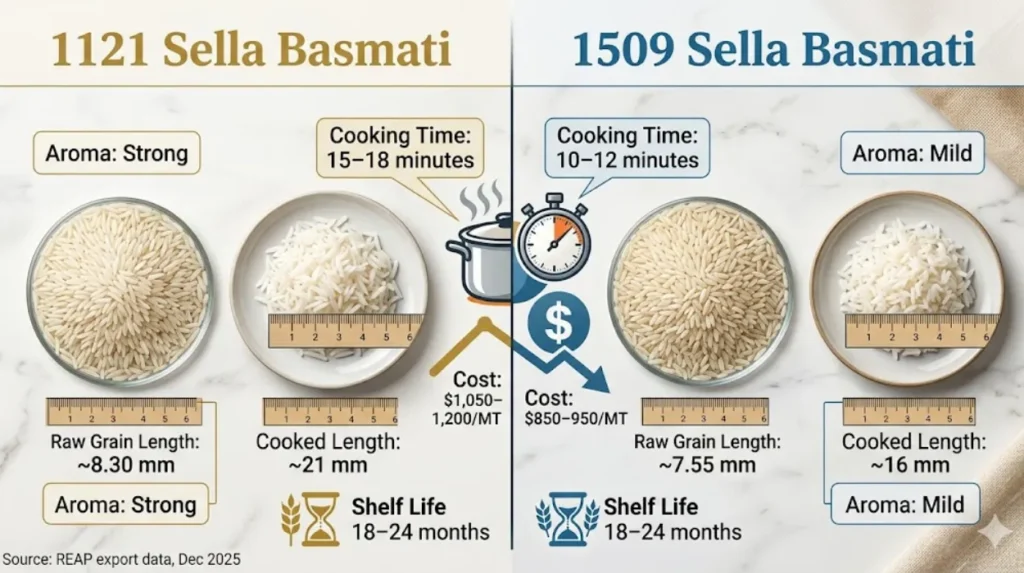
1121 Sella Basmati delivers extra-long grain length and strong elongation after cooking. The grain measures 8.20–8.40 mm before cooking and extends up to 20–22 mm after cooking. This visual expansion defines premium catering plates.
1121 performs best in banquet catering. It holds structure during long service windows. It resists breakage during repeated reheating cycles. This makes it suitable for buffets and plated service.
1509 Sella Basmati
1509 Sella Basmati delivers medium-long grain length with faster cooking time. The grain measures 7.40–7.70 mm and elongates moderately during cooking. The shorter cooking cycle reduces fuel usage and kitchen load.
1509 performs best in institutional catering. It cooks quickly in large vessels. It absorbs flavors efficiently. This makes it suitable for mass feeding operations such as airlines, labor camps, and large kitchens.
Processing stages for both grades
Both grades follow the same 9-step parboiling and milling process:
- Clean the paddy
- Soak the grain
- Steam under pressure
- Dry the paddy
- Dehusk the grain
- Polish the rice
- Sort by length
- Grade by quality
- Pack for export
Each step ensures structural strength, uniform color, and shelf stability.
With the available solutions defined, the next step is to compare how these grades perform across measurable specifications.
How do 1509 Sella and 1121 Sella compare in specifications?
1121 leads in grain length and elongation, while 1509 leads in cooking speed and cost efficiency; both maintain similar shelf life and moisture stability under standard export conditions.
Specification Comparison Table
| Attribute | 1121 Sella Basmati | 1509 Sella Basmati |
|---|---|---|
| Grain Length (mm) | 8.20–8.40 | 7.40–7.70 |
| Cooked Length (mm) | 20–22 | 15–17 |
| Broken Ratio | ≤2% | ≤5% |
| Cooking Time | 15–18 minutes | 10–12 minutes |
| Water Absorption | High | Moderate |
| Aroma Intensity | Strong | Mild |
| Cost per MT (avg) | $1,050–1,200 | $850–950 |
(source: REAP export data, December 2025)
Performance differences in catering kitchens
1121 Sella maintains grain separation during long holding times. In a buffet setup lasting 4 hours, grains remain intact and visually appealing.
1509 Sella cooks faster under pressure. In industrial kitchens using steam boilers, batch cooking time reduces by up to 25%. This improves kitchen throughput.
Shelf life comparison
Both grades offer 18–24 months shelf life under dry storage. However, performance varies by environment:
- 1121 maintains structure longer in humid climates
- 1509 performs reliably in dry bulk storage conditions
In a 40°C Gulf warehouse, 1121 retains grain strength for 18 months. 1509 remains stable but shows slightly reduced elongation after extended storage.
With specification differences established, the next step is to evaluate which approach fits different catering scenarios.
Which method works best for different catering cases?
1121 Sella works best for premium catering, while 1509 Sella works best for cost-sensitive, high-volume operations where speed and efficiency matter more than presentation.
Premium catering operations
1121 Sella fits hotel buffets and wedding catering. These operations prioritize presentation and customer perception.
Example: A Dubai hotel serving biryani requires long, separate grains. 1121 delivers visual appeal that supports premium pricing.
Industrial catering operations
1509 Sella fits airline kitchens and institutional feeding programs. These operations prioritize consistency and cost per plate.
Example: A Saudi labor camp serving 5,000 meals daily reduces cooking time and fuel cost using 1509.
Regional preference comparison
Gulf Region
- Preference: 1121 Sella
- Reason: High demand for long grain presentation
- Price tolerance: Higher
African Markets
- Preference: 1509 Sella
- Reason: Cost efficiency and bulk supply
- Price sensitivity: High
(source: Pakistan Bureau of Statistics, FY2024-25)
Cost per serving analysis
1121 costs more per metric ton but delivers higher perceived value. A catering plate using 1121 can justify premium pricing.
1509 reduces cost per serving by up to 15–20% due to lower raw material cost and faster cooking.
With use-case alignment clarified, the next step is to evaluate the advantages and limitations of each option.
What are the pros and cons of each grade?
1121 offers superior presentation and elongation, while 1509 offers operational efficiency and cost savings; each trade-off directly impacts catering profitability and service quality.
1121 Sella – Pros
- Long grain appearance enhances plate value
- Strong elongation improves visual volume
- High resistance to breakage during handling
1121 Sella – Cons
- Higher procurement cost per metric ton
- Longer cooking cycle increases fuel usage
- Requires precise water control during cooking
1509 Sella – Pros
- Faster cooking reduces kitchen workload
- Lower cost improves profit margins
- Consistent performance in bulk cooking
1509 Sella – Cons
- Shorter grain reduces visual appeal
- Lower elongation limits premium positioning
- Slightly higher broken ratio affects uniformity
Practical example
1121 increases buffet appeal in a 5-star hotel. Guests perceive higher quality due to grain length.
1509 improves efficiency in airline catering. Faster cooking reduces turnaround time between meal batches.
With advantages and limitations defined, the final step is to identify the decision factors that determine the correct grade.
What decision factors should catering buyers consider?
Buyers should prioritize service type, cost structure, cooking infrastructure, and customer expectations when selecting between 1509 and 1121 Sella grades.
Decision Framework Table
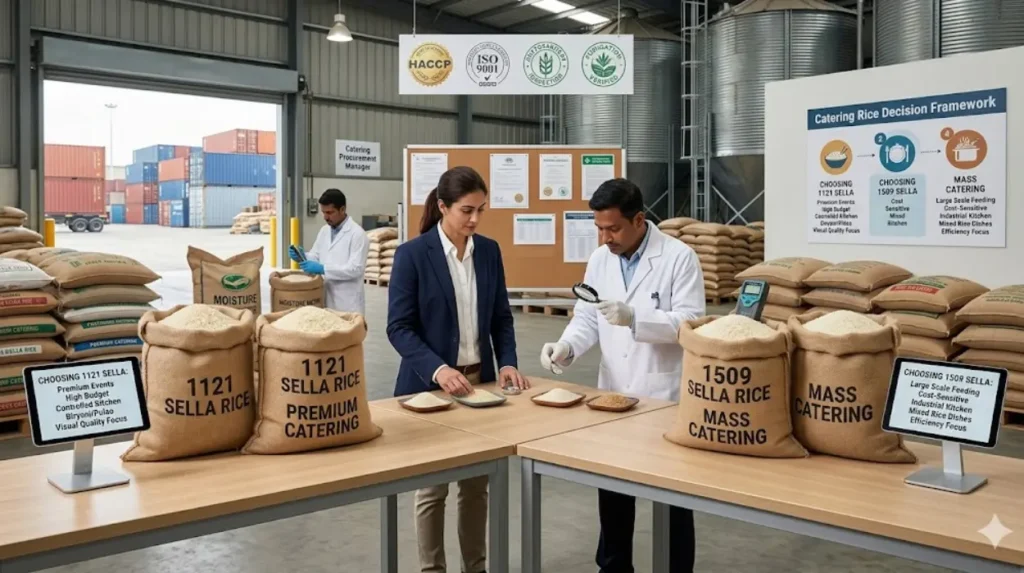
| Factor | Choose 1121 Sella | Choose 1509 Sella |
|---|---|---|
| Service Type | Premium catering | Mass catering |
| Budget | High budget | Cost-sensitive |
| Cooking Setup | Controlled kitchen | Industrial bulk kitchen |
| Customer Expectation | Visual quality | Portion consistency |
| Menu Type | Biryani, pulao | Mixed rice dishes |
Key evaluation criteria
Catering scale determines the grade. High-end service requires presentation. Large-scale feeding requires efficiency.
Cooking infrastructure influences performance. Modern kitchens handle 1121 complexity. Bulk kitchens benefit from 1509 simplicity.
Storage conditions affect shelf performance. Controlled environments favor 1121. Open storage favors 1509 stability.
Certification and quality requirements
Both grades meet export standards when properly processed:
- ISO certification
- HACCP compliance
- Phytosanitary inspection
- Fumigation verification
Each shipment must be inspected, tested, and certified before dispatch.
With decision factors defined, buyers can align grade selection with operational goals.
Final Recommendation for Catering Operations
1121 Sella is the correct choice for premium, presentation-driven catering, while 1509 Sella is the correct choice for high-volume, efficiency-driven catering operations.
Catering buyers must align rice grade with service expectations. Grain length drives perception. Cooking speed drives efficiency. Cost drives scalability.
For buyers evaluating bulk procurement terms, shipping timelines, and pricing structures, detailed insights are available in our guide on sourcing Basmati for Gulf catering markets.
Frequently Asked Questions
What is the main difference between 1509 Sella and 1121 Sella Basmati?
The main difference is grain length and cooking performance. 1121 Sella has longer grains and higher elongation, making it suitable for premium catering. 1509 Sella cooks faster and costs less, making it ideal for bulk operations. Both are parboiled and suitable for large-scale kitchens.
Which Sella Basmati grade is better for large catering operations?
Large catering operations benefit more from 1509 Sella because it cooks in 10–12 minutes and reduces fuel costs. It also delivers consistent results in bulk cooking environments. However, premium catering setups prefer 1121 Sella for better presentation and grain separation.
Does 1121 Sella Basmati have a longer shelf life than 1509?
Both grades offer 18–24 months shelf life under proper storage conditions. 1121 maintains grain strength better in humid environments, while 1509 performs reliably in dry storage. Storage temperature and moisture control directly impact shelf stability.
Which grade is more cost-effective for catering businesses?
1509 Sella is more cost-effective due to lower price per metric ton and faster cooking time. It reduces both procurement cost and kitchen operating cost. 1121 costs more but delivers higher perceived value in premium catering segments.
Can both 1509 and 1121 Sella be used for biryani?
Both grades can be used for biryani, but the outcome differs. 1121 Sella produces longer, more separate grains suited for premium biryani, while 1509 Sella produces shorter grains with faster cooking, suitable for bulk biryani production.