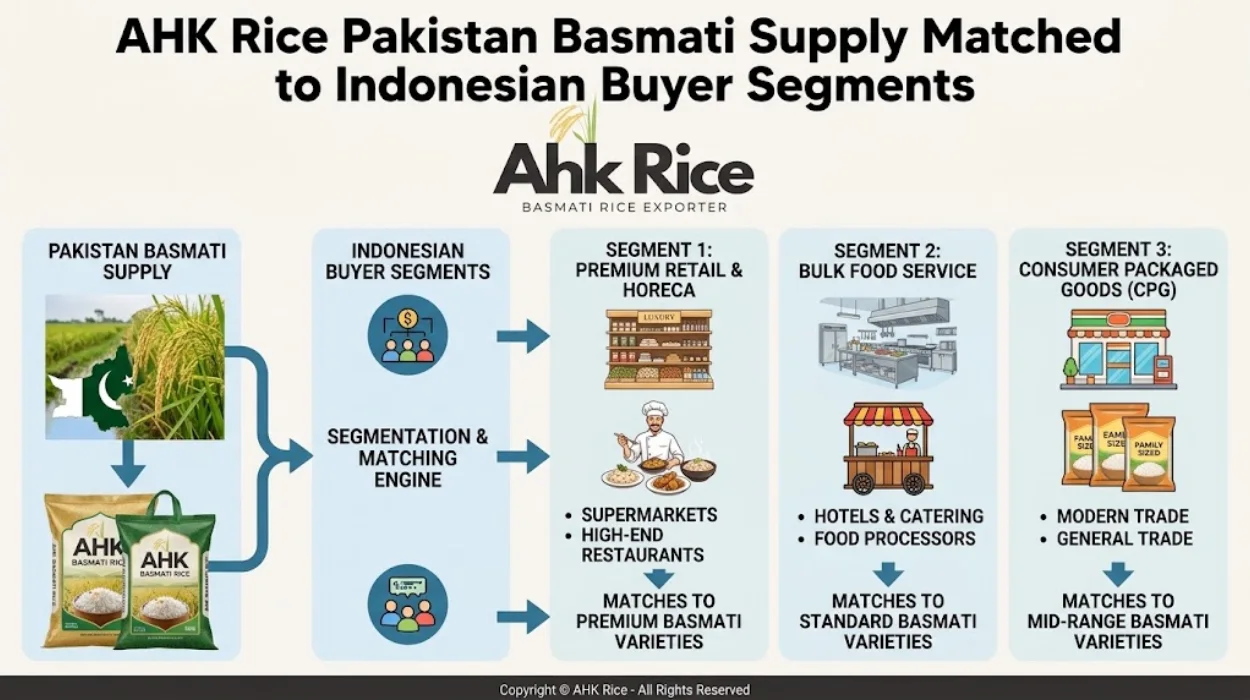
AHK Rice Pakistan Basmati Supply Matched to Indonesian Buyer Segments
AHK Rice Pakistan Basmati supply helps Indonesian importers match 1121, Super Kernel, and 1509 grades to retail, HORECA, and wholesale demand. Here is why: the right grain length, processing type, packaging, and shipment plan protect margins and improve cooking performance.
Indonesian buyers need different specifications for supermarkets, restaurants, and distribution warehouses. A premium retailer values appearance and consistent grain length. A restaurant group needs reliable cooking results and repeat deliveries. A wholesaler prioritizes cost, shelf life, and efficient handling.
The earlier guide, [How Can Indonesian Buyers Match Pakistani Basmati Grades to Customer Segments?], explains the relationship between rice grades and customer requirements. This BOFU guide focuses on selecting a supplier, confirming specifications, controlling costs, and preparing the first shipment.
What Is the Best Solution for Indonesian Rice Importers?
A segment-specific supply specification is the best solution. Indonesian importers should select rice grade, processing type, packaging, and quantity according to the intended sales channel. Here is why: a single specification rarely serves premium retail, HORECA, and wholesale equally well.
Premium Retail
Premium retail requires attractive grain appearance, consistent cooking performance, and packaging that communicates quality. 1121 Steam Basmati suits retailers selling long-grain rice with a premium positioning. 1121 Golden Sella suits stores that need parboiled rice with firm cooked grains.
HORECA
HORECA buyers need repeatable cooking results, reliable supply, and efficient kitchen handling. 1121 Steam offers long grains and a familiar Basmati cooking profile. Super Kernel provides another premium option for restaurant groups seeking aromatic rice with a distinct grain shape.
Wholesale Distribution
Wholesale buyers need competitive landed cost, practical bag sizes, and dependable shelf-life management. 1509 Steam suits distributors seeking a cost-conscious long-grain option. 1509 Golden Sella suits buyers who prioritize parboiled rice for longer storage and distribution cycles.
AHK Rice can match the specification to the segment instead of treating every Indonesian buyer as a single customer type.
Grade Selection Table
| Buyer segment | Recommended grade | Main specification priority |
|---|---|---|
| Premium retail | 1121 Steam | Long grain, appearance, cooking quality |
| Premium retail | 1121 Golden Sella | Firm cooked grain, parboiled processing |
| HORECA | 1121 Steam | Grain separation, repeatable cooking |
| HORECA | Super Kernel | Aroma, grain quality, restaurant presentation |
| Wholesale | 1509 Steam | Cost control, long grain, versatile use |
| Wholesale | 1509 Golden Sella | Storage stability, parboiled cooking |
The grade selection establishes the product decision. The next question is how AHK Rice converts that decision into a dependable export specification.
Why Choose AHK Rice for Indonesian Basmati Supply?
AHK Rice combines Pakistani Basmati sourcing, processing, packaging, and export coordination. Here is why: importers need one supply partner that can align product specifications with documentation, packaging, and shipment requirements.
AHK Rice is a trusted Pakistani Basmati rice exporter based in Punjab. The company supplies 1121, Super Kernel, and 1509 varieties. Its end-to-end processing and export service supports buyers seeking a consistent specification across repeated orders.
Processing and Quality Control
AHK Rice processes rice through cleaning, dehusking, polishing, grading, sorting, and packaging. Each stage serves a commercial purpose. Cleaning removes unwanted material. Dehusking removes the husk. Polishing improves surface appearance. Grading separates grain categories. Sorting improves uniformity.
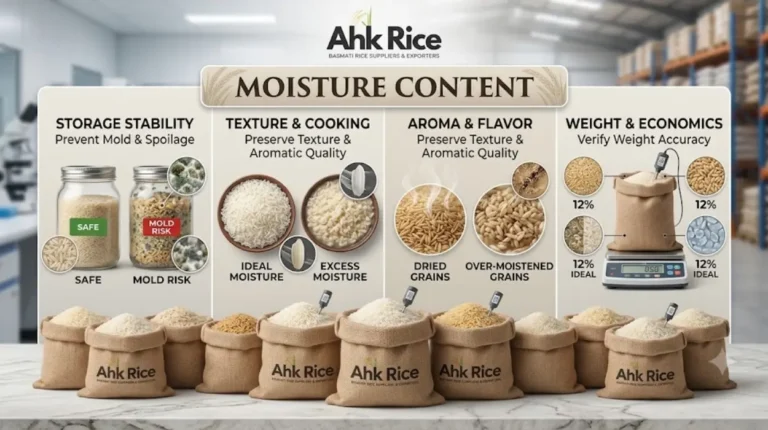
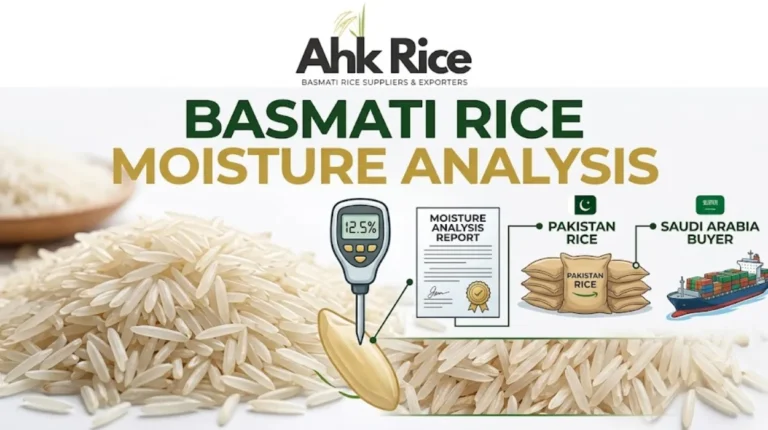
Colour sorting removes discoloured grains. Moisture control supports storage quality. Fumigation protects the shipment against specified pest risks. Laboratory testing verifies agreed quality parameters.
Packaging and Private Label
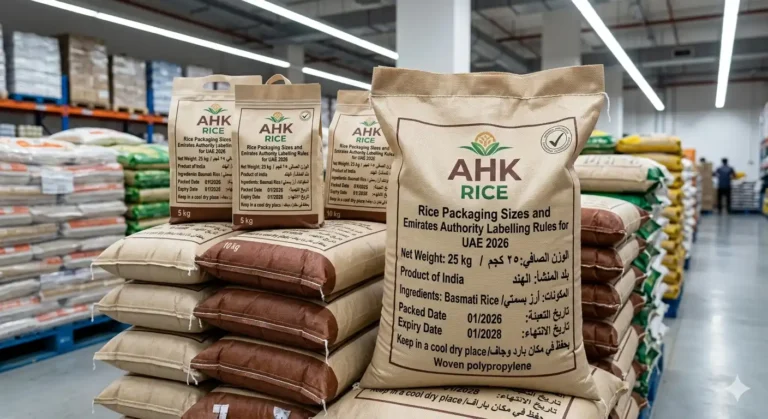
Custom packaging helps Indonesian importers match rice products to their retail or distribution model. Retail buyers can request consumer-focused packaging. Wholesale buyers can select practical bulk formats. Restaurant groups can use larger bags that reduce handling frequency.
Packaging decisions should include bag material, net weight, artwork, labelling, palletization, and container loading. AHK Rice coordinates these details with the buyer’s specification.
Export Coordination
Export coordination covers commercial documents, shipment preparation, and dispatch planning. The buyer should confirm the agreed Incoterm, destination port, product specification, packaging format, and required certificates before production begins.
AHK Rice supplies to international markets and supports buyers through the export process. The next section explains the proof a buyer should require before confirming an order.
What Results Can Indonesian Buyers Expect?
A documented specification and approved sample can reduce product uncertainty before commercial dispatch. Here is why: buyers can verify grain appearance, cooking performance, packaging, and shipment documents before committing to a full container.
Sample Approval
The first sample should represent the proposed commercial grade. The buyer should inspect grain length, colour, broken percentage, foreign matter, moisture, and cooking performance.
The buyer should also test the rice in the intended kitchen or retail environment. A restaurant group can prepare its standard menu. A retailer can inspect the grain appearance and packaging presentation. A wholesaler can assess bag handling and storage requirements.
Commercial Consistency
A consistent specification supports repeat orders. The buyer should record the approved grade, processing type, grain length, broken percentage, moisture limit, packaging, and quantity.
AHK Rice can use the approved specification as the basis for production and export coordination. The buyer should request a pre-shipment inspection report for the agreed quality parameters.
Shipment Reliability
Shipment planning depends on production readiness, packaging approval, container availability, port schedules, and destination clearance. AHK Rice can coordinate the export process around the buyer’s agreed delivery plan.
The buyer should confirm the expected dispatch date and estimated transit time before placing the order. The next section covers shipping days and the costs that affect the landed price.
How Many Shipping Days Does Pakistan Basmati Rice Take to Indonesia?
Pakistan-to-Indonesia shipments commonly require several weeks from dispatch to destination delivery. Here is why: production, container loading, port handling, sea transit, customs clearance, and inland delivery each affect the final timeline.
Estimated Shipping Schedule
| Market | Estimated sea transit | Planning consideration |
|---|---|---|
| Jakarta | 20–30 days | Confirm destination port and clearance |
| Surabaya | 22–32 days | Allow for inland distribution |
| Other Indonesian ports | 25–40 days | Confirm routing and transshipment |
These are planning estimates, not guaranteed delivery times. Actual schedules depend on the shipping line, vessel route, port congestion, and customs clearance.
AHK Rice should confirm the available sailing schedule before dispatch. Indonesian importers should also confirm their import documentation and destination clearance requirements.
The shipping schedule establishes the delivery expectation. The next section explains how to calculate the full sample process and its costs.
What Is the Full Sample Process and Cost?
A complete sample process includes specification confirmation, sample preparation, freight, testing, and approval. Here is why: the buyer needs to evaluate the rice before committing to commercial production.
Step 1: Confirm the Specification
Confirm the rice grade, processing type, grain length, broken percentage, moisture limit, packaging, and intended customer segment. This prevents a sample from representing the wrong commercial product.
Step 2: Prepare the Sample
AHK Rice prepares the agreed rice sample from the proposed grade. The sample should reflect the grain appearance and processing type intended for the commercial order.
Step 3: Arrange Delivery
The sample can be dispatched through an international courier. The final cost depends on destination, sample weight, courier service, and delivery speed.
Step 4: Test the Rice
The buyer should test the rice for appearance, aroma, cooking performance, and agreed quality attributes. Laboratory testing can verify technical specifications.
Step 5: Approve the Sample
The buyer confirms the approved grade, packaging, quantity, and commercial terms. AHK Rice then prepares the production and export plan.
Indicative Sample Cost
| Cost component | Estimated cost |
|---|---|
| Sample preparation | $10–$25 |
| Courier delivery | $60–$150 |
| Laboratory testing | $50–$150 |
| Packaging sample | $10–$30 |
| Estimated total | $130–$355 |
These are indicative planning figures, not confirmed AHK Rice charges. Actual costs depend on the destination, sample size, courier, and requested testing.
The sample process reduces uncertainty. The next section explains the commercial factors that determine the final order price.
What Factors Affect the Cost of Pakistani Basmati Rice in Indonesia?
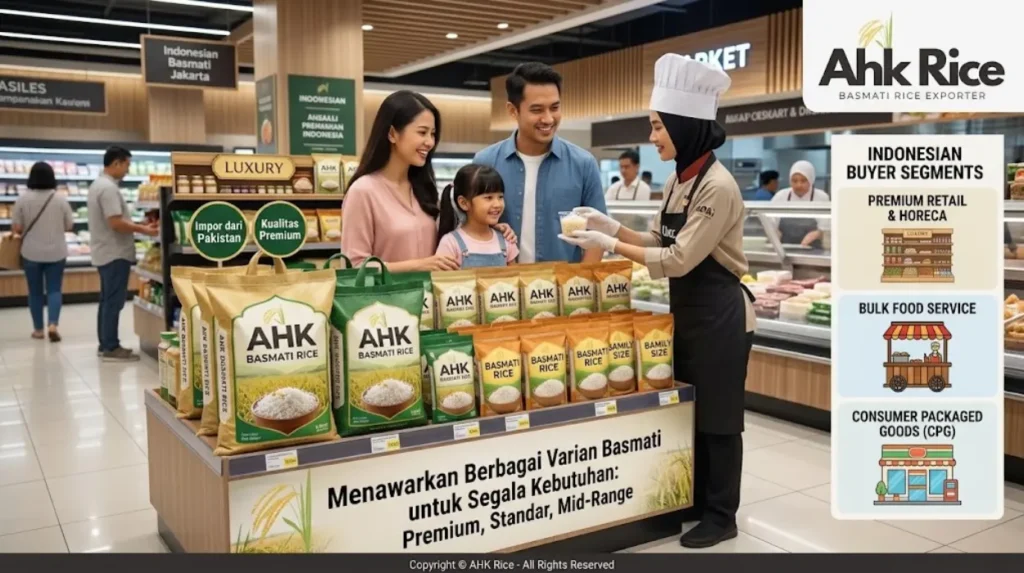
The final landed cost depends on rice grade, processing, packaging, quantity, freight, and import charges. Here is why: every specification adds or reduces cost before the shipment reaches the Indonesian buyer.
Rice Grade
1121 Basmati generally commands a premium over 1509 because of its long-grain positioning. Super Kernel provides another premium specification for buyers seeking distinctive grain quality.
Processing Type
Steam, Sella, and Golden Sella processing affect the product specification and price. Parboiling changes the grain structure and cooking behaviour. The buyer should select the processing type according to the intended customer segment.
Packaging
Retail packaging often requires printed bags, artwork, and smaller net weights. Wholesale packaging usually prioritizes handling efficiency and cost control. Custom packaging can increase the per-unit cost but support a differentiated product.
Order Quantity
Larger orders can improve freight efficiency and production planning. The buyer should compare the total landed cost per metric ton rather than only the rice purchase price.
Freight and Import Charges
Freight depends on the origin port, destination port, container type, and shipping line. Import charges depend on the product classification, applicable duties, taxes, and clearance requirements.
AHK Rice can prepare a quotation based on the confirmed specification and destination. The next section explains how Indonesian buyers should start the order.
How Can Indonesian Importers Get Started with AHK Rice?
Indonesian buyers should begin with a written specification, sample approval, and a confirmed commercial quotation. Here is why: the process aligns product quality, packaging, quantity, and delivery before production starts.
Buyer Information
Prepare the following details:
- Buyer company name and contact details
- Destination port and delivery location
- Required rice grade and processing type
- Target quantity in metric tons
- Preferred packaging and bag size
- Required quality specifications
- Intended customer segment
- Target shipment schedule
Supplier Confirmation
AHK Rice reviews the buyer’s requirements and prepares the available product specification. The buyer confirms the grade, processing type, packaging, quantity, and commercial terms.
Sample Approval
The buyer receives and tests the sample. The approved sample becomes the reference for the commercial order.
Production and Dispatch
AHK Rice coordinates production, packaging, inspection, documentation, and container loading. The shipment is dispatched according to the agreed export plan.
The best supplier decision is not based on rice price alone. Indonesian importers should evaluate product fit, specification control, packaging capability, sample approval, and export coordination.
AHK Rice offers Pakistani Basmati supply for Indonesian retail, HORECA, and wholesale buyers. The company supports the process from product selection to export shipment.
For a quotation matched to your grade, packaging, and destination requirements, visit AHK Rice and submit your request through the contact process.
Frequently Asked Questions
Which Pakistani Basmati grade is best for Indonesian premium retail?
1121 Steam Basmati suits premium retail because of its long-grain appearance and cooking performance. 1121 Golden Sella suits buyers seeking parboiled rice with firm cooked grains. The final choice depends on customer preferences, packaging, and target price.
Which Pakistani rice grade is suitable for Indonesian HORECA buyers?
1121 Steam suits restaurant groups seeking long grains and repeatable cooking results. Super Kernel offers another premium option with distinctive grain quality. Buyers should test the selected grade in their standard kitchen recipes before confirming the order.
How long does Pakistan Basmati rice take to reach Indonesia?
Estimated sea transit commonly ranges from 20 to 40 days, depending on the destination port and shipping route. Buyers should also allow time for production, container loading, customs clearance, and inland delivery.
What does the AHK Rice sample process include?
The process includes specification confirmation, sample preparation, courier delivery, testing, and approval. Indicative sample costs range from $130 to $355. Actual costs depend on the sample size, destination, courier, and testing requirements.
Can AHK Rice provide custom packaging for Indonesian importers?
Yes. AHK Rice supports custom packaging requirements for retail, wholesale, and foodservice buyers. Importers can discuss bag size, material, artwork, labelling, and packing quantities according to their customer segment.