AHK Rice Philippines: 1509 Basmati Reliable Supply — Request a Free Sample
Reliable 1509 Basmati supply for the Philippines comes from a verified exporter with consistent specifications, documented quality control, and predictable shipping schedules. Here is why: Philippine importers need stable grain quality, transparent documentation, and dependable delivery. AHK Rice provides all three through controlled sourcing, processing, inspection, and export management.
Philippine rice buyers have increased sourcing from Pakistan because of competitive pricing, supply stability, and expanding demand for long-grain aromatic rice. Buyers evaluating supply options can first understand the market shift by reading our guide on why Philippine importers increased purchases from Pakistan after regional trade changes.
For distributors, wholesalers, retailers, and food service importers, AHK Rice supplies 1509 Basmati with documented specifications, export certifications, and shipment support from Pakistan to the Philippines.
What is the best solution for reliable 1509 Basmati supply in the Philippines?
The best solution is a supplier offering verified specifications, consistent processing standards, export documentation, and predictable delivery schedules.
Philippine buyers face three common risks. Grain quality may vary between shipments. Documentation may delay customs clearance. Delivery schedules may become unpredictable during peak export seasons.
1509 Basmati reduces these risks because the variety is widely cultivated, harvested in large volumes, and processed using standardized export procedures. Large production volumes create supply continuity for importers managing long-term contracts.
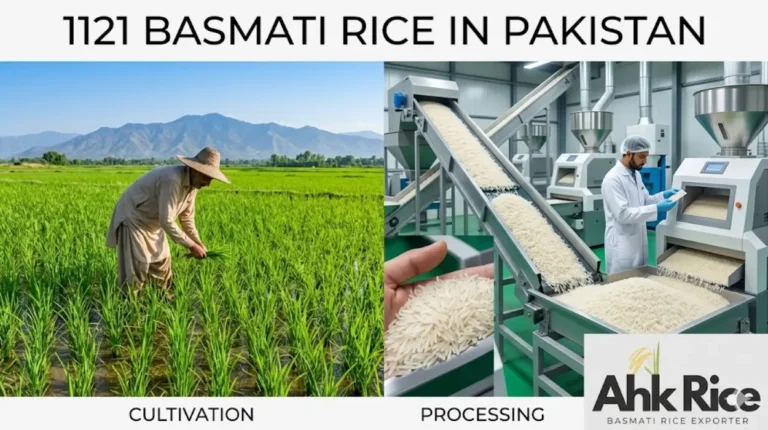
AHK Rice supplies 1509 Basmati through controlled procurement and export operations. Every shipment undergoes inspection before loading. Every lot is graded before dispatch. Every container is documented before export clearance.
Why does 1509 Basmati fit the Philippine market?
1509 Basmati combines long grain appearance with competitive pricing. Retailers gain attractive shelf presentation. Food service operators gain better cost control. Distributors gain broader market coverage.
Specification overview
Typical export specifications
| Attribute | Specification |
|---|---|
| Grain Length | 8.10–8.35 mm |
| Moisture | 12–14% |
| Broken Grains | 1–5% |
| Purity | 95–100% |
| Crop Year | Current Harvest |
| Origin | Pakistan |
| Shelf Life | 24 Months |
How is quality maintained?
AHK Rice follows nine processing steps:
- Clean the paddy.
- De-husk the grain.
- Dry the rice.
- Polish the kernels.
- Grade by length.
- Sort by density.
- Remove defects through color sorting.
- Inspect the final lot.
- Load the shipment.
Each stage reduces variability and improves consistency between containers.
Reliable specifications create purchasing confidence. The next question is how a dedicated exporter supports Philippine buyers beyond the rice itself.
Why choose Basmati 1509 Rice Exporter From Pakistan to Philippines?
Direct export support, verified quality control, flexible packaging, and shipment management make the difference between a transaction and a reliable supply partnership.
Philippine buyers often compare multiple suppliers before committing to volume purchases. Product quality matters, but export execution matters equally.
The dedicated service offered by AHK Rice through the Basmati 1509 Rice Exporter From Pakistan to Philippines page focuses on both product quality and shipment reliability.
What advantages does AHK Rice provide?
Export support features
| Feature | Benefit |
|---|---|
| Quality inspection | Consistent shipment quality |
| Export documentation | Faster customs processing |
| Flexible packaging | Retail and wholesale compatibility |
| Container loading supervision | Reduced transit issues |
| Sample approval process | Lower procurement risk |
| Multiple grades | Better market targeting |
| Dedicated export team | Faster communication |
AHK Rice supplies importers, wholesalers, retailers, distributors, and food service companies throughout the Philippines.
Which grades are available?
White Basmati
White Basmati provides a bright appearance and competitive pricing. Retail markets commonly prefer this grade.
Golden Sella Basmati
Golden Sella provides stronger grain structure and extended storage performance. Catering and institutional buyers often select this specification.
Steam Basmati
Steam Basmati balances appearance and cooking performance. Modern retail channels frequently procure this grade.
Importers comparing processing options should review our detailed comparison of 1509 White and Golden Sella grades preferred by Philippine distributors before selecting the most suitable specification for their market.
What certifications support exports?
AHK Rice can provide:
- Phytosanitary Certificate
- Certificate of Origin
- Fumigation Certificate
- Commercial Invoice
- Packing List
- Bill of Lading
- Quality Inspection Report
Export support reduces operational risk. The next question is what measurable results buyers can expect after selecting a dependable supplier.
What results can be expected from sourcing 1509 Basmati from AHK Rice?
Buyers can expect supply consistency, stable specifications, predictable shipment schedules, and reduced procurement uncertainty.
Rice procurement decisions affect inventory planning, retail performance, and customer satisfaction.
Consistent grain length improves visual presentation. Stable moisture levels support storage performance. Controlled processing improves cooking consistency.
Shipping timelines to the Philippines
Estimated transit schedules
| Destination Region | Estimated Shipping Days |
|---|---|
| Manila | 18–25 Days |
| Cebu | 20–28 Days |
| Davao | 22–30 Days |
| General Philippine Ports | 18–30 Days |
Transit periods vary according to vessel schedules, port congestion, customs processing, and seasonal demand.
Example distributor scenario
A Philippine distributor importing retail-packed 1509 White Basmati needs consistent grain appearance across multiple supermarket chains.
AHK Rice can supply standardized specifications across recurring orders. Standardized grading reduces customer complaints. Consistent packaging improves shelf presentation. Reliable shipment schedules improve inventory planning.
Example food service scenario
A catering supplier serving hotels and restaurants requires durable grains during bulk cooking.
Golden Sella 1509 performs well under extended cooking conditions. Grain structure remains intact after cooking. Storage performance supports longer inventory cycles.
Golden Sella lasts longer than Steam under challenging storage environments. In tropical warehouse conditions, Golden Sella often maintains quality for up to 24 months. Steam grades perform best with faster inventory rotation. For distributors storing inventory across multiple Philippine regions, Golden Sella offers additional protection against storage variability.
Predictable outcomes depend on pricing and procurement planning. The next question examines cost considerations.
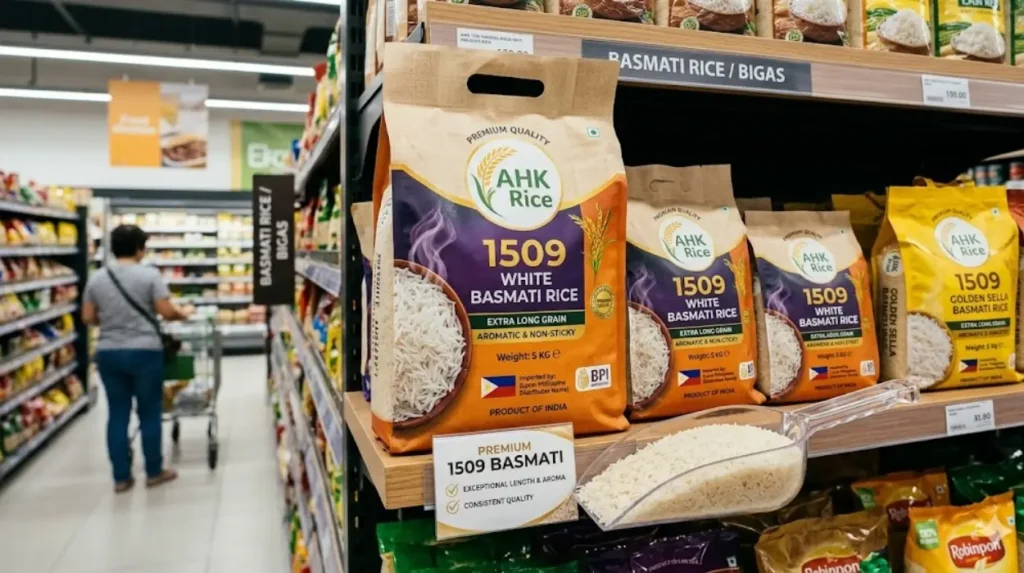
What factors affect the price of 1509 Basmati exports to the Philippines?
Processing grade, packaging type, order volume, freight rates, and seasonal market conditions determine final export pricing.
Rice pricing changes according to supply and demand conditions in international markets.
Major pricing factors
Cost drivers
| Factor | Impact |
|---|---|
| Processing Grade | Higher-grade rice costs more |
| Packaging Type | Retail packs increase costs |
| Container Quantity | Larger volumes improve pricing |
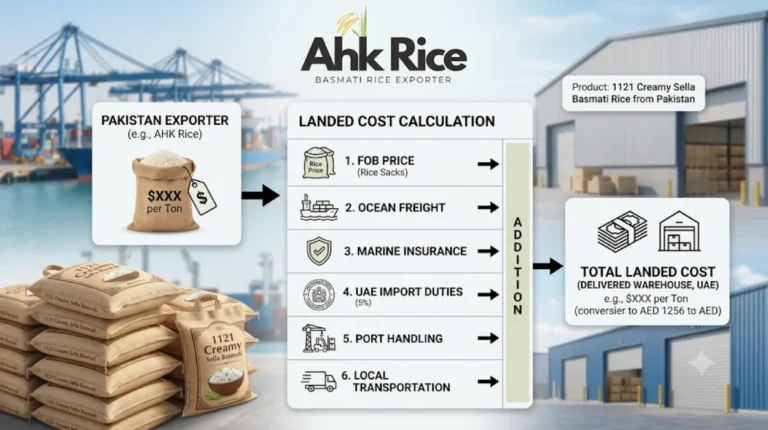
| Freight Charges | Shipping affects landed cost |
| Seasonal Demand | Peak demand increases prices |
| Currency Fluctuation | Exchange rates influence export pricing |
| Documentation Requirements | Additional services affect total cost |
How do grades affect pricing?
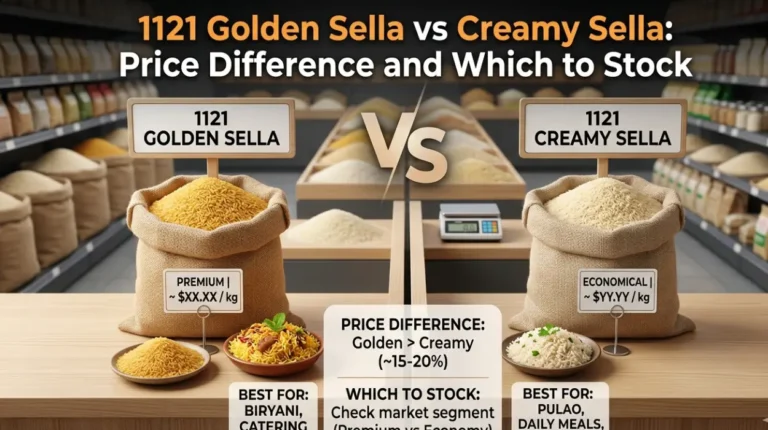
White 1509 typically represents the most economical option.
Steam 1509 generally commands a moderate premium because of additional processing.
Golden Sella usually carries a higher value because of parboiling and enhanced grain durability.
Price differences create different commercial opportunities. Retail chains often focus on shelf appeal. Catering buyers often prioritize cooking performance. Wholesalers frequently balance both requirements.
How does volume affect pricing?
Full container orders usually achieve better unit economics.
Repeated procurement schedules often improve planning efficiency for both supplier and buyer.
AHK Rice works with importers to identify specifications that align with commercial goals rather than selecting grades solely on purchase price.
Understanding pricing helps buyers evaluate opportunities. The final step is learning how to start the procurement process.
How can Philippine buyers get started with AHK Rice?
The process begins with specification confirmation, sample approval, quotation review, and shipment planning.
Importers should validate product suitability before committing to large-volume purchases.
How does the sample process work?
Sample approval steps
- Submit your specification requirement.
- Confirm preferred grade selection.
- Receive product samples.
- Test cooking performance.
- Evaluate grain appearance.
- Approve specifications.
- Confirm commercial quotation.
- Finalize order details.
- Schedule shipment.
What are the sample costs?
Sample policies vary according to destination, courier rates, and sample quantity.
Typical sample quantities range between 500 grams and 2 kilograms.
Courier charges generally range between USD 40–100 depending on delivery location and service speed. Many commercial buyers recover this expense through larger purchase orders.
What information should buyers provide?
Required procurement information
- Target grade
- Required quantity
- Packaging preference
- Destination port
- Target delivery schedule
- Quality requirements
- Company information
Providing complete requirements allows AHK Rice to prepare accurate quotations and suitable product recommendations.
Why do Philippine importers request samples first?
- Samples reduce purchasing uncertainty.
- Samples verify cooking characteristics.
- Samples confirm grain appearance.
- Samples validate specification compliance before container commitments.
AHK Rice supports buyers throughout evaluation, approval, documentation, loading, and shipment stages. AHK Rice also provides ongoing communication during export execution. AHK Rice helps importers reduce procurement risk through specification transparency. AHK Rice focuses on shipment consistency. AHK Rice prioritizes quality verification before dispatch. AHK Rice continues supporting buyers after order confirmation.
Philippine buyers seeking dependable 1509 Basmati supply can contact AHK Rice today and submit their requirements through Request a Quote.
Frequently Asked Questions
How long does it take to ship 1509 Basmati rice from Pakistan to the Philippines?
Shipping time typically ranges between 18 and 30 days, depending on the destination port, vessel schedule, customs procedures, and seasonal shipping demand. Manila shipments generally arrive faster than shipments to southern Philippine ports.
What packaging options does AHK Rice offer for Philippine importers?
AHK Rice supplies 1509 Basmati rice in retail and bulk packaging formats. Common options include 1 kg, 5 kg, 10 kg, 25 kg, and 50 kg bags. Custom private-label packaging is also available for distributors and supermarket brands.
What is the minimum order quantity for exporting 1509 Basmati rice?
The minimum order quantity depends on the packaging format and shipment requirements. Most commercial buyers import by full container load to achieve better freight efficiency and lower landed costs. AHK Rice can discuss suitable order quantities based on your business needs.
How can buyers verify the quality before placing a bulk order?
Buyers can request a product sample before confirming a commercial shipment. The sample allows importers to evaluate grain length, cooking performance, aroma, moisture levels, and overall appearance. This process reduces procurement risk and confirms that the rice matches market requirements.
Which 1509 Basmati grade is best for the Philippine market?
The best grade depends on the target customer segment. 1509 White Basmati is popular in retail markets because of its bright appearance and competitive pricing. 1509 Golden Sella Basmati is preferred by catering and food service buyers because of its stronger grain structure and longer storage life. 1509 Steam Basmati offers a balance between appearance and cooking performance.