AHK Rice Super Kernel Basmati: Trusted Exporter from Pakistan
AHK Rice Super Kernel Basmati is a practical export choice for importers seeking traditional aroma, consistent grain quality, and flexible commercial packaging from Pakistan. Here is why: Super Kernel combines strong basmati fragrance with a distinctive long-grain profile and established demand across international markets. For background, read the Super Kernel Basmati rice guide.
What is the best solution for importing Super Kernel Basmati?
The best solution is a specification-led Super Kernel supply program covering grain length, broken percentage, moisture, packaging, inspection, documentation, and shipping terms. Here is why: buyers reduce quality disputes when every commercial specification is agreed before production and loading.
Super Kernel Basmati is a traditional Pakistani aromatic rice variety cultivated in Punjab. Export specifications commonly define grain length, moisture, broken grains, foreign matter, chalky grains, and milling quality. Published commercial specifications show grain lengths around 7.0–7.3 mm and moisture limits around 13%.
AHK Rice can position Super Kernel around the buyer’s intended channel rather than selling one generic specification. Retail buyers can request branded packs. Wholesalers can specify bulk bags. Foodservice buyers can prioritize cooking consistency and breakage control.
A typical specification can include 7.0–7.3 mm average grain length, up to 2% broken, and up to 13% moisture, subject to the final contracted lot. These values should appear on the specification sheet and certificate of analysis.
The processing route also matters. A commercial Super Kernel order normally requires cleaning, dehusking, polishing, grading, colour sorting, quality testing, and packing before container loading.
Super Kernel is available in different processing formats across the Pakistani export market. White rice provides a traditional aromatic profile, while parboiled formats can target buyers seeking firmer cooked grains and different handling characteristics.
For importers comparing Super Kernel with 1121, the commercial difference involves grain length, cooking expansion, aroma, pricing, and market positioning. Review the Super Kernel versus 1121 importer comparison before finalizing the specification.
With the required specification established, the next decision is selecting the exporter capable of executing it consistently.
Why choose AHK Rice for Super Kernel Basmati?
AHK Rice provides specification-based sourcing, processing, packaging, inspection support, and export documentation for international Super Kernel Basmati buyers. Here is why: a bulk rice transaction depends on more than grain quality alone.
AHK Rice sources Pakistani Basmati rice for export requirements and coordinates the commercial process from specification selection through shipment. The service can support buyers requiring customized packaging and export documentation.
Quality control starts before loading. The rice should be inspected for grain length, broken percentage, moisture, colour, foreign matter, and other contractual parameters.
AHK Rice can structure the order around a buyer-approved specification instead of relying on a generic product description. This approach gives the importer a measurable basis for acceptance.
Packaging also affects the final commercial result. A distributor can use 25 kg or 50 kg bulk packaging. A retail importer can request smaller branded packs. Private-label requirements can also determine artwork, labeling, bag material, and minimum production quantities.
Inspection provides another control point. Buyers can request laboratory analysis or third-party inspection according to the agreed contract. Pre-shipment inspection is widely used in Pakistani rice exports to verify loading quality and documentation.
Documentation can include commercial invoices, packing lists, bills of lading, certificates of origin, phytosanitary documents, fumigation certificates, and inspection reports. Destination requirements vary by market.
AHK Rice therefore becomes useful when the buyer needs one coordinated export process rather than separate suppliers for rice, packaging, inspection, and logistics.
The next question is what measurable commercial result the importer should expect from this structure.
What results can be expected from AHK Rice Super Kernel supply?
Importers can expect a defined product specification, controlled processing, approved packaging, documented quality checks, and coordinated shipment preparation. Here is why: each stage creates a measurable control point before the container reaches the destination.
A wholesale buyer can use Super Kernel for ethnic grocery distribution, foodservice supply, or regional wholesale. A retail buyer can position it under a private label with packaging designed for the target market.
Super Kernel’s commercial identity centers on traditional basmati aroma and a grain profile that differs from the longer 1121 variety. Published comparisons commonly place Super Kernel around 7.2 mm and 1121 around 8.3 mm raw grain length.
The distinction matters at procurement level. A retailer emphasizing traditional aroma can specify Super Kernel. A buyer focused heavily on maximum visual grain length can compare 1121 against the same commercial requirements.
Cooking performance also needs practical evaluation. A buyer should cook the approved sample using the intended recipe and compare aroma, elongation, separation, texture, and broken grains after cooking.
Sample approval reduces specification risk. The approved sample should represent the intended commercial lot rather than serving only as a generic product demonstration.
Shipping time then becomes the next planning factor. Karachi-to-Jebel Ali transit commonly falls within roughly 4–10 days, while Saudi routes vary by carrier and routing.
European routes require longer planning. Karachi-to-UK ocean transit is commonly around 22–28 days on published commercial routes.
These timelines describe ocean transit rather than the entire procurement cycle. Production, inspection, container booking, port handling, customs clearance, and destination delivery require additional time.
The next step is understanding how product specifications and logistics influence the final price.
What affects Super Kernel Basmati pricing?
Super Kernel pricing depends on grain specification, broken percentage, crop and aging requirements, processing, packaging, quantity, inspection, freight, and Incoterms. Here is why: two products carrying the same variety name can have materially different commercial specifications.
Grain quality affects price through length, broken percentage, purity, moisture, colour, and milling degree. Premium specifications require tighter processing and sorting controls.
Processing also changes the quotation. White, steam, and parboiled products involve different production requirements, while packaging adds material, printing, filling, and handling costs.
Order volume influences the unit economics. Full-container orders normally provide a different cost structure from small trial quantities because production and logistics costs are distributed across more product.
Freight depends on destination port, carrier, sailing schedule, container availability, and routing. Current published market data shows significant differences between short Gulf routes and longer European routes.
For example, indicative Super Kernel FOB pricing published in August 2026 was around $1,165–$1,205 per MT, but this is a market reference rather than an AHK Rice quotation.
A confirmed AHK Rice price should therefore be calculated from the exact specification, quantity, packaging, destination, and Incoterm.
The most reliable comparison is not simply price per metric ton. Importers should compare product specification, inspection basis, packaging, freight, documentation, and landed cost together.
With pricing factors defined, the next step is controlling risk through a structured sample process.
How does the Super Kernel sample process work?
The sample process should verify the actual product before a bulk contract through specification confirmation, sample dispatch, cooking evaluation, approval, production, inspection, and shipment. Here is why: buyers need evidence that the commercial lot matches the agreed specification.
- Confirm the specification. Define grain length, broken percentage, moisture, processing type, packaging, crop requirements, and destination.
- Request the sample. A supplier prepares a representative Super Kernel sample for physical and cooking evaluation.
- Inspect the grain. Check appearance, aroma, uniformity, broken grains, colour, and foreign matter.
- Cook the sample. Use the buyer’s normal water ratio, cooking method, and recipe.
- Approve the specification. Record the accepted grain, cooking, packaging, and quality characteristics.
- Produce the order. The exporter mills, grades, sorts, tests, packs, and prepares the contracted quantity.
- Inspect the shipment. Complete laboratory or third-party checks according to the purchase agreement.
- Load the container. Load, seal, document, and dispatch the approved shipment through the agreed port.
Sample costs vary by destination and courier. A Saudi sample shipment, for example, can take around 3–5 working days according to published exporter guidance.
The sample itself can involve product preparation, packaging, courier charges, documentation, and laboratory testing. A buyer should request a written sample-cost breakdown before dispatch.
Sample approval creates the bridge between product evaluation and a bulk purchasing decision.
How should an importer get started with AHK Rice?
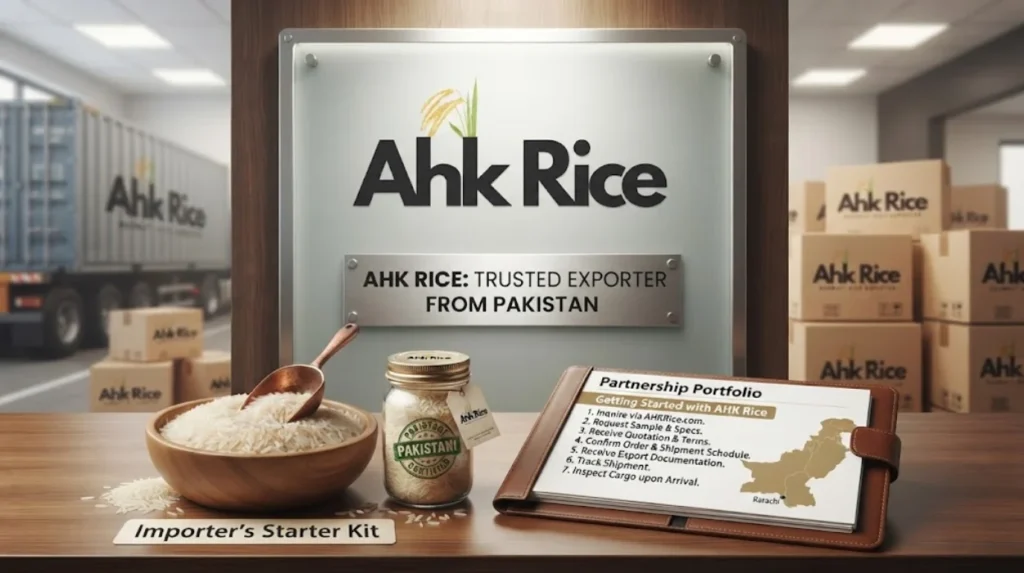
Start with the destination market, required Super Kernel specification, target quantity, packaging format, and shipping term. Here is why: these five inputs allow an exporter to build a commercially meaningful quotation.
Send the destination port first. Jebel Ali, Jeddah, London Gateway, and other ports carry different freight and transit considerations.
Specify the required processing format next. State whether the requirement is white, steam, or another agreed form.
Define packaging clearly. State bag size, material, private-label requirements, printing needs, and labeling requirements.
Confirm the commercial quantity. A full-container requirement gives the exporter a clearer basis for production and freight calculations.
Choose the Incoterm. FOB gives the buyer control over ocean freight after the agreed loading point. CNF or CIF provides a destination-based quotation structure.
AHK Rice can then align product specifications, packaging, quality controls, export documentation, and logistics around the order.
The final decision should be based on the approved sample and written specification, not on the product name alone.
What should buyers verify before placing the order?
Buyers should verify the exact grain specification, quality tolerances, packaging, inspection method, documents, Incoterm, shipment schedule, and final landed cost before payment. Here is why: written specifications create a clear reference for production and shipment acceptance.
Verify the grain length against the contract. Verify broken percentage against the agreed tolerance. Verify moisture through laboratory testing. Verify packaging against the approved artwork or bag sample.
Verify the inspection basis before loading. Verify the required destination documents with the importer or customs representative.
Verify the shipment schedule against the selected vessel. Transit time is only one part of the delivery timeline.
AHK Rice gives the buyer a structured basis for moving from sample evaluation to commercial procurement. The decision should remain tied to measurable specifications and the intended market channel.
For an importer seeking traditional Pakistani Basmati aroma with a commercially established grain profile, Super Kernel provides a clear specification-led sourcing option.
Contact AHK Rice through the request-a-quote service to receive a quotation based on your Super Kernel specification, quantity, packaging, destination, and shipping terms.
Frequently Asked Questions
Is Super Kernel Basmati suitable for export?
Yes, Super Kernel is an established Pakistani Basmati variety for international trade.
It provides a traditional aromatic profile and long-grain appearance.
Commercial specifications commonly define grain length and broken percentage.
Buyers should approve the exact specification before bulk production.
Destination requirements should also be checked before shipment.
What grain length does Super Kernel Basmati have?
Commercial specifications commonly show around 7.0–7.3 mm average raw grain length.
Exact values vary according to the contracted lot and grade.
Broken percentage is normally specified separately.
Moisture and milling quality also affect acceptance.
The final contract should state measurable tolerances.
How long does Super Kernel shipping take?
Transit depends on the destination, carrier, and routing.
Karachi to Jebel Ali commonly takes around 4–10 days.
Karachi to UK ports commonly takes around 22–28 days.
Saudi routes can vary considerably between shipping services.
Production and customs time must be added to ocean transit.
Can AHK Rice provide custom packaging?
Yes, custom packaging can be incorporated into the export specification.
Buyers can define bag size and packaging material.
Private-label artwork can also form part of the order requirements.
Packaging should be approved before production starts.
The final cost depends on materials, printing, quantity, and format.
How should buyers compare Super Kernel with 1121?
Compare grain length, aroma, cooking performance, price, and market positioning.
Super Kernel generally has a shorter grain than 1121.
1121 is commonly selected for stronger visual elongation after cooking.
Super Kernel provides a traditional Pakistani Basmati positioning.
The correct specification depends on the buyer’s target channel.