AHK Rice Supports Growing Basmati Rice Demand Across Iowa
Iowa importers evaluating Pakistani Basmati rice need more than a low FOB price. They need a supplier that combines scalable production, stable specifications, export documentation, sample verification, and a practical route from Pakistan to an Iowa warehouse.
Why Do Iowa Importers Assess Supplier Scalability Before Contracting? explains why capacity is a commercial screening criterion before a long-term supply agreement.
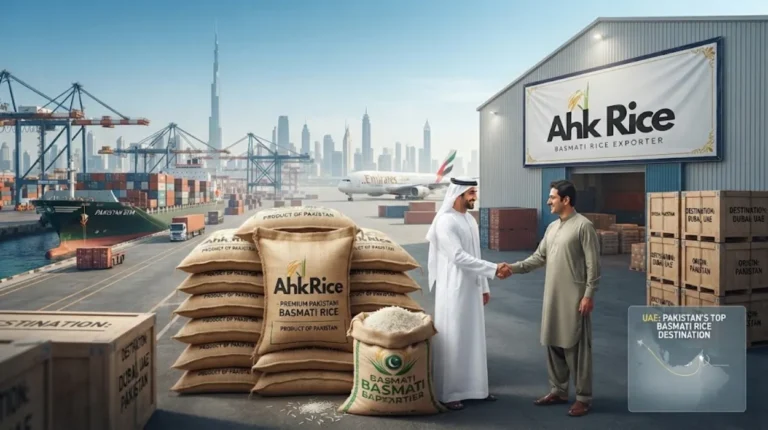
The decision becomes more important as U.S. buyers expand premium Basmati assortments in 2026. Demand comes from ethnic grocery retailers, wholesalers, restaurants, foodservice distributors, private-label brands, and mainstream retailers. AHK Rice serves this market from Punjab, Pakistan, with Basmati 1121, Super Kernel, and other export grades designed for wholesale and distribution requirements.
What is the best solution for Iowa importers sourcing Basmati rice?
The strongest solution is a direct Pakistani supplier that controls sourcing, milling, grading, packing, documentation, sampling, and export coordination while giving Iowa buyers clear product specifications and shipment planning before contract approval.
Iowa buyers face a logistics issue that buyers near U.S. coastal ports do not. Rice arriving through an American port still needs inland transportation to Iowa. The commercial calculation therefore has two stages: ocean freight from Pakistan to the selected U.S. gateway and domestic freight from that gateway to the final destination.
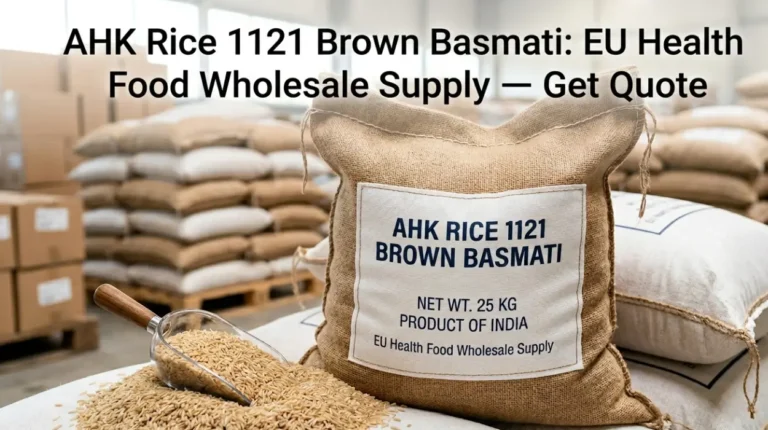
AHK Rice provides an integrated export model from its Punjab operation. Its published USA range includes 1121 Sella, Super Kernel, white Basmati, and related grades, with customized packaging available for U.S. buyers. The company states that its processing flow covers paddy procurement, cleaning, de-husking, separation, whitening, polishing, grading, and sorting before export.
For an Iowa distributor, this structure reduces the number of commercial handoffs. The buyer can approve one defined specification, test the sample, agree on packing, confirm the destination port, and then move into container planning.
The practical objective is not simply to purchase rice. It is to establish repeatable inventory.
Why does supplier scalability matter for Iowa Basmati buyers?
Supplier scalability matters because a successful Iowa buyer needs the same grade, packing format, quality parameters, and shipment discipline across repeat orders rather than receiving a different commercial specification whenever volume increases.
A first container proves product acceptance. It does not automatically prove long-term supply capability. A distributor that sells 20 metric tons per month can face stock pressure when its retail network expands to 50 or 100 metric tons.
AHK Rice states that its USA operation supports wholesale quantities and scalable Basmati 1121 supply. Its USA product information also identifies monthly export capacity in the hundreds to more than 1,000 metric tons for Basmati 1121. These published figures give buyers a starting point for capacity discussions, although a contract quantity still requires confirmation against the production schedule and shipment window.
Scalability also involves specification control. A buyer purchasing 1121 White Basmati needs grain length, moisture, broken percentage, milling quality, packing, and labeling requirements defined before commercial production. Changing any of these parameters can alter the landed cost and retail positioning.
For example, an Iowa ethnic-food distributor launching a new private-label 1121 Basmati line can begin with one trial container. If sales accelerate, the next purchase needs to preserve the approved product specification instead of restarting supplier selection.
That is where the capacity question becomes a purchasing question.
Why choose AHK Rice for the USA market?
AHK Rice combines Punjab-based Basmati sourcing and processing with export documentation, customized packing, product grading, quality controls, and USA-oriented supply support, giving Iowa importers one commercial point for product and shipment coordination.
The relevant USA Basmati rice export service is designed for U.S. importers, wholesalers, retailers, distributors, and other commercial buyers. AHK Rice identifies 1121 Basmati, Super Kernel, Sella, Steam, Golden Sella, Creamy Sella, Brown, and related formats within its USA supply range.
Its location in Bucheki, Nankana Sahib, Punjab places the operation close to Pakistan’s Basmati-producing region. The company describes an integrated processing and export system covering sourcing through container loading.
For Iowa buyers, three commercial advantages matter.
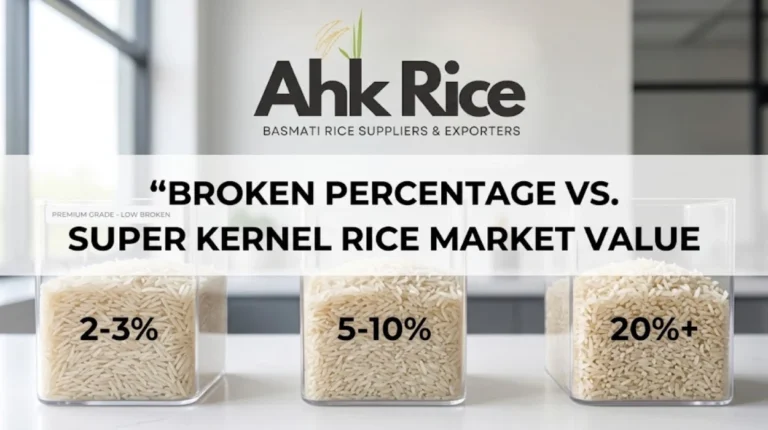
First, specification control starts before the container is loaded. The buyer can define the required variety, processing type, grain characteristics, moisture, broken percentage, packaging, and quantity.
Second, export documentation is coordinated as part of the transaction. U.S. food imports require compliance with FDA requirements, including applicable facility registration, Prior Notice, and labeling requirements. Covered importers also carry FSVP responsibilities for imported foods.
Third, the buyer can build a repeat-order schedule instead of treating every shipment as an isolated purchase.
The supplier decision therefore depends on both product quality and operational consistency.
What shipping time should Iowa importers expect from Pakistan?
Iowa buyers should plan approximately 40–55 days for an ocean-based Pakistan-to-Iowa supply cycle, combining roughly 30–40-plus days of ocean transit with U.S. port, customs, inland transportation, and operational handling time.
Transit time is not a guaranteed delivery date. It changes according to the selected U.S. port, vessel schedule, transshipment, customs processing, rail or truck availability, and final Iowa destination.
Current 2026 freight data shows Karachi-to-Houston ocean FCL transit around 36 days on a standard 40-foot-high-cube service, while another Karachi-to-U.S. routing can show different transit estimates. A current Pakistan-to-USA rice market reference also places Karachi-to-New York or Los Angeles sailing time around 24–40 days.
For Iowa planning, buyers can use the following commercial planning ranges rather than treating ocean sailing time as the full delivery cycle:
| Iowa supply route | Ocean planning range | Iowa delivery planning |
|---|---|---|
| Karachi → Gulf gateway → Iowa | 30–40+ days | About 40–55 days |
| Karachi → West Coast gateway → Iowa | 25–40+ days | About 40–55 days |
| Port arrival → Iowa warehouse | — | Often several additional days |
The exact route belongs in the quotation. AHK Rice’s quote process asks buyers to identify the destination port, product, packing, metric-ton quantity, and Incoterm, allowing freight and commercial terms to be priced around the actual transaction.
For Iowa importers, the most useful shipping metric is therefore warehouse-ready inventory date, not vessel departure date.
How does supplier capacity influence long-term rice availability?
Long-term availability depends on production capacity, raw paddy sourcing, processing throughput, inventory planning, container availability, and the supplier’s ability to repeat an approved specification without disrupting shipment schedules.
A buyer evaluating capacity needs more than a statement that rice is “available.” The supplier needs to explain what quantity can be allocated, how quickly production can be scheduled, and how repeat orders are managed.
How supplier capacity influences long-term rice availability provides the comparison framework for evaluating these factors before contracting.
A buyer evaluating capacity needs more than a statement that rice is “available.” The supplier needs to explain what quantity can be allocated, how quickly production can be scheduled, and how repeat orders are managed.
AHK Rice describes direct paddy procurement, industrial cleaning, de-husking, paddy separation, whitening, polishing, grading, and sorting within its processing workflow. This integrated sequence gives the buyer a clearer supply-chain structure than purchasing from an intermediary that sources finished rice after receiving each order.
This also connects to the broader question covered in How Does Supplier Capacity Influence Long-Term Rice Availability? Capacity is not only a factory number. It includes the supplier’s ability to protect quality while increasing volume.
For example, an Iowa wholesaler can contract 100 MT initially and plan quarterly replenishment. The supplier discussion then needs to address whether the same grade can be reserved for the next quarter, whether packaging artwork remains unchanged, and how shipment windows are protected.
A scalable supply relationship converts demand forecasts into production and shipping schedules.
What should Iowa importers verify before approving a supplier?
Importers should verify product specifications, sample results, supplier capacity, food-safety documentation, packaging, Incoterms, destination port, shipment schedule, inspection requirements, and total landed cost before signing a recurring supply agreement.
The U.S. regulatory side requires particular attention. FDA states that imported food must meet U.S. safety and labeling requirements, and food facilities involved in production, storage, or handling generally require registration where applicable. Prior Notice is also part of the import process.
FSVP is another key responsibility. The FDA defines the FSVP importer generally as the U.S. owner or consignee, with specific rules determining who holds the role. Covered importers need a risk-based supplier verification program for imported food.
The commercial verification checklist should therefore cover:
| Decision area | What Iowa buyers verify |
| Product | Variety, processing type, grain length and grade |
| Quality | Moisture, broken percentage, purity and inspection criteria |
| Packing | Bag material, weight, labeling and private-label requirements |
| Compliance | Applicable FDA, Prior Notice and FSVP documentation |
| Capacity | Monthly allocation and repeat-order capability |
| Logistics | Port, vessel schedule, inland route and delivery window |
| Commercial terms | MOQ, Incoterm, payment terms and quotation validity |
This structure prevents a low FOB price from becoming an expensive landed-cost problem.
What does the full AHK Rice sample process cost?
AHK Rice offers up to 20 kg of Basmati sample rice without charging for the rice itself, while the buyer covers related sample shipment costs and applicable phytosanitary certification costs for USA samples.
The sample process begins with product selection. An Iowa buyer identifies the required variety, such as 1121 White, 1121 Sella, 1121 Steam, Super Kernel, or another available specification.
The next step is sample confirmation. AHK Rice’s USA information states that up to 20 kg can be supplied as a sample, with the client responsible for sample shipping costs. The company also states that the buyer pays applicable phytosanitary certificate costs for sample shipments.
The commercial sample workflow is:
- Specification request: Buyer defines variety, processing type, packing preference, quantity, destination, and target quality.
- Sample approval: AHK Rice prepares the selected rice sample.
- Courier arrangement: Buyer provides a courier account or pays the applicable international courier charge.
- Phytosanitary documentation: The buyer covers the applicable certificate cost for the USA sample shipment.
- Physical evaluation: Buyer checks grain appearance, aroma, cooking performance, broken percentage, and overall conformity.
- Commercial specification: Approved sample becomes the reference for the quotation and bulk order.
- Bulk quotation: Quantity, packing, Incoterm, destination port, freight, and shipment window are confirmed.
There is no responsible single 2026 courier price for every Iowa sample because the charge depends on package weight, courier, pickup location, service level, and destination ZIP code. The same applies to phytosanitary charges. Those costs belong in the actual sample quotation rather than an invented fixed amount.
The important commercial point is that the sample itself establishes the physical reference before a container commitment.
What factors determine the final price for Iowa buyers?
The final Iowa buying price depends on rice grade, processing method, quantity, packaging, FOB value, ocean freight, destination port, inspection, documentation, insurance where applicable, inland freight, duties or tariffs, and payment terms.

AHK Rice’s published USA material gives an indicative starting point of about $1,100 per metric ton FOB Karachi for Basmati 1121, while current market references show specific 1121 FOB ranges above that level depending on processing grade and quotation date. These figures are indicative rather than fixed Iowa landed prices.
For example, 1121 White, 1121 Sella, Golden Sella, and Steam can carry different prices because processing, demand, and specification differ. A private-label order also requires packaging decisions that affect the commercial calculation.
An Iowa buyer should therefore compare landed cost per metric ton, not FOB price alone.
A practical landed-cost model is:
Rice FOB price + ocean freight + port charges + customs-related costs + applicable duties/taxes + inspection/documentation + inland transportation = estimated landed cost.
Freight also changes with vessel availability and market conditions. Current 2026 freight listings demonstrate that container pricing and transit estimates vary by route and equipment.
A professional quotation needs a validity period because freight, currency, and rice-market conditions change.
What results can Iowa importers expect from this sourcing model?
A structured supplier model gives Iowa importers better specification consistency, clearer landed-cost planning, documented compliance preparation, scalable replenishment, and a repeatable purchasing process for expanding Basmati rice distribution.
The first measurable result is specification control. Once a buyer approves a sample, the bulk order can reference that specification rather than relying on generic descriptions such as “premium Basmati.”
The second result is supply planning. A buyer can move from a one-time container to a quarterly or monthly purchasing schedule based on actual inventory requirements.
The third result is commercial visibility. Product, quantity, destination port, packing, and Incoterm are defined before the quotation is finalized.
The fourth result is reduced operational uncertainty. FDA requirements remain the responsibility of the relevant U.S. importer, but a supplier that understands export documentation can support the buyer’s verification and entry process.
For Iowa businesses expanding Basmati distribution, these outcomes directly support purchasing decisions. A reliable supply relationship protects shelf availability while allowing the buyer to scale volume with demand.
How should an Iowa importer get started with AHK Rice?
Start with a precise product specification, request a sample, validate quality and compliance documentation, confirm required volume, select the U.S. destination port, calculate landed cost, and then establish a shipment schedule based on forecasted Iowa demand.
AHK Rice’s USA supply model is suited to buyers that know their commercial requirements or need help translating those requirements into a rice specification. The first discussion should identify product variety, processing grade, target quantity, packaging, destination, and preferred Incoterm.
The sample should then be evaluated against the intended retail, wholesale, restaurant, or foodservice application. Once approved, the same specification can be used for bulk pricing and future replenishment.
The buyer should also identify the responsible U.S. importer and FSVP structure before the first commercial shipment. FDA requirements place important obligations on U.S. food importers, so compliance planning belongs at the beginning of the transaction rather than after the vessel sails.
AHK Rice’s export operation gives Iowa buyers a direct route to Pakistani Basmati supply, while the final commercial decision remains based on verified specifications, confirmed capacity, current freight, compliance requirements, and landed economics.
For an Iowa importer ready to move from supplier evaluation to a product-specific commercial calculation, submit the required destination, product, packing, quantity, and Incoterm details through the AHK Rice request-a-quote process.
Frequently Asked Questions
What Basmati rice does AHK Rice supply to Iowa importers?
AHK Rice supplies Basmati varieties including 1121 White, 1121 Sella, 1121 Steam, Golden Sella, Super Kernel, and other grades for U.S. wholesale, retail, foodservice, and distribution requirements.
Why should Iowa importers choose AHK Rice?
AHK Rice provides direct access to Pakistani Basmati rice with sourcing, processing, grading, packing, export documentation, sampling, and shipment coordination handled through one supplier relationship.
How long does Basmati rice take to reach Iowa from Pakistan?
A practical planning range is approximately 40–55 days from Pakistan through a U.S. gateway to an Iowa destination. Actual timing depends on the port, vessel schedule, customs processing, and inland transportation.
Does AHK Rice provide Basmati rice samples?
Yes. AHK Rice states that buyers can receive up to 20 kg of sample rice. The buyer covers sample shipping and applicable phytosanitary certificate costs for U.S. sample shipments.
How much does an AHK Rice Basmati sample cost?
The rice sample itself can be provided without a product charge under AHK Rice’s stated sample policy. Courier and applicable phytosanitary certification costs are paid by the buyer. The exact amount depends on shipment details.