Bring Authentic Pakistani Basmati Rice to Indonesia with AHK Rice
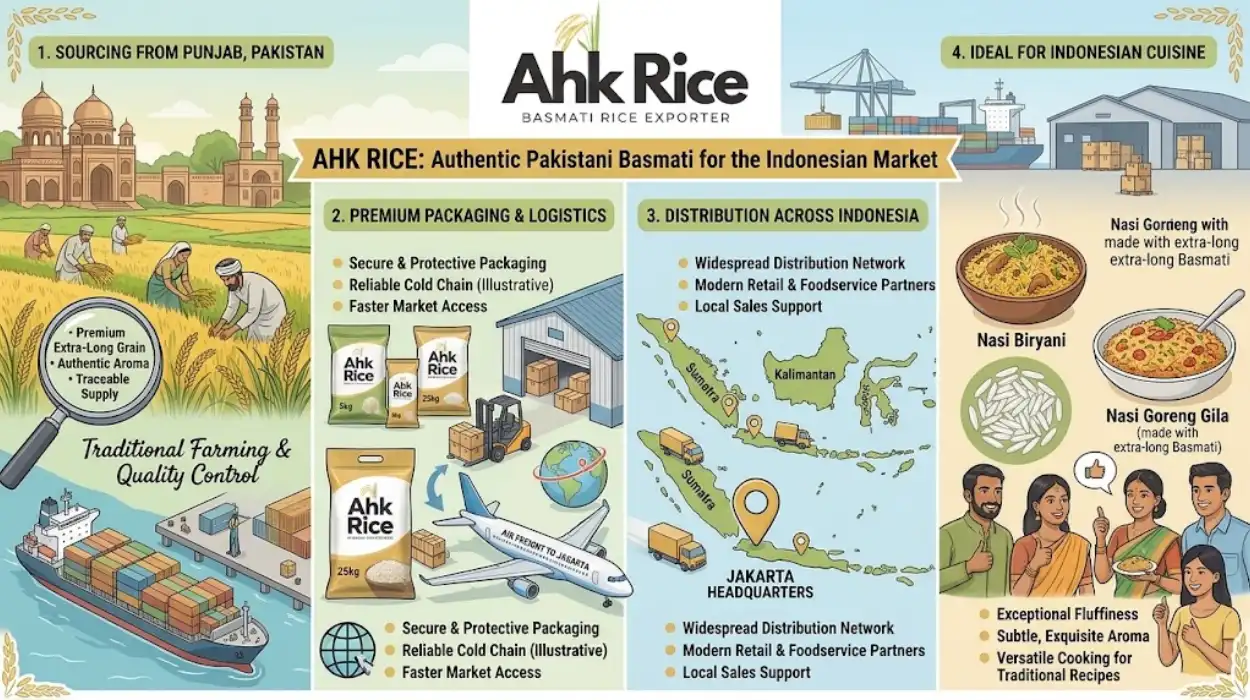
Indonesian rice importers, wholesalers, supermarket distributors, and foodservice buyers need a Pakistani Basmati supplier that delivers consistent grain quality, controlled processing, export documentation, and predictable shipment planning. AHK Rice provides Pakistani 1121, Super Kernel, and 1509 Basmati with specification-based sourcing, custom packaging, and coordinated export services for Indonesian buyers.
Before selecting an exporter, buyers should understand what Pakistani Basmati rice is and how it differs from Indonesian Beras. This distinction helps importers evaluate aroma, grain length, cooking texture, and the appropriate market position. The commercial decision then depends on matching the right grade with Indonesian customer demand and confirming the applicable import permissions.
What is the best solution for importing Pakistani Basmati rice into Indonesia?
The best solution is to purchase specification-controlled Pakistani Basmati through an exporter that coordinates sourcing, milling, grading, packaging, inspection, documentation, and shipment. Indonesian importers should approve the exact rice specification and confirm their import eligibility before authorising commercial production.
Indonesian buyers serve different customer segments. Premium supermarkets require attractive long grains and recognisable aroma. Hotels and restaurants prioritise cooking consistency and grain separation. Wholesale distributors focus on competitive landed cost, reliable stock availability, and repeat container supply.
AHK Rice supplies three principal Pakistani Basmati varieties:
- 1121 Basmati: Extra-long grain positioning for premium retail, hotels, and restaurants.
- Super Kernel Basmati: Traditional aromatic positioning for distributors and consumers seeking characteristic Pakistani Basmati fragrance.
- 1509 Basmati: A commercially competitive long-grain option for wholesalers, retail brands, and institutional buyers.
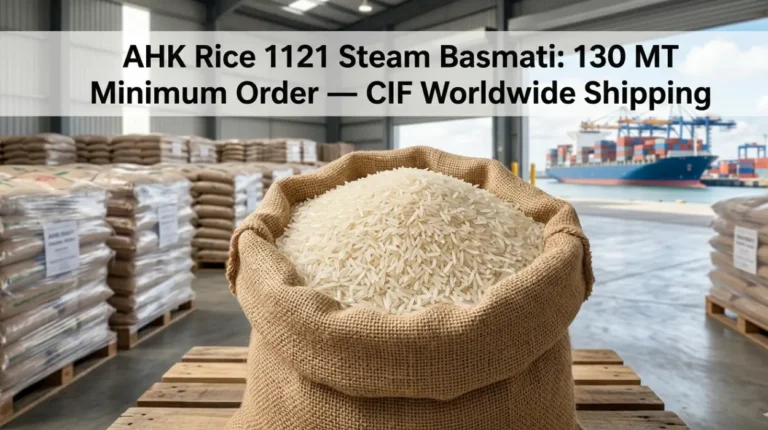
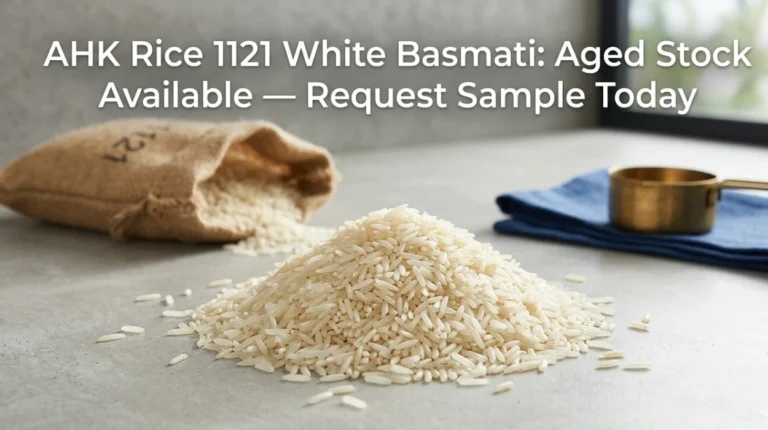
Processing also determines the final product. White rice offers a conventional polished appearance. Steam processing supports firmer cooked grains. Golden Sella and Creamy Sella provide parboiled alternatives with distinct grain appearance and cooking characteristics.
Buyers comparing these products should also review the Pakistani Basmati versus local Indonesian rice comparison covering grain, aroma, texture, and cooking use. This comparison helps establish whether imported Basmati fits premium retail, specialised foodservice, or wholesale distribution.
Why should Indonesian importers choose AHK Rice?
AHK Rice offers a coordinated Pakistani Basmati export service covering product selection, processing, grading, custom packaging, quality checks, and export preparation. This approach gives Indonesian buyers one supplier to coordinate the agreed commercial specification from sourcing through container dispatch.
AHK Rice operates from Punjab, Pakistan, a major Basmati-producing region. Its export portfolio includes 1121, Super Kernel, and 1509 varieties in different processing formats.
Through its Pakistani Basmati sourcing and export services, AHK Rice supports buyers with:
- Variety and processing selection according to market requirements.
- Grain-length, moisture, broken-percentage, and purity specifications.
- Milling, polishing, and Sortex-based grading options.
- Retail and wholesale packaging requirements.
- Private-label packaging subject to approved artwork and production arrangements.
- Pre-shipment quality checks and agreed inspection arrangements.
- Commercial invoices, packing lists, and export documentation.
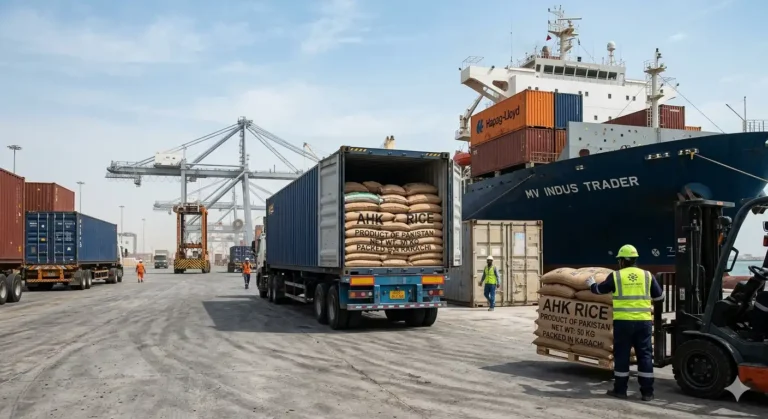
- Container booking and shipment coordination.
For example, an Indonesian supermarket distributor launching a premium rice brand can specify 1121 White in retail bags. A foodservice wholesaler can evaluate 1121 Steam or Golden Sella for firmer cooked grains and kitchen handling.
AHK Rice converts these requirements into a written product specification before commercial production. The buyer can use the approved specification to compare samples, inspect the shipment, and manage repeat orders.
Importantly, Indonesia regulates rice imports. Permendag No. 18/2025 establishes the agricultural and livestock import framework, with subsequent amendments including Permendag No. 11/2026. Buyers must verify the current approval, quota, importer eligibility, and product-category requirements with Indonesian authorities before shipment.
What results can Indonesian buyers expect?
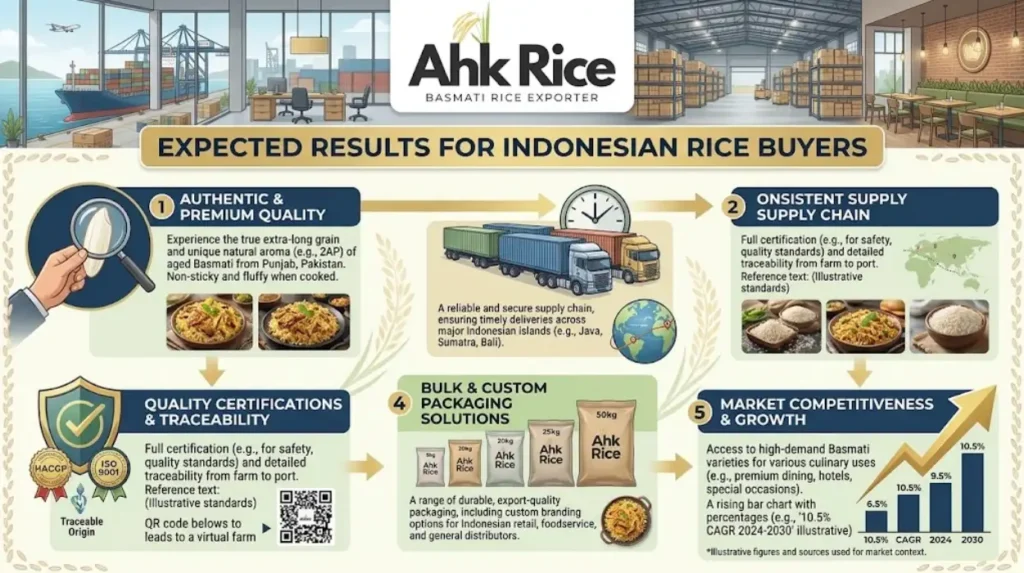
A properly specified export order provides consistent grain characteristics, documented quality expectations, approved packaging, and a defined shipment plan. Buyers can evaluate the product before bulk production and use the approved sample as a commercial reference for subsequent deliveries.
The expected commercial outcomes include:
- Consistent variety and processing specifications.
- Controlled broken percentage and moisture.
- Defined packaging sizes and labelling requirements.
- Better purchasing visibility through confirmed quotations.
- Reduced specification disputes through sample approval.
- Improved stock planning through scheduled container shipments.
- A repeatable procurement process for wholesale and retail distribution.
Shipping time depends on the Indonesian destination port and vessel schedule. For planning, buyers should consider the following indicative sea-transit windows:
| Indonesian destination | Indicative sea transit from Karachi |
|---|---|
| Jakarta | 14–21 days |
| Surabaya | 14–21 days |
| Belawan, North Sumatra | 17–26 days |
| Other Indonesian ports | Confirm vessel routing |
These are planning estimates, not guaranteed delivery dates. Published freight schedules show different transit durations across carriers and destinations. Pakistan–Indonesia freight route references.
The overall procurement period is longer than sea transit. Buyers should allow approximately 4–6 weeks for production, export preparation, vessel scheduling, sea transportation, and destination handling. Indonesian customs clearance and inland delivery require additional time according to the shipment and importer arrangements.
How much does Pakistani Basmati rice cost for Indonesia?
The final price depends on variety, processing grade, grain specifications, quantity, packaging, inspection requirements, freight, and delivery terms. Indonesian importers should compare complete FOB or CIF quotations instead of choosing a supplier solely on the lowest rice price per metric ton.
AHK Rice prepares quotations according to the buyer’s product and shipment requirements. The following factors determine the commercial offer:
- Rice variety: 1121, Super Kernel, or 1509 have different market positions and procurement costs.
- Processing: White, Steam, Golden Sella, and Creamy Sella involve different processing requirements.
- Quality specification: Grain length, broken percentage, moisture, purity, and polishing affect the final price.
- Order volume: Container quantity and repeat-order commitments influence procurement and processing economics.
- Packaging: Bulk bags, retail packs, printed bags, and private-label artwork affect packing costs.
- Inspection: Independent laboratory testing and third-party inspection add costs where requested.
- Shipping terms: FOB Karachi and CIF Indonesian ports include different freight and insurance responsibilities.
FOB Karachi generally covers the agreed export delivery obligations up to loading on board the nominated vessel. CIF includes the agreed ocean freight and insurance to the named destination port. Indonesian import duties, taxes, clearance, and applicable local charges must be assessed separately.
A reliable comparison should calculate the landed cost per metric ton after adding freight, insurance, destination handling, customs charges, and inland transportation.
How does the AHK Rice sample process work, and what does it cost?
Indonesian buyers should approve a representative rice sample before placing a bulk order. AHK Rice can arrange samples of up to 20 kg, while the buyer covers applicable courier shipping and phytosanitary charges. The sample provides a practical basis for confirming product suitability.
The sample-to-order process follows five stages:
Stage 1: Submit product requirements. The buyer specifies the variety, processing type, grain length, broken percentage, moisture, and intended application.
Stage 2: Prepare the sample. AHK Rice selects a representative sample according to the requested commercial specification. Sample availability and preparation are confirmed before dispatch.
Stage 3: Arrange courier delivery. The buyer pays the applicable international courier charges and phytosanitary costs. The final amount depends on sample weight, courier, destination, and documentation requirements.
Stage 4: Conduct cooking and quality tests. The Indonesian buyer evaluates raw grain appearance, aroma, cleanliness, cooked texture, elongation, and grain separation using the intended preparation method.
Stage 5: Approve the commercial specification. Both parties confirm the product grade, packaging, quantity, inspection requirements, and commercial terms before bulk production.
There is no universal courier charge for every Indonesian destination. The buyer should request an actual courier quotation before dispatch. Any sample-fee adjustment or credit against a subsequent bulk order must also be confirmed in writing rather than assumed.
This process helps importers compare the approved sample with the finished commercial batch before accepting the shipment.
How can Indonesian buyers get started with AHK Rice?
Indonesian buyers can start by submitting their required Basmati variety, processing grade, quantity, packaging, destination port, and target delivery date. AHK Rice can then prepare a specification-based quotation and coordinate the next steps after import eligibility is confirmed.
The commercial onboarding process is straightforward:
- Send the product requirement and intended market segment.
- Confirm the rice variety, processing, and quality parameters.
- Request a representative sample and approve the cooking results.
- Confirm packaging, artwork, and inspection requirements.
- Receive the commercial quotation and proforma invoice.
- Agree on payment terms, production scheduling, and shipment arrangements.
- Complete export documentation and container loading.
- Track the shipment and coordinate destination clearance with the Indonesian importer.
Indonesian importers should prepare their applicable import approvals and confirm current food safety, labelling, phytosanitary, customs, and other regulatory requirements before dispatch. The exact document set depends on the product classification and current Indonesian regulations.
AHK Rice supports buyers seeking an initial container or an ongoing supply arrangement. A written specification, approved sample, and confirmed delivery plan provide the foundation for a more controlled procurement relationship.
Frequently Asked Questions
Which Pakistani Basmati variety is best for Indonesia?
1121 suits premium retail and foodservice buyers.
Super Kernel suits traditional aromatic rice demand.
1509 offers a competitive long-grain alternative.
The best choice depends on customer expectations and cooking use.
Buyers should compare samples before confirming a bulk order.
How long does shipping from Pakistan to Indonesia take?
Karachi-to-Jakarta sea transit generally takes 14–21 days.
Surabaya shipments require confirmation of the vessel schedule.
Production and export preparation add further time.
Customs clearance and inland delivery extend the total lead time.
Allow approximately 4–6 weeks for overall procurement planning.
Can Indonesian buyers request rice samples?
Yes, AHK Rice can arrange samples up to 20 kg.
The buyer covers applicable courier shipping charges.
Phytosanitary costs are also payable by the buyer.
Samples allow cooking and physical quality evaluation.
Bulk production follows the confirmed commercial specification.
What packaging options are available for Indonesia?
Buyers can discuss bulk and retail packaging formats.
Common requirements include 5 kg, 10 kg, 25 kg, and 50 kg.
Printed packaging and private labels require artwork approval.
Final material and labelling must meet Indonesian requirements.
Packaging options are confirmed in the commercial quotation.
What documents are required to import Pakistani Basmati into Indonesia?
Requirements depend on the product and import category.
Commercial invoices and packing lists support customs processing.
Bills of Lading and origin documents support shipment verification.
Phytosanitary and inspection documents may also be required.
Importers must confirm current Indonesian permits before dispatch.