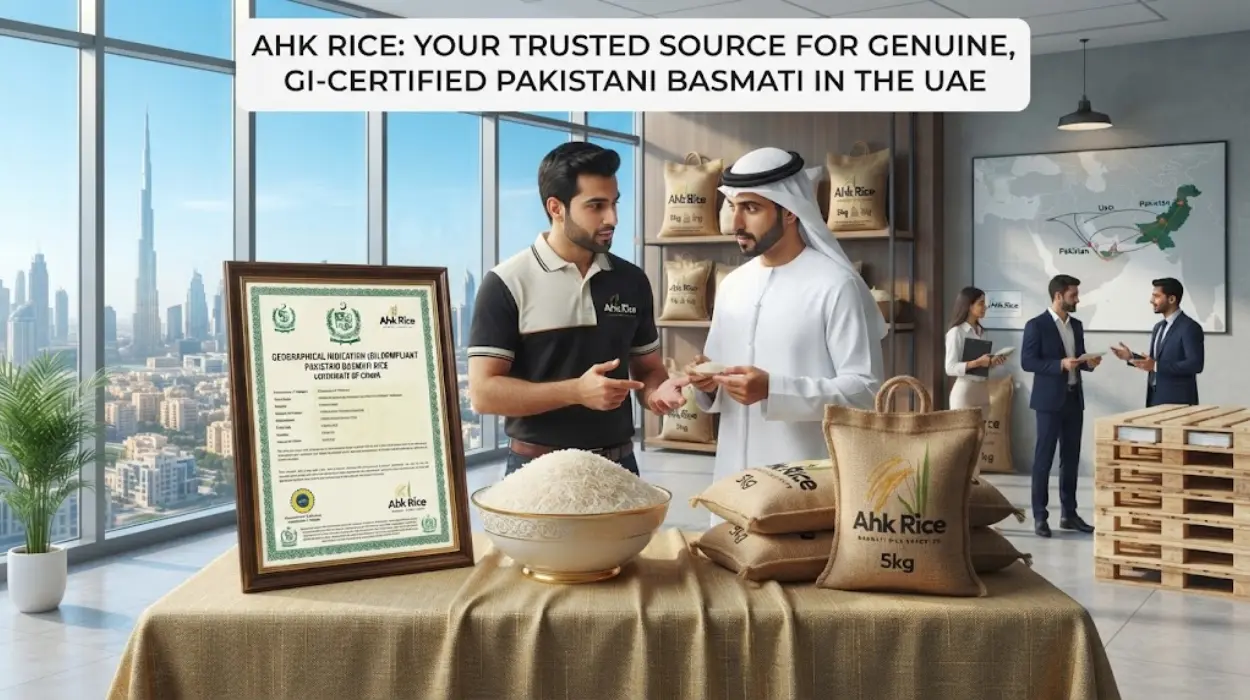
Buy GI-Compliant Pakistani Basmati Rice with Certificate of Origin for UAE Import
Buy Pakistani Basmati with verified Pakistani origin, documented specifications, and a Certificate of Origin prepared for the export shipment. Here is why: UAE importers need traceable product identity, accurate commercial documents, and consistent rice specifications before dispatch. Pakistan’s Basmati GI framework supports origin protection, while the Certificate of Origin provides documentary evidence of country of origin. The EU also formally recognizes Pakistani Basmati as a geographical indication in its published PGI documentation.
For buyers entering the UAE market, the practical solution is specification-based sourcing. A purchase should define variety, processing grade, grain length, broken percentage, moisture, packing, quantity, Incoterm, inspection requirements, and export documents before loading. This approach reduces the risk of receiving rice that does not match the agreed commercial description.
For broader background, the guide to Pakistan’s Basmati Geographical Indication and GI protection explains the origin and protection framework before a buyer moves into supplier selection. The commercial decision starts after that education stage.
What is the best solution for buying GI-compliant Pakistani Basmati for the UAE?
The best solution is a documented Pakistani Basmati supply with origin certification, approved specifications, pre-shipment inspection, and matched export documents. This connects the rice specification with the shipment identity.
Pakistani Basmati starts with paddy cultivated in the recognized Basmati-growing areas of Punjab. The harvested paddy moves through controlled milling and grading operations. The supplier then identifies the variety and processing format on the commercial specification.
The core export varieties include 1121, Super Kernel, and 1509. Each serves a different commercial requirement. 1121 suits premium retail and foodservice. Super Kernel combines traditional aroma with a strong Pakistani Basmati identity. 1509 targets cost-sensitive volume distribution.
A UAE importer should approve the exact grade before shipment. A typical specification can include grain length, moisture, broken grains, foreign matter, chalky grains, damaged grains, packing format, crop information, and tolerance limits.
The Certificate of Origin adds a separate documentary layer. UAE authorities recognize Certificates of Origin as proof of origin for exported products. The UAE government provides Certificate of Origin services through its relevant ministry.
The certificate should match the commercial invoice, packing list, product description, quantity, exporter information, and shipment details. Matching documents make customs review easier and reduce avoidable documentation discrepancies.
The GI and Certificate of Origin perform different functions. GI protection connects product reputation with geographical origin. A Certificate of Origin documents the declared country of origin for the shipment.
With the sourcing framework established, the next decision is which exporter can manage the specification and documentation together.
Why choose AHK Rice for Pakistani Basmati exports to the UAE?
AHK Rice combines Pakistani Basmati sourcing, milling, grading, packaging, documentation, and export coordination into one buyer-controlled workflow. This reduces communication gaps between product approval and shipment preparation.
AHK Rice is a Pakistani Basmati rice exporter based in Punjab. AHK Rice supplies 1121, Super Kernel, and 1509 varieties to international markets. Its export workflow connects sourcing, processing, grading, packaging, inspection, and dispatch.
AHK Rice can structure the purchase around the buyer’s required commercial specification. The specification should be agreed before production allocation. This creates a reference point for sample approval and final inspection.
For a UAE buyer, AHK Rice’s Pakistani Basmati export service provides the commercial starting point for selecting the required variety and shipment format.
Which Basmati grades fit UAE buyers?
1121 Basmati suits premium retail, private-label, catering, and foodservice programs. Its long grain profile supports premium positioning and presentation.
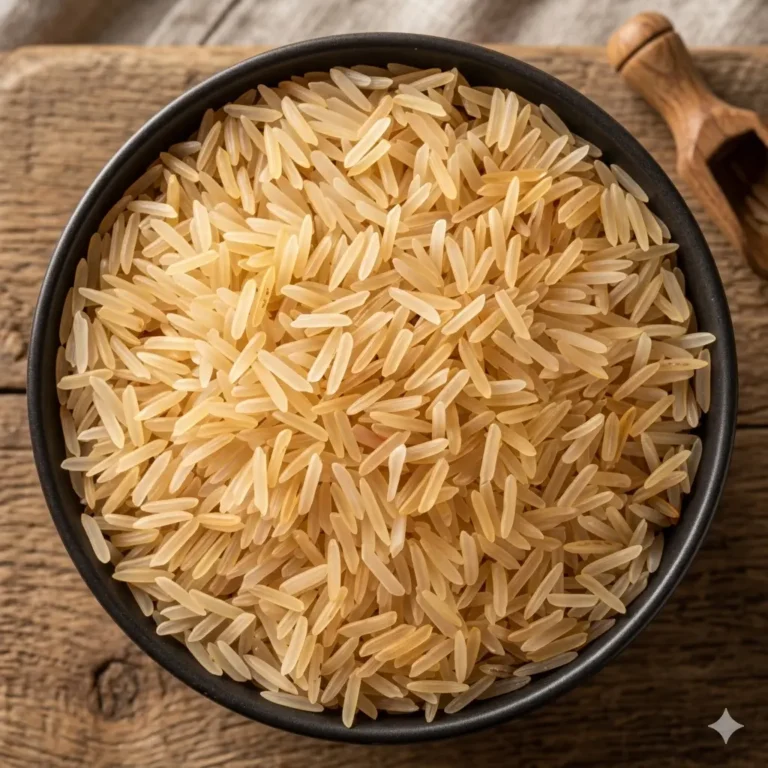
Super Kernel Basmati suits buyers seeking traditional Pakistani aroma and a competitive premium-grade specification. Raw grain commonly targets approximately 7.0–7.5 mm, subject to the agreed grade.
1509 Basmati suits volume buyers focused on cost efficiency and dependable supply. Its shorter cultivation cycle supports higher production efficiency and commercial availability.
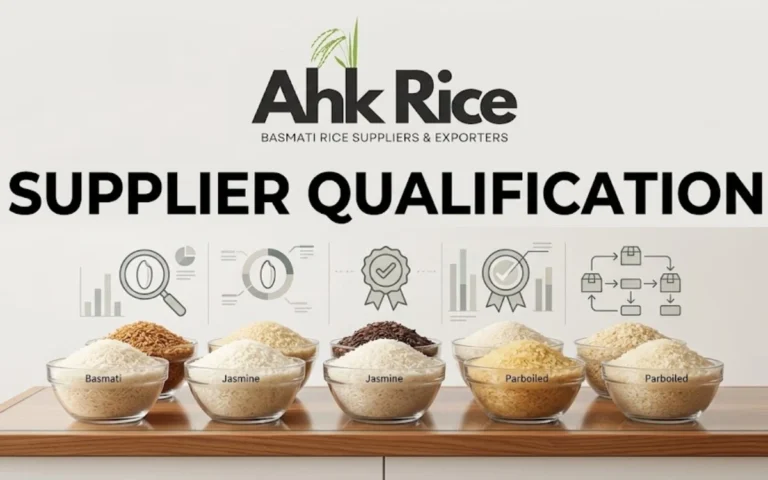
Processing also changes the buying decision. White rice provides a conventional presentation. Steam processing creates a different cooking profile. Sella processing provides parboiled rice with different handling and storage characteristics.
AHK Rice should document the selected processing grade on the quotation and sample approval. This prevents a buyer from approving one format and receiving another.
The comparison stage should therefore focus on the exact commercial attributes rather than variety names alone. The analysis of how Pakistan’s Basmati GI registration protects UAE importers from mislabeled rice provides the next layer of comparison for buyers evaluating authenticity and supplier risk.
With grade selection defined, the next question is what a UAE buyer should receive before committing to a commercial container.
What results can UAE importers expect from the AHK Rice sourcing process?

UAE buyers can expect a specification-led sample, documented product approval, matched export paperwork, and container-ready dispatch after commercial confirmation. The process creates measurable checkpoints before payment and shipment.
How does the sample approval process work?
Sample approval should confirm the variety, processing grade, appearance, aroma, cooking behavior, and agreed commercial specifications before the purchase order. The approved sample becomes the buyer’s product reference.
- Define the specification. Confirm variety, processing type, grain length, broken percentage, moisture, packing, quantity, and destination.
- Request the sample. AHK Rice prepares a representative sample against the agreed product specification.
- Arrange courier delivery. The buyer pays applicable courier charges and any required phytosanitary or sample-related charges.
- Inspect the sample. Check appearance, aroma, grain uniformity, cooking performance, and packaging suitability.
- Approve the sample. Confirm the specification in writing before commercial production or allocation.
- Confirm the order. Agree quantity, price, Incoterm, payment terms, packing, shipment schedule, and documentation.
- Inspect the shipment. Use the agreed inspection procedure before loading where required.
- Prepare documents. Match the commercial invoice, packing list, Certificate of Origin, phytosanitary documentation, health documentation, and transport documents.
- Load the container. Load the approved rice into the designated container and verify quantity and sealing.
- Dispatch the shipment. Ship from Pakistan to the agreed UAE port and provide the final shipping documents.
Sample costs depend on sample quantity, courier destination, documentation, and any required inspection or phytosanitary charges. AHK Rice’s sample offer can provide up to 20 kg of Super Kernel Basmati, while the buyer covers courier shipping and applicable phytosanitary charges.
This sample process is important because a laboratory specification alone does not show every commercial characteristic. Grain appearance, aroma, cooking behavior, packing, and handling also affect retail and foodservice acceptance.
The next decision point is transit planning, because the UAE buyer must coordinate arrival with customs, warehousing, and distribution.
How many shipping days does Pakistani Basmati take to reach the UAE?
Karachi-to-Jebel Ali ocean transit commonly falls within roughly 4–10 sailing days, while total delivery time also depends on booking, port handling, customs, and documentation. Buyers should plan the full logistics cycle.
Jebel Ali is the principal UAE destination considered for containerized Pakistani rice shipments. Current commercial market information reports sailing times of approximately 4–10 days from Karachi to Jebel Ali.
A practical shipment schedule should separate production from ocean transit. Production and packing require their own lead time. Container booking adds another variable. Port handling and customs clearance occur after arrival.
For UAE retail buyers, the target is a predictable arrival window. For foodservice buyers, the target is uninterrupted stock availability. For wholesalers, the target is container rotation and warehouse replenishment.
AHK Rice can coordinate the shipment around the approved product specification and destination. A buyer should confirm the expected dispatch date before finalizing the purchase order.
Documentation also affects clearance. UAE authorities provide official mechanisms for Certificate of Origin services and document verification.
With transit requirements clear, the remaining commercial question is the delivered cost.
What affects the price of GI-compliant Pakistani Basmati rice for UAE importers?
The final price depends on variety, processing grade, grain specification, broken percentage, packing, quantity, freight, inspection, documentation, and Incoterm. A single market price cannot represent every UAE shipment.
FOB pricing covers the agreed export value up to the applicable loading point under the selected Incoterm. CIF pricing adds ocean freight and insurance to the named UAE destination.
A buyer should compare quotations using identical specifications. Comparing a premium 1121 specification with a lower-grade 1509 quotation creates a false price difference.
The main cost factors are:
- Variety: 1121, Super Kernel, and 1509 carry different market positions.
- Processing: White, Steam, Sella, and other formats require different processing.
- Grain specification: Longer and more uniform grains generally support different pricing.
- Broken percentage: Lower broken tolerance requires tighter grading.
- Moisture: Controlled moisture supports agreed quality and storage requirements.
- Packing: Retail packs cost differently from bulk PP or institutional formats.
- Quantity: Container volume affects the commercial rate per metric ton.
- Freight: Karachi-to-UAE freight changes with vessel schedules and market conditions.
- Inspection: Third-party inspection adds a separate service cost where requested.
- Documentation: Certification, attestation, and destination requirements affect total landed cost.
UAE official information confirms that Certificate of Origin services can involve fees based on the applicable certificate process and transaction value.
Buyers should also distinguish origin certification from document attestation. UAE Ministry of Foreign Affairs provides an electronic attestation service for commercial invoices and Certificates of Origin. Its published service information states a AED 150 fee per invoice/COO for that attestation service.
The correct buying decision is therefore based on total landed cost rather than FOB price alone.
How do UAE importers get started with AHK Rice?
Start with the rice specification, then approve the sample, confirm documentation, agree the commercial terms, and authorize shipment after final verification. This sequence keeps product and paperwork aligned.
- Define the requirement. State variety, processing grade, grain length, broken percentage, moisture, quantity, packing, destination, and Incoterm.
- Request the quotation. Ask for the applicable FOB or CIF basis with validity, quantity, payment terms, and estimated shipment schedule.
- Request the sample. Review the physical rice before commercial approval.
- Approve the specification. Confirm the sample and written specification as the commercial reference.
- Confirm documentation. Require the Certificate of Origin and other agreed export documents.
- Arrange inspection. Use an agreed inspection company or internal quality procedure.
- Approve loading. Verify quantity, packing, container condition, and seal information.
- Receive shipping documents. Match the documents against the purchase order and commercial invoice.
AHK Rice gives buyers a practical route from product selection to export dispatch. AHK Rice can also structure the quotation around the buyer’s exact UAE market requirement instead of offering an unspecified commodity quotation.
For a UAE wholesaler, the correct choice may be 1509 for volume distribution. For premium retail, 1121 can provide stronger positioning. For buyers prioritizing traditional aroma and Pakistani Basmati identity, Super Kernel can provide the appropriate commercial balance.
The final decision should therefore combine GI-aware sourcing, origin documentation, product specifications, sample approval, inspection, and shipping planning.
AHK Rice supports this decision process by connecting Pakistani Basmati sourcing with milling, grading, packaging, quality verification, export documentation, and container dispatch. AHK Rice is therefore positioned for UAE buyers who need more than a simple rice quotation.
To request a specification-based export quotation for GI-compliant Pakistani Basmati rice, contact AHK Rice through the request-a-quote page.
Frequently Asked Questions
Does Pakistani Basmati rice have GI protection?
Pakistan has established domestic GI protection for Basmati rice.
GI protection connects qualifying Basmati with its geographical origin.
The EU also published Pakistan’s Basmati application as PGI-PK-02990.
Buyers should still verify the applicable destination-market requirements.
A Certificate of Origin separately documents Pakistani origin for the shipment.
What documents should a UAE rice importer request?
Request the commercial invoice and packing list.
Request the Certificate of Origin for Pakistani origin.
Request phytosanitary and health documentation where applicable.
Request the Bill of Lading after shipment.
Add third-party inspection documentation when the purchase contract requires it.
How long does Pakistani rice take to reach UAE?
Karachi-to-Jebel Ali sailing commonly takes about 4–10 days.
The complete cycle also includes production and container booking.
Port handling and customs clearance add additional time.
Documentation accuracy helps prevent avoidable clearance delays.
The buyer should confirm the shipment schedule before ordering.
Which Pakistani Basmati variety is best for UAE buyers?
1121 suits premium retail and foodservice applications.
Super Kernel suits traditional aroma-focused Pakistani Basmati demand.
1509 suits cost-sensitive wholesale and volume distribution.
Steam and Sella processing create different commercial applications.
The correct choice depends on the buyer’s specification and sales channel.
How can UAE buyers test Pakistani Basmati before ordering?
Start by defining the required rice specification.
Request a representative sample from the exporter.
Review grain appearance, aroma, cooking performance, and uniformity.
Approve the sample before confirming commercial production.
AHK Rice can coordinate sample preparation and export documentation.