Why Should Importers Qualify Rice Suppliers Before Purchasing?
Importers qualify rice suppliers before purchasing to verify product identity, food safety, processing capability, documentation, export compliance, and shipment reliability. Supplier qualification turns a rice purchase from a price-based transaction into a controlled sourcing decision with measurable quality and commercial requirements.
Rice is a traded agricultural commodity with differences in variety, grain length, milling quality, moisture, broken percentage, purity, aroma, cooking performance, packaging, and regulatory compliance. A supplier offering “Basmati rice” does not automatically provide the same specification as another supplier using the same description.
Pakistan is an important rice-exporting origin. Rice Exporters Association of Pakistan data records 5.82 million metric tons of Pakistani rice exports in 2024–25, including 808,643 metric tons of Basmati rice. Pakistan’s export markets include the Gulf, China, Southeast Asia, Africa, the UK, and European markets. In 2026, supplier qualification remains important because destination-market controls, residue limits, documentation, and traceability requirements directly affect import clearance.
What is rice supplier qualification?
Rice supplier qualification is the structured process of checking a supplier’s identity, rice specifications, facilities, quality controls, certifications, laboratory results, export documents, capacity, and shipment history before approving purchases from that supplier.
Qualification begins with supplier identity. The importer verifies the legal company name, registration details, physical processing location, export history, banking information, and responsible commercial contacts.
The second stage establishes product identity. A specification needs to identify the rice variety, crop year where relevant, grain length, milling degree, broken percentage, moisture, foreign matter, damaged kernels, chalky kernels, immature kernels, discoloration, and other agreed quality parameters.
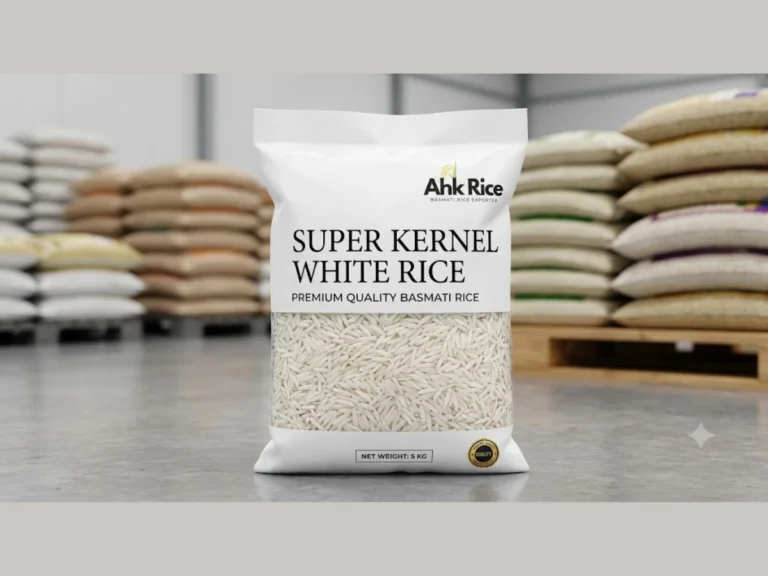
For Basmati rice, variety identity also matters. Pakistani commercial export offerings include varieties such as 1121 Basmati, Super Kernel Basmati, and 1509 Basmati. These names describe distinct commercial categories and are not interchangeable specifications.
Supplier qualification also checks whether the supplier controls the product from procurement through processing and export. A supplier purchasing rice from several unrelated sources without effective lot traceability presents a different quality-control profile from a processor operating controlled intake, milling, grading, testing, storage, and packing systems.
Pakistan’s PSQCA maintains standards for agriculture and food products and lists PS:3342-2007, Rice (1st Revision) among its finalized standards. It also lists international methods covering rice specifications, moisture, milling yield, amylose, sampling, storage, infestation, and related testing.
How does rice supplier qualification work?
Importers qualify rice suppliers by defining specifications, collecting company and facility documents, reviewing certificates, checking laboratory reports, evaluating processing controls, examining samples, verifying export capability, and approving suppliers against documented acceptance criteria.
Step 1: Define the purchasing specification
The importer first creates a product specification. For example, a buyer purchasing 1121 Basmati White Rice needs to define grain length, milling type, moisture limit, broken percentage, foreign matter, damaged grains, packaging format, quantity, crop requirements, and destination-market compliance.
A specification prevents disputes because both parties use the same measurable requirements.
Step 2: Verify supplier identity
The importer checks business registration, export credentials, processing address, ownership information, bank details, and previous export activity.
A supplier’s website is not sufficient evidence of operating capability. The buyer needs documents and verifiable commercial information.
Step 3: Review the processing facility
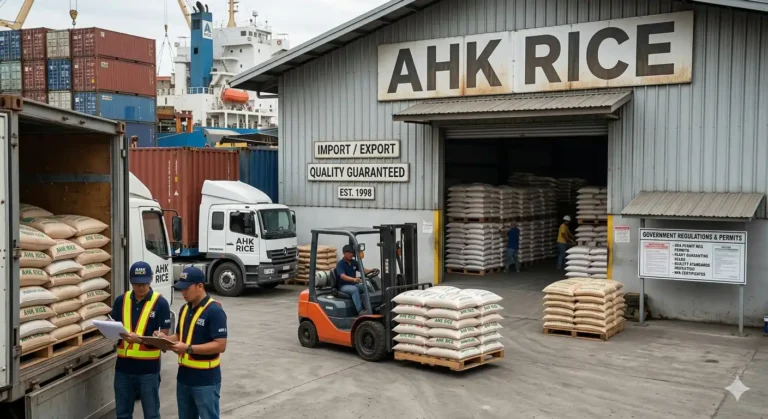
The facility review covers paddy reception, pre-cleaning, husking, whitening, polishing, grading, sorting, metal detection, storage, packing, and dispatch.
A modern rice-processing line typically separates physical processes into controlled stages. Paddy enters the facility, foreign material is removed, husk is separated, rice is milled, kernels are graded, optical sorting removes defects, and the finished product enters controlled storage and packaging.
Step 4: Test representative samples
A sample needs to represent the commercial lot. Buyers examine physical characteristics and cooking performance and use laboratory analysis for relevant chemical and microbiological parameters.
A certificate of analysis becomes more useful when it identifies the lot, sampling date, laboratory, test methods, and results rather than presenting generic product claims.
Step 5: Verify documentation
The buyer reviews documents such as commercial invoices, packing lists, certificates of origin, phytosanitary documentation where required, inspection certificates, laboratory reports, and transport documents.
Destination requirements determine the exact document set. An exporter serving the EU, UK, Gulf, China, or an African market does not face identical import controls.
Step 6: Approve and monitor
Supplier approval does not end with the first shipment. Importers compare shipment results against the approved specification.
A supplier with three compliant shipments has a stronger performance record than a supplier with one acceptable sample and no shipment history. Non-conformities need documented corrective action.
What are the key components of a qualified rice supplier?
A qualified rice supplier combines consistent rice specifications, controlled processing, laboratory verification, traceability, suitable certifications, export documentation, adequate production capacity, hygienic storage, secure packaging, and a documented record of compliant shipments.
Product grades and specifications
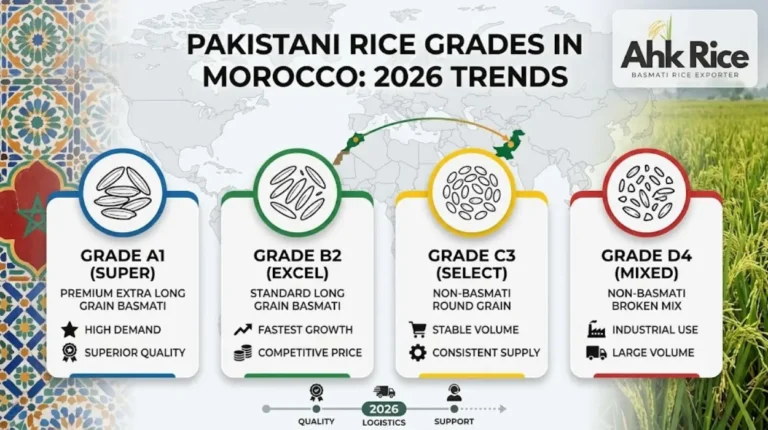
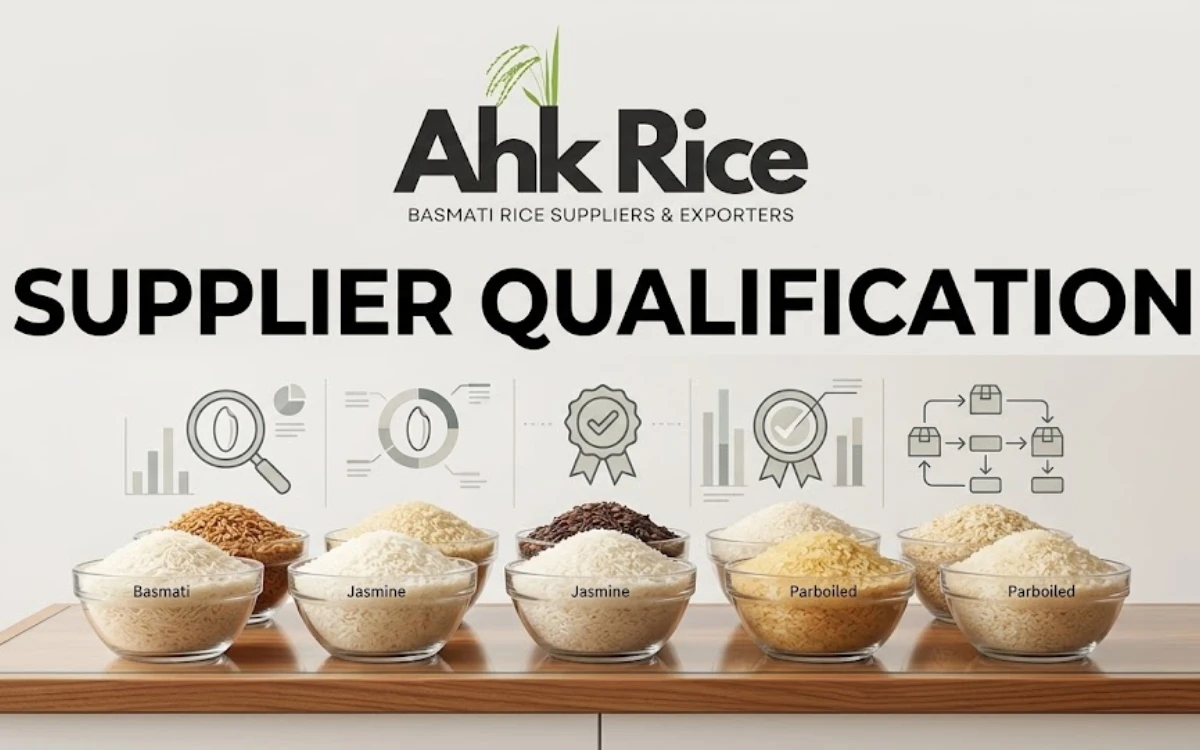
Rice grades describe measurable commercial characteristics. For Pakistani Basmati, importers commonly encounter 1121, Super Kernel, and 1509. Other Pakistani rice trade includes varieties and categories such as PK-386, IRRI-9, IRRI-6, long-grain non-Basmati, parboiled rice, steam rice, white rice, and broken rice.
The word “grade” does not always mean the same thing across suppliers. One specification can emphasize grain length while another emphasizes broken percentage, milling degree, or processing type.
For this reason, buyers need a written specification instead of approving rice based only on a variety name.
Processing and milling controls
Processing capability determines consistency. Key controls include paddy cleaning, destoning, husking, whitening, polishing, length grading, thickness grading, optical sorting, metal detection, and packing.
Parboiled rice follows a different processing sequence. Paddy is soaked, steamed, dried, and milled. The process changes kernel structure, cooking characteristics, colour, and milling performance.
Basmati rice can also undergo ageing after harvest. Ageing affects moisture, cooking behaviour, aroma expression, and grain elongation. The buyer needs the supplier to state whether the shipment consists of newly harvested, aged, or blended stock.
Laboratory and food-safety controls
Laboratory testing addresses risks that visual inspection cannot establish. Relevant tests include moisture, pesticide residues, mycotoxins, heavy metals where applicable, microbiological parameters where required, and physical quality characteristics.
The destination market controls the acceptance threshold. In Great Britain, pesticide maximum residue levels apply to food commodities, and importers need to consider the applicable GB MRLs and import tolerances.
For EU-bound Pakistani rice, current controls also require close attention. EU Implementing Regulation 2026/1206 lists rice from Pakistan under controls for aflatoxins and ochratoxin A and pesticide residues. This demonstrates why a supplier’s testing program needs to match the destination market rather than rely on a generic domestic specification.
Certifications and compliance documents
Certification requirements depend on the buyer, product, destination, and contract. Common certifications and compliance evidence include HACCP-based food-safety systems, ISO 22000, BRCGS, Halal certification, organic certification where applicable, third-party inspection, laboratory certificates, phytosanitary certificates, and certificates of origin.
Not every rice shipment legally requires every certification. A buyer needs to distinguish between a statutory import requirement, a retailer requirement, a voluntary certification, and a commercial preference.
PSQCA operates conformity-assessment and certification systems in Pakistan. Its Certification Marks Scheme provides third-party evidence that certified products conform to applicable standards.
Traceability and lot control
Traceability connects finished rice with its source and processing records. A strong system identifies the incoming paddy or rice lot, processing date, production line, laboratory tests, packaging batch, warehouse location, and shipment reference.
Traceability becomes critical when a destination authority identifies a contamination issue or when an importer discovers a specification failure.
What are the benefits of qualifying rice suppliers?
Supplier qualification reduces quality failures, rejected shipments, regulatory problems, inconsistent specifications, hidden processing weaknesses, documentation errors, and commercial disputes while giving importers measurable evidence for supplier selection and ongoing purchasing decisions.
The first benefit is quality consistency. Rice is agricultural, so physical characteristics differ between harvests, farms, varieties, and processing lots. Controlled specifications reduce variation.
The second benefit is food-safety control. Testing and process verification identify risks before containers leave the exporting country.
The third benefit is customs and regulatory readiness. Importers need documentation and analytical evidence that align with destination-market requirements.
The fourth benefit is commercial predictability. A supplier with established capacity can provide clearer information about minimum order quantities, packaging formats, production schedules, container loading, and lead times.
The fifth benefit is brand protection. Retailers and foodservice businesses sell rice under defined quality expectations. A shipment containing excessive broken grains, incorrect variety, poor cooking performance, or damaged packaging affects customer perception.
Supplier qualification also supports price analysis. A lower quoted price does not represent lower total cost when it produces rejected goods, port storage charges, reinspection, replacement shipments, or customer complaints.
Which rice-importing markets require careful supplier qualification?
Every rice-importing market requires supplier qualification, but the verification focus changes by destination because food-safety rules, pesticide limits, import controls, documentation, consumer specifications, and retailer standards differ between markets.
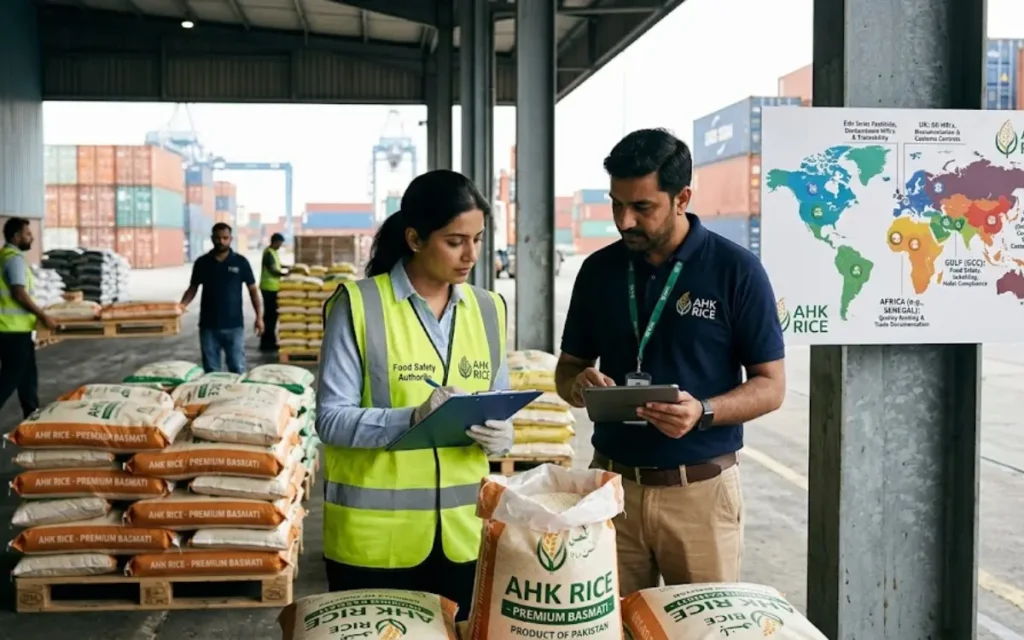
Pakistan’s rice export footprint demonstrates this market diversity. USDA data for November 2024 through April 2025 identifies Indonesia, the Philippines, Malaysia, Senegal, Côte d’Ivoire, China, the EU, Kenya, Saudi Arabia, and Ethiopia among major Pakistani rice markets.
The UK and EU require close attention to pesticide residues, food contaminants, documentation, traceability, and official import controls. The UK uses its own MRL framework, while EU requirements operate under EU food law and official control regulations.
The Gulf markets, including Saudi Arabia, the UAE, Oman, Qatar, Kuwait, and Bahrain, require attention to food safety, labelling, Halal requirements where applicable, documentation, and importer-specific standards.
China presents a different purchasing environment. Pakistani rice shipments include milled rice and broken rice. Chinese demand therefore includes both consumer and processing applications. Pakistan exported approximately 157.74 million kilograms of rice to China in 2025, according to Chinese customs data reported by Pakistan’s Associated Press.
African markets also require product-specific qualification. Kenya, Tanzania, Côte d’Ivoire, Senegal, Guinea-Bissau, and other markets purchase significant quantities of Pakistani rice. Supplier evaluation needs to account for local import documentation, packaging requirements, price sensitivity, and preferred rice types.
What common problems occur when importers skip supplier qualification?
Importers that skip supplier qualification face specification mismatches, inconsistent grain quality, excessive broken rice, incorrect varieties, contamination risks, missing documents, shipment delays, packaging failures, and disputes over whether delivered rice matches the agreed contract.
Buying from a trading intermediary without verifying the processor
A trader can be legitimate without operating a processing plant. The buyer needs to know whether the supplier controls production directly or purchases finished rice from another mill.
This distinction affects traceability, production control, corrective action, and capacity verification.
Treating a sample as proof of every shipment
One approved sample represents one sample. It does not automatically establish the quality of every future lot.
Contract specifications, batch testing, inspection, and shipment records create stronger evidence.
Choosing only by price
Price comparison without specification comparison produces distorted results. A lower-priced shipment with higher broken percentage or weaker milling quality does not represent an equivalent product.
Assuming every certificate has the same value
A certificate is useful only when its issuing body, scope, validity, product coverage, and applicable standard match the purchasing requirement.
An ISO certificate for a management system is different from a laboratory certificate proving pesticide-residue results. A Halal certificate is different from a phytosanitary certificate.
Ignoring destination-specific food controls
This is a major 2026 sourcing risk. EU controls for Pakistani rice specifically identify aflatoxins, ochratoxin A, and pesticide residues. Pakistan’s Ministry of National Food Security and Research also reported policy action in 2025 following concerns about Pakistani agricultural exports to Europe, including changes to fumigation practices and stronger monitoring.
An importer therefore needs destination-specific compliance evidence before approving a supplier.
How can importers build a practical rice supplier qualification system?
A practical qualification system uses a written specification, supplier questionnaire, document review, facility assessment, representative sampling, laboratory testing, shipment inspection, risk scoring, approval criteria, and periodic performance reviews tied to measurable quality and compliance results.
A buyer can structure qualification around 10 checkpoints:
- Legal company verification.
- Processing-facility verification.
- Rice variety and grade confirmation.
- Written technical specification.
- Sample and cooking evaluation.
- Laboratory testing.
- Certification and compliance review.
- Export-document verification.
- Production and shipment-capacity assessment.
- Post-shipment performance monitoring.
The importer can then classify suppliers as approved, conditionally approved, or rejected.
A high-risk supplier requires stronger verification before commercial approval. A supplier with consistent laboratory results, traceable production, valid documentation, controlled processing, and compliant shipment history receives a stronger qualification score.
This framework also creates the foundation for the next stage of international sourcing: understanding how buyers compare vendors after establishing the basic qualification criteria. For that evaluation process, see:
How buyers evaluate international rice export vendors, which follows supplier qualification with a more detailed vendor-assessment framework.
Frequently Asked Questions
Why should importers qualify rice suppliers before purchasing?
Supplier qualification helps importers verify rice quality, food safety, processing capability, certifications, documentation, traceability, production capacity, and export reliability before placing a commercial order.
What should an importer check before buying rice from an international supplier?
An importer should check the rice variety, grade, grain length, broken percentage, moisture, purity, processing method, laboratory results, certifications, packaging, traceability, export documents, production capacity, and previous shipment performance.
Which rice varieties should importers verify with Pakistani suppliers?
Importers commonly verify 1121 Basmati, Super Kernel Basmati, and 1509 Basmati, along with non-Basmati varieties such as IRRI-6, IRRI-9, and PK-386. Each variety requires a defined technical specification.
Why is rice sample testing important before purchase?
Sample testing confirms whether the proposed rice matches the agreed specification. Testing can cover moisture, broken grains, foreign matter, grain characteristics, pesticide residues, mycotoxins, heavy metals, and microbiological parameters where applicable.
What certifications should rice importers look for?
Certification requirements depend on the destination and buyer. Relevant evidence includes HACCP-based systems, ISO 22000, BRCGS, Halal certification, organic certification where applicable, laboratory certificates, phytosanitary certificates, and certificates of origin.