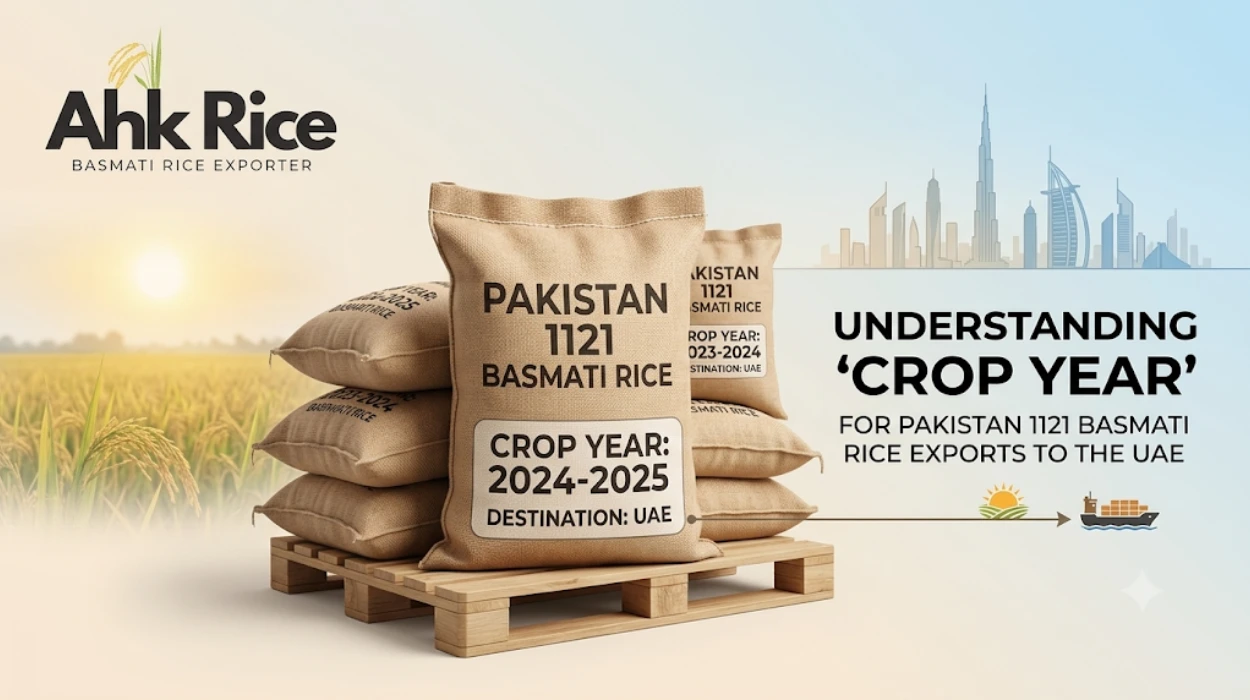
What Does Crop Year Mean for Pakistan 1121 Basmati Rice Exported to the UAE?
Pakistan 1121 Basmati rice reaches UAE buyers with different harvest dates, processing histories, and storage periods. The crop year identifies when the paddy was harvested, making it one of the most important quality indicators in international rice trade. Importers use the crop year to evaluate aroma, grain maturity, cooking performance, moisture stability, and commercial suitability before placing purchase orders.
Pakistan remains one of the world’s leading producers of premium Basmati rice. Punjab contributes the largest share of 1121 Basmati cultivation because its fertile soil, canal irrigation system, and favorable climate support long-grain production. After harvesting, the rice passes through cleaning, drying, milling, grading, polishing, quality inspection, packaging, and export documentation before shipment to overseas markets.
For UAE food distributors, supermarkets, hotels, restaurants, catering companies, and private-label brands, understanding crop year improves purchasing decisions. Buyers comparing different harvest years should also understand how purchasing preferences change across trading seasons in our guide explaining which harvest season UAE importers usually select .
What Does Crop Year Mean in Pakistan 1121 Basmati Rice?
Crop year identifies the agricultural season during which Pakistan 1121 Basmati rice was harvested. It tells buyers exactly when the paddy entered the supply chain and serves as a measurable reference for evaluating aroma, moisture, maturity, milling quality, storage stability, and export value.
Crop year refers to the year in which farmers harvest paddy from the field. It does not represent the milling date, packaging date, or shipping date. These events occur after harvesting and vary according to export schedules.
Pakistan generally harvests 1121 Basmati rice between October and November. The harvested paddy then enters drying facilities before moving to processing plants. Exporters record the crop year throughout the production chain to maintain traceability.
For example, rice harvested during October 2025 belongs to Crop Year 2025, even if it is exported during 2026.
International buyers rely on crop year because it provides objective information instead of marketing claims. Commercial contracts often specify crop year to ensure both parties agree on the product supplied.
How Does Crop Year Influence Pakistan 1121 Basmati Rice Quality?
Crop year directly influences grain maturity, moisture balance, aroma development, cooking consistency, milling recovery, and storage performance because these characteristics change as rice naturally matures after harvesting under controlled storage conditions.
Freshly harvested rice contains higher moisture than matured rice. Before export, processors reduce moisture to acceptable commercial levels using drying systems and controlled storage.
Natural aging improves several quality characteristics.
These improvements include:
- Better grain separation after cooking
- Stronger Basmati aroma
- Reduced grain stickiness
- Improved elongation
- Higher cooking consistency
The aging process does not change the genetic variety. Pakistan 1121 remains the same variety regardless of storage duration. Aging simply allows physical and chemical changes inside the grain that improve cooking performance.
Commercial buyers serving restaurants usually value consistent cooking results because identical recipes produce predictable output every day.
How Is Pakistan 1121 Basmati Rice Processed Before Export?
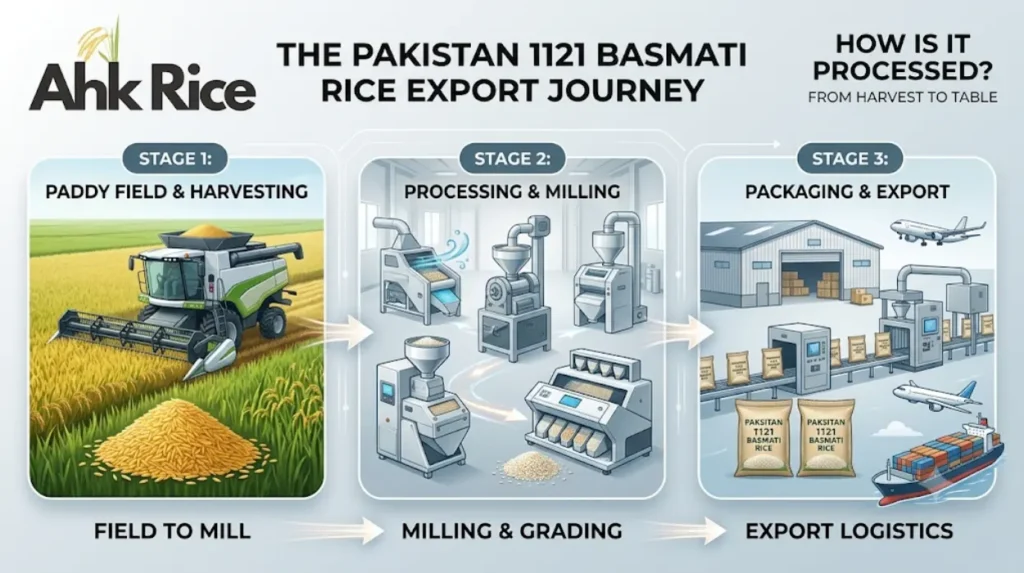
Pakistan 1121 Basmati rice follows a structured processing sequence that converts harvested paddy into export-ready rice through drying, cleaning, milling, grading, polishing, quality inspection, packaging, and container loading while maintaining traceability from farm to shipment.
Harvesting
Farmers harvest mature paddy using combine harvesters or manual methods after the grains reach the correct maturity level.
Drying
Fresh paddy contains excess moisture.
Drying reduces moisture to safe storage levels and prevents fungal growth during storage.
Storage
The paddy remains in controlled warehouses before milling.
Proper storage protects grain quality and supports natural maturation.
Cleaning
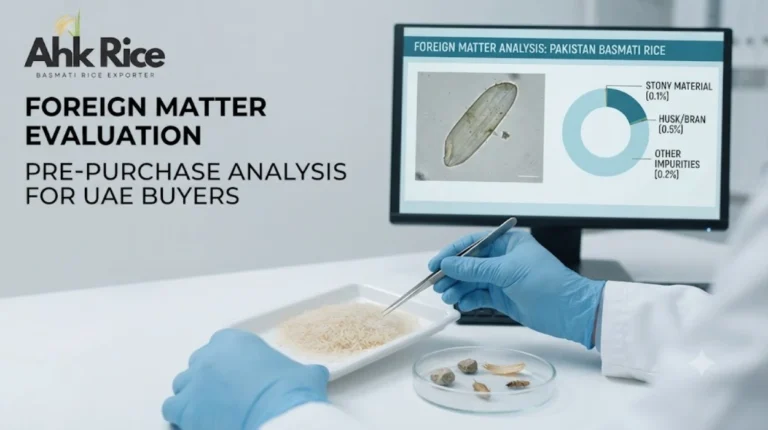
Machines remove foreign materials.
Examples include:
- Stones
- Dust
- Straw
- Metal particles
- Broken plant material
Husking
The outer husk separates from the rice grain without damaging the kernel.
Milling
Milling removes the bran layer while preserving maximum whole grain recovery.
Grading
Optical sorting machines classify grains by size, color, and quality.
Examples include:
- Head rice
- Broken rice
- Chalky grains
- Discolored grains
Polishing
Some buyers request polished rice for appearance.
Others prefer silky polish or minimal polish depending on market preferences.
Quality Inspection
Laboratories test export batches for:
- Moisture
- Purity
- Broken percentage
- Grain length
- Foreign matter
- Damaged kernels
Packaging
Rice is packed according to buyer specifications.
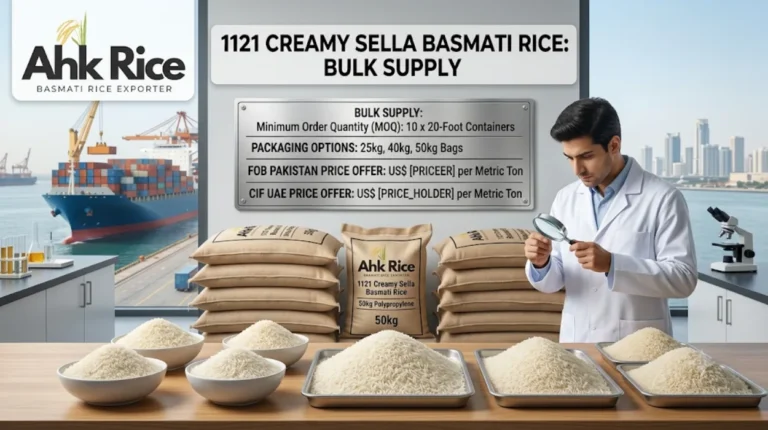
Common package sizes include:
- 1 kg
- 2 kg
- 5 kg
- 10 kg
- 20 kg
- 25 kg
- 40 kg
- 50 kg
Export
Finished containers undergo documentation before shipping to destination ports across the UAE.
What Are the Main Components That Determine Export Quality?
Several measurable quality components determine export value because international buyers purchase rice according to standardized specifications instead of appearance alone.
Export specifications usually include:
Grain Length
Pakistan 1121 Basmati is recognized for exceptionally long kernels.
Long grains command higher commercial value.
Broken Percentage
Lower broken percentages indicate better milling performance.
Premium export grades usually contain minimal broken kernels.
Moisture Content
Controlled moisture supports longer shelf life and stable transportation.
Purity
High purity means the shipment contains very little foreign material.
Color
Uniform grain color reflects effective processing and sorting.
Aroma
Natural Basmati fragrance develops during proper storage.
Cooking Performance
Importers evaluate:
- Grain elongation
- Water absorption
- Texture
- Separation after cooking
Together, these characteristics determine commercial quality more accurately than visual inspection alone.
What Grades of Pakistan 1121 Basmati Rice Are Available?
Pakistan 1121 Basmati rice is available in several commercial grades based on grain integrity, processing level, and buyer specifications rather than different plant varieties.
Common export grades include:
1121 Steam Rice
Steam processing strengthens kernels before milling.
Many importers choose this grade for durability during transportation.
1121 Sella Rice
Sella rice undergoes parboiling before milling.
It produces firm cooked grains with high elongation.
1121 White Rice
White rice receives standard milling after husk removal.
It delivers the classic Basmati appearance preferred by many retail markets.
Head Rice
This grade contains a high percentage of complete kernels.
Premium buyers generally request higher head rice recovery.
Broken Rice
Broken kernels serve food processing industries, flour production, and certain value-oriented markets.
Each grade satisfies different commercial applications while remaining part of the Pakistan 1121 Basmati variety.
What Benefits Does Understanding Crop Year Provide UAE Buyers?
Understanding crop year allows UAE buyers to evaluate consistency, estimate cooking performance, compare supplier specifications, reduce quality disputes, and purchase rice that matches their intended commercial application.
Crop year improves procurement planning.
Importers compare available inventory before seasonal purchasing begins.
Restaurants benefit from stable cooking performance.
Retail brands benefit from consistent consumer experience.
Food distributors reduce complaints by purchasing products with verified production records.
Wholesalers negotiate contracts more accurately because crop year provides measurable information instead of subjective quality descriptions.
The result is greater transparency throughout the international supply chain.
Where Is Pakistan 1121 Basmati Rice Used After Import into the UAE?
Pakistan 1121 Basmati rice serves multiple commercial sectors throughout the UAE because its long grains, aroma, and cooking characteristics satisfy both food service businesses and retail consumers.
Major applications include:
Hotels prepare premium buffet dishes using long-grain Basmati rice.
Restaurants serve traditional biryani, mandi, kabsa, pulao, and grilled meat meals.
Supermarkets package branded retail products.
Private-label companies market customized consumer packaging.
Catering companies purchase large commercial volumes for institutional food production.
Food wholesalers distribute rice to independent grocery stores across different Emirates.
Each sector selects specifications that match its operational requirements.
Which Certifications Apply to Pakistan 1121 Basmati Rice Exports?
International certifications verify food safety, traceability, manufacturing controls, and regulatory compliance throughout the export process, giving overseas buyers confidence in product consistency.
Common export certifications include:
- ISO 22000 Food Safety Management
- HACCP
- GMP
- Halal Certification
- Phytosanitary Certificate
- Certificate of Origin
- Fumigation Certificate when required by destination regulations
- Health Certificate depending on importing country requirements
Government authorities also inspect export documentation before international shipment.
Certification requirements differ according to destination country regulations and importer specifications.
What Are the Most Common Misconceptions About Crop Year?
Several misconceptions create confusion because crop year, milling date, packaging date, and export date describe different stages of the production process rather than the same event.
One common misunderstanding is that crop year equals packaging year.
Packaging occurs after milling.
Another misunderstanding is that fresh rice automatically indicates higher quality.
Commercial cooking performance depends on complete quality specifications rather than harvest date alone.
Some buyers believe older rice loses quality.
Proper warehouse storage preserves grain quality while supporting natural aroma development.
Another misconception assumes crop year determines rice variety.
The crop year identifies harvest timing.
The variety identifies the plant genetics.
Understanding these differences allows importers to compare supplier quotations more accurately.
Crop year serves as one of the most important quality references for Pakistan 1121 Basmati rice exported to the UAE. It identifies the harvest season, supports product traceability, and helps buyers evaluate maturity, aroma, moisture balance, and cooking performance. Combined with proper processing, grading, quality inspection, and internationally recognized certifications, crop year provides valuable information for importers making purchasing decisions. Buyers who understand how crop year fits into the complete export process can compare suppliers using objective quality specifications instead of marketing claims.
Frequently Asked Questions
What is the crop year of Pakistan 1121 Basmati rice?
The crop year refers to the agricultural season in which the 1121 Basmati paddy was harvested. It identifies the harvest date rather than the milling, packaging, or shipping date.
Why is crop year important for UAE rice importers?
Crop year helps importers evaluate grain maturity, aroma development, cooking consistency, moisture stability, and overall product traceability before purchasing.
Does crop year affect rice quality?
Yes. The crop year helps buyers understand the maturity stage of the rice. Properly stored rice develops improved aroma, better grain separation, and more consistent cooking performance.
Where is Pakistan 1121 Basmati rice mainly grown?
Pakistan 1121 Basmati rice is primarily cultivated in Punjab, where fertile soil, favorable climate, and canal irrigation support premium long-grain production.
What are the main grades of Pakistan 1121 Basmati rice?
The main export grades include 1121 White Rice, 1121 Steam Rice, 1121 Sella Rice, Head Rice, and Broken Rice, each serving different commercial applications.