Why 1121 Golden Sella Basmati Rice Prices Differ Between FOB Pakistan and CIF UAE
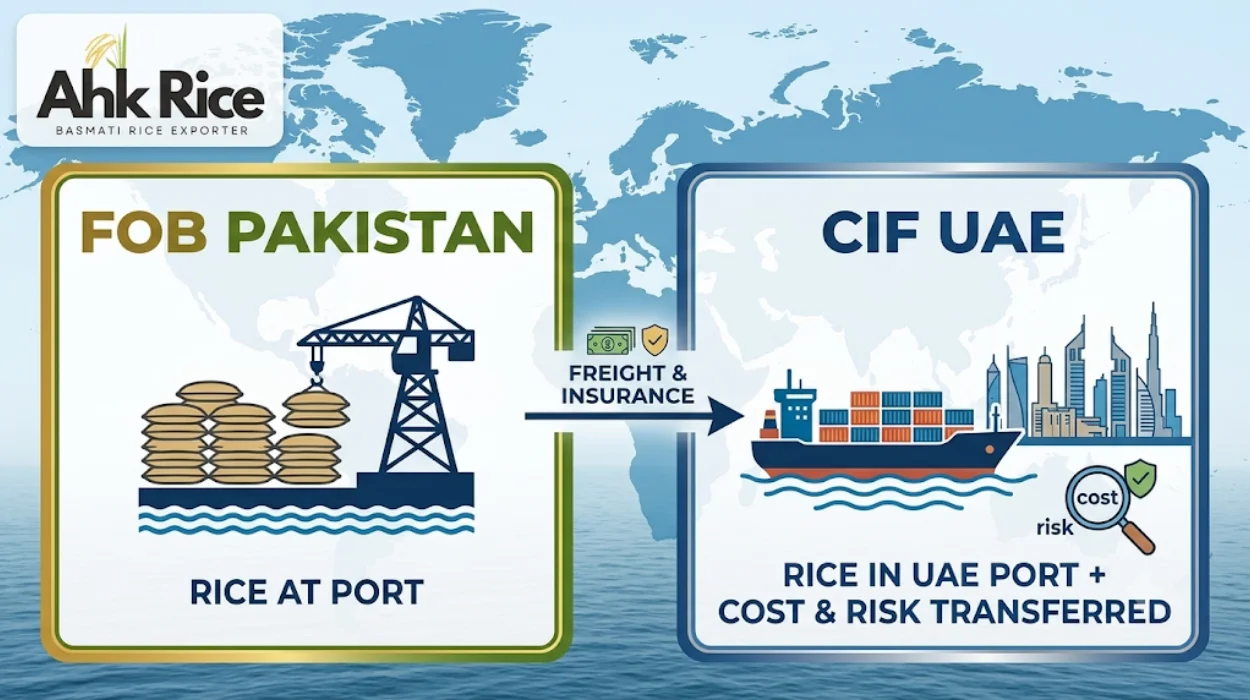
1121 Golden Sella Basmati Rice prices differ between FOB Pakistan and CIF UAE because CIF includes ocean freight, marine insurance, destination handling charges, customs-related logistics, and shipping risks. Here is why: FOB pricing ends when the cargo is loaded onto the vessel in Pakistan, while CIF pricing covers transportation until the shipment reaches the UAE port.
1121 Golden Sella Basmati Rice is one of Pakistan’s highest-exported premium rice varieties. Buyers in the UAE often compare FOB and CIF prices before placing import orders. Understanding these pricing methods helps importers calculate their total landed cost instead of comparing only the rice price.
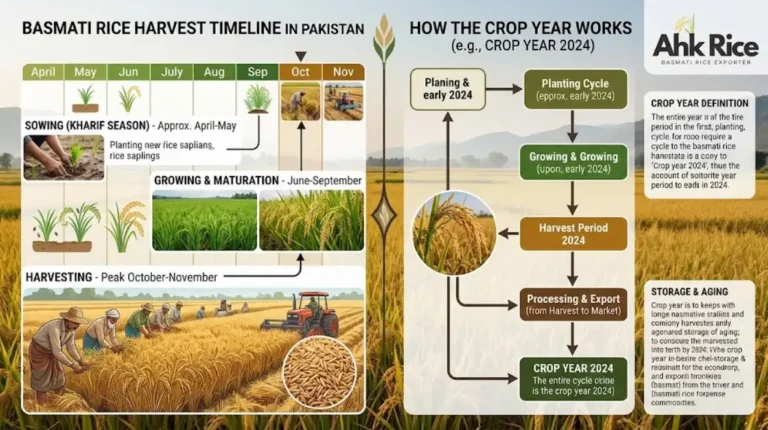
Pakistan cultivates 1121 Basmati mainly in Punjab. Farmers harvest the crop between October and November. Rice mills parboil, dry, mill, polish, grade, inspect, and pack the rice before export. The UAE remains one of Pakistan’s largest premium Basmati markets because of strong demand from retail brands, hotels, restaurants, and catering companies (source: Pakistan Bureau of Statistics, FY2024–25).
What is the difference between FOB Pakistan and CIF UAE pricing?
FOB covers the product until loading at the Pakistani port. CIF includes the product, freight, insurance, and delivery costs to the UAE destination port.
FOB stands for Free on Board. Under FOB Pakistan, the exporter supplies, processes, packs, clears customs, and loads the rice onto the vessel. After loading, transportation responsibility transfers to the buyer.
CIF stands for Cost, Insurance, and Freight. Under CIF UAE, the exporter arranges ocean freight and marine insurance until the cargo reaches the agreed UAE port. Buyers receive one combined price covering the rice and international shipping.
The pricing difference does not indicate different rice quality. The same 1121 Golden Sella grade can have different FOB and CIF prices because logistics costs change throughout the year.
For example, a shipment to Dubai includes vessel booking, container movement, marine insurance, and freight charges. These costs become part of the CIF quotation instead of the FOB quotation.
How does the FOB to CIF pricing process work?
The pricing process adds transportation costs step by step after the FOB value is established.
How exporters calculate FOB price
Rice exporters first calculate production and export expenses.
The FOB calculation normally includes:
- Cleaning the paddy
- Parboiling the grain
- Drying the rice
- Milling the kernels
- Polishing the surface
- Grading by size
- Sorting with color sorters
- Inspecting quality
- Packing export bags
- Loading containers
After these activities, the exporter issues the FOB quotation.
How exporters calculate CIF price
The exporter then adds logistics expenses.
The CIF quotation generally includes:
- Ocean freight
- Marine insurance
- Container booking
- Documentation
- Shipping line charges
- Destination freight coverage
As shipping costs increase, the CIF price increases while the FOB price remains unchanged.
For UAE buyers, freight often represents one of the largest variables because container availability changes throughout the year (source: REAP export data, December 2025).
This explains the calculation process. The next section examines every cost component separately.
What components create the difference between FOB and CIF prices?
Ocean freight, insurance, documentation, and destination logistics create the largest pricing difference.
Rice value
The rice itself forms the largest percentage of both FOB and CIF quotations. Grain length, purity, broken percentage, moisture level, and milling quality determine the export value.
Freight charges
Shipping companies calculate freight using container availability, fuel costs, vessel schedules, and trade demand.
Freight rises during busy export seasons. Freight falls when shipping capacity increases.
Marine insurance
Marine insurance protects cargo against transportation risks during sea transit. Insurance usually represents a small percentage of the shipment value but remains mandatory under CIF contracts.
Export documentation
Export documentation includes commercial invoices, packing lists, certificates of origin, phytosanitary certificates, fumigation certificates, and quality certificates.
Destination logistics
CIF pricing covers transportation until the UAE port. Import duties, VAT, and customs clearance inside the UAE normally remain the buyer’s responsibility unless another Incoterm applies.
Together, these components explain why CIF quotations exceed FOB quotations. The next section explains why importers still prefer CIF purchasing.
What benefits does CIF pricing provide for UAE importers?
CIF simplifies purchasing by combining rice cost, freight, and insurance into one quotation.
Many first-time importers prefer CIF because budgeting becomes easier. One quotation provides the product value together with international transportation costs.
CIF also reduces coordination work. Exporters arrange vessel bookings, shipping documents, insurance, and cargo dispatch before the shipment leaves Pakistan.
Risk management improves because marine insurance remains part of the agreement. Insurance protects cargo during international transportation according to the contract terms.
Large supermarket distributors often compare total landed costs instead of comparing FOB prices alone. This approach produces more accurate purchasing decisions.
Understanding these benefits helps explain buyer preferences. The next section examines where FOB and CIF pricing are most commonly used.
What are the main use cases for FOB and CIF pricing?
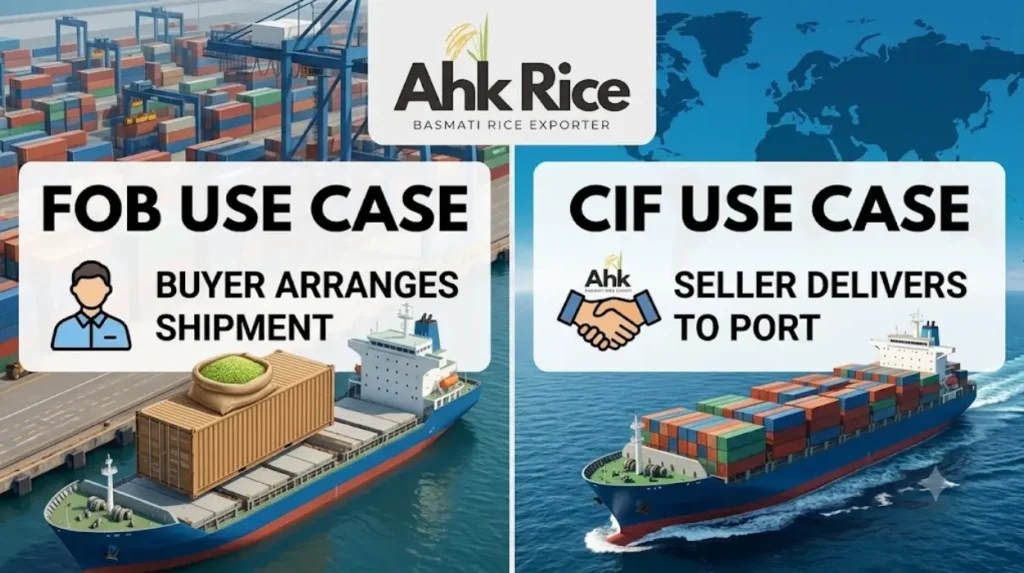
FOB suits experienced importers with their own freight partners. CIF suits buyers who prefer one complete shipping quotation.
FOB for large importers
Large food distributors often purchase under FOB terms because they negotiate freight directly with shipping lines. This approach provides greater control over logistics costs and vessel selection.
FOB also allows importers to consolidate multiple suppliers into one shipment. A UAE trading company can purchase rice from Pakistan and spices from another country while managing one freight contract.
CIF for retail importers
Retail brands, wholesalers, and first-time importers frequently choose CIF because transportation planning remains with the exporter.
CIF simplifies budgeting. Buyers receive one export quotation covering the rice, freight, and insurance until the destination port.
CIF for food service businesses
Hotels, restaurants, and catering companies require predictable purchasing costs. CIF pricing supports procurement planning because freight charges remain included in the quotation.
Understanding these practical applications explains why both pricing methods remain widely used. The next section addresses common misconceptions about FOB and CIF pricing.
What misconceptions exist about FOB and CIF pricing?
Higher CIF prices do not indicate higher-quality rice. The difference reflects transportation and logistics costs rather than grain quality.
Many buyers believe CIF rice is more expensive because exporters charge more for the product. This assumption is incorrect. Identical 1121 Golden Sella Basmati Rice can have one FOB quotation and several CIF quotations depending on the destination port and freight market.
Another misconception involves insurance. Buyers often assume insurance covers every possible expense after arrival. Marine insurance protects cargo during sea transportation according to policy conditions. Import duties, customs taxes, and inland transportation remain separate unless another trade agreement specifies those services.
Some importers compare quotations without confirming the Incoterm. Comparing one FOB quotation with one CIF quotation produces inaccurate conclusions because each quotation includes different services.
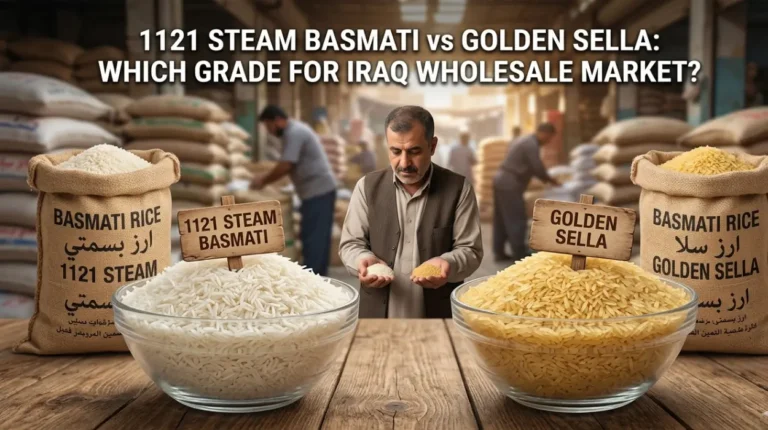
Golden Sella also differs from Steam Basmati in storage performance. Golden Sella maintains quality for up to 18 months under proper storage. Steam Basmati performs best within 12 months. For UAE warehouses operating in temperatures approaching 40°C, Golden Sella provides better storage stability. For catering companies maintaining larger inventories, Golden Sella remains the preferred specification.
With these misconceptions resolved, the final section summarizes the factors that influence FOB and CIF pricing.
Why should buyers understand FOB and CIF pricing before importing?
Understanding both pricing methods allows buyers to compare total landed costs instead of comparing rice prices alone.
1121 Golden Sella Basmati Rice pricing extends beyond the value of the grain. FOB Pakistan includes processing, export preparation, customs clearance, and vessel loading. CIF UAE builds upon the FOB price by adding ocean freight and marine insurance until the destination port.
Pakistan continues supplying premium Basmati rice to international markets because of consistent cultivation, advanced milling technology, and established export infrastructure (source: Pakistan Bureau of Statistics, FY2024–25). Importers who understand these pricing structures make more accurate purchasing decisions and prepare realistic import budgets.
Buyers seeking a deeper understanding of freight calculations, container charges, shipping routes, and landed-cost estimation can continue with our detailed guide on 1121 Golden Sella Basmati Rice Shipping Costs, Freight Factors and CIF UAE Pricing Explained.
Frequently Asked Questions
Why is the CIF price higher than the FOB price?
CIF includes the FOB value plus ocean freight, marine insurance, and shipping costs to the destination port.
Does FOB include shipping costs?
No. FOB ends when the cargo is loaded onto the export vessel in Pakistan.
What does CIF include?
CIF includes the product price, freight charges, and marine insurance until the agreed destination port.
Does rice quality change between FOB and CIF?
No. The rice quality remains identical. Only the pricing structure changes because additional logistics costs are included.
Why do freight charges change throughout the year?
Freight rates change because of container availability, fuel prices, seasonal demand, vessel capacity, and global shipping conditions.