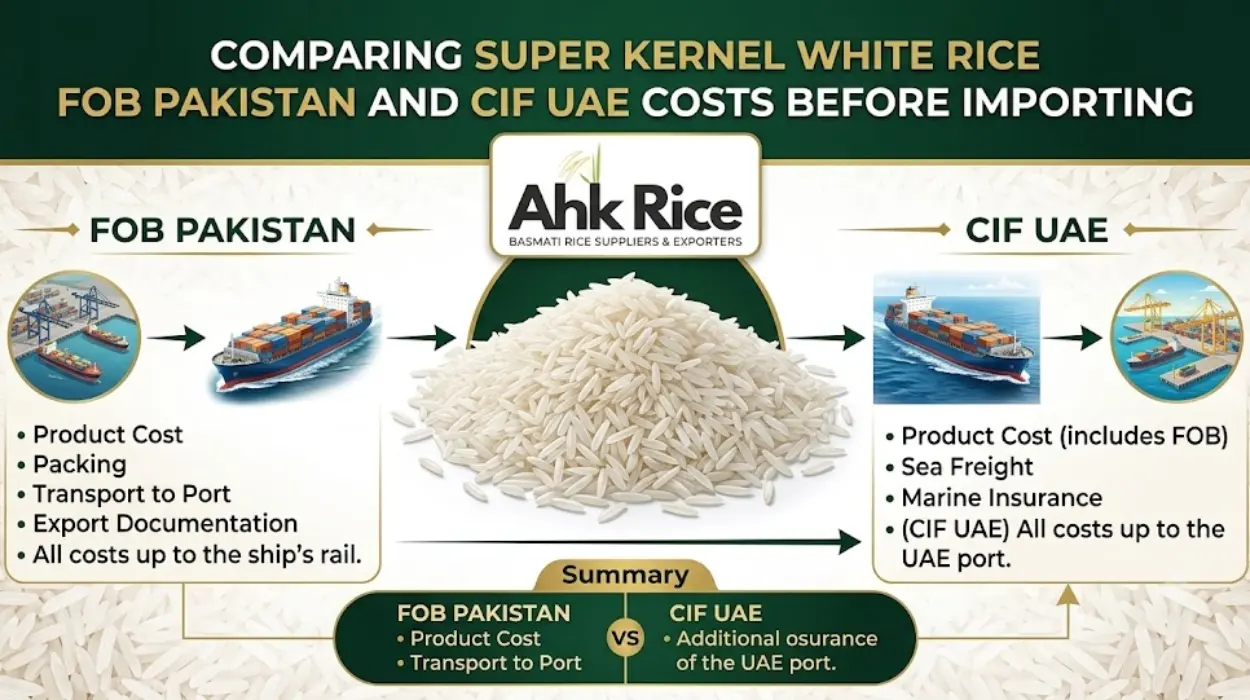
Comparing Super Kernel White Rice FOB Pakistan and CIF UAE Costs Before Importing
Importers comparing Super Kernel White Rice FOB Pakistan and CIF UAE prices should evaluate the complete landed cost instead of focusing only on the quoted price because freight, insurance, destination charges, and purchasing strategy determine the final profitability of every shipment.
Importing Pakistani Super Kernel White Rice requires understanding internationally recognised trade terms. Before requesting quotations, buyers should understand how export pricing works, quality grades, shipping responsibilities, and destination costs. If you are still learning about this rice variety, it is helpful to first read your educational guide on:
Get Wholesale Super Kernel White Rice FOB Pakistan and CIF UAE Quotes from AHK Rice before comparing commercial pricing. Likewise, Super Kernel White Rice from AHK Rice is available with customised export specifications, packaging, and documentation for international buyers.
What is the difference between FOB Pakistan and CIF UAE pricing?
FOB and CIF represent two internationally accepted Incoterms that determine which party pays for transportation, insurance, and shipping responsibilities. FOB usually provides buyers greater freight flexibility, while CIF offers predictable landed pricing because the exporter includes ocean freight and marine insurance in the quotation.
FOB (Free On Board) means the Pakistani exporter is responsible for processing, packing, customs clearance, inland transportation to the port, and loading the container onto the vessel at Karachi Port.
Once the cargo crosses the ship’s rail, responsibility transfers to the buyer.
CIF (Cost, Insurance and Freight) includes everything covered under FOB, plus:
- Ocean freight
- Marine insurance
- Freight booking
- Shipping arrangements to the UAE destination port
For UAE importers, CIF quotations simplify purchasing because transportation is arranged by the exporter.
FOB quotations provide more control for buyers who already have preferred shipping lines or negotiated freight contracts.
How do FOB Pakistan and CIF UAE specifications compare?
Although rice quality remains identical under FOB and CIF contracts, the commercial pricing structure changes because transportation, insurance, and logistics costs become part of the exporter’s quotation under CIF terms rather than remaining the buyer’s responsibility.
Specification Comparison
| Attribute | FOB Pakistan | CIF UAE |
|---|---|---|
| Price Includes | Rice, processing, export documentation, loading | FOB services plus freight and insurance |
| Freight | Buyer arranges | Exporter arranges |
| Marine Insurance | Buyer | Exporter |
| Risk Transfer | At vessel loading | Destination port arrival responsibilities vary under contract |
| Cash Flow | Lower invoice value | Higher invoice value |
| Logistics Management | Buyer controlled | Exporter managed |
| Best For | Experienced importers | New importers and distributors |
The physical rice quality does not change between FOB and CIF contracts.
Only the commercial responsibility changes.
What Super Kernel White Rice grades are commonly exported?
Pakistani exporters supply multiple Super Kernel White Rice grades to satisfy different retail, wholesale, and foodservice markets. Grade selection directly influences FOB pricing, milling yield, export demand, and importer profitability in every destination market.
Common export grades include:
| Grade | Typical Broken % | Primary Market |
|---|---|---|
| Premium Export Grade | 1–2% | Premium retail |
| Standard Export Grade | 3–5% | Supermarkets |
| Commercial Grade | 5–10% | Wholesale |
| Economy Grade | 10–15% | Institutional buyers |
| Bulk Processing Grade | Higher broken ratio | Food manufacturing |
Higher grades command stronger international prices because of better grain length, appearance, aroma, and cooking performance.
How do UAE and African markets compare when importing Super Kernel White Rice?
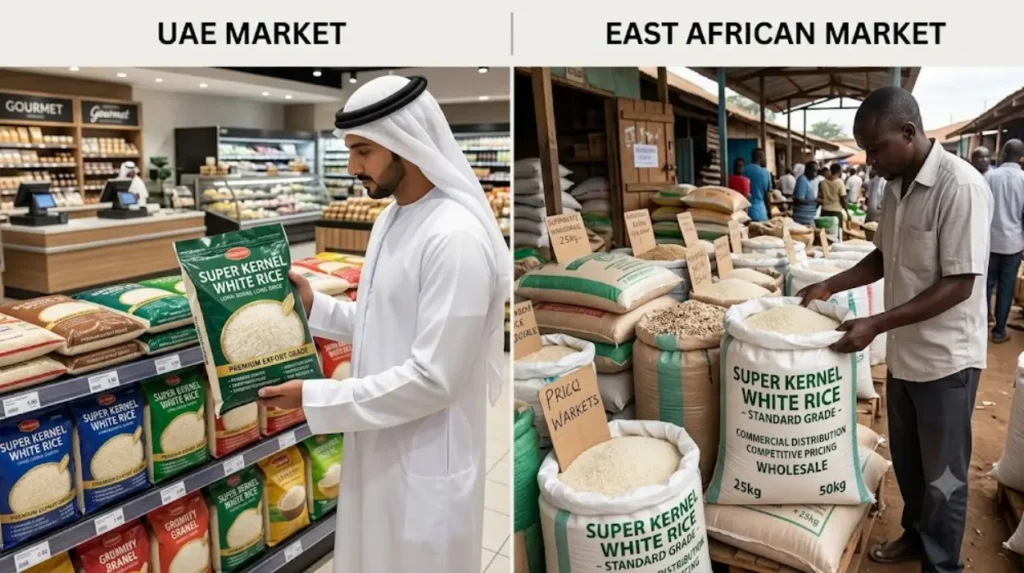
Regional demand differs significantly because importers purchase according to consumer preferences, retail positioning, purchasing power, and food service requirements. Selecting the appropriate grade improves competitiveness and inventory turnover within each destination market.
UAE Market
Typical preferences include:
- Premium export grade
- Long grain appearance
- Bright white colour
- Attractive retail packaging
- Low broken percentage
- Consistent cooking quality
These products are commonly supplied to supermarkets, hotels, restaurants, and premium food distributors.
East African Market
Typical preferences include:
- Standard export grades
- Competitive pricing
- Larger wholesale packaging
- Commercial distribution
- Bulk purchasing
Wholesale buyers generally focus on balancing quality with affordability.
How much do FOB Pakistan and CIF UAE prices differ in 2026?
The price difference reflects freight, insurance, seasonal shipping demand, fuel costs, container availability, and destination port charges rather than changes in rice quality. Buyers should compare complete landed costs instead of invoice prices alone.
Indicative 2026 commercial export ranges are shown below.
| Cost Component | FOB Pakistan (USD/MT) | CIF UAE (USD/MT) |
|---|---|---|
| Premium Grade | 980–1,080 | 1,030–1,150 |
| Standard Grade | 910–980 | 960–1,040 |
| Commercial Grade | 850–910 | 900–970 |
Typical freight and insurance account for approximately USD 45–80 per metric tonne, depending on:
- Vessel availability
- Fuel surcharges
- Shipping season
- Container supply
- UAE destination port
- Cargo volume
Actual quotations vary by shipment size and contract timing.
Which purchasing approach offers better value?
The best purchasing method depends on logistics capability rather than simply choosing the lowest quoted price. Buyers with established freight networks usually benefit from FOB purchasing, whereas newer importers often gain operational simplicity through CIF purchasing.
FOB Advantages
- Greater freight flexibility
- Shipping line selection
- Better negotiation opportunities
- Transparent logistics costs
- Easier multi-origin sourcing
FOB Limitations
- Requires logistics expertise
- Freight rates fluctuate
- Buyer manages shipping risks
- More supplier coordination
CIF Advantages
- One complete quotation
- Simpler budgeting
- Less administrative work
- Exporter coordinates freight
- Easier for first-time importers
CIF Limitations
- Less control over shipping line
- Freight margin included
- Limited flexibility after booking
What factors should buyers evaluate before requesting quotations?
Successful importers compare commercial specifications beyond price by analysing rice quality, packaging, payment terms, shipment schedules, certifications, documentation, and logistics performance. These factors collectively determine long-term purchasing efficiency and customer satisfaction.
Important evaluation criteria include:
- Grain length
- Broken percentage
- Moisture level
- Milling degree
- Crop year
- Country of origin
- Phytosanitary certification
- Fumigation certificate
- Packaging options
- Container loading capacity
- Production lead time
- Payment terms
- Shipping schedule
- Export documentation
- Inspection reports
Each quotation should describe these specifications clearly.
What is the expected shelf life of export-grade Super Kernel White Rice?
Proper storage significantly influences product quality after arrival. Export-grade Super Kernel White Rice maintains its commercial value when moisture levels remain controlled and international storage practices are followed throughout transportation and warehousing.
Shelf Life Comparison
| Storage Condition | Expected Shelf Life |
|---|---|
| Vacuum packaging | Up to 24 months |
| PP woven export bags | 18–24 months |
| Retail laminated packs | Up to 24 months |
| High humidity storage | Reduced quality over time |
| Temperature-controlled warehouse | Maximum quality retention |
Maintaining moisture below export specifications and storing containers in dry, ventilated warehouses helps preserve grain appearance, aroma, and cooking quality.
Which purchasing strategy works best for different importers?
Different business models require different procurement strategies. The most effective option aligns with purchasing volume, logistics expertise, inventory planning, and financial objectives rather than applying a single solution to every importer.
Decision Framework
| Buyer Type | Recommended Option | Primary Reason | Cost Priority | Logistics Complexity |
|---|---|---|---|---|
| First-time importer | CIF | Simplicity | Medium | Low |
| Experienced trader | FOB | Freight control | High | Medium |
| Large distributor | FOB | Volume optimisation | High | High |
| Supermarket supplier | CIF | Reliable scheduling | Medium | Low |
| Food manufacturer | FOB | Bulk procurement efficiency | High | Medium |
Choosing the correct purchasing structure improves inventory planning while reducing unexpected logistics expenses.
What export services support consistent international procurement?
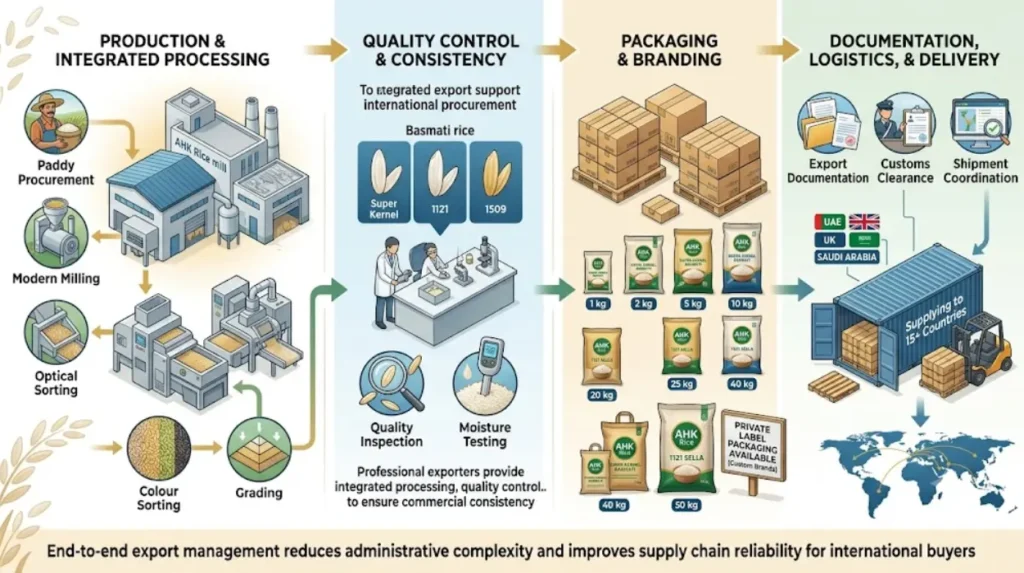
Professional exporters provide integrated processing, quality control, packaging, documentation, and shipping coordination to ensure commercial consistency from production through delivery. End-to-end export management reduces administrative complexity and improves supply chain reliability for international buyers.
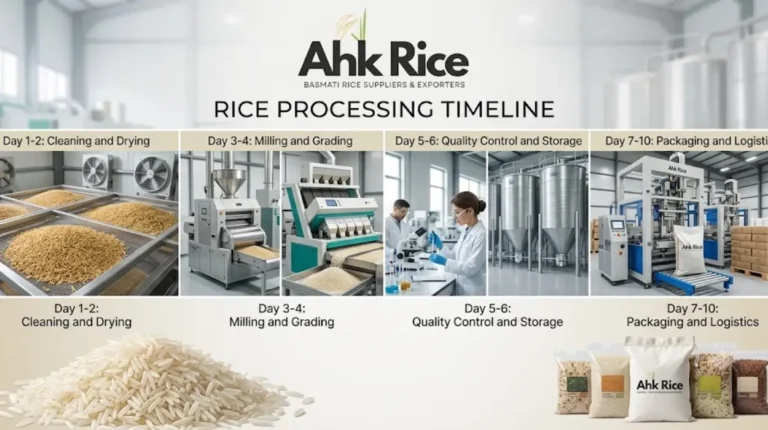
AHK Rice is a Pakistani Basmati rice exporter based in Punjab supplying Super Kernel, 1121, and 1509 rice varieties to more than 15 countries.
Its export process typically includes:
- Paddy procurement
- Modern milling
- Optical sorting
- Colour sorting
- Grading
- Quality inspection
- Moisture testing
- Packaging
- Container loading
- Export documentation
- Customs clearance
- Shipment coordination
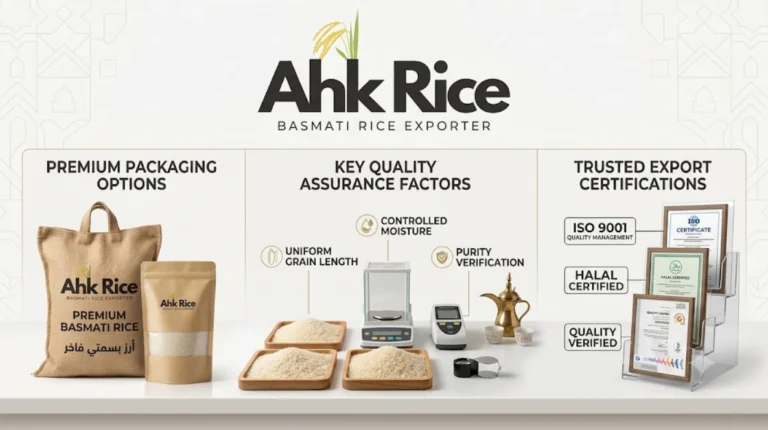
Available packaging options include:
- 1 kg
- 2 kg
- 5 kg
- 10 kg
- 20 kg
- 25 kg
- 40 kg
- 50 kg
Private label packaging is also available for international distributors depending on order requirements.
Comparing Super Kernel White Rice FOB Pakistan and CIF UAE costs requires analysing much more than the quoted price. FOB offers experienced importers greater control over freight negotiations and logistics management, while CIF simplifies purchasing by combining rice, insurance, and transportation into a single commercial quotation. Evaluating grade selection, destination market requirements, shelf life, logistics capability, certifications, and complete landed cost enables importers to choose the procurement strategy that best supports profitability and supply chain efficiency.
Frequently Asked Questions
What is the main difference between FOB Pakistan and CIF UAE pricing for Super Kernel White Rice?
FOB pricing includes the cost of the rice and export procedures up to loading at the Pakistani port, while CIF pricing also includes ocean freight and marine insurance to the UAE destination port.
Which option is better for first-time rice importers, FOB or CIF?
CIF is generally more suitable for first-time importers because the exporter manages freight and insurance, making the purchasing process simpler and more predictable.
How much does freight usually add to CIF pricing in 2026?
Freight and insurance typically add around USD 45–80 per metric tonne, depending on shipping season, container availability, fuel costs, and destination port.
Does Super Kernel White Rice quality change between FOB and CIF shipments?
No. The rice quality, grade, and specifications remain the same. The difference lies only in who is responsible for shipping, insurance, and logistics costs.
Which Super Kernel White Rice grade is most popular in the UAE?
The UAE market generally prefers premium export grades with long grains, low broken percentage, bright white colour, and consistent cooking quality for retail and hospitality sectors.
What is the shelf life of export-grade Super Kernel White Rice?
When stored in dry, cool conditions with proper packaging, export-grade Super Kernel White Rice typically has a shelf life of 18–24 months.
What documents are commonly provided with Super Kernel White Rice exports?
Export shipments usually include the commercial invoice, packing list, bill of lading, certificate of origin, phytosanitary certificate, fumigation certificate, and other documents required by the importing country.
What factors should buyers compare besides the rice price?
Importers should evaluate grain length, broken percentage, moisture content, packaging options, certifications, payment terms, production lead time, shipping schedule, and total landed cost before making a purchasing decision.