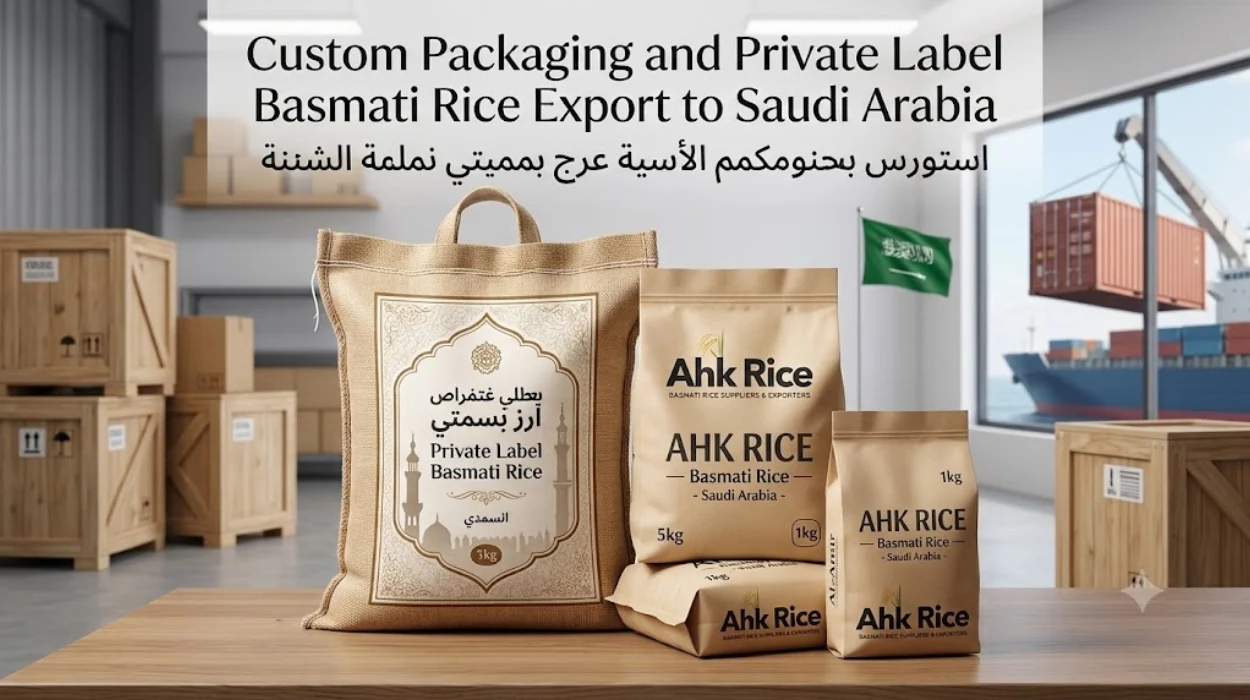
Custom Packaging and Private Label Basmati Rice Export to Saudi Arabia
Custom packaging and private label Basmati rice export is the fastest way for Saudi brands to build market share with controlled product quality and stronger margins. Here is why: Saudi consumers increasingly prefer branded rice products, while Pakistani Basmati remains the premium origin for aroma, grain length, and value efficiency. Buyers that source directly from experienced exporters such as AHK Rice gain specification control, packaging flexibility, and reliable delivery schedules.
Many Saudi importers begin by understanding how private label sourcing works. Our guide on how Saudi companies develop their rice brands explains the complete sourcing model and complements this article: How Do Saudi Rice Brands Source Pakistani Basmati for Private Label Packaging?
What is the best solution for custom packaging and private label Basmati rice export to Saudi Arabia?
The best solution is direct factory sourcing with custom packaging, private label registration, quality certification, and managed logistics from Pakistan to Saudi Arabia. This model reduces procurement layers, improves margin control, and ensures consistent retail presentation across supermarkets, wholesalers, and foodservice channels.
Saudi rice brands compete through packaging quality, brand visibility, and product consistency. Direct sourcing gives buyers complete control over these variables.
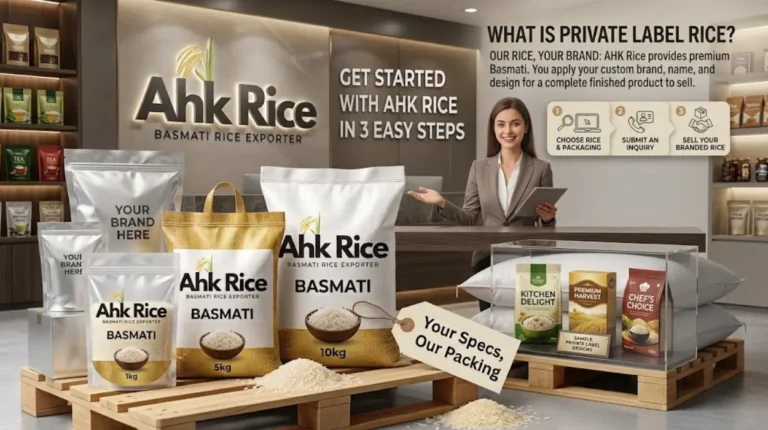
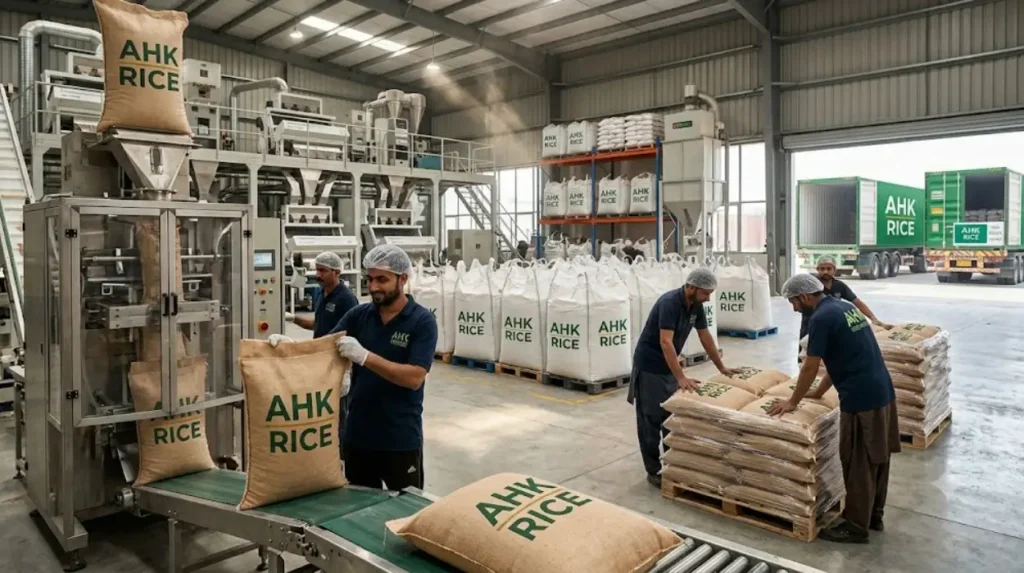
AHK Rice provides private label export programs designed for Saudi distributors, supermarket chains, wholesalers, and emerging rice brands. AHK Rice manages milling, grading, packaging, inspection, documentation, and shipment coordination under one export framework.
The first product decision remains specification selection. Buyers comparing grades should review our detailed guide on selecting the correct Saudi market specification through different 1121 rice grades: 1121 Rice Grades Compared for Saudi Private Label Brands.
Why do Saudi brands choose private label Basmati rice?
Saudi consumers recognize Pakistani Basmati as a premium rice category. Long grains, aroma retention, and cooking performance create strong shelf differentiation.
Private label programs allow Saudi businesses to build customer loyalty under their own brand rather than selling generic imported products.
AHK Rice supports multiple retail strategies. Some buyers target premium supermarkets. Others focus on wholesale markets or catering contracts. Each channel requires different packaging specifications and positioning.
What packaging options are available?
Packaging Specifications
| Packaging Element | Available Options |
|---|---|
| Retail Bags | 1 kg, 2 kg, 5 kg, 10 kg |
| Family Packs | 20 kg, 25 kg |
| Wholesale Bags | 35 kg, 40 kg, 50 kg |
| Material Types | PP Woven, BOPP Laminated, Non-Woven, Paper Bags |
| Printing | Up to 8 Colors |
| Label Format | Arabic, English, Bilingual |
| Barcode Integration | GS1 Compatible |
AHK Rice customizes packaging according to Saudi retail regulations and importer requirements. Arabic nutritional panels, origin declarations, and barcode specifications can be integrated before production begins.
AHK Rice also supports custom carton packing for supermarket distribution channels requiring palletized retail units.
With the optimal sourcing model established, the next question is the measurable business outcome buyers can expect.
What results can Saudi importers expect from private label Basmati rice sourcing?
Saudi buyers typically achieve stronger brand recognition, improved retail margins, better shelf presentation, and greater pricing control when sourcing directly from specialized Pakistani exporters instead of purchasing third-party branded products.
Private label sourcing transforms rice from a commodity purchase into a branded asset.
Saudi distributors gain the ability to control pricing strategies across multiple sales channels. Retail promotions become easier because the importer owns the brand identity.
AHK Rice helps buyers standardize specifications across shipments. Consistency matters because repeat consumers expect the same cooking performance every time they purchase a product.
What quality results should buyers expect?
AHK Rice follows a defined processing sequence.
- Clean the paddy.
- De-husk the grain.
- Dry the rice.
- Parboil selected grades.
- Polish the kernels.
- Grade by length.
- Sort by density.
- Colour-sort impurities.
- Inspect final lots.
These nine processing steps create consistency between production batches.
What grades are commonly exported to Saudi Arabia?
1121 Steam Basmati Rice
1121 Steam Basmati Rice delivers strong aroma and bright appearance. Saudi retailers frequently position this grade in premium supermarket categories.
1121 Golden Sella Basmati Rice
1121 Golden Sella Basmati Rice provides excellent storage stability and grain strength. Catering companies often select this specification for high-volume operations.
Super Kernel Basmati Rice
Super Kernel Basmati Rice remains popular among traditional consumers seeking classic Pakistani Basmati aroma and texture.
PK 386 Long Grain Rice
PK 386 Long Grain Rice serves value-focused retail and wholesale segments.
AHK Rice exports all major Saudi market grades with customized specifications based on customer requirements.
According to Pakistan’s export performance data, rice remains one of the country’s largest agricultural export categories, with Gulf countries continuing as major destinations (source: Pakistan Bureau of Statistics, FY2024-25).
With expected results defined, buyers should understand the cost structure behind private label programs.
What affects pricing for custom packaging and private label Basmati rice?
Rice grade, packaging material, print complexity, order volume, certification requirements, freight rates, and seasonal crop conditions are the primary factors influencing final export pricing.
Private label costs extend beyond rice procurement.
Packaging frequently becomes the second-largest cost component after the rice itself. Premium BOPP laminated bags cost more than standard woven polypropylene bags.
Key pricing factors
Rice Grade
1121 Steam Basmati generally differs from 1121 Golden Sella because processing requirements vary.
Golden Sella often commands stronger storage performance. In high-temperature Gulf warehouses, Golden Sella can maintain quality for approximately 18 months. Steam grades typically perform best within 12 months under similar conditions. For distributors managing longer inventory cycles, Golden Sella becomes the preferred specification.
Packaging Design
Multi-color printing increases production costs. Premium retail packaging often generates stronger shelf visibility and higher consumer trust.
Order Quantity
Full container orders reduce packaging and logistics costs per metric ton.
Freight Conditions
Ocean freight rates fluctuate according to global shipping demand. Importers benefit from planning purchases before peak logistics periods.
Typical private label cost components
| Cost Element | Impact Level |
| Rice Grade | High |
| Packaging Material | High |
| Printing Design | Medium |
| Freight Charges | High |
| Certification | Medium |
| Sampling | Low |
| Port Charges | Medium |
AHK Rice provides specification-based quotations rather than generic pricing because packaging variables significantly affect final costs.
Understanding cost drivers naturally leads to the sampling process that validates quality before full production.
How does the sample process work before placing a container order?
Professional sampling verifies rice quality, confirms packaging standards, and reduces procurement risk before commercial production begins. Most Saudi buyers complete sampling before approving full container shipments.
Sampling protects both importer and exporter.
AHK Rice follows a structured approval process designed for commercial buyers.
Sample Process
- Submit product requirements.
- Select rice grade.
- Approve target specifications.
- Dispatch rice samples.
- Evaluate cooking performance.
- Review packaging mockups.
- Confirm final specifications.
- Approve commercial production.
What sample costs should buyers expect?
Rice Samples
Rice samples are often supplied free of charge for qualified commercial inquiries. Courier expenses normally remain the responsibility of the buyer.
Packaging Mockups
Custom packaging prototypes may involve artwork and printing setup costs depending on complexity.
Laboratory Testing
Third-party laboratory testing costs vary according to requested parameters and certification requirements.
AHK Rice coordinates sample dispatch through international courier networks serving Saudi Arabia.
Once quality validation is complete, buyers can move confidently into production planning and shipment scheduling.
How long does shipping take from Pakistan to Saudi Arabia?
Most Saudi shipments arrive within approximately 10–25 days depending on destination port, vessel schedule, customs procedures, and carrier routing.
Transit planning affects inventory management.
AHK Rice coordinates shipment schedules based on the target Saudi market.
Estimated Shipping Times
| Destination | Estimated Transit |
| Jeddah | 12–18 Days |
| Dammam | 14–22 Days |
| Riyadh via Dammam | 18–25 Days |
| Medina Distribution Network | 18–25 Days |
| Mecca Distribution Network | 18–25 Days |
Transit times vary according to carrier schedules and seasonal port activity.
Export Documentation
Required Documents
- Commercial Invoice
- Packing List
- Certificate of Origin
- Phytosanitary Certificate
- Bill of Lading
- Quality Certificate
- Fumigation Certificate
AHK Rice prepares export documentation according to importer requirements and applicable Saudi regulations.
With logistics covered, the final step is understanding how to start a private label project.
How can Saudi buyers get started with AHK Rice?
The fastest path is specification consultation, sample approval, packaging development, production confirmation, and container booking under a defined procurement schedule.
AHK Rice begins each project with specification analysis.
Buyers define grade requirements, target consumers, packaging sizes, and monthly volume expectations.
AHK Rice then recommends suitable rice grades, packaging formats, and shipment plans.
What information should buyers provide?
Procurement Requirements
- Rice grade
- Target market segment
- Packaging size
- Packaging material
- Estimated volume
- Delivery destination
- Branding requirements
AHK Rice converts these requirements into a detailed export proposal.
Saudi importers benefit from working directly with a supplier that controls milling, grading, packaging, quality verification, and shipment coordination. This integrated model reduces complexity and improves consistency throughout the supply chain.
AHK Rice supports private label rice programs for retailers, distributors, wholesalers, and foodservice companies seeking long-term brand growth in Saudi Arabia. Contact AHK Rice today to discuss your specifications and request a customized export proposal through /request-a-quote/.
Frequently Asked Questions
How much is the minimum order quantity for private label Basmati rice export to Saudi Arabia?
Most exporters accept orders starting from one full 20-foot or 40-foot container. The exact quantity depends on the rice grade, packaging size, and destination market. AHK Rice can recommend the most cost-efficient container configuration based on your sales volume and distribution strategy.
How long does it take to develop custom packaging for a Saudi rice brand?
Custom packaging development typically takes 2–4 weeks after artwork approval. The timeline includes packaging design review, printing preparation, sample approval, and production planning. Complex packaging projects with multiple SKUs may require additional time.
Can AHK Rice provide Arabic-language packaging for Saudi retail markets?
Yes. AHK Rice can produce packaging with Arabic, English, or bilingual labeling. Packaging can include nutritional information, barcode integration, cooking instructions, and origin declarations that align with Saudi market requirements.
Which Basmati rice grade is most popular for Saudi private label brands?
1121 Golden Sella Basmati Rice and 1121 Steam Basmati Rice are among the most requested grades. Golden Sella performs well in catering and wholesale sectors because of its durability and longer storage life. Steam Basmati is commonly preferred in premium retail channels because of its aroma and appearance.
What certifications are required for exporting Basmati rice to Saudi Arabia?
Most shipments require a Certificate of Origin, Phytosanitary Certificate, Commercial Invoice, Packing List, and Bill of Lading. Additional quality certificates or laboratory reports may be requested depending on importer requirements and regulatory updates. AHK Rice coordinates the required export documentation before shipment dispatch.