How Do Saudi Rice Brands Source Pakistani Basmati for Private Label Packaging?
Saudi rice brands source Pakistani Basmati through specialized exporters, milling companies, and private label packaging suppliers in Punjab, Pakistan. The process includes variety selection, grade specification, milling, quality testing, packaging customization, certification verification, and export shipment. Here is why: Pakistan produces the world’s largest volume of premium long-grain Basmati varieties, and Saudi Arabia remains one of its largest import destinations (source: Pakistan Bureau of Statistics FY2024-25; REAP export data December 2025).
Saudi consumers prefer aromatic long-grain rice for traditional dishes such as Kabsa, Mandi, Bukhari Rice, and Madghout. Pakistani Basmati varieties meet these requirements because they offer natural aroma, long cooked grain length, and strong grain integrity after cooking.
Private label packaging allows Saudi distributors, supermarket chains, wholesalers, and foodservice suppliers to sell Pakistani rice under their own brand names while sourcing production from Pakistani exporters.
What Is Private Label Pakistani Basmati Rice for Saudi Brands?
Private label sourcing means Saudi companies purchase Pakistani Basmati rice and package it under their own trademarks, logos, specifications, and retail formats instead of selling the exporter’s brand.
Private label rice is a contract manufacturing model. A Saudi importer owns the brand identity while a Pakistani supplier handles rice procurement, milling, grading, packaging, quality control, and export documentation.
Pakistani Basmati is a premium long-grain aromatic rice cultivated primarily in Punjab. Punjab contributes most of Pakistan’s Basmati production because its soil composition, irrigation network, and climate support grain elongation and aroma development.
Saudi brands select specific rice varieties according to their market positioning. Premium retail brands often choose 1121 Basmati. Mid-market distributors frequently select Super Kernel Basmati. Foodservice operators commonly evaluate both varieties based on price and cooking performance.
Private label programs allow importers to control packaging design, product specifications, and pricing strategy without investing in milling infrastructure.
Understanding the private label concept creates the foundation for examining how the sourcing process works step by step.
How Does The Saudi Private Label Sourcing Process Work?
The sourcing process follows nine major stages: variety selection, procurement, milling, grading, quality testing, packaging, certification, documentation, and shipment.
Saudi buyers typically begin by defining product specifications. These specifications include grain length, broken percentage, moisture level, packaging size, and processing type.
Variety Selection
Saudi importers select the rice variety according to target consumers.
Common varieties include:
- 1121 Basmati
- Super Kernel Basmati
- 1509 Basmati
1121 Basmati delivers exceptional cooked grain length. Super Kernel Basmati provides strong aroma and traditional consumer recognition. 1509 Basmati offers a shorter cultivation cycle and competitive pricing.
Procurement And Processing
Pakistani millers procure paddy from cultivation regions across Punjab.
Processing follows a structured sequence:
- Clean the paddy.
- De-husk the grain.
- Dry the rice.
- Polish the kernels.
- Grade by size.
- Sort by color.
- Inspect for defects.
- Pack according to specifications.
- Prepare export shipment.
Each stage affects grain appearance, cooking behavior, and shelf stability.
Export Execution
Export execution requires commercial and regulatory compliance.
Required documents commonly include:
- Commercial Invoice
- Packing List
- Certificate of Origin
- Phytosanitary Certificate
- Fumigation Certificate
- Bill of Lading
- Health Certificate
- Laboratory Test Reports
Saudi importers use these documents during customs clearance and product registration.
With the sourcing workflow established, the next question is which components determine sourcing success.
What Are The Key Components Saudi Brands Evaluate Before Selecting A Supplier?
The most important evaluation factors are rice variety, processing grade, quality specifications, certifications, packaging capability, and export experience.
Rice quality begins with measurable specifications rather than marketing claims.
Grain Specifications
Saudi buyers often define strict quality parameters.
Common specifications include:
- 8.20–8.40 mm average grain length
- 12–14% moisture content
- 0–5% broken grain tolerance
- 95%+ purity level
- Natural Basmati aroma
These figures influence retail positioning and consumer satisfaction.
Packaging Capability
Packaging plays a significant role in private label sourcing.
Common packaging formats include:
- 1 kg retail bags
- 2 kg retail bags
- 5 kg family packs
- 10 kg economy packs
- 20 kg foodservice packs
- 40 kg wholesale bags
Saudi retailers frequently request bilingual Arabic-English packaging to meet regulatory and consumer requirements.
Certification Requirements
Certification verifies product compliance.
Common certifications include:
- ISO 22000
- HACCP
- Halal Certification
- SGS Inspection Reports
- Phytosanitary Compliance
Saudi importers often require certification validation before approving production.
With supplier evaluation criteria defined, the next question concerns why Saudi brands choose Pakistani Basmati specifically.
Why Do Saudi Rice Brands Prefer Pakistani Basmati For Private Label Programs?
Pakistani Basmati offers superior grain elongation, strong aroma, market recognition, consistent availability, and competitive export pricing.
Consumer preference drives rice sourcing decisions.
Saudi households traditionally consume aromatic rice in large volumes. Pakistani Basmati aligns with these preferences because its cooking characteristics support regional cuisine.
Grain Elongation Performance
1121 Basmati is widely recognized for cooked grain expansion.
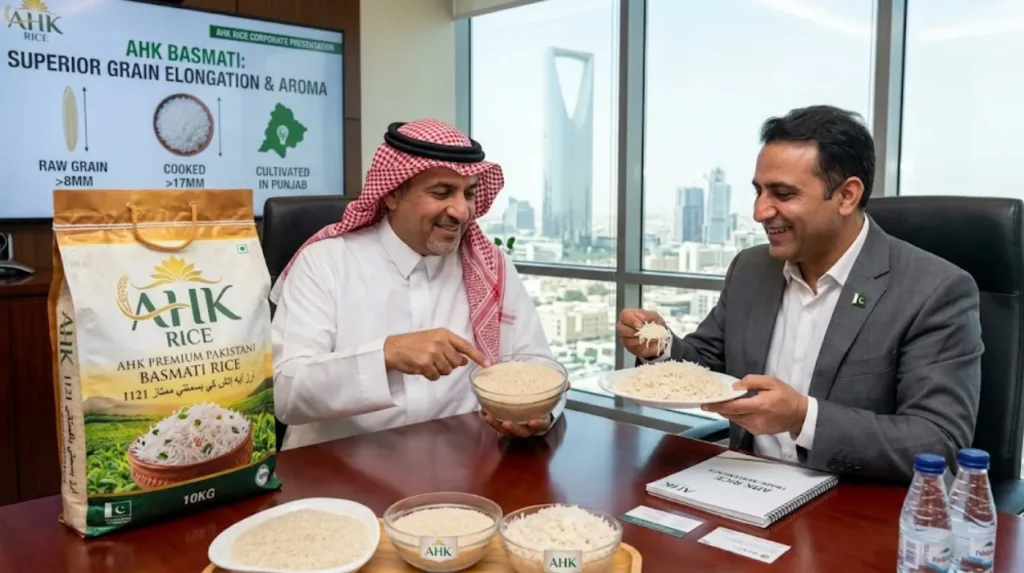
Raw grains typically measure over 8 mm, while cooked grains often exceed 17 mm depending on processing grade and cooking method.
Long grain appearance improves product perception in premium retail channels.
Aroma Retention
Basmati contains naturally occurring aromatic compounds developed during cultivation.
Punjab’s cultivation conditions contribute to aroma development through temperature variation, irrigation patterns, and soil characteristics.
Saudi consumers associate aroma with premium rice quality.
Established Trade Relationships
Pakistan and Saudi Arabia maintain long-standing agricultural trade connections.
Saudi Arabia consistently ranks among the largest importers of Pakistani rice exports (source: REAP export statistics 2025).
Established trade routes support predictable shipping schedules and inventory planning.
The benefits explain market demand, but understanding actual market applications provides additional context.
How Do Different Saudi Market Segments Use Private Label Pakistani Rice?
Retail chains, wholesalers, foodservice operators, hospitality businesses, and e-commerce brands use private label Pakistani Basmati for different commercial objectives.
Each market segment prioritizes different specifications.
Retail Supermarkets
Retail chains emphasize packaging appearance and consumer recognition.
Popular formats include:
- 1 kg packs
- 2 kg packs
- 5 kg packs
Premium shelf positioning often favors 1121 Basmati grades.
Foodservice And Catering
Foodservice distributors focus on cooking consistency.
Hotels, restaurants, and catering companies purchase larger packaging formats to support operational efficiency.
Common pack sizes include:
- 20 kg bags
- 35 kg bags
- 40 kg bags
Wholesale Distribution
Wholesale importers prioritize supply continuity and competitive procurement costs.
These buyers often distribute products to independent retailers across multiple cities.
Market usage patterns reveal why grade selection becomes a critical sourcing decision.
What Grades Of Pakistani Basmati Are Commonly Used For Saudi Private Labels?
Saudi brands primarily source Steam, White, Golden Sella, and Creamy Sella grades depending on price position, shelf-life requirements, and consumer preferences.
Processing grade influences appearance, storage stability, and cooking behavior.
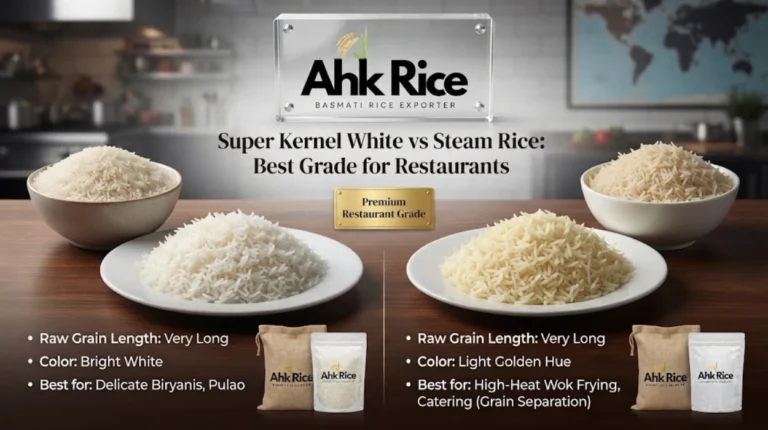
White Basmati Rice
White Basmati undergoes standard milling and polishing.
Characteristics include:
- Bright appearance
- Fast cooking
- Soft texture
- Premium retail positioning
Steam Basmati Rice
Steam processing strengthens grain structure while preserving appearance.
Characteristics include:
- Better grain separation
- Reduced breakage
- Consistent cooking performance
Golden Sella Basmati Rice
Golden Sella uses a parboiling process before milling.
Characteristics include:
- Enhanced grain strength
- Longer storage capability
- Distinct golden color
Golden Sella lasts longer than Steam. In high-temperature Gulf warehouses, Golden Sella maintains quality for approximately 18 months. Steam grades perform best within roughly 12 months under similar storage conditions.
Creamy Sella Basmati Rice
Creamy Sella provides a lighter appearance than Golden Sella while maintaining many parboiling benefits.
Many Gulf markets prefer this balance between visual appeal and grain durability.
Readers comparing these processing options can benefit from a detailed examination of Saudi-focused grade differences in the article discussing how different 1121 grades perform across private label programs.
With grades explained, the next question addresses common sourcing misunderstandings.
What Misconceptions Exist About Saudi Private Label Rice Sourcing?
The most common misconceptions involve ownership, quality consistency, certification requirements, and packaging flexibility.
Several misunderstandings affect purchasing decisions.
Private Label Does Not Mean Lower Quality
Private label products often use identical rice varieties found in national brands.
Quality depends on specifications, processing controls, and inspection procedures rather than branding ownership.
All Basmati Grades Are Not Identical
1121 White, Steam, Golden Sella, and Creamy Sella deliver different performance characteristics.
Processing methods influence shelf life, grain strength, appearance, and cooking behavior.
Certification Is Not Optional
Saudi import regulations require compliance documentation.
Inspection reports, phytosanitary certificates, and origin verification remain standard requirements for commercial imports.
Packaging Is Highly Customizable
Private label packaging extends beyond logo printing.
Customization options include:
- Bag material selection
- Label language configuration
- Nutritional information panels
- Barcode integration
- Retail compliance requirements
Understanding these misconceptions helps buyers evaluate sourcing opportunities more accurately.
Why Does Pakistan Remain A Leading Source Of Private Label Basmati For Saudi Arabia?
Pakistan remains a leading supplier because it combines large-scale Basmati cultivation, specialized milling infrastructure, export certifications, packaging flexibility, and established Gulf trade routes.
Punjab serves as the center of Pakistani Basmati production. The region cultivates internationally recognized varieties such as 1121 Basmati, Super Kernel Basmati, and 1509 Basmati.
Pakistani exporters operate integrated supply chains that connect cultivation, milling, grading, testing, packaging, and export logistics within a single sourcing ecosystem.
Saudi brands benefit from access to multiple varieties, multiple processing grades, and customized packaging formats through one procurement channel.
The combination of agricultural expertise, processing capability, and export infrastructure explains why Pakistani Basmati continues to hold a significant position in Saudi rice markets (source: REAP export data December 2025; Pakistan Bureau of Statistics FY2024-25).
Frequently Asked Questions
How do Saudi rice brands find Pakistani Basmati suppliers for private label packaging?
Saudi rice brands typically source Pakistani Basmati through exporters and rice mills in Punjab, Pakistan. Buyers evaluate rice varieties, processing grades, certifications, packaging capabilities, and export experience before selecting a supplier for private label production.
Which Pakistani Basmati variety is most popular among Saudi private label brands?
1121 Basmati Rice is the most popular variety because of its extra-long grain length, strong aroma, and excellent grain elongation after cooking. Many Saudi retailers and premium foodservice distributors choose 1121 for Kabsa and other traditional rice dishes.
What packaging sizes are commonly used for Saudi private label rice?
Saudi importers commonly use 1 kg, 2 kg, 5 kg, and 10 kg bags for retail markets. Foodservice and wholesale buyers often select 20 kg, 35 kg, and 40 kg packaging formats for restaurants, catering companies, and bulk distribution channels.
What certifications are required for exporting Pakistani Basmati rice to Saudi Arabia?
Most Saudi buyers require ISO 22000, HACCP, Halal Certification, Phytosanitary Certificates, and quality inspection reports. These documents verify food safety, product quality, and compliance with Saudi import regulations.
What is the difference between White, Steam, and Golden Sella Basmati rice?
White Basmati undergoes standard milling and polishing and offers a bright appearance. Steam Basmati provides stronger grain structure and improved cooking consistency. Golden Sella is parboiled before milling, creating stronger grains, longer shelf life, and a distinctive golden color preferred in many Gulf markets.