Factors Influencing 1121 Basmati Sella Rice FOB Pakistan and CIF UAE Rates
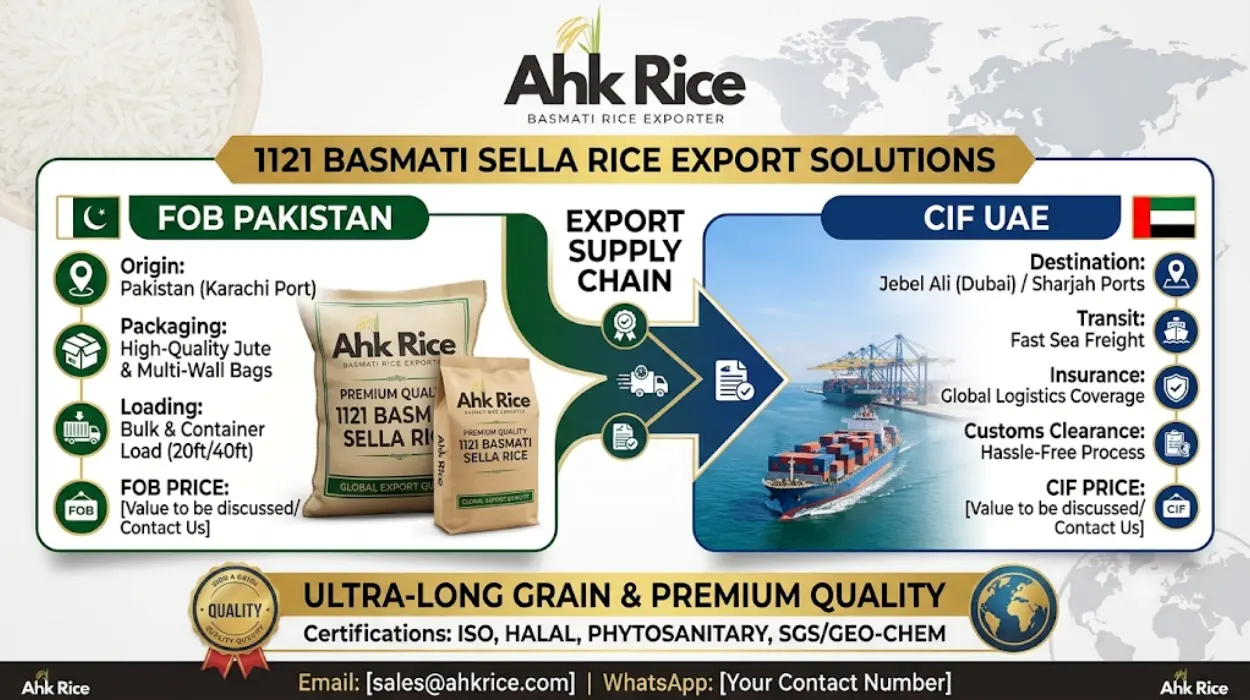
The most important factor affecting 1121 Basmati Sella Rice prices is that FOB Pakistan and CIF UAE rates are driven by different cost structures. FOB prices depend mainly on rice quality, processing, and export readiness, while CIF rates additionally include freight, insurance, port charges, and destination logistics. Understanding these variables helps importers compare suppliers accurately and choose the most suitable procurement strategy.
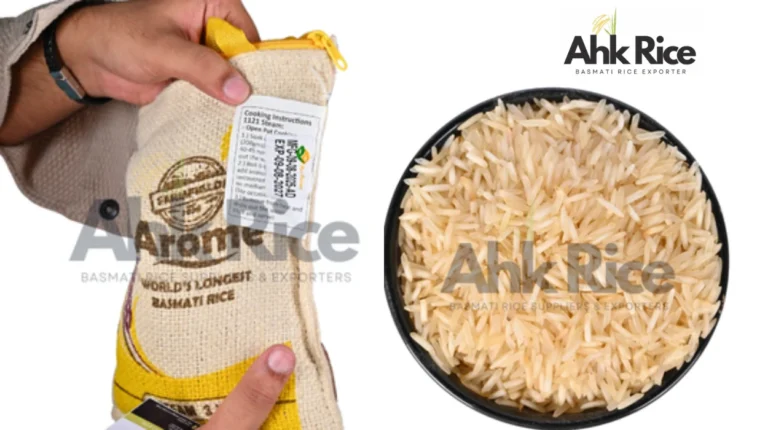
1121 Basmati Sella Rice is one of the most traded premium rice varieties exported from Pakistan. It is known for its extra-long grain length, high cooking elongation, strong aroma retention, and excellent shelf stability. Importers in the UAE, Saudi Arabia, Oman, Qatar, and other Gulf countries rely on this variety for retail packaging, food service operations, and large-scale hospitality projects. Businesses evaluating procurement costs should first understand the educational foundation behind rice export pricing, grading standards, and market structures explained in our guide on understanding Pakistani Basmati rice export pricing and quality specifications.
As a trusted Pakistani Basmati rice exporter, AHK Rice processes and exports 1121, Super Kernel, and 1509 varieties from Punjab through integrated milling, grading, packaging, documentation, and international shipping operations. Understanding how each pricing component contributes to final landed cost enables buyers to compare offers based on value rather than price alone.
What factors influence 1121 Basmati Sella Rice FOB Pakistan rates?
FOB Pakistan rates are determined primarily by paddy procurement costs, milling efficiency, grain specifications, processing quality, packaging requirements, certification compliance, and exporter operating expenses. These variables directly influence the final export price offered at the Pakistani loading port before freight and insurance are added.
FOB stands for Free on Board. Under FOB terms, the seller delivers goods to the designated port and loads them onto the vessel. Once loading is completed, responsibility transfers to the buyer.
Several factors influence FOB pricing.
The first factor is raw paddy cost. When the annual Basmati harvest is strong, paddy prices stabilize. Lower paddy costs create competitive export pricing. During lower-yield crop years, paddy prices rise significantly and increase FOB rates.
The second factor is grain quality. Premium 1121 Sella rice with superior grain length, lower chalkiness, and minimal broken percentage commands higher prices. Export-grade rice undergoes extensive sorting and grading processes that increase processing costs but improve market value.
The third factor is processing technology. Modern color sorters, optical graders, de-stoners, and polishing systems improve quality consistency. Exporters operating advanced facilities generally achieve better quality outcomes and lower rejection risks.
The fourth factor is packaging. Standard polypropylene bags cost less than premium retail-ready packaging. Customized branding, multilingual labeling, barcode integration, and private-label packaging increase FOB rates.
The fifth factor is compliance and certifications. Food safety systems, phytosanitary inspections, fumigation requirements, and export documentation contribute to overall export costs.
How do FOB and CIF pricing approaches compare?
FOB pricing provides maximum logistics flexibility for experienced importers, while CIF pricing offers simplified procurement by combining product cost, freight, insurance, and destination delivery arrangements into a single commercial structure that reduces operational complexity and supplier coordination requirements.
Many buyers compare FOB and CIF offers without understanding their structural differences.
FOB vs CIF Comparison
| Attribute | FOB Pakistan | CIF UAE |
|---|---|---|
| Freight Included | No | Yes |
| Insurance Included | No | Yes |
| Port Handling in Pakistan | Yes | Yes |
| Ocean Shipping Responsibility | Buyer | Seller |
| Cost Visibility | Higher | Moderate |
| Logistics Control | Maximum | Limited |
| Procurement Simplicity | Moderate | High |
Under FOB purchasing, importers negotiate freight independently. This model is preferred by large distributors that already maintain shipping contracts.
Under CIF purchasing, exporters arrange shipping and insurance. Importers receive a clearer picture of total landed cost before shipment departs.
For new importers entering Gulf markets, CIF arrangements often simplify procurement management and reduce coordination risks.
What are the major components influencing CIF UAE rates?
CIF UAE rates combine rice value with freight, insurance, shipping schedules, container availability, fuel surcharges, destination port expenses, and regional logistics conditions. Each cost element contributes to the final landed price paid by UAE importers and food distribution companies.
CIF means Cost, Insurance, and Freight.
The CIF rate starts with the FOB value of rice. Freight charges are then added based on shipping routes, carrier availability, seasonal demand, and fuel costs.
Container shortages often increase freight costs. Global trade disruptions can also affect vessel availability and transit schedules.
Insurance contributes a smaller percentage but remains essential. It protects cargo against damage, loss, and unforeseen shipping incidents.
Port handling expenses at UAE terminals may indirectly influence commercial negotiations even when incorporated into broader pricing agreements.
Exchange rate fluctuations between the Pakistani Rupee and US Dollar also impact export quotations. Most international rice transactions are conducted in US Dollars, making currency movements an important pricing consideration.
How do different 1121 Sella grades compare in export markets?
Different 1121 Sella grades serve distinct market requirements. Premium grades target retail and hospitality sectors, while commercial grades prioritize cost efficiency. Grain length, broken percentage, color consistency, and cooking performance determine market suitability and pricing differences.
1121 Sella Grade Comparison
| Specification | Premium Grade | Standard Grade |
|---|---|---|
| Grain Length | 8.3mm+ | 8.0–8.2mm |
| Broken Content | Very Low | Moderate |
| Color Uniformity | Excellent | Good |
| Cooking Elongation | Higher | Standard |
| Sorting Level | Advanced | Standard |
| Typical Buyers | Retail Brands | Bulk Distributors |
| Relative Price | Higher | Lower |
Premium grades are widely preferred by supermarket chains and premium food brands.
Commercial grades are commonly selected by food service operators, institutional buyers, and wholesalers seeking cost optimization.
Which grade preferences dominate different market regions?
Market preferences vary according to consumer expectations, retail positioning, and purchasing power. Premium Gulf retail sectors prioritize appearance and cooking performance, while value-focused regions often emphasize competitive pricing and acceptable quality standards.
UAE Market Preferences
The UAE market strongly favors premium-grade 1121 Golden Sella Rice.
Retail brands focus on grain appearance, consistency, aroma retention, and cooking elongation. Hotels, restaurants, and catering operators also prioritize premium specifications because presentation directly influences customer satisfaction.
Private-label packaging is particularly common in the UAE retail sector.
Africa Market Preferences
Many African import markets prioritize affordability and volume efficiency.
Importers frequently select commercial-grade Sella rice that provides a balance between quality and cost. Competitive pricing often outweighs premium appearance requirements.
These differences explain why identical rice varieties may be sold at different prices across international markets.
How do price per metric ton differences affect purchasing decisions?
Price per metric ton should always be evaluated alongside quality specifications, freight costs, yield performance, and market positioning. Lower purchase prices do not necessarily create better profitability when quality limitations reduce retail value or customer satisfaction.
Illustrative Price Comparison
| Category | FOB Pakistan (USD/MT) | CIF UAE (USD/MT) |
|---|---|---|
| Premium 1121 Golden Sella | 1,050–1,200 | 1,150–1,350 |
| Standard 1121 Sella | 950–1,100 | 1,050–1,250 |
Actual market prices fluctuate according to harvest conditions, freight markets, exchange rates, and contract volumes.
A distributor targeting premium supermarkets may generate stronger margins using higher-grade rice despite paying more per metric ton.
Conversely, wholesale traders supplying price-sensitive markets often prioritize lower acquisition costs.
How does shelf life influence rice procurement strategies?
Shelf life affects inventory planning, storage efficiency, distribution flexibility, and overall procurement economics. Longer shelf stability reduces inventory risk and supports larger purchasing volumes, especially for importers managing multi-country distribution networks and seasonal demand cycles.
Properly processed 1121 Basmati Sella Rice typically offers shelf stability ranging between 18 and 24 months under recommended storage conditions.
Shelf Life Comparison
| Factor | Premium Grade | Standard Grade |
|---|---|---|
| Moisture Control | Excellent | Good |
| Storage Stability | High | Moderate |
| Aroma Preservation | Better | Standard |
| Retail Performance | Strong | Good |
| Shelf Life Potential | 24 Months | 18–24 Months |
Importers maintaining large inventories often prioritize stable moisture levels and consistent processing standards.
These factors reduce spoilage risk and preserve product quality throughout storage and distribution.
What are the available solutions for managing procurement costs?
Importers can control procurement costs through supplier selection, grade optimization, logistics planning, contract timing, and packaging strategies. The most effective approach depends on business objectives, target market requirements, inventory turnover rates, and distribution model characteristics.
Several practical solutions are available.
The first solution is direct sourcing from exporters. Eliminating intermediaries improves pricing transparency and communication efficiency.
The second solution is grade matching. Importers should align rice specifications with actual customer requirements rather than purchasing unnecessary premium features.
The third solution is container optimization. Full container utilization reduces per-unit logistics costs.
The fourth solution is annual contracting. Long-term purchasing agreements often provide greater price stability.
The fifth solution is customized packaging selection based on distribution strategy and target market positioning.
Which procurement method works best for different cases?
Different procurement models create different advantages. The optimal solution depends on importer experience, logistics capability, market positioning, capital allocation, and operational resources available for managing international supply chains and inventory movement.
Decision Framework
| Business Situation | Recommended Approach | Benefit | Limitation | Best For |
|---|---|---|---|---|
| New Importer | CIF Purchase | Simplicity | Less Control | First-time Buyers |
| Large Distributor | FOB Purchase | Cost Control | More Management | Experienced Importers |
| Retail Brand | Premium Grade | Better Positioning | Higher Cost | Supermarkets |
| Wholesale Trader | Standard Grade | Lower Investment | Lower Margins | Bulk Sales |
| Multi-Country Supply | Long-Term Contract | Stability | Commitment | Regional Distributors |
The most effective procurement strategy aligns product quality, logistics management, and target customer expectations.
No single solution works universally.
The strongest results come from matching specifications with market requirements and operational capabilities.
What are the pros and cons of FOB and CIF purchasing?
FOB purchasing offers flexibility and potential savings, while CIF purchasing offers convenience and reduced coordination requirements. Importers should evaluate operational capacity, logistics expertise, and cost visibility requirements before selecting a purchasing model.
FOB Advantages
- Greater logistics control
- Flexible freight selection
- Potential shipping savings
- Better carrier negotiation opportunities
FOB Disadvantages
- More coordination required
- Increased logistics responsibility
- Greater documentation oversight
CIF Advantages
- Simplified procurement
- Single supplier coordination
- Clear landed cost visibility
- Reduced operational workload
CIF Disadvantages
- Less freight control
- Limited shipping flexibility
- Dependence on exporter arrangements
Understanding the factors influencing 1121 Basmati Sella Rice FOB Pakistan and CIF UAE rates allows importers to evaluate suppliers using objective criteria rather than headline prices. Quality specifications, processing standards, freight costs, packaging requirements, certifications, shelf life performance, and destination market expectations all contribute to procurement outcomes. Buyers who align grade selection, pricing structure, and logistics strategy with their target market consistently achieve stronger commercial results and more predictable supply chain performance.
Explore how importers can secure reliable supply chains, customized packaging, and landed-cost visibility through our detailed guide on sourcing premium Pakistani rice with UAE delivery solutions.
Frequently Asked Questions
What is the difference between FOB and CIF rice pricing?
FOB pricing includes the rice cost and loading at the export port, while CIF pricing includes the rice value, freight charges, and marine insurance up to the destination port. CIF provides a clearer estimate of total import cost.
Why do 1121 Basmati Sella Rice prices change throughout the year?
Prices change because of paddy availability, seasonal harvest conditions, export demand, freight rates, currency movements, and global supply chain conditions.
Which grade of 1121 Sella Rice is preferred in the UAE?
Premium Golden Sella grades are generally preferred in the UAE because of their long grain appearance, cooking elongation, color consistency, and suitability for retail and hospitality sectors.
How long can 1121 Basmati Sella Rice be stored?
When stored under proper temperature and moisture conditions, 1121 Basmati Sella Rice typically maintains quality for 18 to 24 months.
Is FOB or CIF better for new rice importers?
CIF is usually more suitable for new importers because freight and insurance arrangements are handled by the exporter, reducing operational complexity and simplifying procurement management.