Indonesia Rice Import Volume 2026: Why Pakistan Is Gaining Market Share
Indonesia rice import volume in 2026 continues to create opportunities for exporting countries, and Pakistan is gaining a larger share of premium rice demand because Indonesian importers increasingly source aromatic long-grain varieties for retail, hospitality, and food service channels. Here is why: Indonesia’s population exceeds 280 million, rice remains the national staple, and import diversification reduces supply risks while expanding consumer choice.
What Is Driving Indonesia’s Rice Import Volume in 2026?
Indonesia continues importing millions of metric tons of rice because domestic demand exceeds available supply during specific periods, while premium rice segments require diverse origins and specifications.
Indonesia is one of the world’s largest rice-consuming countries. Rice contributes a significant share of daily calorie intake across households, restaurants, hotels, and institutional kitchens. Population growth, consumption stability, and supply management policies create recurring import requirements.
Indonesia rice volume includes several categories. These categories include premium rice, medium grain rice, specialty rice, fortified rice, and aromatic long-grain rice. Each category serves different buyers and consumption patterns.
Government agencies monitor national stocks and import volumes to maintain food security. Import programs support supply stability when domestic inventories decline or when market prices require balancing measures (source: Indonesia National Food Agency, 2025).
Premium rice imports occupy a separate segment from staple food security imports. Premium buyers prioritize grain length, aroma, cooking performance, and consistency rather than lowest-price procurement.
Understanding import demand explains why specific origins gain market share. The next question is how Indonesia’s rice import system actually works.
How Does Indonesia’s Rice Import System Work?
Indonesia imports rice through regulated procurement channels, quality inspections, import permits, logistics networks, and distribution systems that connect exporters with wholesalers and retailers.
Rice imports begin with demand assessment. Authorities evaluate stock levels, consumption forecasts, harvest expectations, and reserve requirements.
Importers then source rice according to required specifications. Specifications often include grain length, moisture content, broken percentage, purity levels, and packaging format.
The process follows several steps:
- Assess national demand.
- Issue procurement requirements.
- Source approved rice origins.
- Inspect product quality.
- Verify export documents.
- Load containers or bulk shipments.
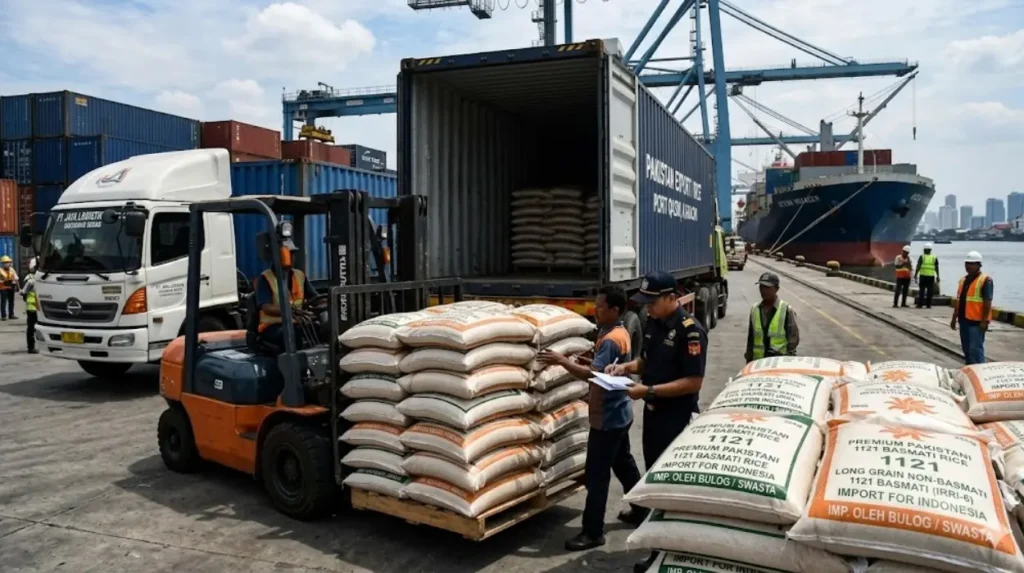
- Ship cargo to Indonesian ports.
- Clear customs procedures.
- Deliver cargo to distribution networks.
Quality verification remains critical throughout the process. Importers inspect grain dimensions, foreign matter levels, moisture percentages, and milling quality before shipment approval.
Port infrastructure supports efficient rice movement. Major Indonesian ports handle containerized agricultural cargo and distribute products to regional markets.
The import process highlights why supplier consistency matters. The next question is which exporting countries currently serve Indonesia.
Which Countries Supply Rice to Indonesia?
Thailand, Vietnam, Pakistan, India, and several regional suppliers contribute to Indonesia’s imported rice requirements, each serving different quality and price segments.
Thailand supplies premium aromatic rice and standard white rice categories. Thai rice maintains strong recognition among retail consumers.
Vietnam supplies large volumes of white rice and commercial-grade products. Vietnamese exporters compete strongly in government procurement tenders.
India supplies multiple rice categories, including non-basmati and specialty varieties. Indian exporters benefit from large production capacity.
Pakistan supplies aromatic basmati rice and long-grain rice. Pakistani exporters focus on premium segments where aroma, grain elongation, and cooking performance influence purchasing decisions.
Supplier diversification reduces sourcing concentration risks. Importers gain access to different harvest cycles, quality profiles, and pricing structures.
Country selection depends on intended use. Retail packaging, hotel kitchens, catering operations, and wholesale distribution require different specifications.
Supplier diversity explains market competition. The next question is why Pakistan’s share continues expanding.
Why Is Pakistan Gaining Market Share in Indonesia?
Pakistan gains market share because Indonesian buyers increasingly purchase aromatic rice, long-grain varieties, and value-oriented premium products with strong cooking performance.
Pakistan is one of the world’s largest rice exporters. Punjab serves as the primary rice-growing region and produces internationally recognized basmati varieties.
Pakistani rice offers a combination of aroma, grain length, elongation, and competitive pricing. These attributes align with growing demand among premium rice buyers.
Several factors support Pakistan’s position:
Growing Demand for Aromatic Rice
Aromatic rice creates differentiation in retail and food service channels. Consumers recognize fragrance, texture, and appearance after cooking.
Pakistani basmati varieties satisfy these requirements through naturally aromatic grain characteristics.
Competitive Price-to-Quality Ratio
Importers evaluate landed cost against consumer acceptance.
Pakistani rice delivers premium sensory characteristics while remaining competitive against several alternative origins.
Consistent Export Infrastructure
Pakistan operates a mature rice export sector. Exporters inspect, mill, grade, sort, package, and ship rice according to international standards.
Export capacity supports containerized shipments and long-term procurement programs.
Diverse Product Portfolio
Pakistan exports multiple rice categories. Examples include 1121 Basmati, Super Kernel Basmati, 1509 Basmati, IRRI-6, C9 Long Grain, and non-basmati white rice.
Product diversity allows importers to source different specifications from one origin.
Pakistan’s market share growth reflects product suitability. The next question is which Pakistani rice varieties attract Indonesian buyers.
Which Pakistani Rice Varieties Are Relevant for Indonesia?
1121 Basmati, 1509 Basmati, Super Kernel Basmati, and selected long-grain non-basmati varieties match several Indonesian retail, hospitality, and wholesale requirements.
Different buyer groups require different rice specifications.
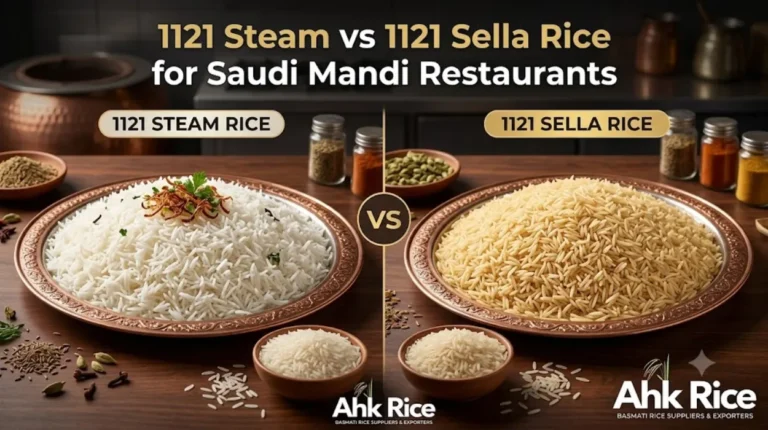
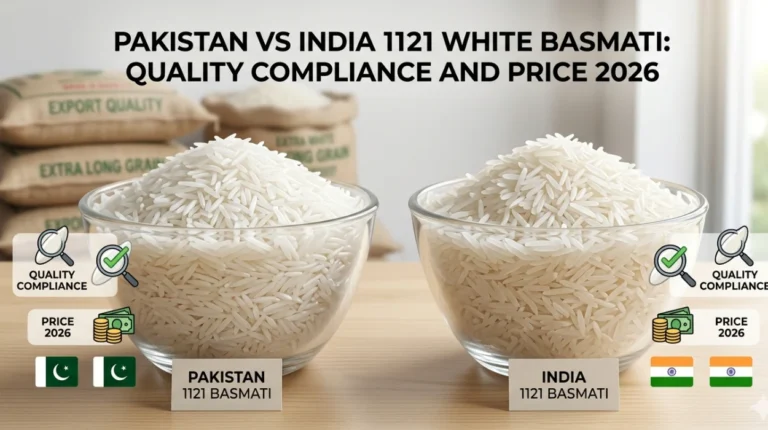
1121 Basmati Rice
1121 Basmati is a premium aromatic long-grain variety.
Key characteristics include:
- 8.20–8.40 mm average grain length
- High cooked grain elongation
- Distinct natural aroma
- Low stickiness after cooking
Hotels, restaurants, and premium retail brands commonly source this category.
1509 Basmati Rice
1509 Basmati combines aroma with commercial efficiency.
Key characteristics include:
- 8.00–8.30 mm grain length
- Strong cooking yield
- Shorter aging requirements
- Competitive procurement costs
Bulk buyers frequently compare this variety against conventional long-grain rice. Readers interested in specification differences can explore a detailed analysis in the article about how premium aromatic rice compares with conventional long-grain options for Indonesian bulk procurement decisions.
Super Kernel Basmati Rice
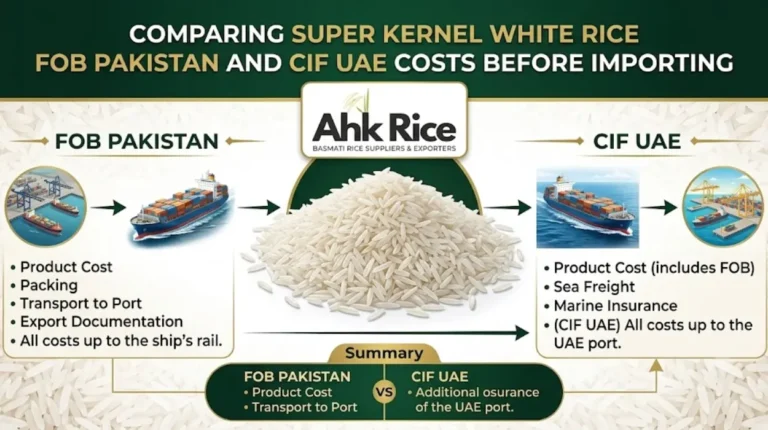
Super Kernel Basmati remains one of Pakistan’s most recognized export varieties.
Key characteristics include:
- Traditional basmati aroma
- Long slender grain profile
- Excellent plate presentation
- Strong consumer recognition
Long Grain Non-Basmati Rice
Non-basmati rice serves price-sensitive channels.
Examples include IRRI-6 and C9 Long Grain.
These varieties support wholesale distribution, institutional kitchens, and large-volume food service operations.
Rice varieties determine purchasing decisions. The next question is how Pakistani rice moves from farms to Indonesian buyers.
How Is Pakistani Rice Processed Before Export?
Export-quality rice passes through cultivation, harvesting, drying, milling, grading, sorting, testing, packaging, and certification before shipment.
Rice quality depends on processing discipline. Each stage affects appearance, shelf life, cooking performance, and buyer acceptance.
The export process follows these steps:
- Cultivate paddy fields.
- Harvest mature crops.
- Dry harvested paddy.
- Clean incoming material.
- De-husk rice grains.
- Mill rice kernels.
- Polish grain surfaces.
- Grade by size.
- Sort using optical technology.
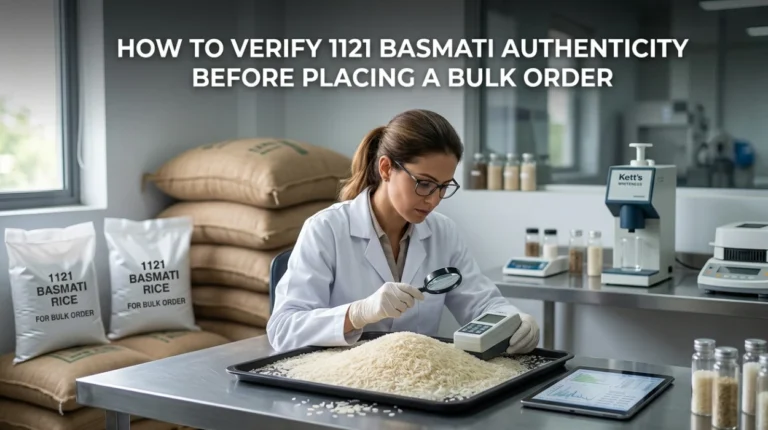
- Test quality parameters.
- Package finished rice.
- Load export containers.
Quality control remains essential throughout processing.
Key inspection areas include:
- Moisture testing
- Grain length verification
- Broken percentage analysis
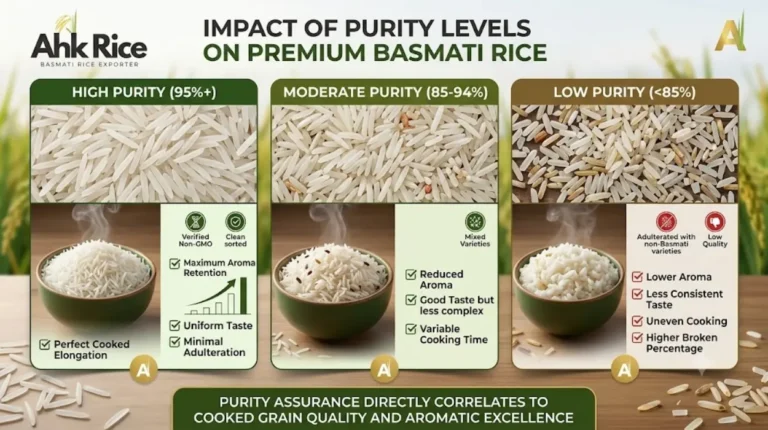
- Purity measurement
- Foreign matter inspection
- Aroma evaluation
- Packaging integrity verification
Processing standards influence export success. The next question is which certifications matter for Indonesian rice imports.
Which Certifications Support Rice Exports to Indonesia?
Food safety, quality assurance, phytosanitary compliance, and export documentation form the foundation of international rice trade.
Rice exporters operate under documented compliance systems. Certifications help buyers verify product safety and traceability.
Common certifications include:
Food Safety Certifications
Food safety systems verify processing controls.
Examples include:
- ISO 22000
- HACCP
- FSSC 22000
Quality Management Certifications
Quality systems establish documented procedures.
Examples include:
- ISO 9001
- Internal quality assurance protocols
Export Compliance Documents
Export shipments require supporting documents.
Examples include:
- Phytosanitary Certificate
- Certificate of Origin
- Commercial Invoice
- Packing List
- Bill of Lading
- Quality Inspection Report
Certification requirements vary by importer and product category. Documentation supports market access and buyer confidence.
Certification establishes trust. The next question is which sectors consume imported rice in Indonesia.
Where Is Imported Rice Used in Indonesia?
Imported rice serves retail consumers, hotels, restaurants, catering companies, wholesalers, distributors, and food manufacturers.
Different sectors prioritize different specifications.
Retail brands prioritize consumer appeal. Aroma, grain appearance, and packaging influence purchasing behavior.
Hotels prioritize consistency. Long-grain presentation and cooking reliability support guest satisfaction.
Restaurants prioritize flavor and texture. Aromatic rice varieties improve menu differentiation.
Catering companies prioritize volume efficiency. High cooking yield reduces operational costs.
Food manufacturers prioritize specification consistency. Uniform grain characteristics support standardized production processes.
Each segment values different product attributes. The next question addresses common misconceptions surrounding Indonesia’s rice imports.
What Misconceptions Exist About Indonesia Rice Imports?
Imported rice does not replace all domestic production, premium imports do not serve identical markets, and basmati rice fulfills different consumer needs than commodity rice.
One misconception states that all imported rice competes directly with local rice.
Premium aromatic rice serves distinct market segments. Hotels, specialty retailers, and premium consumers purchase products based on quality characteristics.
Another misconception states that all long-grain rice performs identically.
1121 Basmati differs from conventional long-grain rice. Grain elongation, aroma intensity, and texture create measurable distinctions during cooking.
Another misconception states that market share depends only on pricing.
Quality consistency influences repeat purchasing. Buyers evaluate cooking performance, grain appearance, packaging reliability, and supply continuity alongside procurement costs.
Market dynamics depend on multiple factors. Understanding these factors provides a clearer view of Indonesia’s rice import landscape in 2026.
What Does Indonesia Rice Import Volume 2026 Indicate for Global Trade?
Indonesia’s import demand highlights the growing importance of supplier diversification, premium rice categories, and consistent export quality across international markets.
Indonesia remains a major rice-consuming nation. Import programs support food security objectives and market stability.
Premium rice categories continue expanding. Aromatic long-grain varieties attract growing interest from retail, hospitality, and food service sectors.
Pakistan gains market share because its rice portfolio aligns with these requirements. Basmati varieties offer aroma, elongation, appearance, and commercial flexibility that fit premium procurement strategies.
Indonesia rice volume trends demonstrate a broader shift toward diversified sourcing and specification-driven purchasing. As buyers focus more on quality differentiation, aromatic rice categories continue strengthening their position within Indonesia’s evolving import market.
Frequently Asked Questions
How much rice is Indonesia expected to import in 2026?
Indonesia is expected to remain one of the largest rice-importing countries in Asia during 2026. Import volumes depend on domestic production, stock levels, consumption demand, and government food security policies. Official import figures are released by Indonesian authorities throughout the year.
Why is Pakistan gaining rice market share in Indonesia?
Pakistan is gaining market share because Indonesian buyers increasingly source aromatic long-grain rice varieties. Pakistani rice offers strong grain length, natural aroma, good cooking performance, and competitive pricing across premium market segments.
Which Pakistani rice varieties are most popular in Indonesia?
1121 Basmati, 1509 Basmati, and Super Kernel Basmati are among the most recognized Pakistani rice varieties. These products serve retail brands, hotels, restaurants, distributors, and food service buyers that require premium grain quality.
What is the difference between basmati rice and non-basmati rice?
Basmati rice has a natural aroma, longer grain structure, and higher cooked grain elongation. Non-basmati rice focuses on volume, affordability, and standard cooking performance. Both categories serve different consumer and commercial requirements.
What certifications are important for rice exports to Indonesia?
Rice exporters commonly maintain food safety and quality certifications such as ISO 22000, HACCP, and ISO 9001. Export shipments also require documents such as a Phytosanitary Certificate, Certificate of Origin, Commercial Invoice, and Bill of Lading.