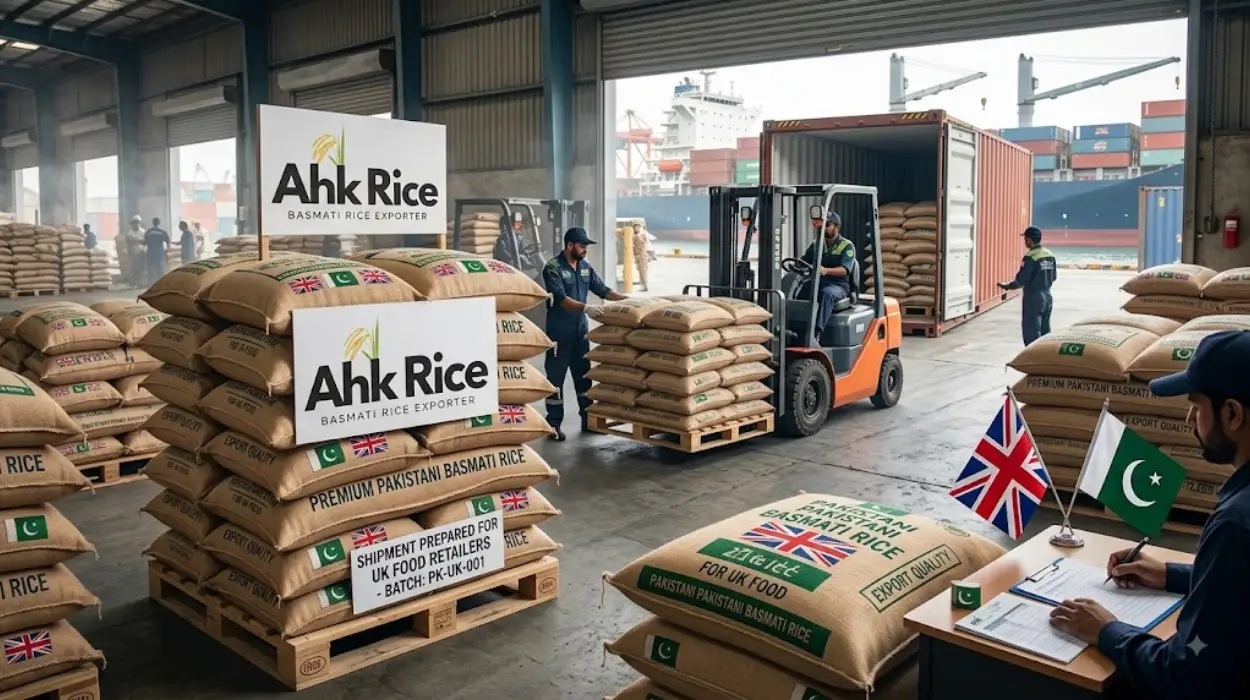
How Are Pakistani Basmati Rice Shipments Prepared for UK Food Rules?
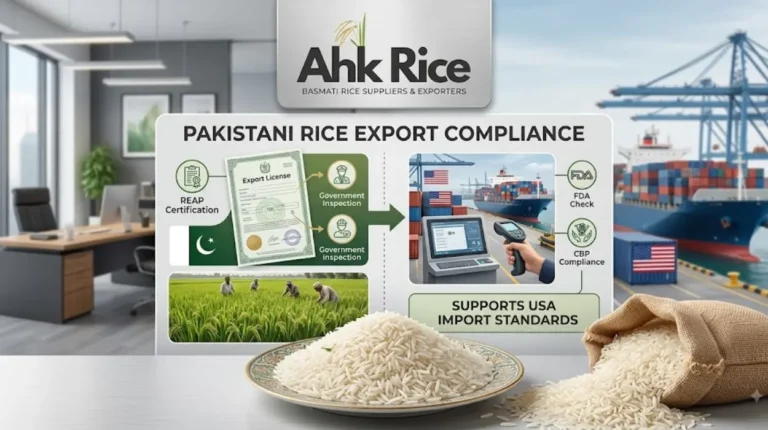
Pakistani Basmati rice shipments for Wales need controlled processing, contaminant testing, traceability, correct documentation, compliant packaging, and accurate food labelling. Here is why: Wales follows Great Britain food import rules, while Pakistan-origin rice currently has specific controls for contaminants including aflatoxins and Ochratoxin A.
UK preparation therefore involves more than milling and loading containers. Exporters must control the product from paddy selection through dispatch. Buyers also need specifications that match their retail, wholesale, catering, or food-service channel. For a broader explanation of the regulatory framework, see how Welsh food safety standards affect imported rice.
What are the available solutions for preparing Pakistani Basmati rice for Wales?
Four preparation approaches cover most Welsh import requirements: controlled milling, laboratory verification, documentation control, and compliant packaging. Each approach addresses a different risk. Strong shipments combine all four before container loading and dispatch.
Controlled milling and grading
Controlled milling removes unwanted material and prepares the grain for export specifications. The process can include cleaning, dehusking, polishing, grading, length separation, and optical colour sorting.
AHK Rice supplies 1121, Super Kernel, and 1509 Basmati rice through an end-to-end export process. Each variety can be prepared around the buyer’s agreed grain length, broken percentage, moisture requirement, packaging format, and processing type.
Laboratory verification
Laboratory testing checks hazards that visual inspection cannot identify. UK controls for Pakistan-origin rice were updated in July 2026 to include aflatoxins and Ochratoxin A among controlled contaminants.
Pesticide residue testing also matters because UK food businesses must place safe food on the market. Testing should match the intended specification and destination requirements rather than rely only on a general certificate.
Documentation control
Documentation connects the physical rice to its commercial and regulatory identity. Core records can include commercial invoices, packing lists, certificates of analysis, certificates of origin, transport documents, lot references, and inspection records.
The importer remains responsible for meeting applicable Great Britain requirements. Food businesses must also maintain supplier and supply-chain traceability records.
Compliant packaging and labelling
Packaging protects the shipment during loading, ocean transport, unloading, storage, and distribution. Retail packaging also needs accurate food information.
UK rules require mandatory information for applicable prepacked foods, including the food name, required date information, net quantity, origin where required, lot information, storage conditions, and responsible business details.
These four approaches establish the preparation options; the next question is how their specifications differ for actual buying decisions.
How do different Pakistani Basmati preparation approaches compare?
Raw, Steam, and Sella processing serve different commercial priorities, while laboratory testing and traceability apply across every compliant shipment. The correct selection depends on cooking performance, shelf-life requirements, price, distribution conditions, and buyer specifications.
What should buyers compare before selecting a grade?
The main comparison should cover seven measurable attributes rather than rely on the word “premium.” Grain type, processing method, broken percentage, moisture, appearance, shelf-life objective, and price create a clearer purchasing specification.
| Attribute | 1121 White | 1121 Steam | 1121 Sella |
|---|---|---|---|
| Processing | Raw milled | Steam treated | Parboiled |
| Grain profile | Extra-long | Extra-long | Extra-long |
| Appearance | White | Near-white | Golden to amber |
| Cooking structure | Soft, separate | Firmer | Firmest |
| Breakage control | Standard | Improved | Strong |
| Storage objective | Normal retail rotation | Extended stability | Extended stability |
| Indicative FOB range | $1,165–$1,205/MT | $1,160–$1,200/MT | $1,135–$1,175/MT |
The listed FOB ranges are indicative July 2026 Pakistan export prices published by a Pakistani rice exporter. They are not fixed AHK Rice quotations.
Which grade suits UK retail buyers?
1121 White and 1121 Steam fit premium retail programmes requiring bright appearance, long grains, and consistent cooking performance. UK demand includes 1121 White and Super Kernel in branded retail formats.
1121 White provides the brightest visual profile. Steam provides a firmer grain structure. Both work well for retailers selling long-grain Basmati to consumers who prioritise appearance and aroma.
UK retail also creates a stronger packaging requirement. A retail-ready bag needs accurate product identity, quantity, dates, origin information where required, storage information, and the responsible food business details.
Which grade suits food-service and wholesale buyers?
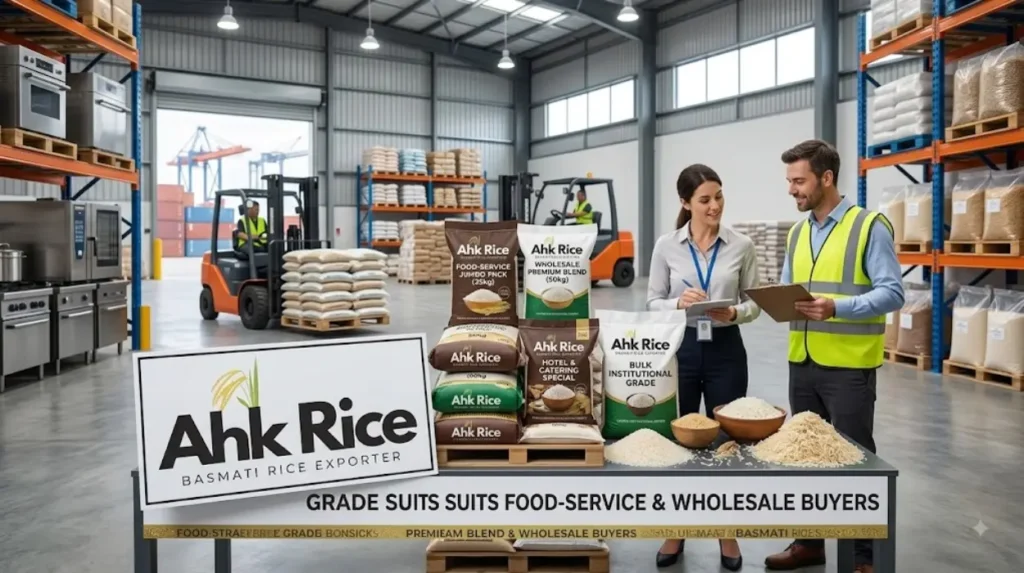
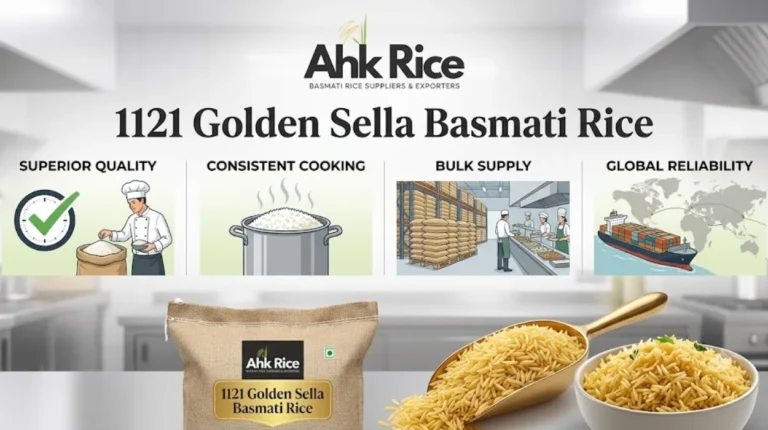
1121 Sella suits buyers prioritising firm grains, cooking stability, and longer storage performance across wholesale and food-service distribution. Parboiling strengthens the grain structure and reduces cooking breakage.
Sella can support high-volume kitchens preparing biryani, pilaf, pulao, and other rice dishes where grain separation matters. The processing choice should still follow the buyer’s approved sample and specification.
The comparison shows that processing changes commercial performance; the next step is matching those differences to market conditions.
Which method works best for different UK and European market cases?
UK retail generally rewards appearance and branding, while food-service distribution rewards cooking stability and storage performance. European wholesale markets also place strong value on documented specifications, laboratory evidence, traceability, and consistent shipment-to-shipment quality.
How should UK buyers select the grade?
UK retail buyers should prioritise 1121 White or 1121 Steam when visual appearance and long grain presentation drive consumer selection. UK import data and trade-market sources identify 1121 White and Super Kernel as important Pakistani Basmati formats in branded retail.
UK food-service buyers can prioritise 1121 Steam or Sella when kitchens need firmer grains and lower cooking breakage. Sella provides a stronger grain structure through parboiling.
How should wider European buyers select the grade?
European wholesale buyers should prioritise documented compliance plus a stable processing specification. The grade should be selected after confirming grain length, broken percentage, moisture, processing method, crop year, packaging, and laboratory requirements.
European buyers also need to separate product quality from import compliance. A visually excellent shipment can still create problems when required contaminant controls or documentation are incomplete.
How does shelf life affect the decision?
Sella generally provides the strongest storage profile among the three processing approaches, while White prioritises fresh aroma and appearance. Published commercial specifications describe 1121 Sella as having storage performance of up to 24 months.
Shelf life should never be treated as one universal number. Actual commercial life depends on moisture, packaging, warehouse temperature, humidity, pest control, handling, and the manufacturer’s validated specification.
A UK distributor with rapid stock rotation can select White or Steam. A wholesaler holding larger inventory can favour Sella when the agreed specification supports extended storage.
These market differences establish the practical use cases; the next question is what each preparation strategy gains and sacrifices.
What are the pros and cons of each preparation strategy?
White rice offers appearance and natural aroma, Steam improves grain firmness, and Sella strengthens cooking stability and storage performance. Each approach creates a different balance between processing cost, appearance, cooking behaviour, and buyer preference.
What are the advantages of White Basmati?
White Basmati provides a bright appearance, natural aroma, and premium long-grain presentation for retail-oriented buyers. The process avoids parboiling and preserves the raw grain’s characteristic visual profile.
The main advantage is presentation. The main limitation is lower structural resilience than parboiled formats during intensive cooking and storage.
What are the advantages of Steam Basmati?
Steam Basmati provides a firmer grain structure while retaining a near-white appearance and natural Basmati aroma. Controlled steaming partially gelatinises surface starch and strengthens the grain.
Steam works well for buyers wanting a compromise between White’s appearance and Sella’s stronger cooking structure.
The main limitation is that its processing specification must be tightly controlled. Excessive or inconsistent steaming can change colour and cooking behaviour.
What are the advantages of Sella Basmati?
Sella provides strong grain integrity, clean separation, and a storage-oriented profile for food-service and wholesale applications. Parboiling changes the grain structure before final milling and polishing.
The main advantage is resilience during cooking. The main limitation is the golden or amber appearance, which does not suit every retail positioning.
A buyer should therefore select processing according to the final use rather than choosing the cheapest grade.
What decision factors should Welsh rice importers evaluate?
Five factors should determine the purchase: regulatory compliance, product specification, market channel, storage period, and total delivered cost. A buyer can score each factor before approving a supplier or shipment.
| Decision factor | What to check | Best decision signal |
|---|---|---|
| Regulatory compliance | Contaminants, documents, traceability | Complete evidence |
| Product specification | Grain, broken, moisture, processing | Approved sample match |
| Market channel | Retail, wholesale, catering | Grade fits end use |
| Storage period | Rotation and warehouse conditions | Validated shelf-life target |
| Total cost | FOB, freight, inspection, packaging | Lowest compliant landed cost |
Regulatory compliance should come first. Pakistan-origin rice is subject to specific GB contaminant controls, and the official restriction list was updated in July 2026.
Product specification comes second because the shipment must match the buyer’s approved sample. A 1121 Steam order cannot be treated as interchangeable with 1121 Sella simply because both use the same variety.
Market channel determines processing preference. Retail programmes often need appearance and packaging precision. Catering programmes often need cooking resilience and consistent grain separation.
Storage period determines whether a buyer should prioritise raw, Steam, or Sella processing. Warehouse conditions also influence the practical storage outcome.
Total cost includes more than FOB price. Freight, inspection, packaging, testing, insurance, customs charges, and destination handling can materially change the landed cost.
How should a Pakistani Basmati shipment be prepared before dispatch?
A compliant shipment should move through specification approval, milling, testing, documentation, packaging, inspection, container loading, and dispatch in a controlled sequence. This sequence creates traceability from product selection to arrival.
- Confirm the buyer specification — Record variety, processing type, grain length, broken percentage, moisture, crop year, packing, quantity, and destination.
- Clean the paddy — Remove stones, dust, husk, foreign matter, and other unwanted material before milling.
- De-husk the grain — Remove the husk while protecting whole-kernel integrity.
- Polish the rice — Produce the agreed surface finish and appearance.
- Grade the rice — Separate kernels according to length and quality specifications.
- Sort the grains — Use colour sorting to remove discoloured and defective kernels.
- Test the shipment — Verify agreed quality and food-safety parameters through appropriate laboratory procedures.
- Prepare the documents — Match invoices, packing lists, lot references, certificates, and inspection records to the physical shipment.
- Pack the rice — Use the agreed PP, woven, laminated, or retail packaging specification.
- Inspect the consignment — Compare finished goods against the approved specification before loading.
- Load the container — Protect bags from contamination, moisture exposure, and handling damage.
- Dispatch the shipment — Complete export clearance and shipping documentation before vessel departure.
Great Britain food businesses must also maintain food-safety management procedures and traceability records.
Wales forms part of Great Britain for these import rules. Therefore, Welsh buyers should evaluate Pakistan-origin rice against the current GB requirements rather than treating Wales as a separate import regime.
The preparation sequence connects product quality with regulatory readiness; the final decision is choosing a supplier capable of controlling both.
What should Welsh importers check before approving a Pakistani Basmati supplier?
Welsh importers should verify processing capability, laboratory evidence, traceability, packaging control, documentation accuracy, and export experience before approving a supplier. These checks reduce quality variation and documentation failures.
AHK Rice is a Pakistani Basmati rice exporter based in Punjab. The company supplies 1121, Super Kernel, and 1509 varieties to 15+ countries with end-to-end processing, custom packaging, and export handling.
Supplier evaluation should focus on evidence rather than marketing language. Ask for the agreed product specification, sample approval record, laboratory reports, packing specification, lot identification, and shipment documentation.
The importer should also confirm which party manages UK customs and food-import responsibilities. Food businesses operating in Wales must register with their local authority when they sell, store, handle, prepare, or distribute food.
For a decision-focused next step, the natural internal resource is Source Food-Safe Pakistani Basmati Rice for Wales from AHK Rice.
The strongest purchasing decision combines a compliant product, verified evidence, suitable processing, and controlled export execution.
Frequently Asked Questions
Does Pakistani rice need to meet UK food safety requirements?
Yes. Rice entering Wales must comply with applicable Great Britain food rules. Pakistan-origin rice currently has specific contaminant controls covering aflatoxins and Ochratoxin A.
Is a phytosanitary certificate normally required for rice entering Wales?
Certain grains, including rice, are listed among products that can enter Great Britain without a phytosanitary certificate under the personal-import guidance. Commercial shipments require assessment under the applicable commercial import and plant-health rules.
Which Pakistani Basmati grade is best for UK retail?
1121 White and 1121 Steam are strong retail options. White provides bright presentation, while Steam provides firmer grains with a near-white appearance.
Which Basmati grade is better for food service?
1121 Steam and Sella are strong food-service choices. Their firmer grain structures support applications requiring separation and lower cooking breakage.
What tests should Pakistani Basmati rice undergo?
Testing should cover the buyer’s agreed food-safety and quality specification. For Pakistan-origin rice entering GB, contaminant controls include aflatoxins and Ochratoxin A.
What documents should buyers request?
Buyers should request commercial invoices, packing lists, certificates of analysis, certificates of origin where applicable, inspection records, lot references, and shipping documents.
Does packaging affect UK compliance?
Yes. Retail packaging must carry required food information. Requirements can include food name, date information, net quantity, origin where required, lot information, storage conditions, and responsible business details.
How much does Pakistani Basmati rice cost per MT?
Indicative July 2026 FOB Karachi prices place 1121 White around $1,165–$1,205/MT, Steam around $1,160–$1,200/MT, and Sella around $1,135–$1,175/MT. Actual contracts depend on specification, quantity, packaging, freight, and commercial terms.
What is the best preparation strategy for Wales?
The best strategy combines controlled milling, contaminant testing, accurate documentation, compliant packaging, traceability, and pre-shipment inspection. Grade selection should then follow the buyer’s retail, wholesale, or food-service specification.
Where should the BOFU article link be inserted?
Place the BOFU link in the final supplier-selection section, immediately after explaining that Welsh importers need evidence, compliant specifications, and export execution. The anchor “Source Food-Safe Pakistani Basmati Rice for Wales from AHK Rice” naturally moves the reader from evaluation to commercial decision-making without disrupting the informational flow.