How Do Foreign Matter Limits Impact Rice Import Decisions?
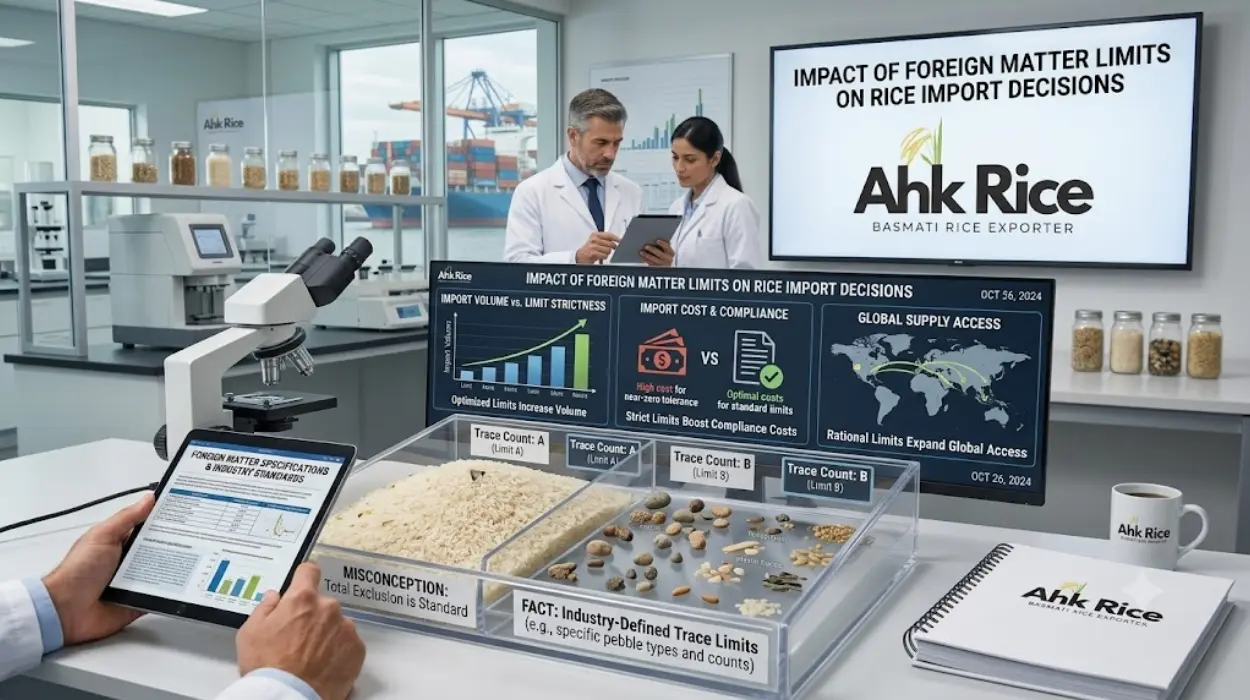
Foreign matter limits directly determine whether imported rice clears inspection, meets buyer specifications, and avoids costly shipment disputes. Here is why: stricter foreign matter limits reduce contamination risks, improve consumer confidence, increase shelf life, and help importers comply with food safety regulations in destination markets.
Rice importers evaluate quality before price. Foreign matter includes stones, dust, husk particles, straw, weed seeds, metal fragments, and other non-rice materials found within a shipment. Import authorities inspect these elements because contamination affects food safety, processing efficiency, packaging performance, and retail acceptance. Markets such as the UK and Europe apply tighter standards than many wholesale commodity markets. Buyers who understand foreign matter specifications make better sourcing decisions and reduce rejection risks.
Importers comparing rice quality standards should first understand how cleanliness specifications affect trade outcomes. A detailed guide on rice inspection standards and contamination control can help buyers understand the broader quality framework before evaluating suppliers. Read more in our educational resource on understanding rice cleanliness standards and export quality requirements.
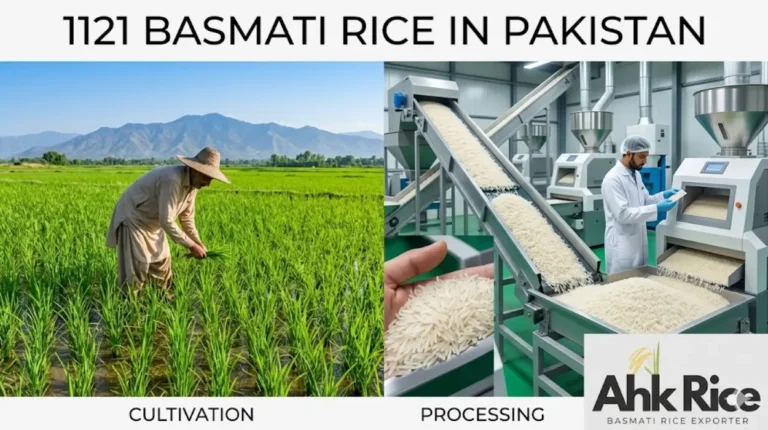
AHK Rice is a trusted Pakistani Basmati exporter that supplies premium varieties through its export-ready rice processing services. The company mills, grades, sorts, inspects, tests, certifies, loads, and ships rice according to destination market requirements.
What Are Foreign Matter Limits in Rice Imports?
Foreign matter limits typically range from 0.1% to 1.0%, depending on the destination market, product grade, and buyer requirements.
Foreign matter refers to any material that is not rice. Import authorities inspect rice consignments to verify compliance with contractual and regulatory specifications. A shipment exceeding the permitted limit may face price deductions, re-cleaning costs, delayed clearance, or rejection.
What Materials Count as Foreign Matter?
Foreign matter includes:
- Stones
- Dust particles
- Straw fragments
- Husk particles
- Weed seeds
- Metal fragments
- Plastic particles
Rice processors remove these contaminants through multiple cleaning stages. Premium export grades undergo additional sorting and inspection procedures before shipment.
How Rice Processors Reduce Foreign Matter
AHK Rice follows nine processing steps:
- Clean the paddy
- De-husk the grain
- Dry the rice
- Polish the kernels
- Grade by size
- Sort by colour
- Inspect quality
- Test specifications
- Package and dispatch
Each step reduces contamination levels and improves shipment consistency.
With foreign matter limits defined, the next question is how different specification levels compare across export markets.
How Do Different Foreign Matter Limits Compare?
Premium retail markets prefer 0.1–0.3%, while wholesale commodity markets often accept 0.5–1.0%.
Different import regions apply different quality expectations. These differences influence procurement decisions, supplier selection, and pricing.
Specification Comparison Table
| Attribute | Premium Grade | Standard Export Grade |
|---|---|---|
| Foreign Matter | 0.1–0.3% | 0.5–1.0% |
| Stone Content | Near Zero | Low Levels Accepted |
| Colour Sorting | Multiple Passes | Standard Sorting |
| Retail Suitability | High | Medium |
| Food Safety Risk | Very Low | Low |
| Processing Cost | Higher | Lower |
| Import Rejection Risk | Minimal | Moderate |
Premium grades cost more because processors perform additional cleaning, grading, and inspection activities.
Why Lower Foreign Matter Matters
Lower foreign matter improves packaging performance.
Lower foreign matter reduces machine stoppages in packing facilities.
Lower foreign matter improves visual appearance on retail shelves.
Lower foreign matter supports stricter supermarket compliance programs.
UK supermarket buyers often specify premium cleanliness standards. Commodity distributors serving foodservice channels may accept slightly higher thresholds.
With comparison standards established, the next question is which solutions importers can choose from.
What Available Solutions Help Importers Meet Quality Requirements?
Mechanical cleaning, optical sorting, laboratory testing, and supplier certification provide the most effective contamination control.
Importers can choose several quality assurance approaches before finalizing procurement contracts.
Mechanical Cleaning Systems
Mechanical cleaning removes large contaminants.
Equipment separates stones, straw, husk particles, and dust before milling. This method creates the foundation for export-grade quality.
Optical Colour Sorting
Optical sorting identifies defective kernels and foreign particles.
Advanced cameras inspect rice continuously. The system ejects contaminants through compressed air mechanisms.
Laboratory Testing
Laboratory testing verifies specification compliance.
Tests measure foreign matter percentages before shipment. Independent reports reduce buyer uncertainty.
Supplier Certification
Supplier certification validates processing standards.
Certified exporters follow documented procedures for inspection, testing, traceability, and shipment preparation.
Importers achieve the best results by combining all four solutions instead of relying on one control measure.
With available solutions explained, the next question is which option works best in different purchasing situations.
Which Method Works Best for Different Import Cases?
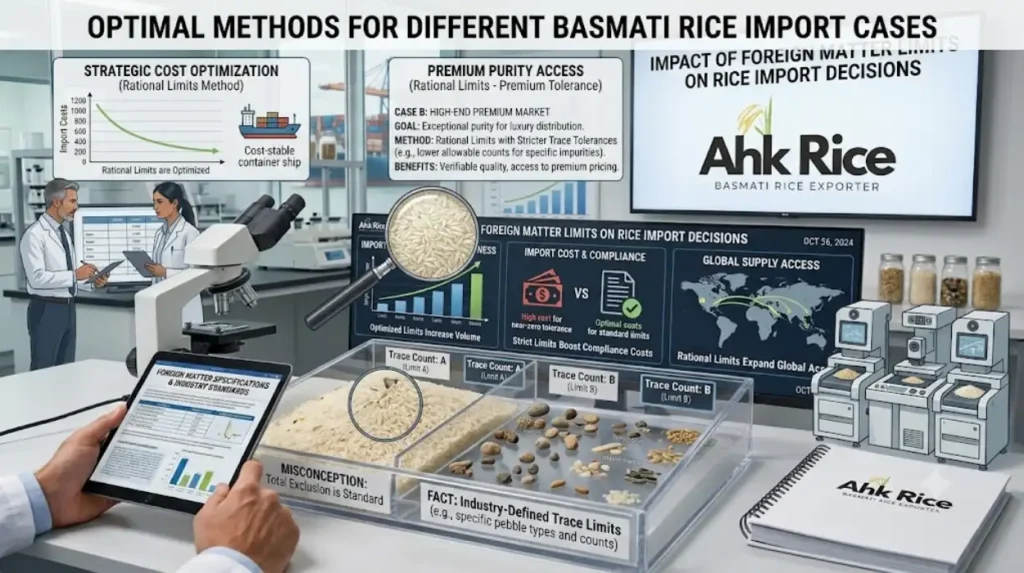
Retail buyers benefit from ultra-clean specifications, while foodservice and wholesale buyers often balance cleanliness against price.
The best specification depends on the sales channel and destination market.
UK Market Preferences
UK buyers prioritize food safety and retail presentation.
Most UK importers prefer:
- Foreign matter below 0.3%
- Enhanced colour sorting
- Traceability documentation
- Laboratory verification
UK retailers face strict consumer expectations. Clean rice reduces complaints and strengthens brand reputation.
Middle East Market Preferences
Middle Eastern buyers often prioritize consistency and cooking performance.
Many distributors accept:
- Foreign matter between 0.3% and 0.5%
- Standard export specifications
- Large-volume procurement contracts
Premium Gulf retail chains increasingly request cleaner grades, particularly for branded Basmati products.
Grade Preferences by Region
| Region | Preferred Grade | Foreign Matter Preference |
|---|---|---|
| United Kingdom | Premium Basmati | 0.1–0.3% |
| Middle East | Standard Premium Export | 0.3–0.5% |
The correct specification depends on the final consumer, packaging strategy, and distribution channel.
With market preferences clarified, the next question is how costs compare across specification levels.
How Do Foreign Matter Limits Affect Rice Prices and Shelf Life?
Cleaner rice commands higher prices but delivers lower rejection risk and longer commercial usability.
Additional cleaning increases processing expenses. Those costs influence export pricing.
Price Comparison per Metric Ton
| Specification Level | Estimated Premium |
|---|---|
| 1.0% Foreign Matter | Base Price |
| 0.5% Foreign Matter | +$10–20/MT |
| 0.3% Foreign Matter | +$20–40/MT |
| 0.1% Foreign Matter | +$40–70/MT |
Actual pricing varies by crop season, variety, freight rates, and destination.
Shelf Life Comparison
| Quality Level | Typical Shelf Life |
|---|---|
| Premium Clean Rice | 18–24 Months |
| Standard Export Rice | 12–18 Months |
Cleaner rice stores better because contaminants often introduce moisture variation and contamination risks.
Premium rice lasts longer than standard grades. In warm warehouse conditions, premium grades maintain appearance longer. Retail importers benefit from this stability. Distributors managing extended inventory cycles gain additional protection.
With pricing and shelf life examined, the next step is evaluating practical decision factors.
What Decision Factors Should Importers Evaluate?
Buyer specifications, destination regulations, brand positioning, storage conditions, and rejection risk determine the correct foreign matter limit.
Import decisions should follow a structured evaluation process.
Decision Framework
| Decision Factor | Premium Requirement | Standard Requirement |
|---|---|---|
| Retail Brand Sales | ✓ | |
| Foodservice Distribution | ✓ | |
| Long Storage Periods | ✓ | |
| Budget Sensitivity | ✓ | |
| Regulatory Strictness | ✓ |
Pros and Cons of Premium Specifications
Advantages
- Lower contamination risk
- Higher retail acceptance
- Longer shelf life
- Reduced inspection disputes
- Stronger brand perception
Disadvantages
- Higher procurement cost
- Longer processing requirements
- Smaller supplier pool
Pros and Cons of Standard Specifications
Advantages
- Lower cost
- Wider supplier availability
- Faster sourcing options
Disadvantages
- Higher rejection exposure
- Greater cleaning requirements
- Reduced retail suitability
Importers should match specification levels to business objectives rather than selecting solely on price.
FAQs
What is considered foreign matter in rice?
Foreign matter includes stones, straw, dust, husk particles, weed seeds, metal fragments, and other materials that are not rice kernels. Import authorities inspect these contaminants during quality verification.
Why do foreign matter limits matter for importers?
Foreign matter limits affect food safety, customs clearance, retail acceptance, and shipment compliance. Lower contamination levels reduce rejection risks and improve product quality.
What foreign matter level is acceptable for UK imports?
Many UK buyers prefer rice with foreign matter levels between 0.1% and 0.3% because these specifications support retail food safety requirements and consumer expectations.
Does lower foreign matter increase rice prices?
Yes. Additional cleaning, sorting, testing, and inspection increase processing costs. Premium specifications generally command higher prices per metric ton.
Which Pakistani Basmati varieties are commonly exported?
Popular export varieties include 1121 Basmati, Super Kernel Basmati, and 1509 Basmati. Buyers select varieties according to cooking characteristics, target markets, and pricing objectives.