How Do Indonesian Importers Check Foreign Matter in Pakistan Basmati Shipments?
Indonesian importers should verify foreign matter through representative sampling, 100-gram manual inspection, laboratory testing, and pre-shipment inspection. Here is why: SNI 6128:2020 sets maximum foreign-matter limits of 0.01% for Premium, 0.02% for Medium 1, and 0.03% for Medium 2 rice. The standard also controls moisture, broken grains, chalky grains, damaged grains, and paddy grains.
Foreign matter means material that does not belong in the finished rice product. Examples include stones, husk fragments, straw, soil particles, seeds, insects, and other physical impurities. Indonesian buyers therefore evaluate more than visible cleanliness. They compare the inspection method, sample size, specification sheet, certificate, and supplier quality system. A practical understanding of how Pakistani Basmati rice moves from cultivation through processing and export helps importers identify where foreign matter should be removed.
Indonesian demand also makes consistent inspection commercially important. Indonesia imported 512,723 MT of rice through the private sector during January–August 2025, while private-sector imports are expected to remain important for specialty rice and foodservice demand. (source: USDA Foreign Agricultural Service, Indonesia Grain and Feed Update 2025)
What does foreign matter mean in a Pakistan Basmati shipment?
Foreign matter is non-rice material remaining in a finished shipment, and Indonesian buyers verify it by separating, identifying, weighing, and calculating the material against the sample weight. SNI 6128:2020 treats foreign matter as a separate physical-quality parameter.
Foreign matter differs from broken rice, chalky kernels, damaged grains, and paddy grains. A broken Basmati kernel remains rice. A paddy grain still contains its husk. A stone or straw fragment is foreign material. Separating these categories prevents inaccurate quality claims.
SNI 6128:2020 also requires rice to be free from pests and diseases, foreign odours, harmful chemicals, and unsafe contamination. Maximum moisture is 14% under the general requirements.
The foreign-matter threshold becomes especially important for premium Basmati. Premium rice permits only 0.01% foreign matter. That equals a maximum of 0.01 gram in a 100-gram analytical sample when the percentage is applied directly.
The sampling method therefore matters as much as the final number. A poorly collected sample can hide localized contamination. A representative composite sample gives the importer stronger evidence about the full container.
With the definition established, the next step is comparing the inspection methods used by Indonesian importers.
What are the available solutions for checking foreign matter?
Four practical solutions are visual inspection, manual 100-gram analysis, laboratory verification, and independent pre-shipment inspection. Each method serves a different stage of procurement and gives a different level of evidence.
Visual inspection
Visual inspection is the fastest screening method. The buyer examines rice colour, surface cleanliness, visible stones, husk, insects, damaged kernels, and unusual material.
Indonesian warehouse teams can use this method during sample approval and container receiving. The method identifies obvious defects quickly but does not provide the strongest quantitative evidence.
Manual sample analysis
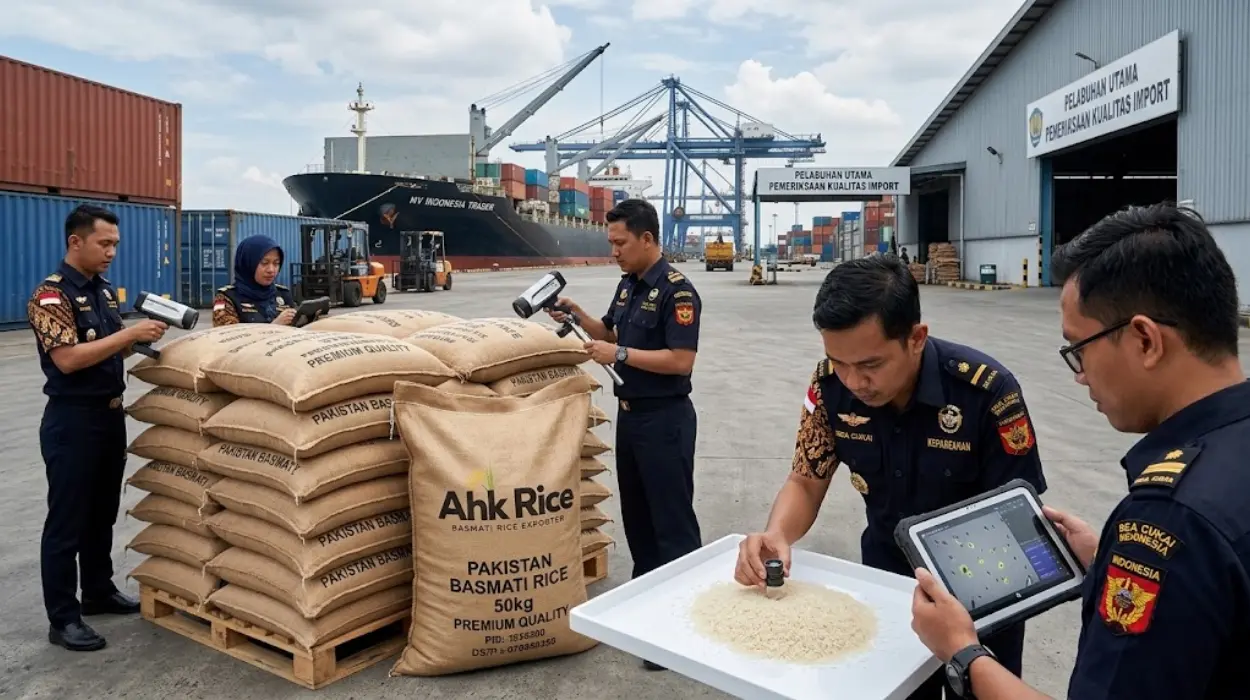
Manual analysis provides a measurable result. SNI-based methods use a 100-gram rice sample, separate foreign matter manually, and calculate its weight against the sample. Earlier SNI testing procedures specifically describe separating foreign matter with tweezers and a magnifying glass before weighing it.
This approach is useful because the buyer receives a numerical percentage rather than a visual opinion. A result of 0.01% has a different commercial meaning from a statement such as “clean rice.”
Laboratory testing
Laboratory testing extends inspection beyond visible foreign matter. Laboratories can evaluate moisture, pesticide residues, contaminants, microbiological parameters, and other contractual requirements.
Laboratory testing becomes important when a shipment requires documented compliance. It also provides stronger evidence during disputes because the analysis follows a defined method.
Independent inspection
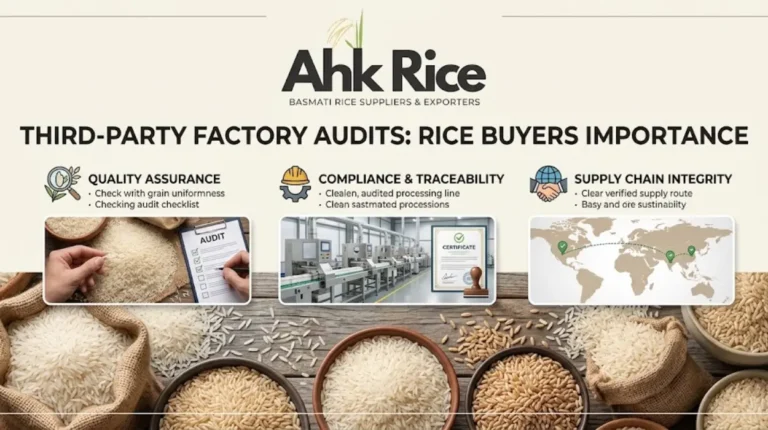
Independent inspection adds third-party verification before shipment. Inspectors can examine representative samples against the agreed specification and issue an inspection report.
This method reduces dependence on either the exporter or importer alone. It works particularly well for large contracts where rejection costs exceed the inspection expense.
The four solutions create different levels of control. The next comparison shows where each approach performs best.
How do different foreign-matter inspection approaches compare?
Manual sampling provides the strongest routine balance between cost and measurable evidence, while independent inspection provides the strongest commercial assurance for large shipments. Visual checks remain useful for rapid screening, while laboratory testing addresses broader compliance risks.
| Attribute | Visual Check | Manual 100-g Sample | Laboratory Test | Independent Inspection |
|---|---|---|---|---|
| Main purpose | Initial screening | Quantitative foreign-matter check | Food-safety verification | Contract verification |
| Sample size | Small visual portion | 100 g analytical sample | Method dependent | Representative composite |
| Foreign matter result | Visual | Percentage by weight | Analytical report | Inspection report |
| Cost level | Low | Low | Medium–High | Medium |
| Speed | Minutes | Minutes–hours | Hours–days | Scheduled inspection |
| Best use | Sample screening | Routine receiving | Compliance risk | Bulk procurement |
| Evidence strength | Low | Medium–High | High | High |
The manual method is particularly useful because the SNI framework provides a direct measurable threshold. Premium rice permits 0.01% foreign matter, while Medium 1 allows 0.02% and Medium 2 allows 0.03%.
The difference is small in percentage terms but significant in procurement terms. A buyer handling 1,000 MT needs consistent controls across thousands of bags and multiple containers. A single visual inspection cannot demonstrate that consistency.
Pre-shipment inspection also protects the importer before the cargo leaves Pakistan. A non-conforming shipment becomes more expensive to correct after ocean transport, port handling, customs clearance, and inland delivery.
With the methods compared, the next question is which method fits each purchasing situation.
Which method works best for different importer cases?
Retail importers should combine manual sampling with laboratory verification, while high-volume foodservice buyers should add independent pre-shipment inspection. Smaller trial orders can begin with visual and manual checks before moving to full third-party verification.
Retail and private-label buyers
Retail buyers need strong consistency because the same product specification appears across repeated packages. Their inspection should cover foreign matter, moisture, broken percentage, grain appearance, packaging integrity, and labelling.
Premium 1121 Basmati is suitable for buyers prioritizing long grain appearance. AHK Rice lists 1121 Golden Sella for Indonesia with 8.3 mm+ average grain length, under 12.5% moisture, and under 1% broken grains on its Indonesia product specification.
Restaurant and foodservice buyers
Foodservice buyers focus on cooking performance, consistency, and cost. Super Kernel and 1509 can serve different procurement positions.
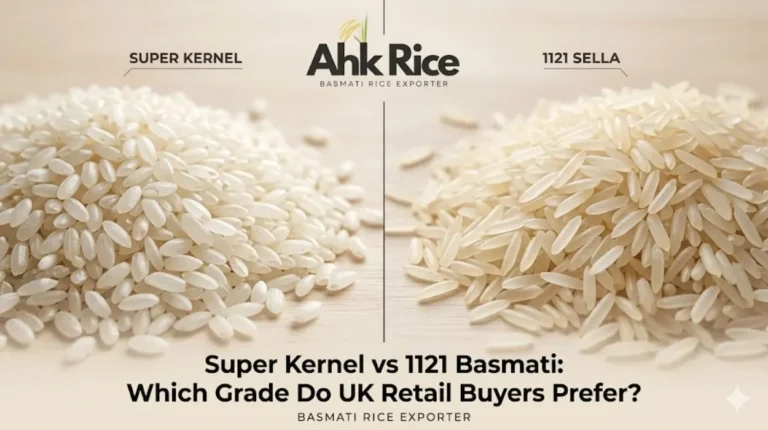
Super Kernel provides traditional Basmati aroma and a shorter grain profile than 1121. 1509 provides long-grain characteristics with a cost-oriented positioning. These differences should be evaluated alongside foreign-matter requirements rather than treated as separate quality issues.
Large-volume distributors
Large distributors benefit most from a documented inspection system. They can approve a specification before shipment, inspect representative samples, and compare the certificate against the receiving report.
This process creates a traceable chain from supplier specification to physical cargo. It also makes supplier comparisons easier across different shipment dates.
The right inspection method therefore depends on shipment value and risk. The next section evaluates the practical advantages and limitations.
What are the pros and cons of each inspection strategy?
Visual inspection is fast but subjective, manual sampling is measurable but sample-dependent, laboratory testing is comprehensive but slower, and independent inspection offers strong assurance at additional cost. Importers should combine methods rather than rely on one test.
Visual inspection: advantages and limitations
Visual inspection provides immediate feedback. A buyer can identify stones, husk, insects, discoloured material, and obvious contamination during sample review.
Its limitation is representativeness. A clean handful cannot prove that every container meets the same specification. Visual inspection should therefore remain a screening tool.
Manual analysis: advantages and limitations
Manual analysis produces a numerical foreign-matter percentage. The method is inexpensive and aligns closely with the SNI testing framework.
Its main limitation is sample coverage. A 100-gram sample represents only a small quantity of a commercial shipment. Proper sampling therefore determines the reliability of the result.
Laboratory testing: advantages and limitations
Laboratory testing provides documented analytical evidence. It is particularly valuable for pesticide residues, contaminants, microbiological parameters, and other safety requirements.
The limitation is turnaround time and cost. Importers should use laboratory testing strategically rather than treating every physical-quality check as a laboratory-only process.
Independent inspection: advantages and limitations
Independent inspection provides neutral evidence before dispatch. It can reduce disputes between exporter and importer because both parties can refer to an external report.
The limitation is additional inspection expense and scheduling. The cost is easier to justify for high-value contracts than for small trial shipments.
These trade-offs show why inspection should be designed around commercial risk. The next section turns those risks into a practical decision framework.
What decision factors should Indonesian importers use?
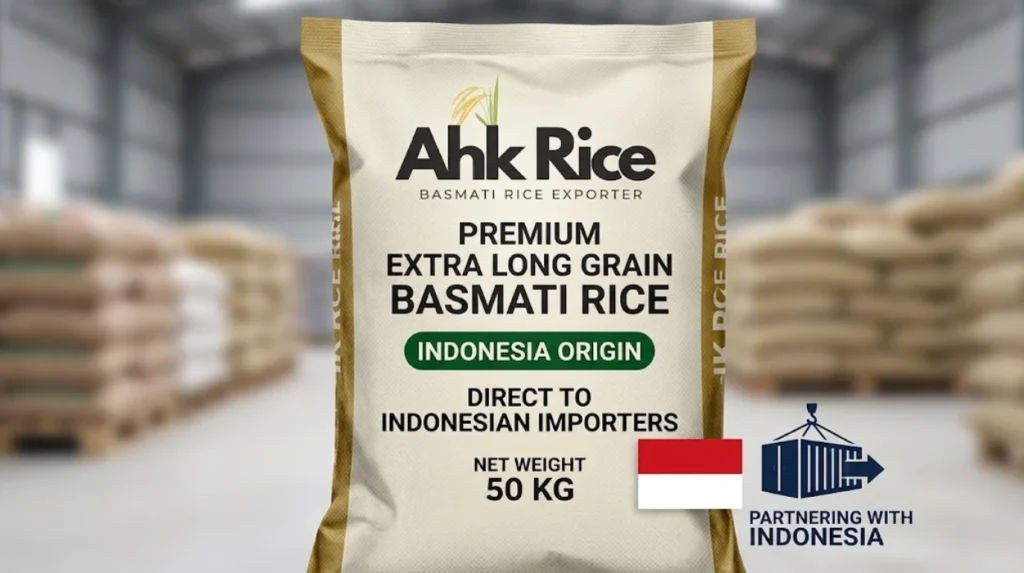
Indonesian importers should prioritize SNI tolerance, shipment volume, product grade, supplier controls, testing evidence, and receiving risk before selecting an inspection strategy. The strongest decision combines product specifications with measurable verification.
| Decision Factor | Low-Risk Case | Higher-Risk Case | Recommended Action |
|---|---|---|---|
| Shipment volume | Trial container | Multi-container contract | Add independent inspection |
| Product grade | Medium | Premium Basmati | Use tighter foreign-matter limits |
| Supplier history | Established record | New supplier | Require pre-shipment inspection |
| Destination use | Food processing | Retail/private label | Add laboratory verification |
| Contract value | Small order | Large annual supply | Use documented inspection protocol |
The first decision factor should be the contractual specification. Indonesian buyers should state the permitted foreign-matter percentage before the purchase order is issued.
The second factor should be sampling. Importers should specify sample locations, sample quantity, composite sampling rules, and analytical methods.
The third factor should be documentation. The inspection report should identify the product, variety, grade, lot, container, sample date, test method, and measured result.
The fourth factor should be supplier process control. Modern rice mills can clean, de-stone, grade, and colour-sort rice before packing. AHK Rice describes end-to-end processing from paddy sourcing through container loading and offers colour sorting, grading, customized packaging, and export documentation.
The fifth factor should be receiving verification. Importers should inspect the shipment again after arrival. Pre-shipment approval does not eliminate the need for destination checks.
How do Indonesia and GCC markets differ in grade and storage priorities?
Indonesian buyers emphasize specification compliance and specialty-rice demand, while GCC buyers commonly prioritize long grain, firm cooking performance, and storage stability. The same Pakistani Basmati variety can therefore require different commercial specifications.
Indonesia market
Indonesia’s private sector imported substantial rice volumes during 2025, with specialty rice and restaurant demand supporting continued imports. USDA forecasts 2025/26 rice imports at 750,000 MT, including specialty rice for retail markets and restaurants.
Indonesian importers can position 1121 White or Steam for buyers seeking aromatic long grain and premium appearance. Sella grades suit foodservice buyers requiring firmer grains and stronger transport stability.
GCC benchmark
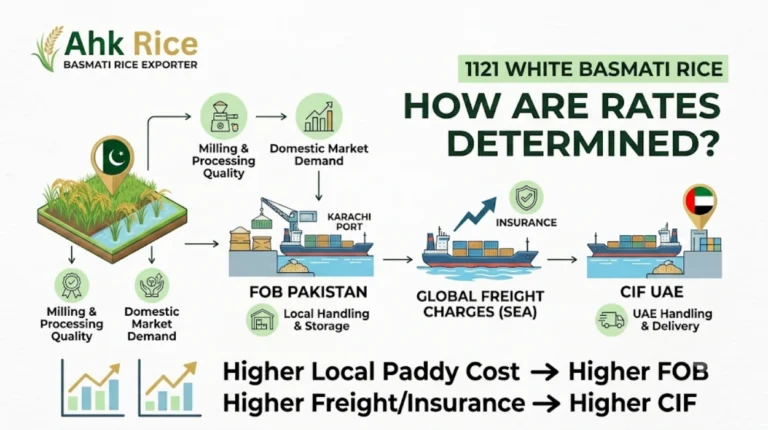
GCC markets commonly favour 1121 Sella and Golden Sella because the parboiling process strengthens the kernel and supports grain separation. Current indicative Pakistani FOB pricing places 1121 Sella around $1,135–$1,175/MT, while 1121 White is around $1,165–$1,205/MT. These are indicative market prices, not AHK Rice quotations.
Shelf life also influences grade selection. Sella products generally offer stronger storage stability than raw white rice. One current Pakistan export specification describes 1121 Sella with storage life of up to 24 months, compared with roughly 12–18 months for white rice under suitable storage conditions.
For Indonesian importers, this comparison shows why price alone cannot determine the correct grade. A lower FOB price can lose its advantage when the grade produces higher breakage, weaker storage performance, or greater receiving risk.
The market comparison establishes the commercial context. The final step is converting it into a shipment inspection procedure.
What inspection procedure should Indonesian importers follow?
Importers should approve the specification, sample representative lots, separate foreign matter, calculate the percentage, verify supporting tests, and document the final result before acceptance. This creates a repeatable quality-control process.
- Define the specification. Set the rice variety, grade, broken percentage, moisture, foreign-matter limit, packaging, and inspection method.
- Approve the reference sample. Retain an agreed physical sample representing the contracted grade and appearance.
- Sample the shipment. Collect portions from representative bags, lots, and container positions rather than relying on one surface sample.
- Separate foreign matter. Remove stones, husk, straw, soil, seeds, insects, and other non-rice material from the analytical sample.
- Weigh the material. Record the foreign-matter weight against the total analytical sample weight.
- Calculate the percentage. Divide foreign-matter weight by sample weight and multiply by 100.
- Compare the result. Match the measured percentage against the contractual specification and applicable Indonesian requirements.
- Verify laboratory results. Check moisture and safety parameters through appropriate laboratory methods where required.
- Record the inspection. Document lot number, container number, sample size, test method, result, inspector, and acceptance status.
- Release or reject the shipment. Apply the agreed contractual tolerance and dispute procedure consistently.
This procedure separates screening from verification. It also gives Indonesian buyers evidence that can be compared across suppliers and shipment cycles.
What should Indonesian importers check before selecting a Pakistani supplier?
The supplier should demonstrate controlled cleaning, de-stoning, grading, colour sorting, testing, documentation, and repeatable specifications before shipment approval. These controls reduce foreign-matter risk before the rice reaches Indonesia.
AHK Rice supplies Pakistani Basmati varieties including 1121, Super Kernel, and 1509 and operates an integrated processing and export system from Punjab. Its published quality system references ISO 22000:2018, HACCP, ISO 9001:2015, GMP, and Halal certification.
The supplier should also provide a product specification before commercial confirmation. The specification should state foreign matter, moisture, broken grains, grain length, packaging, crop information, and inspection requirements.
The supplier’s inspection process should connect milling to shipment. Cleaning removes field impurities. De-stoning targets heavy foreign materials. Colour sorting removes visually defective material. Final inspection verifies the finished lot.
The supplier should also support independent inspection for buyers requiring additional assurance. A third-party inspection creates a separate verification layer before container dispatch.
For Indonesian procurement teams, the strongest sourcing model is therefore specification-led rather than price-led. The buyer defines measurable limits first, compares suppliers against those limits, and evaluates FOB or landed price only after quality equivalence is established.
What is the final decision for Indonesian Basmati importers?
The most reliable approach is a layered inspection system combining representative sampling, manual foreign-matter measurement, laboratory testing, and independent pre-shipment inspection for higher-value contracts. This approach provides both measurable quality evidence and commercial protection.
SNI 6128:2020 provides a useful reference point because its Premium category limits foreign matter to 0.01%. Indonesian importers should still align the purchase contract with the applicable Indonesian import and product requirements.
Grade selection should follow the end use. 1121 supports premium long-grain positioning. Super Kernel supports traditional aromatic Basmati demand. 1509 provides another long-grain procurement option.
Price comparison should use the same basis. Current indicative FOB data places 1121 Sella around $1,135–$1,175/MT, while 1121 White sits around $1,165–$1,205/MT. The final purchase decision should then include freight, insurance, port costs, duties, inspection, and inland delivery.
Foreign-matter control ultimately begins at the mill. A supplier that cleans, sorts, grades, tests, and documents each shipment gives the importer a stronger quality chain than a supplier relying only on final visual inspection.
For Indonesian importers evaluating verified Pakistani Basmati supply, the next commercial-stage resource should explain supplier selection, specifications, and ordering requirements in greater detail.
Frequently Asked Questions
What is the acceptable foreign matter in Premium rice under SNI 6128:2020?
Premium rice has a maximum foreign-matter limit of 0.01% under SNI 6128:2020. Medium 1 allows 0.02%, while Medium 2 allows 0.03%.
How is foreign matter measured in rice?
Foreign matter can be measured by separating non-rice material from a representative sample and calculating its weight percentage. SNI testing procedures describe manual separation using tools such as tweezers and magnification.
What foreign materials do rice inspectors look for?
Inspectors look for stones, soil, husk, straw, seeds, insects, and other non-rice materials. They also separately evaluate broken, damaged, chalky, discoloured, and paddy grains.
Is visual inspection enough for a commercial shipment?
Visual inspection is useful for screening but should not be the only control for high-value shipments. Manual sampling and independent inspection provide stronger measurable evidence.
Which Pakistani Basmati grades can Indonesian importers source?
Indonesian buyers can source 1121, Super Kernel, and 1509 Basmati in multiple processing formats. Grade selection should match cooking requirements, price targets, storage conditions, and customer positioning.
Does Sella rice have better storage stability than White Basmati?
Sella generally provides stronger storage stability because parboiling strengthens the grain structure. Current export specifications describe Sella storage potential up to 24 months under suitable conditions.
What should a rice inspection report contain?
A useful report should identify the variety, grade, lot, container, sample size, test method, measured foreign matter, moisture, broken percentage, and acceptance result. This information supports traceability and commercial dispute resolution.
Should Indonesian importers inspect rice before shipment?
Yes, large or high-value contracts should use pre-shipment inspection before containers leave Pakistan. Destination inspection should remain part of the receiving process.