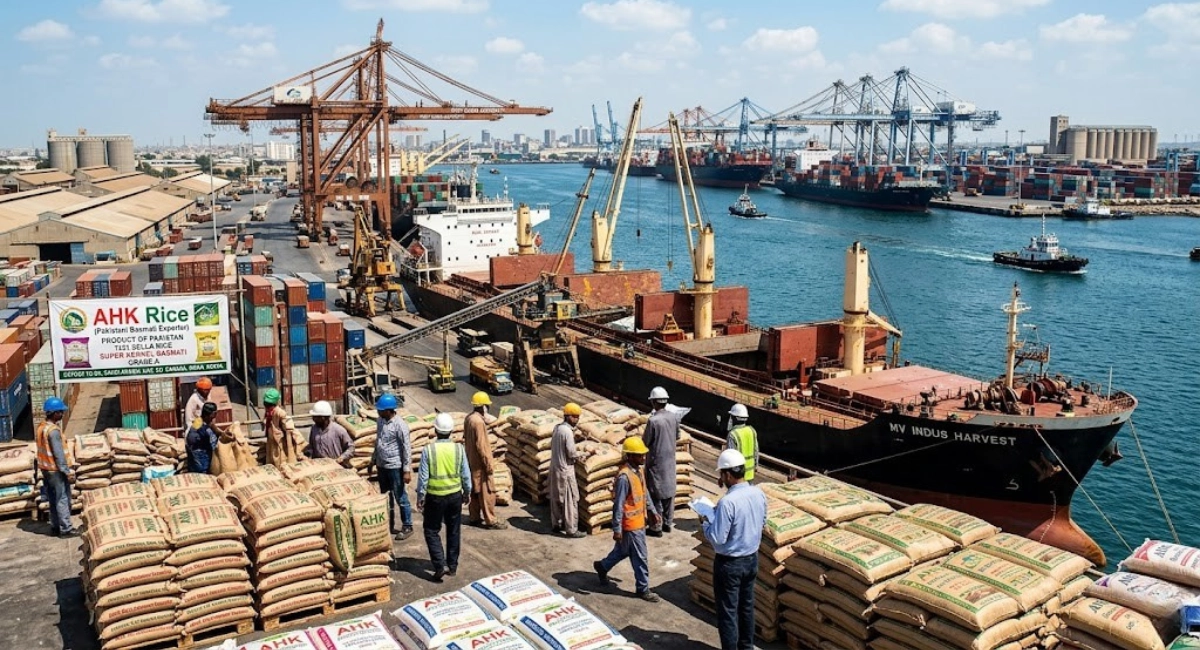
Pakistan Expands Rice Export Opportunities Across Global Markets
What Is Pakistani Basmati Rice?
Pakistani Basmati rice is a long-grain, aromatic agricultural product grown exclusively in the fertile, canal-fed plains of Punjab, Pakistan, characterized by its distinct fragrance, fluffy texture upon cooking, and a grain length that doubles post-hydration.
Basmati translates literally to “the fragrant one” in the Sanskrit language. This grain belongs to the Oryza sativa species. The unique geographic indicators of the Punjab region define its quality. These indicators include specific soil profiles, mineral-rich meltwater from the Himalayan mountain range, and a precise climate transition from humid summers to cool autumn nights.
The grain contains a high concentration of 2-acetyl-1-pyrroline. This chemical compound gives the rice its characteristic popcorn-like aroma.
Core Varieties Exported by AHK Rice
The trade landscape recognizes specific genetic lines of this grain. Each variety services a distinct market niche based on physical dimensions, cooking durability, and pricing structures.
- 1121 Basmati Rice: This variety holds the record for the longest pre-cooked grain length, averaging 8.35 millimeters. It stretches up to 20 millimeters after boiling. It offers high volume expansion and maximum elongation.
- Super Kernel Basmati Rice: This is the traditional premium variety. It is revered for its intense natural aroma and deep nut-like flavor profile. It requires a mandatory aging process to achieve optimal cooking performance.
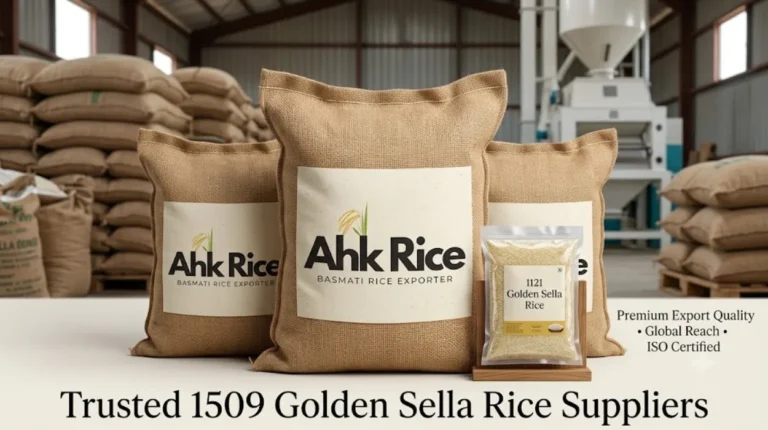
- 1509 Basmati Rice: An early-maturing, high-yielding variant. It features a grain length of approximately 8.40 millimeters. It enters the market earlier than 1121 and serves as a cost-effective alternative for premium long-grain requirements.
Where Is Pakistani Basmati Rice Grown?
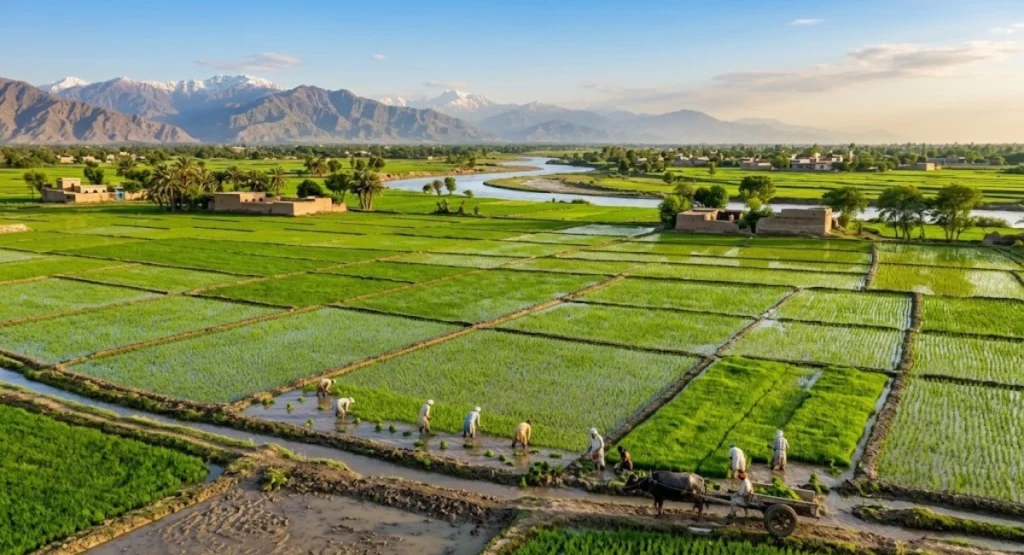
Pakistani Basmati rice grows within the specific geographic boundaries of the Kalar Bowl tract, a historic agricultural region encompassing districts like Gujranwala, Sialkot, Sheikhupura, Nankana Sahib, and Hafizabad within the northern Punjab province.
The cultivation zone relies on a unique hydrological system. The Chenab River and Ravi River feed thousands of irrigation canals across these districts. The soil composition here consists of heavy, fine-textured clay loam. This specific soil retains moisture during the intense summer heat while providing essential micronutrients like zinc and iron to the root systems.
Climate conditions during the maturation phase dictate the final quality of the harvest. Temperatures must drop below 20 degrees Celsius during the grain-filling stage in October. This specific thermal dip locks the aromatic compounds into the endosperm of the rice kernel.
How Is Basmati Rice Processed Step by Step?
The processing of Basmati rice converts raw paddy into stable, clean, and consumer-ready grains through an industrial sequence involving cleaning, hulling, milling, polishing, color sorting, grading, and moisture-controlled packaging.
Processing shifts the product from an unstable field harvest to a highly standardized export commodity. Modern milling plants utilize multi-stage machinery to prevent grain breakage, which directly devalues the shipment.
The Six Stages of Grain Refinement
1.Paddy Cleaning and De-stoning:Stage 1.
Raw paddy enters vibrating sieves to remove straw, dust, and weed seeds. High-power magnetic separators extract metallic debris. Scalpers and de-stoners isolate heavy stones and mud balls based on specific gravity differentials.
2.De-husking or Hulling:Stage 2.
Cleaned paddy passes through rubber roll hullers. Centrifugal force and rubber pressure shear the outer protective husk away from the grain. Aspirational chambers separate the lightweight husks from the remaining brown rice.
3.Milling and Whitening:Stage 3.
Brown rice enters abrasive whitening machines. Friction removes the outer bran layers and the nutrient-dense germ. This stage turns the brown grain into white rice. Precise air cooling prevents heat buildup, which reduces thermal fracturing.
4.Friction Polishing:Stage 4.
Grains pass through mist polishers that apply controlled water vapors. Rotating cams polish the surface of the white rice, removing remaining bran dust. This process gives the grain a glassy, translucent visual finish.
5.Optical Color Sorting:Stage 5.
Polished grains fall through high-speed digital color sorters. Charge-coupled device cameras scan every individual grain. Air jets shoot out discolored, yellow, chalky, or damaged grains into a separate rejection chute.
6.Grading and Length Separation:Stage 6.
Indented cylinders separate broken grains from whole grains based on precise length parameters. Head rice goes to packaging silos. Automatic bagging systems seal the rice into bags ranging from 1 kilogram to 50 kilograms.
What Are the Available Grades of Export Rice?
The available grades of export rice include raw white rice, parboiled sella rice, steamed sella rice, and brown rice, classified by post-harvest hydrothermal treatments and structural modifications.
Grading determines the culinary behavior, shelf life, and target demographic of each shipment. Wholesalers choose grades based on consumer preferences in final destination markets.
Structural Variations in Finished Grains
- Raw White Rice: Grains undergo standard mechanical milling without thermal modification. This preserves the natural aroma and delicate texture, making it ideal for traditional biryani preparations.
- Parboiled (Sella) Rice: Paddy undergoes soaking, steaming, and vacuum-drying before mechanical husking. This process gelatinizes the starch inside the grain. It hardens the kernel, makes it immune to overcooking, and turns the grain a golden color.
- Steamed Sella Rice: Grains undergo an intense steam treatment while still in the husk, without the prolonged soaking stage used for traditional parboiled rice. This retains the brilliant white appearance of raw rice while providing the high grain separation and structural strength of parboiled variants.
- Brown Basmati Rice: Processing removes only the outer hull, leaving the fiber-rich bran layer fully intact. This grade services health-focused market segments requiring high trace elements and a low glycemic index.
Which Global Markets Import Pakistani Rice?
Global markets importing Pakistani rice span over 15 distinct international territories, prominently led by the member states of the European Union, West Asian nations, East African regions, and China.
Import patterns depend on regional food security needs and traditional culinary applications. Higher-income regions prioritize grain aesthetics and residue compliance, while developing markets focus on volume and caloric stability.
| Importing Region | Primary Varieties Demanded | Quality Parameters Prioritized |
| Middle East (GCC) | 1121 Parboiled, Super Kernel | Grain length, aroma intensity, clean visual sorting |
| European Union | Brown Basmati, Raw White | Tricyclazole limits, pesticide residues, non-GMO status |
| East Africa | 1509 Sella, Broken Grains | Price per metric ton, shelf-life stability, bulk packaging |
| China & SE Asia | 1121 Raw White, Steamed Rice | Cooking expansion, amylose content, uniform grain size |
What Certifications Apply to Basmati Rice Exports?
The certifications applying to Basmati rice exports encompass food safety management systems, phytosanitary clearances, regional purity validations, and religious dietary compliances enforced by international regulatory groups.
Certifications act as non-tariff clearance mechanisms. Without verified laboratory testing and standard compliance seals, shipments face immediate quarantine, rejection, or destruction at destination ports.
Global Compliance Standards
- ISO 22000 / HACCP: Validates the presence of an active food safety management framework across the entire processing facility, from intake hoppers to container loading.
- Phytosanitary Certificate: Issued by the Department of Plant Protection of Pakistan, confirming that the shipment has undergone inspection and is free from quarantine pests like the khapra beetle.
- RARI DNA Purity Certification: Verified by the Rice Research Institute, utilizing polymerase chain reaction testing to prove the absence of cross-contamination with non-Basmati rice varieties.
- Halal Certification: Confirms that processing environments, cleaning agents, and packaging materials conform fully to Islamic dietary laws.
How Does the Export Supply Chain Work?
The export supply chain works through a coordinated logistics framework linking procurement agents, milling processors, quality surveyors, customs brokers, container shipping lines, and clearing agents at international destination harbors.
The process converts agricultural capital into trade liquidity. Delays at any link in this supply chain cause demurrage costs, which destroy exporter profit margins.
Procurement and Financial Setup
Exporters purchase raw paddy from local farm brokers during the harvest season. Payment clears via traditional spot-cash transactions. Export sales utilize irrevocable Letters of Credit at sight or advanced telegraphic transfers to eliminate international default risks.
Logistics and Port Clearance
Processed rice moves via flatbed trucks from Punjab mills to the Port of Karachi or Port Qasim. Customs clearing agents submit the Goods Declaration through the Web-Based One Customs system. Cargo surveyors check container seals, moisture thresholds, and fumigation certificates prior to vessel loading.
What Are Key Components of Basmati Quality?
The key components of Basmati quality are physical grain measurements, chemical composition indicators, moisture balance ratios, and sensory evaluation properties tested under laboratory standards.
Quality components establish the global market price for each lot. Buyers define acceptable metrics inside initial purchase contracts to prevent product substitution disputes.
- Average Grain Length (AGL): Measured using digital calipers across random 100-grain samples. High export grades require an AGL exceeding 8.3 millimeters.
- Moisture Content: Must sit precisely between 12 percent and 13 percent. Exceeding 14 percent triggers fungal growth, while dropping below 11 percent causes grain brittleness during shipment.
- Amylose Content: Must range between 22 percent and 24 percent. This specific starch ratio ensures grains remain separate and non-sticky after boiling.
- Chalky Kernels: Must remain below 2 percent by total weight. Chalkiness represents opaque areas containing loose starch structures that fracture under minimal physical stress.
What Benefits Does Basmati Rice Offer?
The benefits Basmati rice offers include a low-to-medium glycemic index, long-term storage stability, high energy yield per serving, and superior culinary versatility compared to standard short-grain variants.
Dietary components make this grain a preferred choice for diverse consumer groups. Its structural density allows it to survive commercial food preparation without losing form.
Nutritional Profiles
Basmati rice contains a complex carbohydrate structure that digests slower than standard white rice. This prevents rapid blood glucose spikes, making it manageable for individuals balancing insulin levels. The grain is naturally gluten-free and low in sodium, which minimizes cardiovascular strain.
Culinary and Storage Utility
The low moisture profile of properly processed Basmati allows it to stay fresh for up to 24 months in ambient storage conditions. Well-aged grains improve in flavor and texture over time, similar to fine wines. During cooking, the structural expansion reduces the net weight of raw grain required per plate, saving costs for commercial restaurants.
What Are the Main Use Cases for This Grain?
The main use cases for this grain focus on premium hospitality catering, traditional regional dishes, healthy ready-to-eat meals, and household consumer staples.
Culinary traditions dictate the volume requirements of specific grades. Processing plants alter their outputs to match these seasonal and regional use cases.
- Commercial Catering and Banquets: Large-scale chefs use parboiled sella rice for weddings and festivals because the grains do not break or stick when handled with heavy serving utensils.
- Traditional Dishes: Restaurants preparing authentic pulao, biryani, or mandi require raw white Basmati or steamed varieties to ensure the grains absorb oils and spices while releasing natural aromas.
- Industrial Ready Meals: Food manufacturers pack parboiled Basmati into microwaveable pouches, relying on its ability to undergo secondary thermal processing without turning mushy.
- Gourmet Retail Packaging: Premium grocery chains stock aged Super Kernel Basmati in cloth or burlap bags to target home cooks looking for restaurant-grade meals.
What Common Misconceptions Surround Rice Export?
The common misconceptions surrounding rice export involve the belief that all long-grain rice is authentic Basmati, that aged rice is stale or degraded, and that non-chemical farming guarantees immediate import approval.
Clearing up these errors helps importers protect their capital from counterfeit products and unnecessary customs rejections.
Misconception 1: Long Grain Equals Basmati
Many buyers believe that any rice grain exceeding 7 millimeters qualifies as Basmati. This is inaccurate. Non-Basmati long-grain varieties like Jasmine or long-grain white rice lack the genetic markers required to produce 2-acetyl-1-pyrroline. They also lack the unique elongation properties of authentic Basmati, meaning they expand in width rather than length when cooked.
Misconception 2: Aging Indicates Freshness Loss
Inexperienced buyers sometimes reject aged rice lots, assuming that old stock equals rancid stock. For Basmati, the opposite is true. Freshly harvested rice contains wet starches that turn pasty during cooking. Aging dries out the grain uniformly, concentrates the natural oils, and enhances the expansion ratio.
Misconception 3: Organic Labels Prevent Rejections
Importers often assume that traditional, non-certified smallholder rice automatically bypasses Western customs barriers due to its natural cultivation style. This is incorrect. European Union border authorities test for specific chemical limits, such as tricyclazole or aflatoxins. Unregulated traditional crops frequently fail these exact checks due to cross-contamination from local soil or improper storage drying.