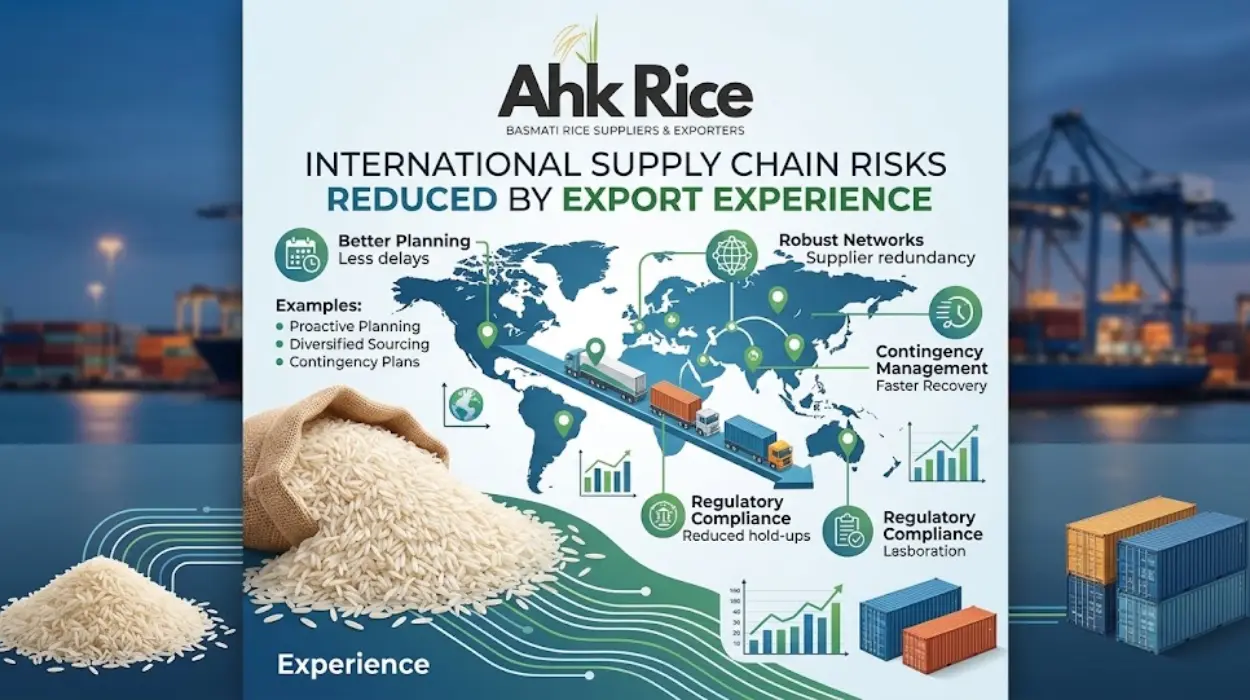
How Does Export Experience Reduce International Supply Chain Risks?
Export experience reduces international supply chain risk by improving documentation accuracy, specification control, shipment planning, customs readiness, carrier coordination, and response speed when problems occur. For Michigan rice buyers, these capabilities matter because every container crosses multiple commercial, regulatory, transportation, and quality-control stages.
A supplier’s export history provides evidence of how it has handled these stages in real transactions. Buyers evaluating this evidence should also understand:
Why Michigan buyers review a supplier’s export history before selecting a long-term source. The objective is not to choose the oldest exporter. It is to identify the supplier whose previous export activity matches the buyer’s product, destination, volume, documentation, and delivery requirements.
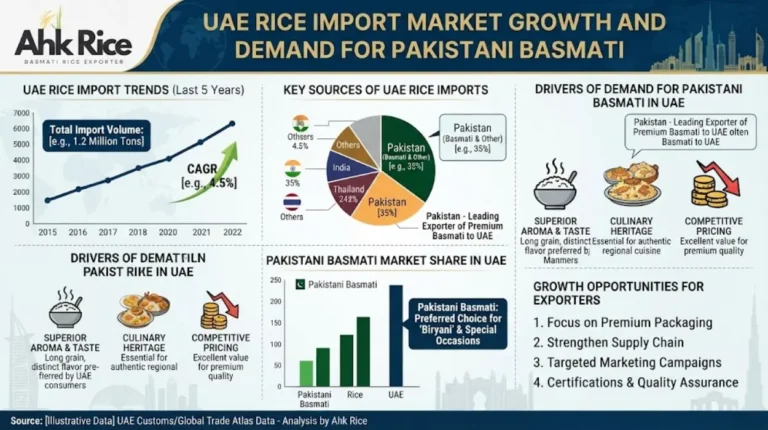
The 2026 market makes this evaluation more important. USDA reports that U.S. long-grain rice imports remain structurally important, with imports from Pakistan and India largely consisting of Basmati and continuing at a robust pace through March 2026. USDA’s July 2026 outlook also projects U.S. all-rice imports at a record 49.8 million hundredweight for 2026/27 because of tighter domestic supply.
For a Michigan importer, the practical question is therefore not simply whether a supplier can sell rice. It is whether that supplier can repeatedly move the same specification from Punjab to the U.S. market without creating avoidable supply-chain failures.
What are the available solutions for reducing international rice supply chain risk?
The main solutions are direct experienced exporters, established trading companies, brokers, and U.S.-based stockists; each reduces different risks, but direct exporters with documented international shipments provide the strongest control over production, documentation, quality, and shipment coordination.
A direct exporter manages the transaction close to the production source. An established trading company may combine several mills and suppliers. A broker normally connects buyer and seller without controlling production. A U.S. stockist already holds inventory domestically, reducing ocean-transit exposure but adding warehouse and inventory costs.
Export experience becomes valuable when the supplier has completed the same type of transaction repeatedly. A supplier shipping Basmati to Europe may understand international documentation but still require additional controls for U.S. food-import procedures. A supplier with previous U.S. shipments has stronger practical knowledge of the destination market.
AHK Rice represents the direct-exporter model. The company operates from Punjab and states that its process covers paddy procurement, cleaning, de-husking, whitening, grading, color sorting, packaging, documentation, and container loading. Its stated product range includes 1121, Super Kernel, and 1509 Basmati rice.
For buyers evaluating Pakistani Basmati rice, the USA Basmati rice export service is the relevant service model because it connects product specification with U.S. shipment requirements rather than treating procurement and logistics as separate activities.
The four approaches can be evaluated against the same risk categories:
| Attribute | Experienced Direct Exporter | Trading Company | Broker | U.S. Stockist |
|---|---|---|---|---|
| Production control | High | Medium | Low | Low |
| Specification consistency | High when mill-controlled | Medium | Depends on supplier | High for stocked lot |
| Export documentation | High | High | Variable | Mostly importer-side |
| Ocean shipment coordination | High | High | Variable | Low |
| Price transparency | High | Medium | Medium | Lower |
| Inventory availability | Production-based | Production-based | Production-based | High |
| Best use case | Recurring imports | Multi-origin sourcing | Price discovery | Urgent domestic replenishment |
This comparison shows why experience should be assessed as an operational capability rather than a number of years in business.
How do different export approaches compare for Michigan and other U.S. markets?
Michigan buyers benefit most from a supplier that combines production control with export execution, while Northeast buyers can place greater value on port access and warehouse flexibility; both markets still require consistent grades, accurate documents, traceability, and reliable shipment planning.
Michigan belongs to the Great Lakes commercial region, where imported rice can move through East Coast gateways and then continue inland by truck or rail. Chicago is a major inland logistics point for the wider Midwest. Northeast buyers can access cargo more directly through New York and New Jersey-area gateways.
The difference affects landed logistics. Public July 2026 freight indications show Karachi-to-New York 40-foot FCL rates around $5,252–$5,691, with an estimated 27-day ocean transit on one published service. Karachi-to-Chicago indications through New York were around $6,282–$6,811 for 40-foot FCL, with an estimated 28-day transit. These are freight indications rather than complete landed costs.
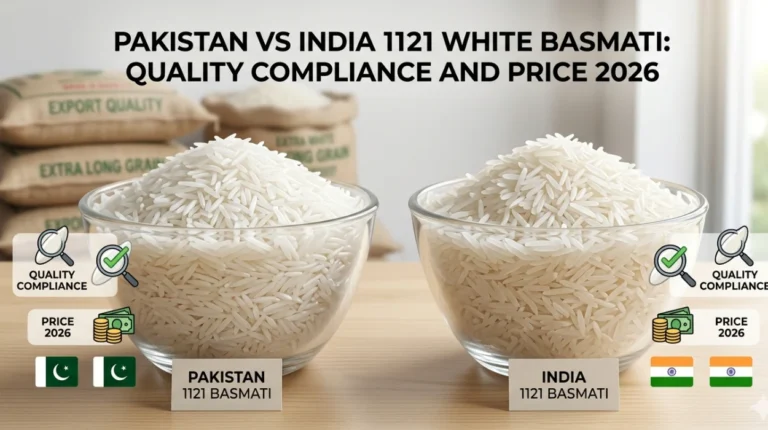
Using a planning load of approximately 26 MT, the freight component works out to roughly $202–$219 per MT for the New York lane and approximately $242–$262 per MT for the Chicago lane. Adding these figures to a July 2026 indicative FOB Karachi range of $1,165–$1,205 per MT for premium 1121 Basmati gives a planning comparison of approximately $1,367–$1,424 per MT before duties, destination charges, inland delivery, insurance, and other landed costs. Published Pakistani exporter prices are indicative and must be replaced by the supplier’s confirmed commercial quotation.
| Market region | Typical buyer priority | Suitable Basmati grade | Indicative FOB basis | Planning freight component | Planning product + freight |
| Great Lakes / Michigan | Consistency, inland delivery reliability | 1121 White or Steam | $1,165–$1,205/MT | ~$242–$262/MT | ~$1,407–$1,467/MT |
| Northeast U.S. | Port proximity, retail and foodservice flexibility | 1121 White or Sella | $1,165–$1,205/MT | ~$202–$219/MT | ~$1,367–$1,424/MT |
The price difference demonstrates why export experience affects more than supplier selection. A buyer who chooses the lowest FOB price without examining the destination route can lose the apparent saving through freight, delays, documentation corrections, storage, or inland transport.
The U.S. Harmonized Tariff Schedule also requires accurate classification. The 2026 HTS identifies milled Basmati under the long-grain Basmati classification within heading 1006.30.90, while parboiled rice is treated separately under 1006.30.10. Importers should confirm the exact current classification and applicable additional tariff measures at the time of entry because the HTS received Revision 12 on July 21, 2026.
How does export experience reduce documentation and customs risk?
Experienced exporters reduce documentation risk by using repeatable export procedures for commercial invoices, packing lists, certificates, phytosanitary documents, certificates of origin, fumigation records, bills of lading, and destination-specific information required for customs and food-import clearance.
Documentation errors can create delays even when the rice itself meets specification. A wrong product description, inconsistent quantity, incorrect consignee information, or mismatch between invoice and packing list can interrupt customs processing.
Experienced exporters usually maintain document templates and transaction checklists. They also understand which information must remain identical across the invoice, packing list, certificate of origin, phytosanitary certificate, bill of lading, and purchase contract.
For U.S. imports, buyers must also coordinate with their customs broker and confirm current Food and Drug Administration requirements. The exporter does not replace the importer’s compliance responsibilities. Export experience instead improves the quality and completeness of the information passed to the importer.
This distinction matters in 2026 because U.S. tariff classifications and related measures continue to change. USITC published Revision 12 of the 2026 Harmonized Tariff Schedule on July 21, 2026. A supplier with a disciplined export-documentation process can respond faster when classification or documentation requirements change.
Which method works best for different Michigan buyer cases?
The best sourcing method depends on order frequency, required inventory, quality sensitivity, and tolerance for transit risk; recurring distributors generally benefit from direct experienced exporters, while urgent buyers may justify domestic stock and smaller buyers may use trading companies.
A Michigan distributor importing several containers each quarter needs repeatability. Direct exporter relationships work well because the buyer can establish a fixed product specification covering variety, grain length, broken percentage, moisture, milling level, packaging, labeling, and inspection.
A restaurant supplier with unpredictable demand may prioritize domestic inventory. A U.S. stockist can provide faster replenishment because the ocean leg has already been completed.
A smaller importer may prefer a trading company because it can consolidate sourcing from different mills or provide a broader product range. The trade-off is less direct visibility into the production process.
A price-sensitive buyer may use a broker to compare suppliers. This approach works for market discovery but creates an additional responsibility: the buyer must independently verify the actual mill, export history, specification, documentation capability, and shipment record behind the quoted price.
For Michigan markets, the most suitable model usually depends on whether the commercial priority is repeatability, speed, price, or inventory availability.
What are the pros and cons of using an experienced exporter?
Experienced exporters provide stronger process repeatability, destination knowledge, documentation discipline, and shipment coordination, but experience does not guarantee competitive pricing; buyers still need to compare specifications, inspection evidence, commercial terms, and total landed cost.
The first advantage is repeatability. An exporter that has already processed similar orders understands the sequence from paddy procurement through container loading.
The second advantage is specification control. Basmati buyers often require exact grain length, broken percentage, moisture level, milling finish, packaging format, and labeling. Repeating these specifications requires production coordination, not only sales communication.
The third advantage is route familiarity. A supplier that has already shipped to U.S. buyers understands the practical relationship between vessel booking, port handling, documentation, customs brokerage, and inland delivery.
The fourth advantage is problem response. International shipments can encounter vessel changes, port congestion, document amendments, inspection questions, or container scheduling problems. An experienced exporter has established communication channels for these events.
The disadvantage is that an experienced exporter may not offer the lowest headline price. Its quotation may include stronger inspection, better packaging, controlled processing, or more structured documentation.
A second disadvantage is that experience can be market-specific. A supplier with a long history in the Middle East does not automatically have the same U.S. compliance experience as a supplier with established U.S. shipments.
The correct evaluation therefore asks for relevant export experience, not simply total years in operation.
How does export experience affect shelf life and inventory risk?
Export experience improves shelf-life management by matching processing grade, moisture control, packaging, storage conditions, and shipment timing to the buyer’s inventory cycle, reducing the chance that rice reaches distribution warehouses with avoidable quality or aging problems.
Shelf life is not controlled by export experience alone. Rice quality depends on processing, moisture, packaging, storage temperature, humidity, sanitation, and warehouse conditions.
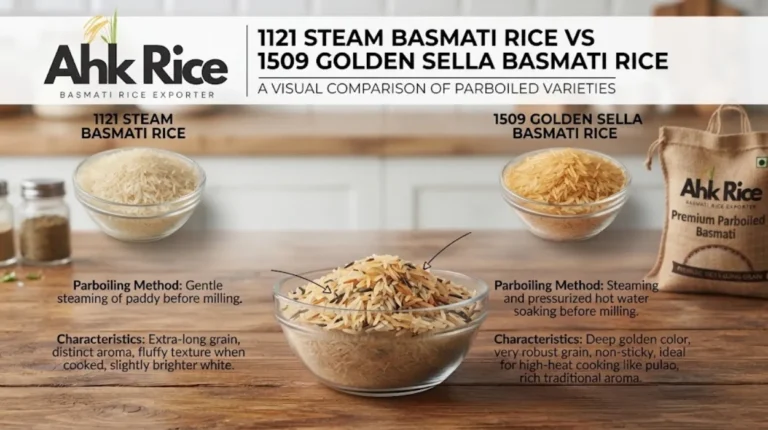
For planning purposes, AHK Rice currently presents 1121 Steam with a 12-month shelf-life figure and 1121 Golden Sella with an 18-month figure under its stated export specifications. These figures illustrate why processing type matters when a buyer plans long inventory cycles.
For a fast-moving Michigan distributor, 1121 White or Steam can fit a shorter inventory cycle where regular replenishment is available. For a buyer holding larger stocks between purchasing cycles, Sella or parboiled grades can offer a longer stated storage window.
The buyer should still define a minimum remaining shelf-life requirement at arrival. A shipment that arrives with only a small portion of its intended shelf life remaining can create a commercial problem even when the product technically remains within specification.
What decision factors should Michigan buyers use when evaluating export experience?
Michigan buyers should evaluate export experience through five measurable factors: relevant U.S. shipment history, specification consistency, documentation performance, logistics execution, and commercial transparency; these factors show whether experience actually reduces operational risk rather than merely increasing supplier credibility.
| Decision factor | What to verify | Why it matters |
| Relevant export history | Previous U.S. and comparable-market shipments | Shows practical destination experience |
| Specification control | COA, sample, grain length, broken ratio, moisture | Prevents quality variation |
| Documentation | Invoice, packing list, origin, phytosanitary, fumigation, B/L | Reduces clearance delays |
| Logistics execution | Vessel booking, transit planning, tracking, contingency process | Protects delivery schedules |
| Commercial transparency | FOB/CFR/CIF basis, payment terms, inspection terms, claims process | Makes total risk and cost measurable |
The first factor is the strongest starting point. Ask how many comparable shipments the supplier has completed and which destinations were served.
The second factor is evidence-based specification control. A sample should become a written commercial specification. The production lot should then be checked against that specification before loading.
The third factor is document discipline. Buyers should request a sample documentation set before committing to a large recurring program.
The fourth factor is logistics execution. A supplier should be able to explain its normal booking process, expected transit range, tracking procedure, and response plan for vessel delays.
The fifth factor is commercial transparency. Buyers should compare the same Incoterm, quantity, packaging, inspection basis, payment structure, and destination when evaluating competing quotations.
AHK Rice states that its export operation covers processing, grading, color sorting, custom packaging, export documentation, and container loading, while its international market coverage includes the USA and other major markets.
What is the practical conclusion for Michigan Basmati rice sourcing?
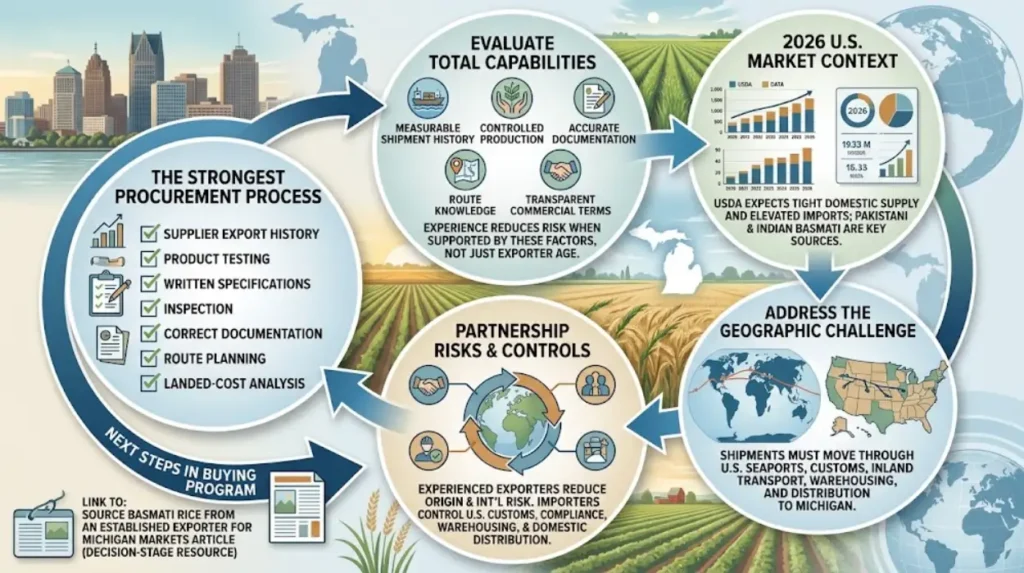
Export experience reduces supply-chain risk most effectively when it is supported by measurable shipment history, controlled production, accurate documentation, route knowledge, and transparent commercial terms; Michigan buyers should evaluate these capabilities together rather than treating exporter age as the deciding factor.
The 2026 U.S. rice market provides a strong reason to use this approach. USDA expects U.S. rice imports to remain elevated as domestic supply tightens, while Pakistani and Indian Basmati remain important sources of imported aromatic long-grain rice.
For Michigan buyers, the geographic challenge is equally important. A shipment does not end at the U.S. seaport. It must move through customs, inland transportation, warehousing, and distribution before reaching the final customer.
An experienced exporter helps reduce risk at the origin and international stages. The importer still controls U.S. customs brokerage, regulatory compliance, warehouse conditions, and domestic distribution.
The strongest procurement process therefore combines supplier export history with product testing, written specifications, inspection, correct documentation, route planning, and landed-cost analysis.
For buyers moving from evaluation toward a supplier decision, the next useful resource is the planned decision-stage article,
Source Basmati Rice from an Established Exporter for Michigan Markets, which should be linked where this article moves from evaluating export experience to selecting a supplier for an actual Michigan purchasing program.
Frequently Asked Questions
How does export experience reduce international supply chain risks?
Export experience reduces risk through better documentation, shipment planning, quality control, customs preparation, and faster responses to delays or operational problems.
Why should Michigan rice buyers review a supplier’s export history?
Michigan buyers can use export history to verify whether a supplier has successfully handled comparable products, shipment volumes, destinations, documentation, and delivery requirements.
What export documents should an experienced Basmati rice supplier provide?
Common documents include the commercial invoice, packing list, bill of lading, certificate of origin, phytosanitary certificate, fumigation certificate, and applicable quality or inspection certificates.
Does export experience guarantee consistent Basmati rice quality?
No. Export experience supports consistency, but buyers should still verify specifications through samples, certificates of analysis, pre-shipment inspection, and written product requirements.
Which Pakistani Basmati rice grades are suitable for Michigan buyers?
Common commercial options include 1121 Basmati, Super Kernel Basmati, and 1509 Basmati. The appropriate grade depends on grain length, cooking characteristics, processing type, price, and end-market requirements.
How does export experience affect shipping reliability?
Experienced exporters typically have established procedures for vessel booking, container loading, documentation, shipment tracking, and handling schedule changes, which can reduce avoidable delays.
Is a direct rice exporter better than a broker?
A direct exporter generally provides greater visibility into production, processing, packaging, and export documentation. A broker can provide supplier comparisons but may offer less direct control over the production source.