Super Kernel White Rice Delivery Timelines and Quality Specifications
Super Kernel White Rice buyers achieve the best balance of quality, consistency, and supply reliability when they evaluate specifications and delivery timelines together rather than focusing only on price.
International rice procurement involves more than selecting a supplier. Importers must understand grain specifications, processing standards, export lead times, packaging options, and destination market requirements before making a purchasing decision. This guide explains how Super Kernel White Rice is graded, processed, shipped, and evaluated by buyers across different regions. For readers seeking foundational knowledge about cultivation, milling, and export standards, our guide on understanding how Pakistani Super Kernel rice is produced and classified for export markets serves as a useful starting point.
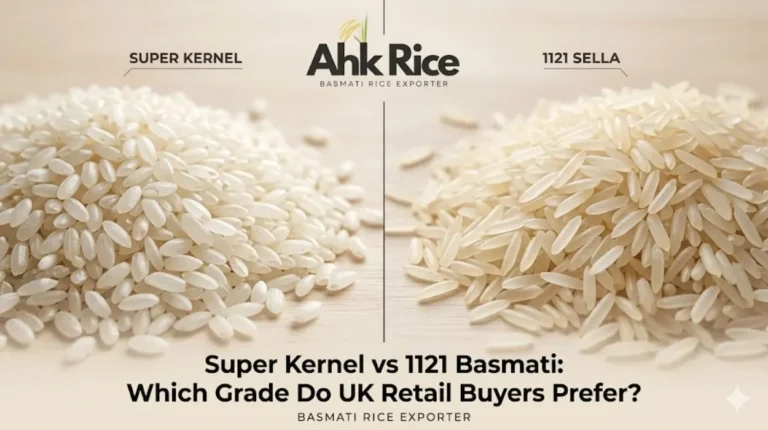
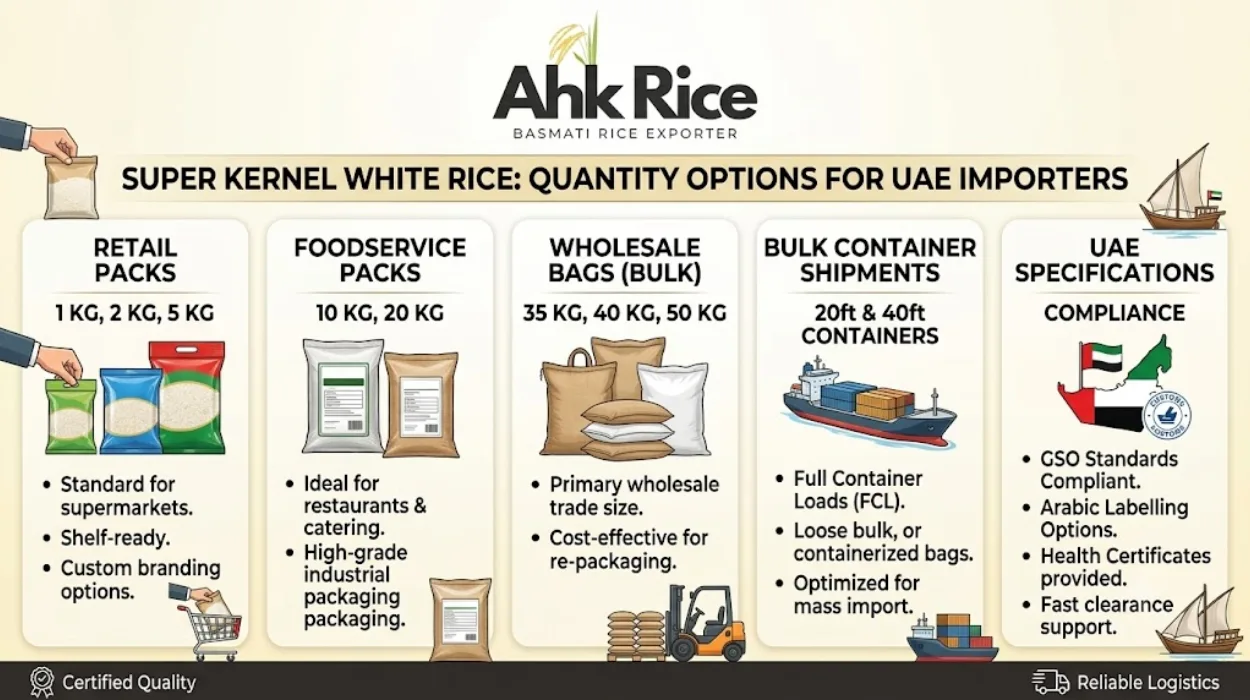
Super Kernel White Rice is a long-grain aromatic rice variety primarily cultivated in Punjab, Pakistan. It is known for its elongated grain structure, bright appearance, good cooking performance, and competitive pricing compared to premium Basmati varieties. Exporters such as AHK Rice process and supply this rice to wholesalers, distributors, retailers, and food-service businesses across multiple international markets.
What quality specifications define Super Kernel White Rice?
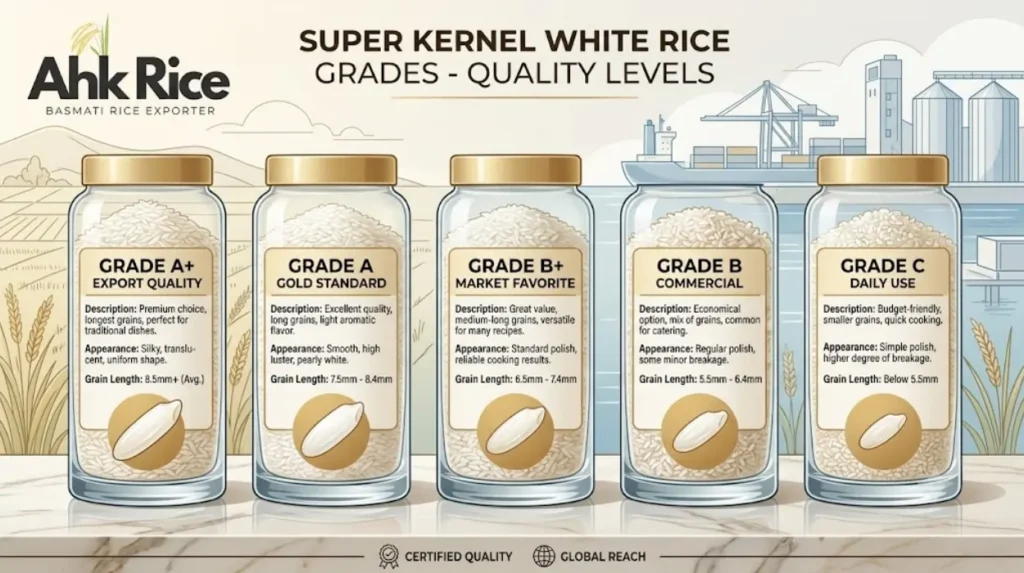
Super Kernel White Rice quality is determined by grain length, purity, moisture content, broken percentage, foreign matter limits, milling quality, and cooking performance. These specifications directly influence buyer acceptance, market suitability, storage life, and final consumer satisfaction across retail and wholesale channels.
Rice specifications provide measurable standards that allow buyers and suppliers to trade confidently across borders. Every shipment is evaluated against predefined parameters before export documentation is approved.
The most common specification elements include grain length, grain width, moisture percentage, broken grain ratio, chalky grain content, damaged kernels, foreign matter, milling degree, and color consistency. Buyers use these metrics to compare suppliers objectively.
Export-grade Super Kernel White Rice typically maintains moisture levels below 14%, ensuring safe transportation and longer storage stability. Lower moisture reduces the risk of mold development and quality deterioration during transit.
Color uniformity is equally important. Buyers expect polished white grains with minimal discoloration. Consistent appearance increases retail acceptance and strengthens brand positioning in competitive markets.
Super Kernel White Rice Specification Comparison
| Attribute | Premium Grade | Standard Grade |
|---|---|---|
| Grain Length | 7.0 mm+ | 6.6–7.0 mm |
| Moisture | Max 13% | Max 14% |
| Broken Rice | 2–5% | 5–15% |
| Foreign Matter | Near Zero | Low Tolerance |
| Damaged Kernels | Minimal | Limited |
| Color Uniformity | Excellent | Good |
| Cooking Performance | Superior Elongation | Moderate Elongation |
Premium grades command higher prices because they deliver better presentation, longer grain appearance, and more consistent cooking results.
What delivery timelines should importers expect for Super Kernel White Rice?
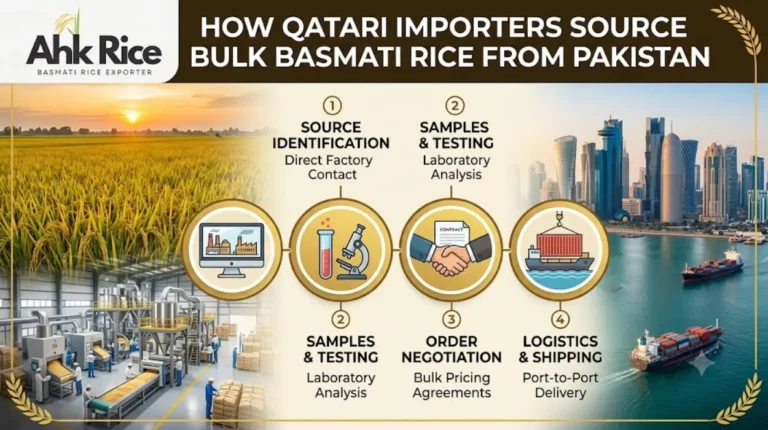
Most Super Kernel White Rice shipments require 15–40 days from order confirmation to destination arrival, depending on production schedules, packaging requirements, documentation processing, container availability, and shipping routes serving the importing country.
Delivery timelines begin long before a container leaves the port. Procurement planning starts with stock availability verification and production scheduling.
When ready stock is available, exporters can complete quality inspection, packaging, documentation, and container loading within one week. Customized packaging programs usually extend preparation timelines.
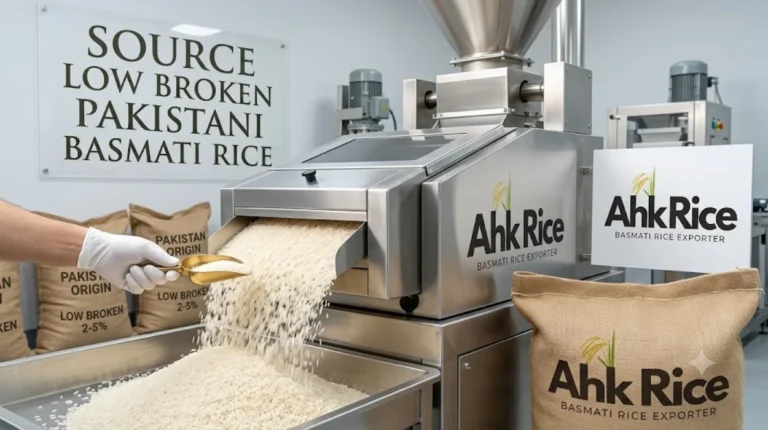
The export process includes cleaning, grading, polishing, laboratory testing, packaging, container stuffing, customs clearance, and vessel booking. Each stage contributes to total lead time.
Transit duration varies by destination region. Nearby markets generally receive shipments faster than distant destinations because of shorter maritime routes and fewer transshipment requirements.
Importers who maintain annual contracts often experience shorter lead times because production allocation and logistics planning are arranged in advance.
What are the available solutions for sourcing Super Kernel White Rice?
Importers can choose among spot purchasing, contract purchasing, seasonal procurement, distributor sourcing, or direct exporter partnerships. Each approach offers different advantages regarding price stability, quality consistency, delivery reliability, and supply chain control.
Spot purchasing remains common among smaller importers. Buyers purchase available inventory at prevailing market rates. This approach offers flexibility but increases exposure to price volatility and stock shortages.
Seasonal procurement involves purchasing larger quantities immediately after harvest and milling periods. Buyers often secure favorable pricing through this method.
Distributor sourcing reduces operational complexity because local distributors manage import logistics. However, distributors typically add margin costs that increase procurement expenses.
Contract purchasing establishes fixed supply commitments over defined periods. This method supports budgeting and inventory planning while improving delivery predictability.
Direct partnerships with exporters provide greater transparency into processing operations, quality controls, packaging customization, and production schedules. Businesses evaluating long-term procurement strategies often review supply programs that include guaranteed allocation and shipment commitments for international rice buyers before selecting a sourcing model.
How do different sourcing approaches compare?
Direct exporter sourcing generally provides the strongest combination of quality visibility, specification control, customization options, and cost efficiency, while distributors and spot markets offer convenience but reduce operational transparency and predictability.
Choosing the right procurement model depends on business size, purchasing frequency, and inventory objectives.
Large importers usually prioritize consistency and traceability. Small businesses often focus on flexibility and lower initial commitments.
Sourcing Method Comparison
| Factor | Spot Buying | Distributor | Direct Exporter |
|---|---|---|---|
| Price Stability | Low | Medium | High |
| Quality Visibility | Low | Medium | High |
| Custom Packaging | Limited | Limited | Extensive |
| Supply Assurance | Low | Medium | High |
| Cost Efficiency | Medium | Low | High |
Direct exporter relationships allow buyers to review production schedules, quality reports, packaging specifications, and shipment planning before orders are finalized.
Distributor-based purchasing simplifies procurement but reduces visibility into processing standards and inventory availability.
Which market regions prefer specific Super Kernel White Rice grades?
Middle Eastern buyers generally prefer premium long-grain specifications with low broken percentages, while African markets often prioritize competitive pricing and balanced quality grades suitable for large-scale consumption and distribution networks.
Regional preferences significantly influence purchasing decisions.
Middle East Market Preferences
Countries across the Gulf region frequently import premium-grade Super Kernel White Rice. Retailers and hospitality businesses prioritize visual appearance, grain length, aroma retention, and cooking performance.
The most requested specifications include:
- 2–5% broken rice
- High polish
- Uniform grain length
- Premium packaging
- Strong elongation after cooking
These characteristics support retail shelf appeal and food-service presentation requirements.
African Market Preferences
Many African buyers focus on affordability and volume efficiency. Standard export grades remain highly popular because they balance quality and cost.
Common preferences include:
- 5–15% broken rice
- Standard packaging formats
- Competitive landed cost
- Reliable availability
- Consistent cooking performance
This approach helps distributors serve mass-market demand effectively.
How do prices compare between grades and regions?
Price differences are primarily driven by grain quality, broken percentage, packaging specifications, shipping costs, destination requirements, and seasonal supply conditions rather than by rice variety alone.
Premium Super Kernel White Rice consistently commands higher prices because processing standards are stricter and yield losses during grading are greater.
Indicative Price Comparison Per Metric Ton
| Category | Typical Price Range |
|---|---|
| Premium Grade | Higher |
| Standard Grade | Moderate |
| Economy Grade | Lower |
Destination costs also vary significantly.
Middle Eastern markets often accept higher pricing in exchange for premium specifications and retail-ready packaging.
African importers typically prioritize competitive landed costs, making standard grades more commercially attractive.
Buyers should evaluate total landed cost rather than FOB price alone. Freight rates, customs duties, insurance, and local distribution expenses influence profitability.
How does shelf life compare across different quality levels?
Properly processed and stored Super Kernel White Rice generally maintains quality for 18–24 months, although moisture control, packaging standards, storage conditions, and handling practices significantly influence long-term product stability.
Shelf life depends primarily on moisture management and packaging quality.
Premium grades frequently demonstrate stronger storage performance because of stricter processing controls and lower contamination risks.
Shelf Life Comparison
| Grade | Expected Shelf Life |
|---|---|
| Premium Grade | Up to 24 Months |
| Standard Grade | 18–24 Months |
| Economy Grade | 12–18 Months |
Storage facilities should remain dry, ventilated, and protected from direct sunlight.
Humidity control is especially important because moisture exposure accelerates deterioration and reduces cooking quality.
Vacuum-sealed and high-barrier packaging systems provide additional protection for extended storage programs.
What are the pros and cons of each procurement strategy?
Every sourcing strategy offers trade-offs between flexibility, cost, control, and reliability. Buyers achieve better outcomes when procurement methods align with operational requirements and inventory management objectives.
Spot Purchasing
Advantages
- Flexible ordering
- No long-term commitment
- Suitable for trial orders
Disadvantages
- Price fluctuations
- Limited availability
- Reduced supply security
Distributor Procurement
Advantages
- Simplified purchasing
- Local inventory access
- Lower administrative workload
Disadvantages
- Higher costs
- Limited customization
- Less quality visibility
Direct Exporter Partnerships
Advantages
- Better quality control
- Competitive pricing
- Packaging customization
- Stronger supply planning
Disadvantages
- Larger order volumes
- More procurement coordination
- Greater logistics involvement
The best choice depends on organizational goals rather than a universally superior procurement model.
Which method works best for different business cases?
Large-volume importers benefit most from direct exporter partnerships, while smaller businesses often gain flexibility through distributors or spot purchases until demand patterns become more predictable and procurement volumes justify longer-term supply arrangements.
Decision Framework
| Business Need | Recommended Solution |
|---|---|
| Lowest Cost | Direct Exporter |
| Small Trial Order | Spot Purchase |
| Custom Packaging | Direct Exporter |
| Fast Local Availability | Distributor |
| Long-Term Stability | Contract Supply |
This framework helps buyers align procurement strategy with operational objectives.
Organizations focused on retail growth usually prioritize packaging flexibility and quality consistency.
Food-service operators often prioritize stable cooking performance and predictable replenishment schedules.
Wholesalers generally seek a balance between quality, availability, and pricing competitiveness.
What decision factors matter most before selecting a supplier?
The most important evaluation criteria include specification consistency, processing capability, packaging flexibility, documentation accuracy, shipment performance, inventory capacity, and the supplier’s ability to maintain quality across multiple production cycles.
Supplier assessment should extend beyond price discussions.
Quality consistency across shipments is often more valuable than obtaining the lowest available quotation.
Buyers should review laboratory reports, processing procedures, quality-control systems, packaging options, export documentation capabilities, and production capacity.
Shipment performance history also deserves attention because delayed deliveries disrupt inventory planning and customer commitments.
A structured evaluation process reduces procurement risk and improves long-term sourcing outcomes.
Super Kernel White Rice procurement decisions should be based on specifications, delivery timelines, regional preferences, shelf life requirements, and sourcing strategy rather than price alone. Buyers who understand grade differences, logistics planning, and market expectations can select procurement models that improve consistency, reduce risk, and support long-term growth.
Frequently Asked Questions
How long does Super Kernel White Rice take to reach international buyers?
Most export orders require 15–40 days from order confirmation to destination arrival. Production schedules, packaging customization, shipping routes, and customs processing determine the final timeline.
What moisture level is considered acceptable for export-grade Super Kernel White Rice?
Export-grade Super Kernel White Rice generally maintains moisture levels below 14%. Lower moisture improves storage stability and reduces transportation risks.
Which region prefers premium Super Kernel White Rice grades?
Middle Eastern markets commonly prefer premium grades with longer grain length, low broken percentages, superior appearance, and stronger cooking performance.
How long can Super Kernel White Rice be stored?
When properly packaged and stored in dry conditions, Super Kernel White Rice typically maintains quality for 18–24 months.
What sourcing model offers the best balance of cost and quality?
Direct exporter sourcing usually provides the strongest combination of quality visibility, specification control, packaging flexibility, and long-term cost efficiency.
What is the difference between premium and standard grades?
Premium grades feature longer grains, lower broken percentages, stronger appearance, and superior cooking performance, while standard grades focus on balancing quality and affordability.