Source Punjab-Origin Basmati Rice with Farm-to-Port Traceability for UAE Distribution
Punjab-origin Basmati with farm-to-port traceability is the practical solution for UAE distributors needing consistent grain specifications, documented sourcing, controlled processing, and shipment visibility. Here is why: Pakistan already supplies substantial Basmati volumes to the UAE, while Dubai requires imported food consignments to meet applicable safety and release requirements. Pakistan exported 149,092 MT of Basmati rice to the UAE in FY2024, valued at US$150 million. (source: Pakistan Bureau of Statistics, FY2023-24)
What is the best solution for sourcing traceable Basmati for UAE distribution?
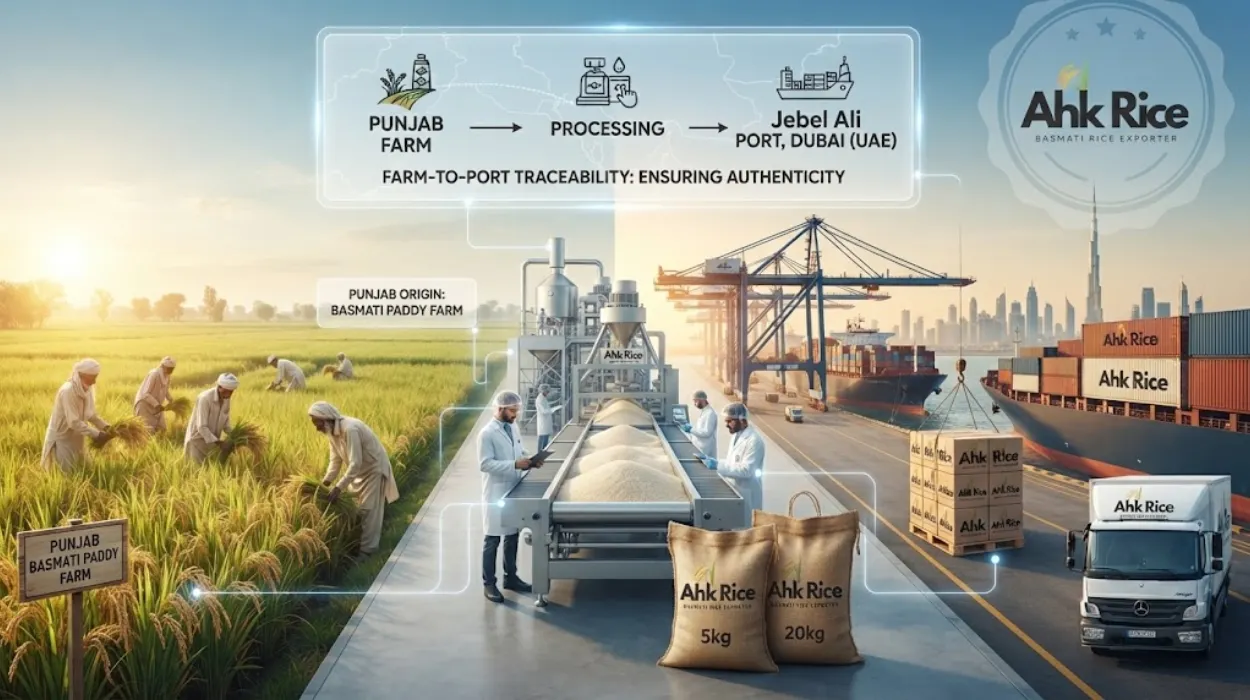
Punjab-origin sourcing, documented processing, pre-shipment inspection, and container-level traceability provide the strongest commercial control for UAE distribution. This approach connects cultivation, milling, grading, packing, export documentation, and port dispatch.
Where Pakistani Basmati rice is cultivated in Punjab explains the agricultural origin behind the supply chain. The Kalar belt is particularly relevant for buyers assessing traditional Basmati production zones.
Farm-level origin matters because grain characteristics begin before milling. Cultivation conditions influence grain length, aroma, maturity, and consistency. Buyers should therefore specify origin alongside variety and processing grade.
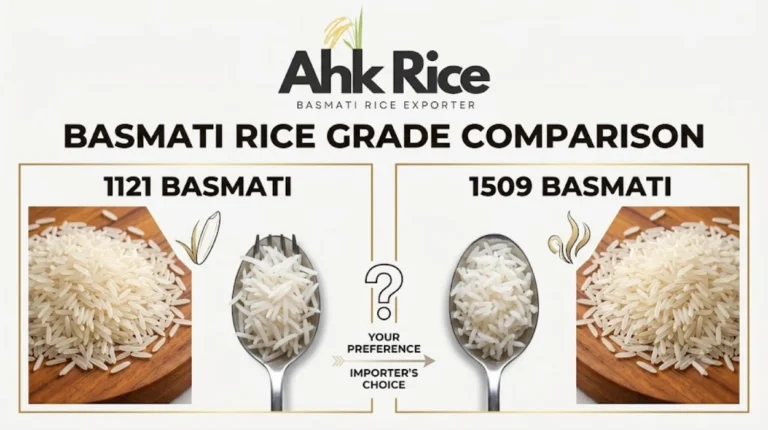
AHK Rice connects Punjab-origin sourcing with export preparation. Its commercial range includes 1121, Super Kernel, and 1509 Basmati. Each variety serves a different UAE distribution requirement.
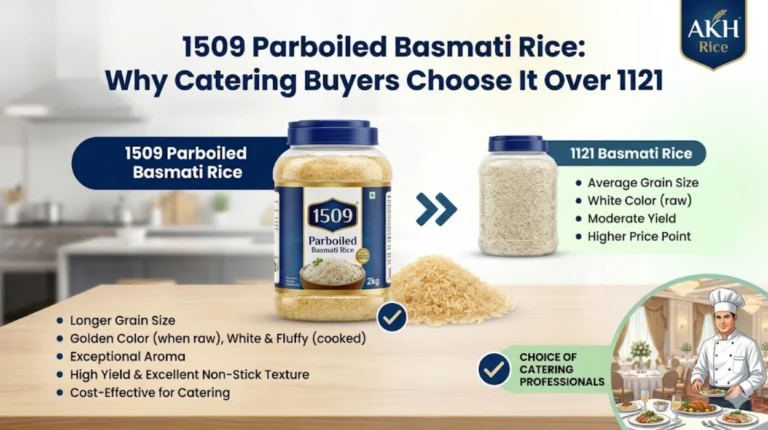
1121 Basmati fits premium retail, private-label, and foodservice programs requiring long grain presentation. Super Kernel targets aromatic Basmati positioning with traditional Punjab characteristics. 1509 Basmati supports volume-focused distribution and cost-sensitive purchasing.
For buyers comparing agricultural characteristics, how Punjab soil, water and climate influence Basmati grain length and aroma provides the relevant comparison context.
With Punjab origin established, the next decision is selecting a supplier that can control the complete export chain.
Why choose AHK Rice for Punjab-origin UAE supply?
AHK Rice combines Punjab sourcing, milling, grading, sorting, packaging, inspection, and export coordination into one documented supply workflow. This reduces the number of handoffs between origin and UAE delivery.
AHK Rice starts with sourcing suitable paddy from Punjab production areas. The supply program then moves through milling and grading according to the buyer’s approved specification.
AHK Rice can prepare commercial specifications around variety, grain length, broken percentage, moisture, processing type, packaging, and shipment quantity.
AHK Rice also supports container-ready preparation for international buyers. The objective is straightforward: approve the specification first, then reproduce that specification during commercial loading.
What does the traceability workflow include?
- Confirm the origin: Record Punjab sourcing and selected Basmati variety.
- Approve the specification: Confirm grain length, moisture, broken percentage, processing grade, and packing.
- Mill the paddy: De-husk, polish, and prepare the rice for grading.
- Grade the grain: Separate rice according to agreed commercial specifications.
- Sort the grain: Remove colour and physical defects through controlled sorting.
- Inspect the shipment: Verify the finished rice against the approved specification.
- Pack the order: Prepare retail, foodservice, or bulk export packaging.
- Load the container: Record the commercial shipment against the approved order.
- Dispatch the cargo: Coordinate export documentation, port handling, and shipping.
Dubai Municipality operates systems for food-product registration and imported-food consignment release. Its food-safety services cover imported food safety and local-market release procedures.
AHK Rice therefore treats documentation as part of the supply specification rather than a final administrative task.
With the supplier workflow defined, the next question is what a UAE distributor can expect from the finished shipment.
What results can UAE distributors expect?
UAE distributors can expect specification-led sourcing, documented export preparation, approved samples, and predictable shipment planning rather than generic rice procurement. The commercial result is stronger control before the container leaves Pakistan.
What shipping time should UAE buyers plan?
UAE sea shipments commonly require about 7–14 days of ocean transit from Karachi-area export operations, excluding origin and destination clearance. Actual timing depends on vessel schedules, port congestion, carrier routing, customs procedures, and destination handling.
A Dubai distributor should normally separate the timeline into four stages: sample approval, production, port dispatch, and ocean transit.
A practical planning example is a buyer approving a sample during week one. Production and packing can then proceed against the approved specification. Port loading follows after export documentation and inspection are completed.
For UAE distribution, allow additional time for destination clearance and food-release procedures. Dubai Municipality provides specific processes for releasing imported food consignments for sale in the local market.
What documentation supports traceability?
Commercial invoices, packing lists, bills of lading, certificates of origin, applicable health or phytosanitary documentation, and inspection records support shipment-level verification. Exact documents depend on the product, shipment structure, and UAE import requirements.
UAE government guidance for agricultural consignments identifies documents such as a phytosanitary certificate, customs declaration or bill of lading, certificate of origin where required, and invoice or contents list.
AHK Rice can align the export file with the agreed commercial specification before dispatch. This gives the UAE buyer a documented reference for receiving and checking the cargo.
With shipment controls established, the next decision is understanding sample and commercial pricing.
How much does a Punjab-origin Basmati sample and shipment cost?
The rice sample can be supplied free up to 20 kg, while the buyer pays applicable courier shipping and phytosanitary charges; commercial pricing depends on specification and volume. Sample charges therefore differ from the final container quotation.
What does the sample process include?
- Submit the requirement: Specify variety, processing type, grain length, packing, quantity, and UAE destination.
- Confirm the specification: Establish the target moisture, broken percentage, grain profile, and packaging.
- Prepare the sample: AHK Rice prepares up to 20 kg of Super Kernel Basmati for sampling.
- Arrange courier delivery: The buyer covers the courier cost to the UAE.
- Pay applicable charges: The buyer covers applicable phytosanitary charges.
- Inspect the sample: Check grain appearance, aroma, cooking performance, and physical specifications.
- Approve the sample: Confirm the approved commercial specification in writing.
- Request the quotation: Price the required quantity against the approved grade and delivery basis.
AHK Rice does not treat sample approval as a substitute for commercial inspection. The approved sample becomes the buyer’s reference point for the production order.
Which factors affect container pricing?
| Cost factor | Commercial impact |
|---|---|
| Basmati variety | 1121, Super Kernel, and 1509 have different market positioning |
| Processing | White, Steam, Sella, and other formats affect processing cost |
| Grain specification | Longer and more controlled grain profiles affect value |
| Broken percentage | Lower broken targets require tighter grading |
| Packaging | Retail and bulk formats carry different packaging costs |
| Quantity | Container volume changes the unit economics |
| Incoterm | FOB, CFR, CIF, or other terms change the delivered price |
| Destination | Freight, port, and clearance costs vary by shipment route |
AHK Rice can structure the quotation around the buyer’s approved specification instead of offering an undefined commodity price.
With the cost structure understood, the final step is moving from sample approval to container procurement.
How can UAE buyers get started with AHK Rice?
Start with the product specification, approve the physical sample, confirm packaging and quantity, then finalize inspection, documentation, Incoterm, and shipment schedule. This sequence reduces specification changes after production begins.
AHK Rice recommends starting with five commercial details: variety, processing grade, grain specification, packaging format, and target quantity.
A retail distributor may select 1121 for premium shelf positioning. A traditional Basmati distributor may select Super Kernel for aroma-led demand. A volume buyer may select 1509 for a cost-focused distribution program.
The buyer should then confirm the destination port and preferred Incoterm. Dubai-bound cargo commonly requires coordination between the exporter, carrier, customs broker, and local food-control process.
AHK Rice supports the transition from sample evaluation to commercial loading. The buyer receives a defined specification rather than an open-ended commodity quotation.
What is the final UAE sourcing decision?
Choose Punjab-origin Basmati when traceable sourcing, controlled processing, specification approval, and shipment documentation matter as much as the rice price. This model fits UAE importers, wholesalers, retailers, foodservice distributors, and private-label buyers.
AHK Rice provides a direct connection between Punjab-origin Basmati and international distribution requirements. The workflow covers sourcing, milling, grading, sorting, packing, inspection, documentation, loading, and dispatch.
AHK Rice also gives buyers a practical route to compare 1121, Super Kernel, and 1509 according to market positioning rather than choosing solely on price.
For a UAE distributor, the strongest purchasing decision is the specification that matches the intended sales channel, storage conditions, consumer expectations, and target landed cost.
AHK Rice can therefore serve as the single export-side coordination point for buyers seeking documented Punjab-origin Basmati supply.
With the specification, sample, compliance file, and logistics plan agreed, the order can move toward commercial shipment.
Frequently Asked Questions
Is Punjab-origin Basmati suitable for UAE distribution?
Punjab-origin Basmati fits UAE retail, wholesale, catering, and foodservice channels.
1121 supports premium long-grain positioning.
Super Kernel supports aroma-focused Basmati demand.
1509 supports volume-oriented distribution.
Final selection should follow the buyer’s approved specification.
How much does the AHK Rice sample cost?
AHK Rice can provide up to 20 kg of Super Kernel Basmati for sampling.
The rice sample itself is offered free under the stated sample program.
The buyer pays courier shipping to the UAE.
Applicable phytosanitary charges are also paid by the buyer.
Commercial shipment pricing is quoted separately.
How long does shipping to the UAE take?
Sea transit planning from Pakistan to the UAE commonly uses a 7–14 day working range.
This excludes production, port handling, customs clearance, and food-release procedures.
Carrier schedules can change the actual transit period.
Destination clearance adds additional time.
Buyers should confirm the sailing schedule before loading.
What documents are required for UAE rice imports?
Typical export files include the commercial invoice and packing list.
A bill of lading supports maritime shipment documentation.
A certificate of origin identifies the product origin where required.
Applicable phytosanitary or health documentation supports regulatory clearance.
The final document set depends on the shipment and UAE requirements.
Which Pakistani Basmati variety should UAE distributors choose?
1121 suits premium retail and private-label positioning.
Super Kernel suits traditional aroma-focused Basmati demand.
1509 suits cost-sensitive volume distribution.
Processing type also changes the commercial application.
The approved sample should determine the final purchasing specification.