How Export Inspections Verify Pakistan Rice Purity for Saudi Arabian Buyers
Pakistan rice export inspections provide the most reliable way to verify purity, quality, and regulatory compliance for Saudi Arabian buyers because independent testing, government certification, and internationally recognised inspection procedures confirm that exported rice matches contractual specifications before shipment.
Saudi Arabia imports significant volumes of Pakistani Basmati rice every year, making purity verification a critical part of international trade. Importers must ensure that every shipment complies with Saudi Food and Drug Authority (SFDA) requirements, phytosanitary regulations, and contractual quality standards. Before evaluating inspection methods, it helps to understand the Saudi import purity requirements for Pakistani Basmati rice, explained in our guide on:
What Purity Standards Must Pakistan Basmati Rice Meet Before Entering Saudi Arabia?
Among Pakistani exporters, AHK Rice’s Pakistan Basmati rice export services for Saudi Arabia demonstrate how structured processing, independent inspections, customised packaging, and export documentation work together to support consistent compliance. However, every importer should evaluate inspection systems objectively before selecting an export partner because inspection quality directly affects shipment acceptance, customs clearance, and long-term supply consistency.
| Export Inspection Specification | Government Verification | Third-Party Inspection | Combined Inspection System |
|---|---|---|---|
| Purity verification | Good | Excellent | Excellent |
| Foreign matter detection | Standard | Advanced | Advanced |
| Variety authentication | Moderate | Excellent | Excellent |
| Laboratory testing | Limited | Comprehensive | Comprehensive |
| Documentation reliability | High | High | Highest |
| Saudi compliance confidence | High | Very High | Highest |
| Buyer confidence | Good | Excellent | Highest |
Why are export inspections necessary for Pakistan rice shipped to Saudi Arabia?
Export inspections verify rice purity, confirm contractual specifications, identify contamination risks, validate export documentation, and ensure compliance with Saudi Arabian food safety regulations before shipment. These inspections reduce commercial disputes, improve customs clearance efficiency, and protect both exporters and importers from costly quality-related issues.
Export inspection is a systematic quality verification process performed before rice leaves Pakistan. It confirms that the shipment meets agreed commercial specifications and regulatory standards.
Rice purity refers to the percentage of grains belonging to the declared variety without contamination from other rice varieties, broken grains beyond specification, stones, weed seeds, insects, dust, or foreign materials.
Saudi Arabian importers rely on inspection reports because imported food products undergo regulatory scrutiny before entering the local market. Inspection certificates provide objective evidence that contractual quality standards have been achieved.
For exporters, inspection also protects commercial credibility. Independent verification reduces disagreements regarding grain quality after delivery.
What purity standards are evaluated during export inspections?
Professional export inspections evaluate varietal purity, broken grain percentage, moisture content, damaged kernels, foreign matter, chalkiness, immature grains, pest contamination, colour consistency, grain length, milling quality, packaging integrity, and compliance with contractual export specifications required by Saudi buyers.
Rice purity involves more than visual appearance.
Inspectors first confirm that the shipment contains the declared rice variety. Mixing premium Basmati with lower-value varieties reduces commercial value and violates purchase contracts.
Laboratories also evaluate moisture content because excessive moisture increases the risk of mould development during long-distance shipping.
Foreign matter inspection identifies stones, dust, husks, straw fragments, weed seeds, and other contaminants that should not be present in export-grade rice.
Broken grain percentages are measured according to the contract. Premium Saudi buyers often purchase lower broken percentages for retail markets, while food service operators may accept higher broken percentages depending on price.
Laboratory analysis also examines insect damage, fungal contamination, and storage conditions.
What inspection solutions are available for Pakistan rice exports?
Pakistan rice exporters generally use government inspections, accredited independent inspection agencies, integrated laboratory testing, or combined quality assurance systems. The combined approach delivers the highest confidence because multiple verification stages reduce inspection errors and strengthen export documentation.
Several inspection models are available.
Government inspection
Government authorities verify export documentation, phytosanitary compliance, and official certification.
This approach satisfies mandatory export requirements.
However, government inspections may not always include extensive laboratory testing requested by premium buyers.
Independent inspection agencies
International inspection companies conduct detailed sampling and laboratory analysis.
These inspections often include:
- Purity testing
- Moisture analysis
- Grain classification
- Contamination detection
- Packaging inspection
- Weight verification
Independent inspection reports provide additional confidence for Saudi importers.
Exporter quality management systems
Large exporters operate internal laboratories before requesting external inspections.
Internal quality control reduces the likelihood of shipment rejection.
Combined inspection systems
The strongest solution combines:
- Internal quality control
- Accredited laboratory testing
- Government certification
- Third-party inspection
This layered verification process minimises export risk.
How do different export inspection approaches compare?
Different inspection approaches vary in testing depth, documentation strength, detection capability, laboratory accuracy, buyer confidence, and regulatory assurance. Multi-stage inspection systems consistently provide the most reliable verification because they combine operational quality control with independent certification.
Inspection methods differ in both scope and reliability.
Government inspections primarily verify legal export requirements.
Third-party inspections focus on commercial quality specifications.
Exporter laboratories continuously monitor production quality.
Combined systems integrate all three.
Saudi premium retailers generally prefer exporters using multiple verification stages because the inspection record provides stronger evidence of shipment consistency.
Which rice grades do Saudi and GCC buyers usually prefer?
Saudi retail distributors generally prioritise premium extra-long Basmati grades with high varietal purity, while broader GCC wholesale markets purchase both premium and commercial grades depending on retail positioning, hospitality demand, and budget requirements.
Although Saudi Arabia belongs to the GCC, purchasing behaviour differs between retail-focused Saudi importers and regional wholesale buyers.
| Market Region | Preferred Grade | Typical Purity Expectation | Primary End Use |
|---|---|---|---|
| Saudi Arabia | Premium Super Kernel & 1121 Basmati | Very High | Retail, premium supermarkets, hospitality |
| Wider GCC Markets | Premium and Commercial Basmati Grades | High | Wholesale distribution, restaurants, institutional catering |
Saudi supermarkets typically favour highly uniform grain appearance, consistent cooking quality, and excellent aroma.
Regional wholesalers serving hotels or foodservice operators may balance purity requirements with commercial pricing.
How is rice purity verified during laboratory testing?
Laboratory testing verifies rice purity through representative sampling, microscopic examination, physical grading, moisture analysis, foreign matter measurement, grain dimension testing, damaged kernel identification, and documented reporting that supports export compliance for international buyers.
Sampling represents the entire shipment rather than individual bags.
Inspectors collect samples using internationally recognised sampling procedures.
Laboratories then perform:
- Grain measurement
- Variety identification
- Moisture analysis
- Broken grain calculation
- Foreign material separation
- Visual grading
- Damage assessment
Results are documented in inspection certificates accompanying export documentation.
How do export prices compare across different purity levels?
Higher purity rice commands stronger export pricing because buyers pay for consistency, lower contamination risk, and premium market acceptance. Commercial grades remain competitive where affordability outweighs maximum grain uniformity.
Approximate 2026 export pricing illustrates how purity affects commercial value.
| Export Category | Typical Purity | Approximate FOB Price (USD/MT) |
|---|---|---|
| Commercial Basmati | Standard Export Grade | 920–1,050 |
| Premium Super Kernel Basmati | High Purity | 1,080–1,240 |
| Premium 1121 Basmati | Extra High Purity | 1,180–1,360 |
Actual pricing depends on harvest conditions, global demand, exchange rates, packaging specifications, shipment volume, and contractual terms.
How does shelf life compare after proper export inspection?
Proper inspection improves storage reliability by ensuring acceptable moisture levels, reducing contamination risks, and confirming packaging quality. Shelf life depends on storage conditions, but inspection significantly reduces deterioration during international transportation.
| Rice Category | Properly Inspected Shelf Life |
|---|---|
| White Basmati Rice | Up to 24 months |
| Steam Basmati Rice | Up to 24 months |
| Sella (Parboiled) Basmati | Up to 24 months |
| Brown Basmati Rice | Approximately 12 months |
Cool, dry storage with appropriate packaging remains essential after inspection.
What are the advantages and disadvantages of different inspection methods?
Every inspection method offers distinct strengths. Comprehensive inspection systems provide the highest reliability, while simpler inspection models reduce costs but may offer less detailed verification for premium export markets.
Government inspection
Advantages
- Official export compliance
- Mandatory documentation
- Recognised by authorities
Limitations
- Less extensive laboratory evaluation
- May not satisfy premium buyer requirements alone
Independent inspection
Advantages
- Detailed laboratory reports
- Strong commercial credibility
- Objective third-party verification
Limitations
- Additional inspection costs
- Longer coordination process
Internal quality control
Advantages
- Continuous production monitoring
- Faster corrective actions
- Supports consistency
Limitations
- Less independent
- Buyers often request external verification
Combined inspection
Advantages
- Maximum confidence
- Strongest documentation
- Lower rejection risk
Limitations
- Higher operational investment
Which inspection method works best for different importing situations?
Inspection requirements vary according to shipment value, customer expectations, retail positioning, and contractual obligations. Matching inspection intensity with commercial objectives produces the most efficient balance between quality assurance and export costs.
| Buyer Situation | Recommended Inspection Approach | Reason |
|---|---|---|
| Premium supermarket importer | Combined inspection system | Highest consistency and documentation |
| Hospitality distributor | Third-party inspection | Strong commercial verification |
| Government procurement | Government + laboratory certification | Regulatory confidence |
| Wholesale commercial buyer | Government inspection with internal QC | Cost-effective compliance |
| Long-term supply contracts | Integrated inspection programme | Consistent shipment quality |
Which factors should Saudi Arabian buyers evaluate before selecting an exporter?

Saudi importers should evaluate inspection transparency, laboratory accreditation, certification quality, processing controls, traceability, export experience, packaging capability, documentation accuracy, and shipment consistency rather than focusing only on product pricing.
Inspection reports should identify:
- Sampling methods
- Laboratory procedures
- Purity percentages
- Moisture levels
- Broken grain percentages
- Foreign matter limits
- Packaging compliance
Importers should also verify whether inspection agencies are internationally recognised.
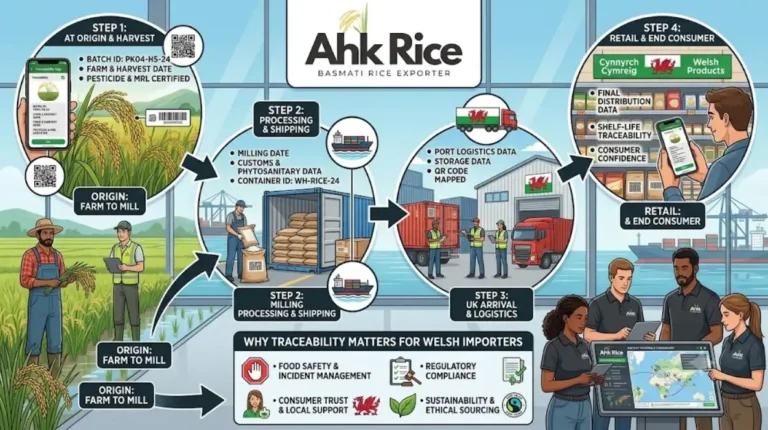
Exporter traceability systems further strengthen confidence because every production stage can be documented.
Long-term consistency often proves more valuable than isolated low-price offers.
Export inspections remain one of the most important safeguards in Pakistan–Saudi Arabia rice trade. They verify purity, confirm contractual specifications, reduce import risks, and strengthen confidence between exporters and buyers. Government certification, independent laboratory testing, and integrated quality management each contribute to shipment reliability, but combined inspection systems consistently provide the highest level of assurance for premium Saudi Arabian imports.
For readers who are comparing suppliers after understanding inspection standards, the most appropriate place to continue their evaluation is with a guide explaining:
Frequently Asked Questions
What documents prove Pakistan rice purity for Saudi Arabian imports?
Exporters typically provide inspection certificates, phytosanitary certificates, certificate of origin, laboratory test reports, and quality certificates to verify rice purity and compliance with Saudi import requirements.
How is rice purity measured during export inspections?
Rice purity is measured by analysing varietal consistency, foreign matter, broken grain percentage, moisture content, damaged kernels, and other quality parameters through laboratory testing and representative sampling.
Why do Saudi Arabian buyers request third-party inspection reports?
Third-party inspection reports provide independent verification of rice quality, purity, and contractual specifications, helping buyers reduce risks and ensure shipments meet agreed standards before export.
Which Pakistan Basmati rice varieties are most commonly exported to Saudi Arabia?
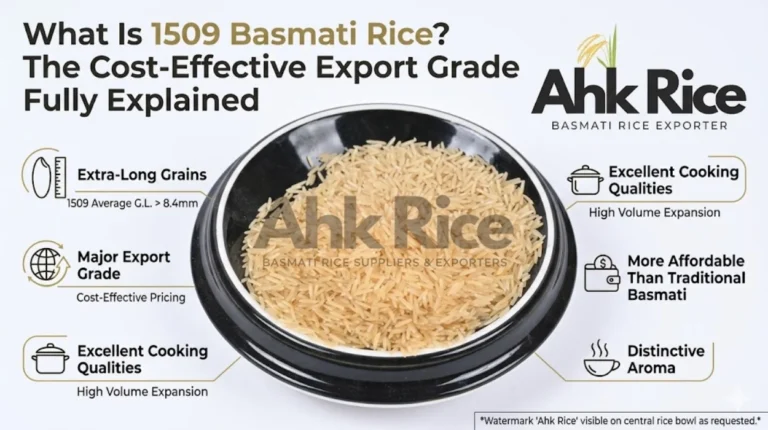
The most commonly exported varieties include 1121 Basmati Rice, Super Kernel Basmati Rice, and 1509 Basmati Rice, depending on buyer preferences, market segment, and budget.
Can export inspections reduce shipment rejection risks?
Yes. Comprehensive export inspections identify quality issues before shipment, allowing corrective actions that significantly reduce the likelihood of customs delays, quality disputes, and shipment rejection.
How often should rice exporters perform quality inspections?
Professional exporters perform inspections throughout processing, before packaging, and prior to shipment to maintain consistent quality and ensure compliance with international export standards.