How Ivory Coast Rice Distributors Import from Pakistan in 2026
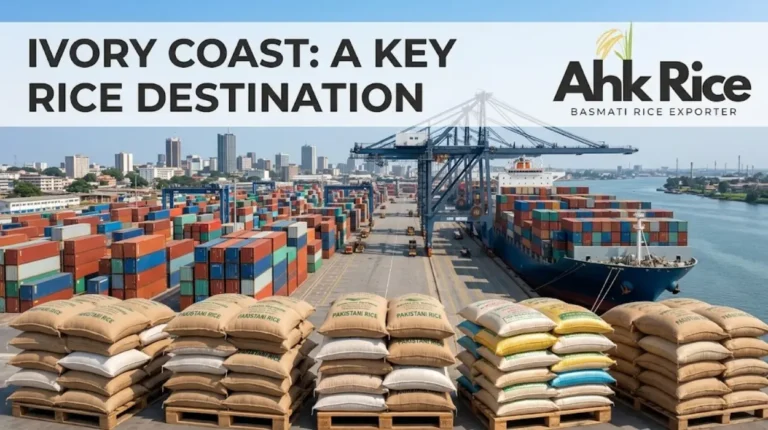
Ivory Coast rice distributors import from Pakistan because Pakistani suppliers provide consistent quality, multiple processing grades, competitive export pricing, and reliable shipping to West Africa. Here is why: Pakistan remains one of the world’s largest rice exporters, offering Basmati and non-Basmati varieties that match the requirements of wholesalers, supermarkets, and food service buyers across Ivory Coast.
Rice demand continues to grow in Ivory Coast due to population growth, urbanization, and increasing consumption of imported rice. Distributors require dependable suppliers, predictable shipment schedules, and rice specifications that meet local consumer preferences. Buyers researching sourcing options can first understand the broader market through our guide on Pakistan’s growing role in supplying West African rice markets.
Pakistan supplies several rice categories to West Africa. AHK Rice’s Pakistani Basmati rice export services include sourcing, milling, grading, packaging, documentation, and shipment coordination for international buyers. AHK Rice operates from Punjab and supplies multiple rice varieties to importers in more than 15 countries.
What are the available solutions for Ivory Coast rice distributors?
Direct factory sourcing, export trading companies, procurement agents, and consolidated container programs represent the four primary import solutions available in 2026.
Rice distributors must first choose a sourcing model. Each model affects pricing, quality control, shipment volume, and supplier communication.
Direct Factory Sourcing
Direct factory sourcing allows distributors to buy directly from rice mills in Pakistan.
This approach reduces intermediary costs. Buyers gain greater visibility into processing methods, packaging options, and quality standards. Large distributors importing multiple containers monthly typically select this model.
Export Trading Companies
Export trading companies manage procurement, quality control, documentation, and logistics.
This model simplifies purchasing. Smaller distributors often use export companies because they gain access to multiple rice grades through a single supplier relationship.
Procurement Agents
Procurement agents represent the buyer inside Pakistan.
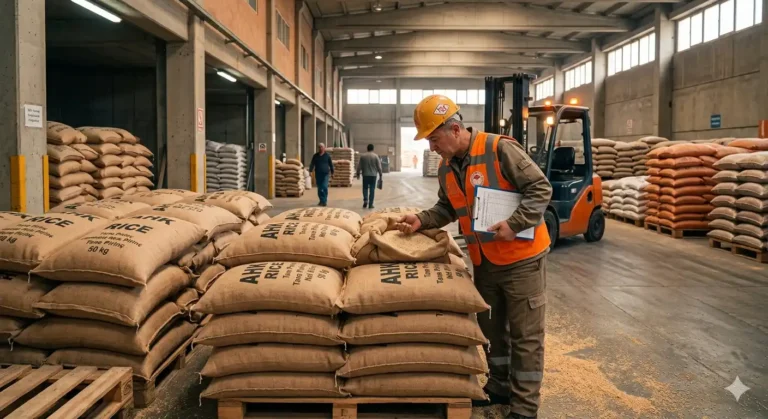
Agents inspect factories, verify quality, negotiate pricing, and supervise loading. Importers entering the Pakistani market often use agents during their first purchasing cycles.
Consolidated Container Programs
Consolidation combines multiple rice products into one shipment.
This model helps distributors test different varieties before committing to large-volume contracts. Importers can evaluate market response while reducing inventory risk.
With the available sourcing solutions established, the next question is how these approaches compare in practical importing situations.
How do different import approaches compare?
Direct factory sourcing delivers the lowest cost, while export companies provide the simplest management process and procurement agents provide the highest independent oversight.
H3: Import Method Comparison
H4: Specification Comparison Table
| Attribute | Direct Factory | Export Company | Procurement Agent | Consolidation Program |
|---|---|---|---|---|
| Cost per MT | Lowest | Medium | Medium-High | High |
| Supplier Control | Highest | Medium | High | Low |
| Quality Visibility | High | Medium | Very High | Medium |
| Documentation Support | Medium | High | Medium | High |
| Minimum Volume | High | Medium | Medium | Low |
| Lead Time | Fast | Fast | Medium | Medium |
| Market Testing Ability | Low | Medium | Medium | High |
Direct sourcing reduces procurement costs because distributors communicate directly with mills. Export companies reduce operational complexity because documentation and shipment coordination remain centralized.
Procurement agents create additional oversight because they inspect quality before loading. Consolidation programs improve flexibility because buyers can evaluate several grades within a single shipment.
Price Comparison by Rice Category
Rice pricing changes according to grade, processing type, crop quality, and freight conditions.
| Rice Type | Typical Export Range (USD/MT) |
|---|---|
| IRRI-6 White Rice | $420–500 |
| 1509 Steam Rice | $700–850 |
| Super Kernel Basmati | $850–1,050 |
| 1121 Steam Basmati | $950–1,250 |
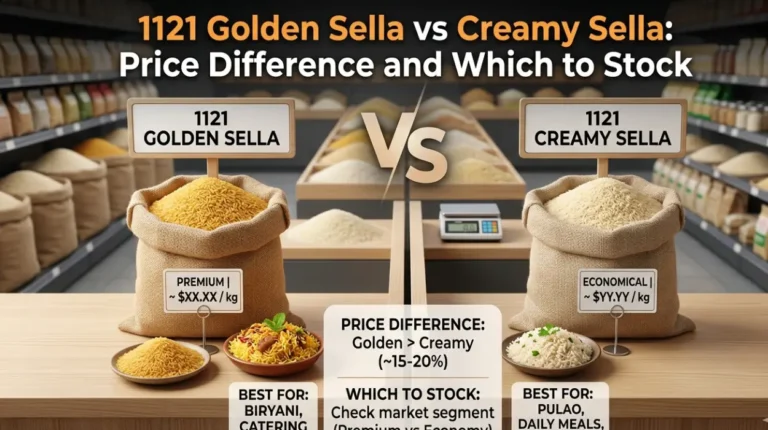
| 1121 Golden Sella | $1,050–1,350 |
Price differences affect distributor margins. Premium Basmati products target supermarkets and hospitality sectors. White rice products target mass-market distribution channels.
Which method works best for different cases?
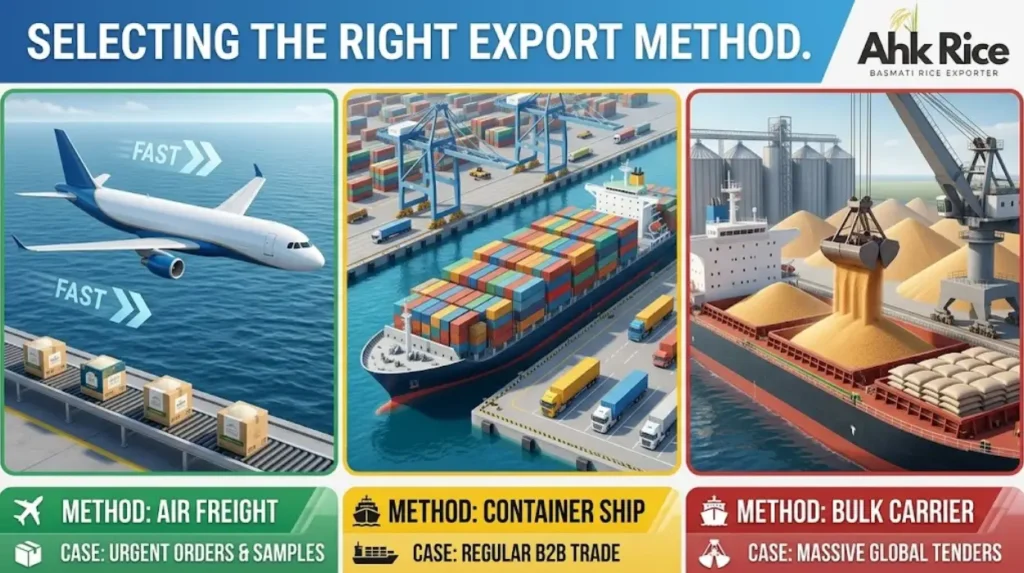
Large distributors benefit from direct sourcing, while emerging importers achieve better results through export companies or procurement-assisted purchasing.
West African Wholesale Distributors
Wholesale distributors prioritize container volume and procurement efficiency.
Direct factory sourcing works best because high-volume buyers can negotiate annual contracts and specification requirements.
Supermarket Supply Chains
Retail-focused distributors prioritize consistency.
Export companies often provide better support because packaging, labeling, and quality verification remain standardized.
New Market Entrants
New importers prioritize risk reduction.
Procurement agents provide additional inspection layers before shipment. This reduces the likelihood of specification disputes.
Product Testing Programs
Distributors entering premium rice categories prioritize flexibility.
Consolidated shipments allow testing of multiple grades before expanding purchases.
Regional Preference Comparison
West Africa
West African distributors frequently prefer:
- 1121 Steam Rice
- 1509 Steam Rice
- IRRI White Rice
- Super Kernel Basmati
These products balance affordability and cooking performance.
Gulf Re-Export Markets
Distributors supplying Gulf-linked retail networks frequently prefer:
- 1121 Golden Sella
- Premium 1121 Steam
- Extra Long Grain Basmati
These grades emphasize grain elongation and visual appearance.
With the most suitable sourcing methods identified, the next question involves evaluating the strengths and weaknesses of each option.
What are the pros and cons of each importing solution?
Every sourcing model creates trade-offs between cost, control, flexibility, and operational complexity.
Direct Factory Sourcing
Advantages
- Lower procurement cost
- Greater specification control
- Direct communication
- Faster issue resolution
Disadvantages
- Higher minimum volumes
- Greater management responsibility
- More supplier verification requirements
Example: A distributor importing ten containers monthly benefits from lower pricing and direct quality management.
Export Trading Companies
Advantages
- Simplified procurement
- Centralized documentation
- Packaging support
- Faster onboarding
Disadvantages
- Slightly higher pricing
- Reduced mill visibility
Example: A supermarket distributor importing two containers monthly gains efficiency through a single supplier relationship.
Procurement Agents
Advantages
- Independent inspections
- Supplier verification
- Negotiation support
Disadvantages
- Additional service fees
- Longer coordination process
Example: A first-time importer reduces supplier risk through third-party inspections.
Consolidation Programs
Advantages
- Low entry volume
- Multiple product testing
- Inventory flexibility
Disadvantages
- Higher per-unit cost
- Limited customization
Example: A distributor testing premium Basmati categories gains market insight before scaling purchases.
With the strengths and weaknesses evaluated, the final consideration involves selecting decision criteria.
What decision factors should Ivory Coast rice distributors evaluate?
Supplier reliability, rice grade suitability, logistics performance, shelf life requirements, and total landed cost determine import success.
H3: Shelf Life Comparison
| Rice Type | Typical Shelf Life |
|---|---|
| White Rice | 12–18 Months |
| Steam Rice | 18–24 Months |
| Golden Sella Rice | 24 Months |
| Premium Aged Basmati | 24+ Months |
Golden Sella lasts longer than Steam rice. In high-temperature storage environments common across West Africa, Golden Sella maintains quality longer. Supermarket distributors benefit from this extended storage capability.
H3: Shipping Time Comparison
| Route | Average Transit Days |
|---|---|
| Karachi to Abidjan | 25–35 Days |
| Karachi to San Pedro | 30–40 Days |
| Karachi to Tema | 22–32 Days |
| Karachi to Dakar | 25–35 Days |
Transit time influences inventory planning. Importers maintaining safety stock experience fewer supply disruptions.
Decision Framework Table
| Decision Factor | Priority for Large Distributor | Priority for New Importer |
|---|---|---|
| Lowest Cost | High | Medium |
| Supplier Control | High | Medium |
| Quality Verification | High | Very High |
| Flexibility | Medium | High |
| Documentation Support | Medium | Very High |
Supplier evaluation remains the most important factor. Reliable mills consistently inspect, test, certify, load, and dispatch rice according to agreed specifications.
The importing process becomes significantly more predictable when distributors align sourcing models with operational requirements and target market expectations.
Frequently Asked Questions
How do Ivory Coast distributors find Pakistani rice suppliers?
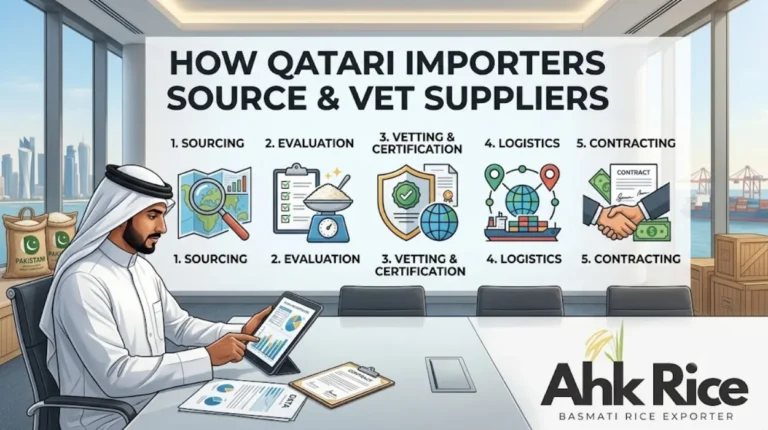
Distributors identify suppliers through export associations, trade exhibitions, procurement agents, and verified exporter networks. Supplier verification should include quality certifications, export history, and shipment references.
Which Pakistani rice varieties are most popular in Ivory Coast?
1121 Steam Rice, Super Kernel Basmati, 1509 Steam Rice, and IRRI white rice remain among the most commonly imported varieties.
What documents are required for rice imports from Pakistan?
Commercial Invoice, Packing List, Bill of Lading, Certificate of Origin, Phytosanitary Certificate, and Quality Inspection Certificate are commonly required.
How long does shipping take from Pakistan to Ivory Coast?
Most shipments arrive within 25–35 days depending on port congestion, carrier schedules, and routing.
Which sourcing model offers the lowest cost?
Direct factory sourcing generally provides the lowest per-metric-ton cost because intermediary margins are removed.
What is the biggest risk when importing rice?
Supplier inconsistency creates the greatest risk. Quality verification before loading reduces specification disputes and protects distributor margins.