How Turkish Rice Importers and Wholesalers Source from Pakistan in 2026
Turkish rice importers and wholesalers should source Pakistani rice through a specification-controlled process covering grade, sample approval, inspection, documentation, pricing, and shipping. Here is why: Pakistan and Türkiye discussed higher rice trade volumes in January 2026, including better use of an existing 18,000-tonne tariff-rate quota.
Turkey imported about US$4.88 million of rice from Pakistan in 2025, while Pakistan’s reported exports to Turkey reached US$3.59 million. Different customs reporting methods explain the difference between the two figures.
For market context, Turkish buyers can review the Pakistani Basmati rice demand and consumer trends in Turkey before fixing a procurement specification.
What is the best solution for Turkish rice importers sourcing from Pakistan?
The best solution is a specification-based purchase with sample approval, inspection, documented quality, and confirmed CIF or FOB terms. Here is why: each shipment must match the buyer’s intended grade, moisture, broken percentage, packaging, quantity, and destination.
AHK Rice supplies Pakistani Basmati varieties including 1121, Super Kernel, and 1509. These varieties serve different commercial requirements across retail, wholesale, foodservice, and restaurant channels.
1121 focuses on long grain and premium presentation. Super Kernel emphasizes traditional Basmati aroma. 1509 provides long-grain commercial performance for price-sensitive volume procurement.
Turkish buyers should define these points before accepting a quotation:
- Specify the variety and processing grade.
- Specify raw grain length and broken percentage.
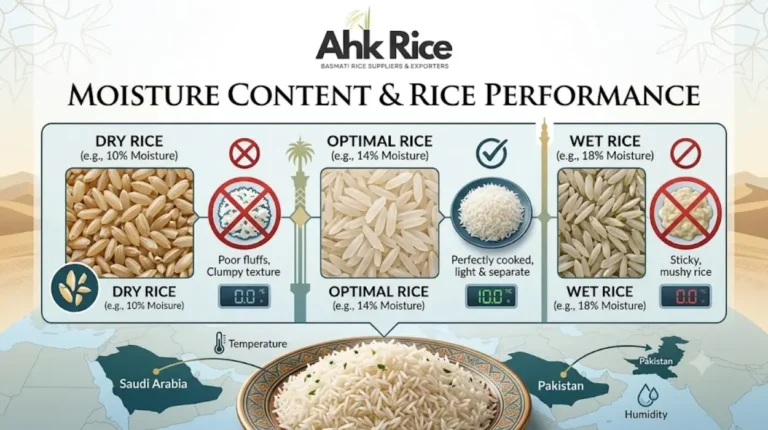
- Specify maximum moisture and purity requirements.
- Specify packaging size and private-label requirements.
- Specify quantity and destination port.
- Specify FOB, CFR, or CIF responsibility.
- Specify inspection and laboratory requirements.
This approach prevents two suppliers from quoting apparently identical rice with materially different specifications.
The next step is selecting an exporter capable of maintaining that specification from processing through loading.
Why choose AHK Rice for Turkish rice sourcing?
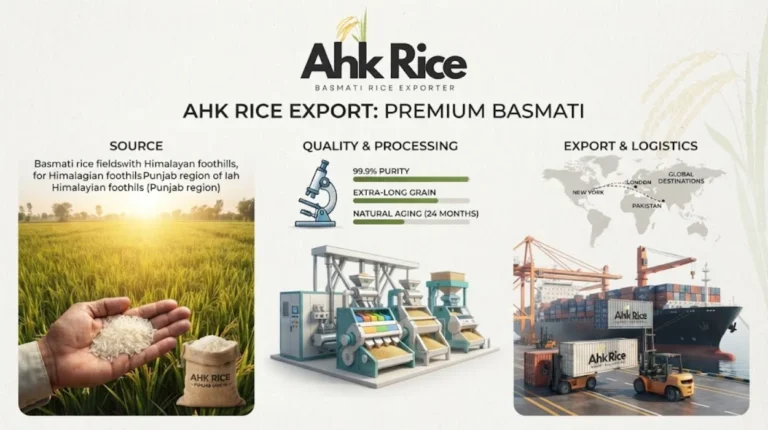
AHK Rice connects sourcing, processing, grading, sorting, packaging, documentation, and shipment coordination through one export workflow. Here is why: Turkish importers need continuity between the approved sample and the commercial container.
AHK Rice operates from Punjab, Pakistan, the principal region associated with Pakistani Basmati cultivation. Its export portfolio includes 1121, Super Kernel, and 1509 Basmati rice.
AHK Rice can structure supply around wholesale or retail requirements. Packaging can be aligned with commercial bags or buyer-specific private-label requirements.
AHK Rice also supports the commercial sequence from specification review through sample evaluation and export coordination. This reduces the need to manage separate suppliers for processing, packing, documentation, and shipment preparation.
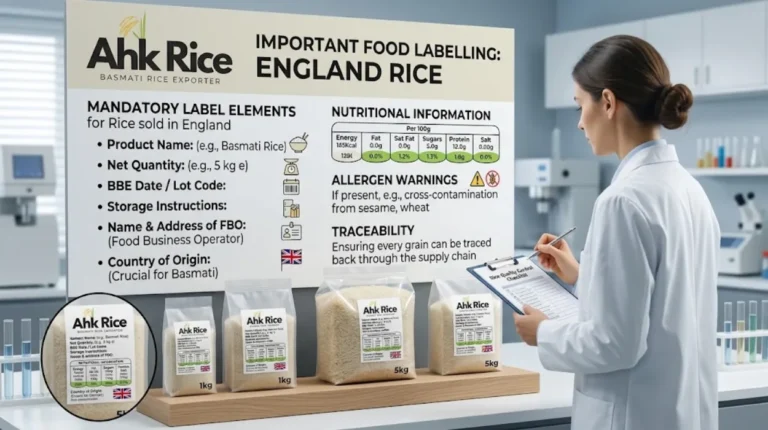
Turkey applies official controls to imported plant-origin food products. These controls can include document checks, identity checks, physical inspection, sampling, and laboratory analysis according to risk and applicable Turkish Food Codex requirements.
A specification-controlled supplier therefore matters beyond product quality. The commercial documents should describe the same rice that reaches the Turkish port.
AHK Rice gives the buyer a defined basis for discussing grade, quantity, packing, destination, inspection, and commercial terms.
With supplier capability established, the next decision is the measurable result Turkish buyers should expect.
What results can be expected from specification-controlled sourcing?
Buyers can expect more consistent rice quality, clearer landed-cost calculations, fewer specification disputes, and better shipment planning. Here is why: measurable requirements create a repeatable purchasing standard across samples, contracts, and containers.
The first result is product consistency. Grain length, moisture, broken percentage, processing type, and packaging can be written into the commercial specification.
The second result is cooking consistency. Turkish retail and foodservice buyers can select White, Steam, or Sella processing according to their target application.
The third result is procurement consistency. A buyer can compare quotations using equivalent specifications instead of comparing variety names alone.
AHK Rice can also structure supply around Turkish port requirements. Mersin, Istanbul, and Izmir represent relevant destinations for Pakistani rice shipments, while inland delivery adds further transportation time.
The fourth result is better inventory planning. A Turkish wholesaler can combine production time, inspection, vessel booking, ocean transit, customs clearance, and inland delivery into one procurement schedule.
The fifth result is stronger private-label control. A buyer can approve packaging specifications before commercial loading rather than changing the product after arrival.
These outcomes make specification control the core of the buying decision rather than the lowest advertised FOB price.
How many shipping days should Turkish buyers plan from Pakistan?
Turkish importers should plan roughly 12–25+ days for ocean movement, depending on the destination port and routing. Here is why: carrier schedules, transshipment, congestion, customs clearance, and inland transport can change the complete delivery window.
| Turkish destination | Indicative planning window | Main variables |
|---|---|---|
| Mersin | 12–20+ days | Vessel routing and transshipment |
| Istanbul | 15–25+ days | Sailing schedule and port handling |
| Izmir | 15–25+ days | Carrier schedule and port handling |
| Inland Turkey | Transit plus additional days | Customs and trucking |
Current route information identifies Karachi-to-Mersin movement as a practical commercial route for Pakistani rice. Actual schedules should be confirmed before contracting.
AHK Rice should therefore plan shipment dates around production, packaging, inspection, documentation, container loading, vessel booking, and port arrival.
A wholesaler carrying several months of stock should place replenishment orders before inventory reaches its minimum level. This creates room for production and vessel scheduling.
The shipping window establishes the logistics requirement, while the sample process establishes whether the rice itself meets the buyer’s expectations.
How does the sample process work and what does it cost?
The sample process should start with a fixed specification and end with approval of the same specification used for the commercial order. Here is why: a sample is useful only when its grade, processing, moisture, broken percentage, and packaging represent the planned shipment.
AHK Rice can provide samples of up to 20 kg for evaluation. The buyer covers courier shipping and applicable sample-related certification charges.
A practical sample process is:
- Submit the required variety, grade, quantity, packaging, and destination.
- Confirm grain length, moisture, broken percentage, and other requirements.
- Request the representative sample.
- Dispatch the sample through the agreed courier.
- Inspect dry-grain appearance, uniformity, aroma, and broken percentage.
- Cook the sample using a consistent preparation method.
- Test laboratory parameters when required.
- Approve the commercial specification.
- Confirm the final quotation and Incoterm.
- Start bulk processing after commercial approval.
The rice sample itself can be treated separately from logistics expenses. Courier charges depend on weight, dimensions, destination, service level, and carrier rates.
Phytosanitary documentation can also create a sample cost where required. Laboratory testing adds another variable when the buyer requests moisture, purity, residue, or other analysis.
AHK Rice should therefore provide the buyer with a shipment-specific sample arrangement instead of presenting an assumed courier price.
The commercial order should reproduce the approved sample specification.
What factors affect the final Pakistan-to-Turkey rice price?
Final cost depends on rice specification, quantity, packaging, processing, freight, inspection, destination, and Incoterm. Here is why: FOB Karachi represents the origin-side rice price, while CIF includes additional delivery costs.
The main pricing factors are:
- Grade: Higher physical specifications can increase rice cost.
- Processing: Steam or Sella processing can change production requirements.
- Quantity: Larger container commitments can change unit economics.
- Packaging: Retail and private-label packaging add material and printing costs.
- Freight: Ocean rates vary by vessel, route, equipment, and booking date.
- Destination: Mersin, Istanbul, and Izmir create different landed-cost structures.
- Inspection: Third-party inspection and laboratory testing can add charges.
- Incoterm: FOB, CFR, and CIF assign different costs to buyer and seller.
- Import charges: Turkish duties, taxes, port charges, brokerage, and inland delivery must be calculated separately.
Turkey’s tariff structure also matters. Current market analysis reports a 45% MFN tariff on milled rice, making landed-cost calculation essential for importers.
Pakistan and Türkiye were also discussing better use of the existing 18,000-tonne PTA tariff-rate quota in January 2026. Buyers should verify the current applicable quota, eligibility, tariff treatment, and import procedures before signing a contract.
AHK Rice can therefore quote against the buyer’s actual product specification and destination instead of using a generic online price.
How should a Turkish wholesaler get started with AHK Rice?

Start with the commercial specification, approve a representative sample, confirm the landed-cost structure, and schedule the shipment against inventory needs. Here is why: this sequence connects product quality with price, compliance, and delivery.
Start with the variety. Select 1121, Super Kernel, and 1509 Basmati rice according to the target Turkish channel.
Define the processing form. Choose White, Steam, Sella, or another agreed grade.
Confirm the physical specification. Include grain length, moisture, broken percentage, purity, and appearance.
Confirm the packing. Select wholesale bags, retail packaging, or private-label formats.
Confirm the destination. State Mersin, Istanbul, Izmir, or another Turkish delivery point.
Approve the sample. Compare dry grain and cooked performance against the intended specification.
Confirm inspection. Define laboratory testing and pre-shipment inspection requirements.
Confirm the quotation. Compare FOB, CFR, or CIF costs using the same specification.
Confirm documentation. Align invoices, packing lists, certificates, transport documents, and applicable health or phytosanitary paperwork.
Schedule production and loading. Coordinate processing, inspection, container stuffing, vessel booking, and dispatch.
AHK Rice provides the commercial structure needed to move from sample evaluation to repeat wholesale procurement.
The final decision should therefore compare verified specifications, landed cost, sample performance, documentation, inspection, and shipping schedule rather than headline price alone.
To request a specification-based export quotation from AHK Rice, submit the required Turkish market specification and destination details.
Frequently Asked Questions
What Pakistani rice varieties can Turkish importers source?
1121, Super Kernel, and 1509 Basmati are key Pakistani varieties.
1121 emphasizes long grain and premium presentation.
Super Kernel emphasizes traditional Basmati aroma.
1509 supports commercial volume procurement.
The final choice depends on the Turkish buyer’s specification.
How long does rice take from Pakistan to Turkey?
Plan approximately 12–25+ days for ocean movement.
Mersin can offer shorter routing than some other destinations.
Istanbul and Izmir can require longer schedules.
Customs clearance adds time after port arrival.
Confirm the vessel schedule before promising delivery dates.
What does an AHK Rice sample cost?
AHK Rice can provide samples up to 20 kg for evaluation.
The buyer covers courier shipping.
Applicable phytosanitary charges can also apply.
Laboratory testing can create additional costs.
The final sample arrangement should be confirmed before dispatch.
What information should Turkish buyers include in a quote request?
Buyers should provide grade, specification, quantity, packing, port, and Incoterm.
Include grain length and broken percentage.
Include moisture and inspection requirements.
Include private-label packaging requirements when applicable.
These details allow a comparable commercial quotation.
What should Turkish wholesalers check before placing a bulk order?
Buyers should verify the sample, specification, documents, inspection, price, and shipment schedule.
The approved sample should represent the commercial shipment.
The contract should define measurable tolerances.
The quotation should identify the applicable Incoterm.
The loading schedule should match the buyer’s inventory plan.