Pakistan Basmati Rice Exporter Meeting Saudi Arabian Moisture Specifications
Saudi Arabian importers require consistent moisture compliance because even premium Basmati rice can lose value if moisture falls outside buyer specifications. Before selecting a supplier, it helps to understand how Saudi weather influences imported rice quality, as explained in our guide:
How Does Saudi Arabia’s Climate Impact Moisture Requirements for Imported Pakistan Rice? Buyers looking for purchasing specifications should also review:
What Moisture Percentage Is Recommended for Pakistan Basmati Rice Shipped to Saudi Arabia?
When sourcing from Pakistan, the supplier’s ability to consistently meet Saudi moisture requirements is often more important than simply offering the lowest price. AHK Rice has developed export procedures that align production, testing, packaging, documentation, and shipping with the quality expectations of Saudi Arabian food importers. If your business requires reliable shipments that comply with agreed specifications, selecting an experienced exporter reduces commercial risk and improves supply consistency.
What is the best solution for meeting Saudi Arabian moisture specifications for Pakistan Basmati rice?
The most reliable solution is selecting an exporter that controls moisture from milling to container loading, performs laboratory verification before shipment, uses export-grade packaging, and provides complete documentation supporting agreed buyer specifications. This reduces quality claims, preserves grain integrity, and improves import acceptance in Saudi Arabia while maintaining long-distance shipping performance.
Saudi Arabia remains one of Pakistan’s largest destinations for premium Basmati rice. Importers generally specify moisture ranges because excessive moisture increases the risk of mould development, unpleasant odours, discoloration, and reduced storage life. Moisture that is too low can also increase broken grains during handling.
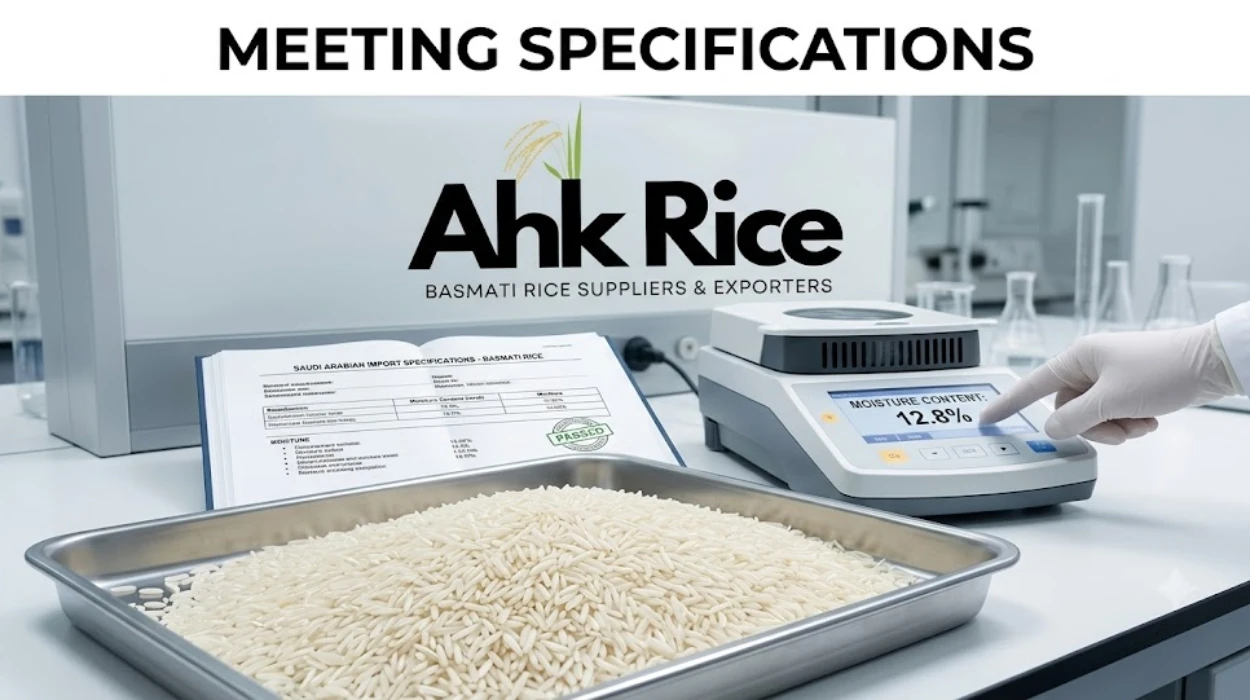
AHK Rice follows controlled processing from paddy selection through final container loading. Moisture is measured after milling, before polishing, during grading, before packing, and immediately prior to shipment. Multiple quality checkpoints help maintain consistency throughout production.
For buyers searching for a dependable supplier, our Saudi Arabia service page explains how AHK Rice supports Saudi importers with customised export specifications, packaging options, documentation, and logistics.
Export-quality moisture control includes:
- Scientific moisture testing
- Climate-controlled storage
- Food-grade packaging
- Container inspection before loading
- Shipment documentation
- Batch traceability
- Pre-shipment quality verification
Rather than relying on a single inspection, AHK Rice monitors moisture throughout the production cycle to reduce variation between batches.
Why should Saudi importers choose AHK Rice?
Saudi buyers benefit from exporters that combine production expertise, internationally recognised quality procedures, flexible packaging options, transparent documentation, laboratory testing, dependable logistics, and responsive commercial support before, during, and after shipment. These factors reduce procurement risk while improving long-term supply reliability for wholesalers and distributors.
Choosing an exporter involves much more than comparing prices.
Saudi food distributors, supermarket chains, wholesalers, private-label brands, and government procurement agencies all evaluate supplier consistency before establishing long-term contracts.
AHK Rice provides several advantages.
Consistent moisture management
Every production batch is checked against customer specifications before export.
Export documentation
Documentation typically includes:
- Commercial Invoice
- Packing List
- Certificate of Origin
- Phytosanitary Certificate
- Fumigation Certificate (when required)
- Quality Certificate
- Bill of Lading
- Health documentation where applicable
Flexible packaging
Saudi buyers commonly request:
- 1 kg retail packs
- 2 kg bags
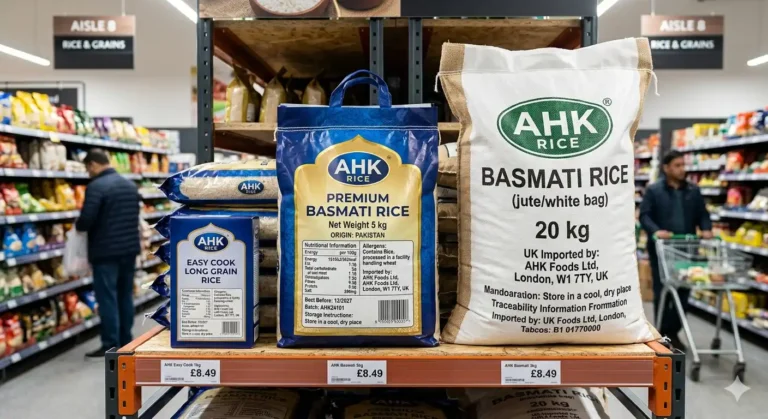
- 5 kg bags
- 10 kg bags
- 20 kg PP bags
- 25 kg PP bags
- 40 kg bags
- 50 kg export bags
Private labelling is also available.
Multiple rice varieties
AHK Rice exports:
- Super Kernel Basmati
- PK 385 Rice
- 1121 Basmati Rice
- Brown Basmati Rice
- Steam Rice
- Sella Rice
- White Rice
- Premium Long Grain Rice
Quality assurance
Every shipment undergoes inspection before loading to reduce discrepancies between approved samples and delivered cargo.
Because AHK Rice specialises in export markets, production planning considers destination climate, transit conditions, and customer specifications.
What moisture specifications are commonly requested by Saudi buyers?
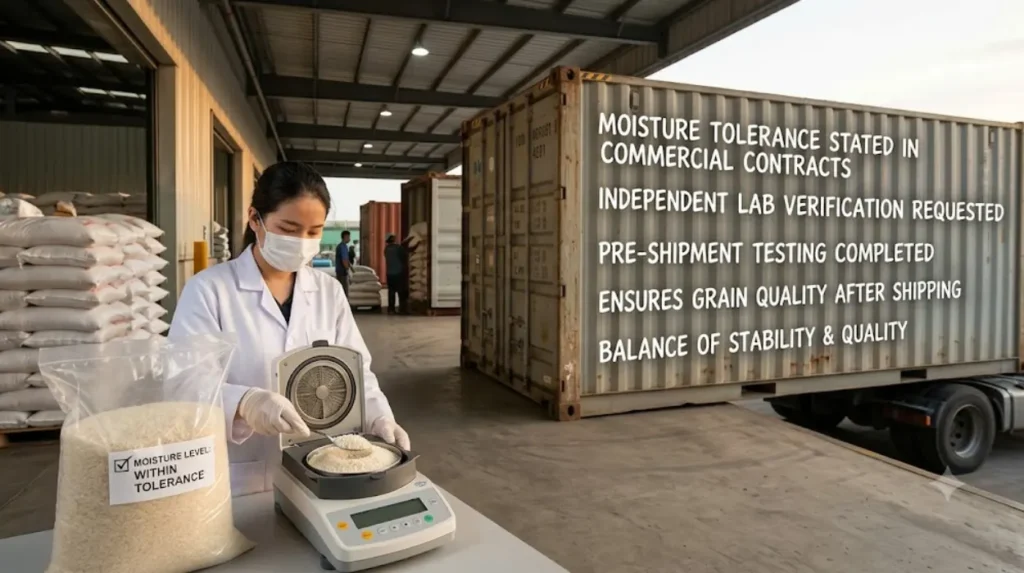
Most Saudi importers request moisture levels that balance storage stability with grain quality during shipping. Exact buyer specifications vary by contract, rice variety, packaging, intended storage duration, and importer quality policies, making pre-shipment laboratory verification an essential export requirement before container loading.
Commercial contracts generally specify acceptable moisture tolerance.
Saudi importers may request independent laboratory verification before shipment approval.
AHK Rice performs moisture verification before dispatch to help ensure shipments match contractual specifications.
Maintaining correct moisture contributes to:
- Longer shelf life
- Better cooking performance
- Lower mould risk
- Reduced insect activity
- Better grain appearance
- Improved fragrance retention
- Lower breakage during transport
These benefits are particularly important because containers travel through high-temperature environments before arriving at Saudi ports.
What shipping times can Saudi buyers expect?
Shipping schedules depend on the destination port, vessel availability, customs procedures, seasonal congestion, and shipping line routing. Planning production alongside logistics ensures deliveries remain predictable while helping buyers manage inventory more efficiently throughout the year with fewer unexpected supply disruptions.
Typical sea freight transit from Pakistan during 2026 is approximately:
| Saudi Destination | Estimated Shipping Days |
|---|---|
| Dammam | 7–10 days |
| Jeddah Islamic Port | 10–15 days |
| Riyadh (via Dammam) | 10–16 days including inland transport |
| Jubail | 8–11 days |
| Yanbu | 11–16 days |
Transit times vary according to:
- Vessel schedules
- Port congestion
- Customs clearance
- Public holidays
- Weather conditions
AHK Rice coordinates production with shipping schedules so cargo is ready before vessel cut-off dates.
How does the export sample process work?
Professional exporters minimise buyer uncertainty through structured sampling procedures that allow importers to evaluate rice quality before production. Laboratory verification, courier delivery, buyer approval, and production confirmation create confidence before full commercial shipment begins, reducing procurement risk for both parties significantly.
The sampling process generally follows these steps.
Step 1 – Initial enquiry
The buyer provides:
- Rice variety
- Quantity
- Moisture requirement
- Packaging
- Destination port
Step 2 – Product selection
AHK Rice recommends the most suitable grade according to customer requirements.
Step 3 – Sample preparation
Representative samples are prepared from production batches.
Typical sample sizes include:
- 500 grams
- 1 kilogram
- 2 kilograms
Step 4 – Laboratory testing
Testing may include:
- Moisture
- Broken percentage
- Grain length
- Foreign matter
- Colour
- Purity
Step 5 – Courier dispatch
Samples are normally sent through international courier services.
Step 6 – Buyer evaluation
Importers assess:
- Cooking quality
- Aroma
- Appearance
- Grain elongation
- Moisture compliance
Step 7 – Commercial agreement
After approval, production begins according to agreed specifications.
Sample costs
Typical 2026 commercial practice includes:
- Product sample: often provided without charge for qualified buyers.
- Laboratory testing: approximately US$30–100, depending on requested analyses.
- International courier: generally US$40–120, depending on destination, sample weight, and courier service.
- Independent third-party inspection (optional): charged separately based on inspection scope.
Commercial orders frequently have sample costs adjusted or credited by mutual agreement after confirmed business, depending on order volume and supplier policy.
What results can buyers expect from working with AHK Rice?
Working with an experienced exporter improves shipment consistency, reduces moisture-related quality claims, supports smoother customs documentation, enhances customer satisfaction, and creates stronger long-term commercial relationships through dependable product quality and transparent export procedures across multiple shipment cycles.
Importers generally seek measurable commercial outcomes rather than promises.
Working with AHK Rice helps buyers pursue objectives such as:
- Reduced shipment disputes
- More consistent inventory quality
- Better consumer satisfaction
- Lower product rejection risk
- Improved retailer confidence
- Reliable repeat ordering
- Consistent product specifications
For wholesalers serving supermarkets, restaurants, and food distributors, consistency is often more valuable than purchasing at the lowest available price.
What factors affect the cost of exporting Pakistan Basmati rice to Saudi Arabia?
Export pricing depends on rice variety, quality grade, crop conditions, packaging specifications, order volume, certification requirements, shipping costs, exchange rates, inspection services, and destination logistics rather than a single fixed market price. Buyers receive quotations tailored to their exact commercial requirements.
Several variables influence final export pricing.
Rice variety
Premium aromatic varieties command higher prices than standard long-grain rice.
Packaging
Retail packaging increases production costs compared with bulk export bags.
Order quantity
Larger container orders generally provide better pricing efficiency.
Certifications
Additional certifications may increase documentation expenses.
Freight
Ocean freight rates continue to fluctuate throughout 2026 based on carrier capacity and fuel costs.
Inspection
Independent inspection services may be requested by buyers or required under specific contracts.
AHK Rice provides quotations based on complete buyer specifications rather than estimated market averages, helping importers compare offers on an equivalent basis.
How can Saudi importers get started?
The purchasing process begins by sharing product specifications, quantity requirements, packaging preferences, destination port, and quality expectations. An experienced exporter then prepares samples, confirms technical requirements, provides pricing, and organises production after commercial approval for efficient international delivery without unnecessary delays.
Starting a new procurement relationship is straightforward.
Saudi buyers should prepare:
- Rice variety
- Required quantity
- Moisture specification
- Packaging preference
- Destination port
- Private label requirements
- Required certifications
- Delivery schedule
After reviewing these details, AHK Rice prepares an export proposal covering product specifications, commercial terms, production planning, and shipping arrangements.
Whether you require supermarket retail packs, wholesale distribution, foodservice supply, or private-label manufacturing, AHK Rice works with buyers to align product quality with Saudi Arabian market expectations while maintaining consistent moisture control throughout the export process.
Frequently Asked Questions
How does AHK Rice ensure Pakistan Basmati rice meets Saudi Arabian moisture specifications?
AHK Rice monitors moisture throughout milling, grading, packing, and pre-shipment inspections using quality control procedures to ensure every shipment meets the agreed buyer specifications.
What is the recommended moisture level for Pakistan Basmati rice exported to Saudi Arabia?
The recommended moisture level depends on the buyer’s contract and intended storage conditions. AHK Rice verifies moisture before shipment to match the customer’s required specification.
How long does it take to ship Pakistan Basmati rice from Pakistan to Saudi Arabia?
Sea freight typically takes around 7–15 days, depending on the destination port, vessel schedule, customs clearance, and shipping line availability.
Does AHK Rice provide rice samples before confirming a bulk order?
Yes. AHK Rice offers product samples so buyers can evaluate grain quality, aroma, cooking performance, and moisture compliance before placing a commercial order.
What documents are included with Saudi Arabia rice export shipments?
Export shipments generally include a Commercial Invoice, Packing List, Certificate of Origin, Phytosanitary Certificate, Bill of Lading, and other documents required by the buyer or Saudi authorities.
What factors affect the export price of Pakistan Basmati rice?
Pricing depends on the rice variety, quality grade, packaging type, order quantity, certification requirements, inspection services, and current freight charges.
Can AHK Rice supply private-label Basmati rice for Saudi importers?
Yes. AHK Rice offers customised private-label packaging in various bag sizes to meet the branding and retail requirements of Saudi wholesalers and supermarkets.
Why should Saudi importers choose AHK Rice as their Pakistan Basmati rice exporter?
AHK Rice provides consistent quality, controlled moisture management, flexible packaging, export documentation, reliable logistics, and responsive customer support for long-term supply partnerships.