Pakistan Turkey Rice Trade Statistics and Bilateral Growth in 2026
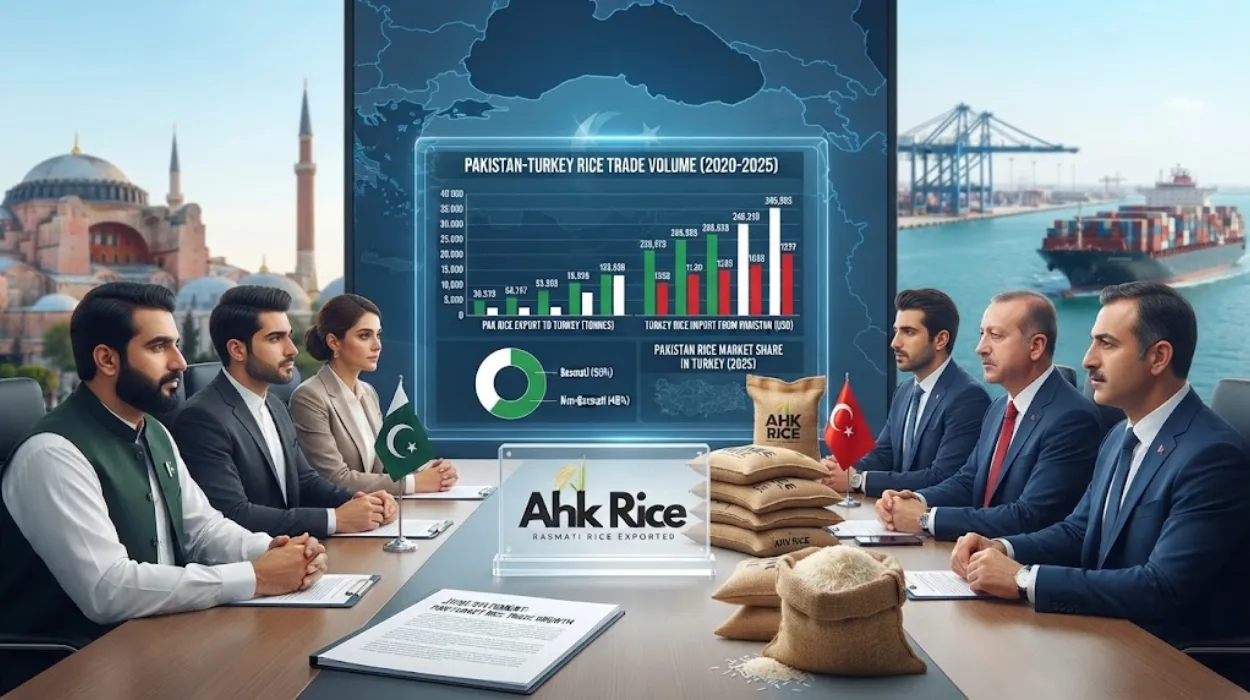
Pakistan–Türkiye rice trade is entering 2026 with a stronger policy focus, an active 18,000 MT tariff-rate quota, and documented Pakistani rice shipments into Türkiye. Here is why: Pakistan and Türkiye are discussing higher rice volumes, better quota use, competitive pricing, and expanded government-to-government trade channels.
Pakistan supplies both Basmati and non-Basmati rice to the Turkish market. Türkiye also remains a significant rice-importing country. Türkiye’s 2024/25 rice market recorded 210,000 tonnes of rice imports during the first 8 months, alongside 171,000 tonnes of rice exports.
What Is Pakistan–Türkiye Rice Trade in 2026?
Pakistan–Türkiye rice trade covers Basmati and non-Basmati rice exports, tariff concessions, import procedures, quota access, private contracts, and government-supported bulk procurement between both countries in 2026.
Pakistan–Türkiye rice trade operates within the Pakistan–Türkiye Trade in Goods Agreement. Türkiye’s preferential trade arrangement with Pakistan entered into force on 1 May 2023. The agreement gives Pakistan tariff concessions across 261 tariff lines.
Rice has a specific position under this framework. Pakistan’s trade authorities state that Türkiye provides an 18,000 MT annual tariff-rate quota for Pakistani rice. The quota applies to covered rice classifications and provides preferential treatment within the specified quantity.
The 2026 policy discussion focuses on increasing actual use of this quota. Pakistan’s Commerce Ministry reported that previous quota cycles remained underutilized because of procedural constraints. The January 2026 meeting therefore focused on import licensing, tariff-rate quotas, and possible reduced or zero tariffs for Basmati rice.
Türkiye’s rice market also has domestic production. Türkiye produced 1.019 million tonnes of paddy in 2024/25 from 129,000 hectares. Domestic production therefore operates alongside imports rather than replacing the import market.
With the trade framework established, the next question is how rice moves from Pakistani fields into Turkish supply chains.
How Does Rice Trade Between Pakistan and Türkiye Work?
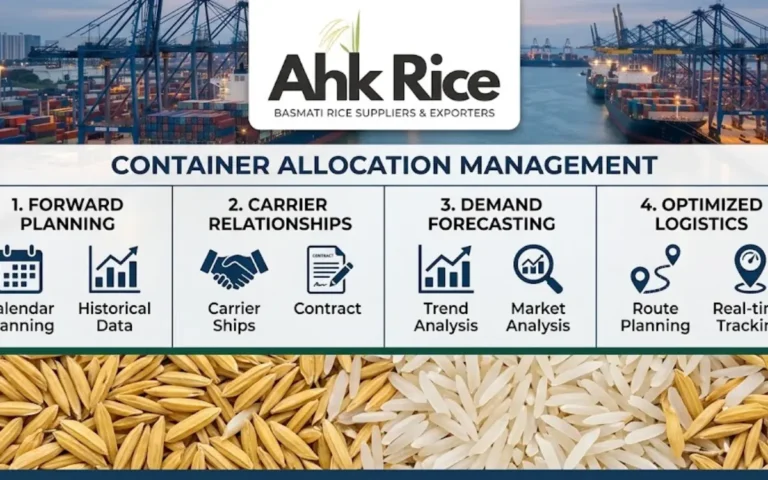
Rice trade follows cultivation, harvesting, milling, grading, inspection, documentation, quota or tariff processing, container loading, shipment, customs clearance, and delivery to Turkish buyers.
How is Pakistani rice prepared?
Pakistani rice begins with paddy cultivated mainly in irrigated agricultural regions. Basmati production is strongly associated with Punjab. Exporters source harvested paddy according to variety, grain characteristics, moisture, and quality requirements.
Processing then converts harvested paddy into export-ready rice. The commercial sequence includes:
- Clean the paddy to remove field debris and foreign material.
- De-husk the grain to remove the outer husk.
- Mill the grain to produce brown or milled rice.
- Polish the grain according to the required appearance.
- Grade the rice according to grain length, broken percentage, and quality.
- Sort the grain using mechanical and colour-sorting systems.
- Parboil the rice for Sella or parboiled specifications.
- Dry the rice to achieve controlled moisture.
- Inspect the shipment against the agreed specification.
How is the shipment exported?
Exporters prepare commercial documents, packing details, certificates, inspection records, and shipping documents before loading. The buyer’s specification determines packaging, quantity, grade, and documentation requirements.
Shipment records demonstrate the range of Pakistani rice entering Türkiye. March 2025 records include 390,000 kg of white rice, 268,000 kg of long-grain white rice, 260,000 kg of long-grain white rice, and 24,440 kg of long-grain Basmati Sella rice.
The trade process therefore connects agricultural production with tariff access and commercial logistics.
Which Rice Varieties Are Important in Pakistan–Türkiye Trade?
Pakistan supplies Türkiye with Basmati and non-Basmati rice, including 1121 Basmati, Sella rice, long-grain white rice, IRRI-6, PK-386, and other milled rice specifications.
1121 Basmati
1121 Basmati is a long-grain Basmati variety associated with Pakistan’s premium rice export segment. Turkish shipment records identify Pakistani 1121 products, including 1121 Sella and 1121 Steam rice.
A January 2025 shipment recorded 16,000 kg of Pakistani 1121 rice packed in 5 kg bags. Earlier October 2024 records identify multiple 1121 Steam shipments entering Türkiye.
Basmati Sella
Basmati Sella is parboiled rice processed before final milling and packing. The process changes cooking performance and grain firmness. A March 2025 Pakistani shipment to Türkiye contained 24,440 kg of long-grain Basmati Sella rice.
Long-Grain White Rice
Long-grain white rice serves volume-oriented applications. March 2025 records show several Pakistani shipments containing hundreds of tonnes of long-grain white or white rice.
IRRI-6 and PK-386
IRRI-6 and PK-386 represent non-Basmati Pakistani rice categories. Türkiye shipment records include 540,000 kg of IRRI-6 long-grain white rice in May 2025 and 96,010 kg of PK-386 white rice in January 2025.
These shipment records show that Pakistan–Türkiye rice trade is not limited to one Basmati grade.
What Are the Key Components of Pakistan–Türkiye Rice Trade?
The main components are rice varieties, grain specifications, tariff-rate quota access, import licensing, quality documents, packaging, pricing, shipping logistics, customs clearance, and buyer requirements.
Trade policy
The 18,000 MT rice tariff-rate quota is a central market-access component. Pakistan’s Commerce Ministry identified better utilization of this quota as a priority in January 2026.
Pricing
Price competitiveness has become a direct policy issue. Pakistan’s Commerce Ministry stated in January 2026 that Indian and Vietnamese competition was creating pricing pressure in international rice markets. Pakistan therefore emphasized competitive export pricing for Türkiye.
Quality
Quality specifications determine commercial classification and buyer acceptance. Common specifications include grain length, broken percentage, moisture, milling quality, purity, colour, packaging, and crop year.
Documentation
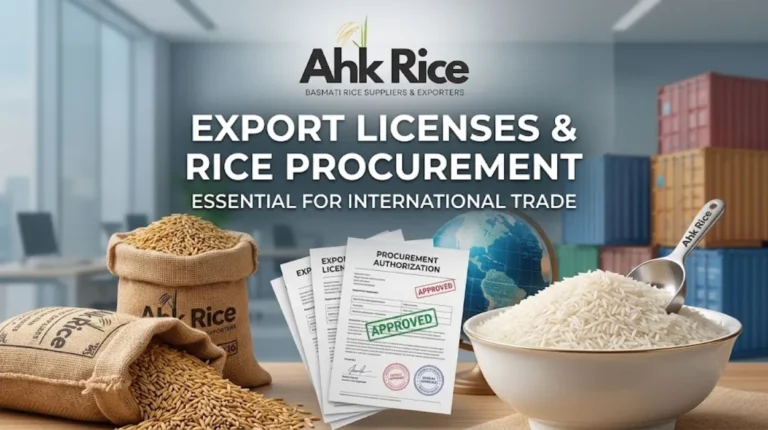
Export documentation supports customs clearance and contractual verification. Documents commonly include commercial invoices, packing lists, certificates of origin, phytosanitary documents, inspection certificates, and shipping documents.
Logistics
Logistics connect Pakistani mills with Turkish importers. Exporters load containerized cargo, dispatch shipments through international shipping routes, clear export procedures, and deliver cargo according to the agreed Incoterm.
What Benefits Does Bilateral Rice Trade Provide?
Bilateral rice trade gives Turkish buyers access to Pakistani Basmati and non-Basmati supply while giving Pakistani exporters access to a large import market with preferential trade mechanisms.
Türkiye’s rice market demonstrates meaningful import demand. The Turkish agricultural market report recorded 210,000 tonnes of rice imports during the first 8 months of 2024/25.
Pakistan benefits from market diversification. Pakistani rice exports reached 773,995 tonnes of Basmati in FY2024, valued at approximately US$877 million. The United Arab Emirates, Saudi Arabia, Afghanistan, Oman, Italy, the United Kingdom, and the United States were among major destinations.
Türkiye benefits from supplier diversification. Pakistani shipments cover both Basmati and non-Basmati categories, allowing importers to source different grain specifications for different applications. Shipment records confirm Basmati Sella, 1121, IRRI-6, PK-386, and long-grain white rice transactions.
Bilateral trade also supports broader commercial cooperation. Pakistan and Türkiye have maintained a joint target of increasing total bilateral trade to US$5 billion. The 2025 Joint Ministerial Commission also addressed customs cooperation, business-to-business links, and trade expansion.
These benefits explain why rice has become a specific focus within the broader bilateral trade relationship.
Where Is Pakistani Rice Used in Türkiye?
Pakistani rice serves retail, foodservice, ethnic grocery, restaurants, catering, wholesale distribution, and food-processing channels across Türkiye’s rice-importing supply chain.
Retail distribution
Retail buyers use Basmati and long-grain rice for packaged consumer products. Smaller bags such as 1 kg, 2 kg, 5 kg, and 10 kg support supermarket and specialty-store distribution.
Foodservice
Restaurants use long-grain rice for pilaf, biryani-style dishes, rice bowls, and other prepared meals. Basmati grades provide distinctive aroma and long-grain presentation.
Wholesale distribution
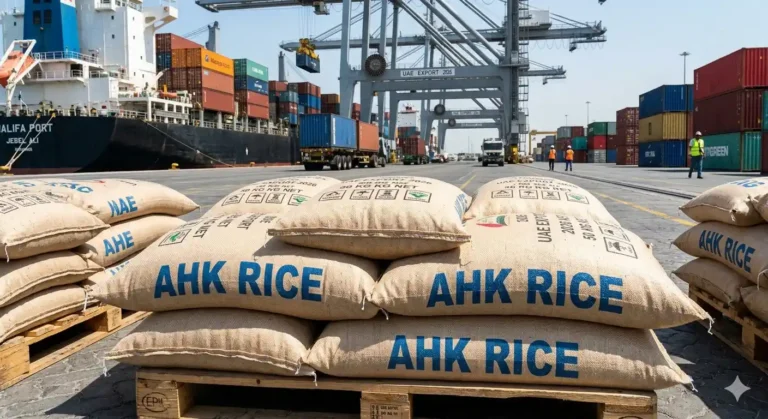
Wholesale importers purchase 25 kg and 50 kg commercial packs for redistribution. March 2025 Pakistani shipments to Türkiye included rice packed in 50 kg polypropylene bags.
Re-export channels
Türkiye also functions as a regional trading hub. Pakistan’s January 2026 trade discussions specifically identified opportunities for Turkish imports and re-exports to neighboring markets.
The range of applications connects trade statistics with actual product demand.
What Are the Common Problems and Misconceptions in Pakistan–Türkiye Rice Trade?
The main problems involve underused quota capacity, tariff procedures, import licensing, price competition, incomplete specifications, and confusion between total rice imports and Pakistani rice imports.
Quota utilization
An 18,000 MT quota does not represent Pakistan’s total rice exports to Türkiye. It represents a preferential market-access mechanism. Pakistan’s government reported that the quota had remained underutilized during previous cycles because of procedural constraints.
Import volume confusion
Türkiye’s 210,000 tonnes of rice imports during the first 8 months of 2024/25 represent total rice imports, not Pakistani rice alone. The figure therefore cannot be used as Pakistan’s bilateral export volume.
Basmati classification
Basmati and non-Basmati rice serve different market segments. Shipment records show that Pakistani exports to Türkiye include both categories.
Price competition
Competitive pricing remains a major issue. Pakistan’s government specifically discussed matching prevailing global prices and increasing volume rather than focusing only on price maximization.
Trade statistics
Pakistan’s official trade statistics are released through monthly, quarterly, and annual publications. The Pakistan Bureau of Statistics provides commodity and country-level trade datasets, including monthly releases through 2026.
These limitations matter when interpreting 2026 bilateral growth. Trade policy signals, total Turkish imports, and shipment-level Pakistani records measure different parts of the market.
What Does 2026 Mean for Pakistan–Türkiye Rice Trade?
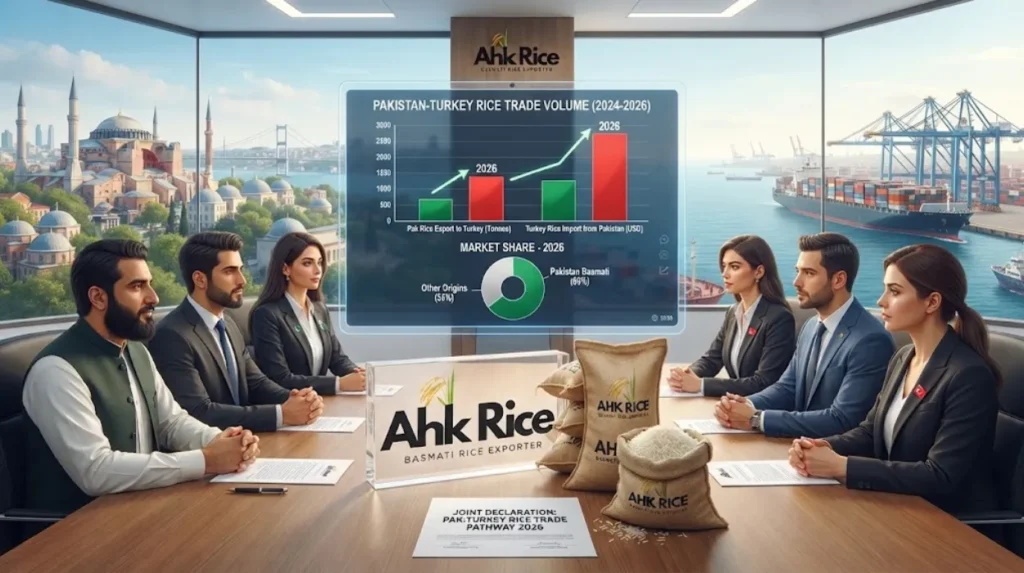
2026 is focused on increasing Pakistani rice volumes, improving 18,000 MT quota utilization, strengthening price competitiveness, and developing government-to-government and private-sector procurement channels.
Pakistan and Türkiye discussed these measures directly in January 2026. Pakistan proposed stronger use of the existing quota, improved import procedures, and greater use of G2G channels alongside private-sector contracts.
Türkiye’s market provides measurable import demand, while Pakistan has established export capacity across Basmati and non-Basmati categories. The commercial relationship therefore depends on price, specification, quota access, documentation, and supply consistency.
For readers moving from market-level statistics to product-level demand, the next step is understanding which Pakistani varieties match Turkish import requirements.
FAQs About Pakistan–Türkiye Rice Trade
What rice varieties does Pakistan export to Türkiye?
Pakistan exports both Basmati and non-Basmati rice to Türkiye, including 1121 Basmati, Basmati Sella, long-grain white rice, IRRI-6, and PK-386. Shipment records also show different grades, pack sizes, and quantities entering the Turkish market.
What is the Pakistan–Türkiye rice tariff-rate quota?
Türkiye provides an 18,000 MT annual tariff-rate quota for covered Pakistani rice classifications. The quota provides preferential treatment within the specified quantity and is a key part of Pakistan–Türkiye rice market access.
How large is Türkiye’s rice import market?
Türkiye recorded 210,000 tonnes of rice imports during the first eight months of the 2024/25 market year. This figure represents Türkiye’s total rice imports, not Pakistani rice imports specifically.
Is 1121 Basmati exported to Türkiye?
Yes, Pakistani 1121 Basmati is documented in Turkish shipment records, including 1121 Sella and 1121 Steam rice. A January 2025 shipment recorded 16,000 kg of Pakistani 1121 rice packed in 5 kg bags.
What are the main factors affecting Pakistan–Türkiye rice trade?
Quota access, import licensing, pricing, rice specifications, documentation, packaging, logistics, and buyer requirements are the main commercial factors. Grain length, broken percentage, moisture, purity, milling quality, and packaging can affect buyer acceptance.