How to Import Pakistani Basmati Rice into Saudi Arabia from a Verified Exporter
Importing Pakistani Basmati Rice into Saudi Arabia is most successful when buyers source from a verified exporter with documented quality controls, Saudi-compliant certifications, and proven logistics experience. Here is why: Saudi import regulations require traceable quality, proper documentation, and consistent grain specifications, while verified exporters reduce clearance delays, quality disputes, and supply chain risks.
Saudi Arabia remains one of the largest destinations for Pakistani Basmati Rice exports due to strong consumer demand for long-grain aromatic rice in retail, hospitality, catering, and food service sectors (source: REAP export data, December 2025). Importers who select an experienced supplier gain better shipment consistency, predictable quality outcomes, and faster customs processing.
Before selecting a supplier, buyers should understand the Saudi quality requirements. A detailed explanation is available in our guide on quality compliance requirements for Saudi buyers: What Quality Standards Must Pakistani Basmati Rice Meet for Saudi Imports?
For importers comparing varieties, grain performance, and pricing, our comparison guide on 1121 vs 1509 Basmati Rice for Saudi Rice Importers provides specification-based purchasing guidance.
AHK Rice supplies Saudi importers with premium Pakistani Basmati Rice through verified processing facilities, documented quality systems, and export-focused logistics solutions. AHK Rice works with wholesalers, distributors, supermarket chains, food service companies, and government procurement buyers throughout the Kingdom.
What Is the Best Way to Import Pakistani Basmati Rice into Saudi Arabia?
The most reliable solution is sourcing directly from a verified Pakistani exporter that provides Saudi-compliant documentation, pre-shipment inspections, laboratory testing, and complete logistics support from mill to Saudi port.
Saudi buyers face three common challenges during rice procurement.
Quality inconsistency creates customer complaints and brand damage. Grain length, moisture levels, broken percentage, and cooking performance can vary between suppliers.
Documentation issues create customs delays. Missing certificates can increase clearance times and storage costs.
Logistics failures disrupt inventory planning. Late shipments affect distributors, retailers, and catering operations.
AHK Rice addresses these challenges through a structured export process designed specifically for international buyers.
How Does AHK Rice Verify Export Quality?
AHK Rice follows nine processing steps before dispatching export shipments.
- Harvest the paddy at optimal maturity.
- Clean the raw paddy.
- De-husk the grain.
- Parboil selected grades.
- Dry the rice.
- Polish the kernels.
- Grade by specification.
- Sort through optical color sorters.
- Inspect and pack for export.
Each stage supports consistency across large-volume shipments.
What Certifications Are Required?
Export Documentation for Saudi Imports
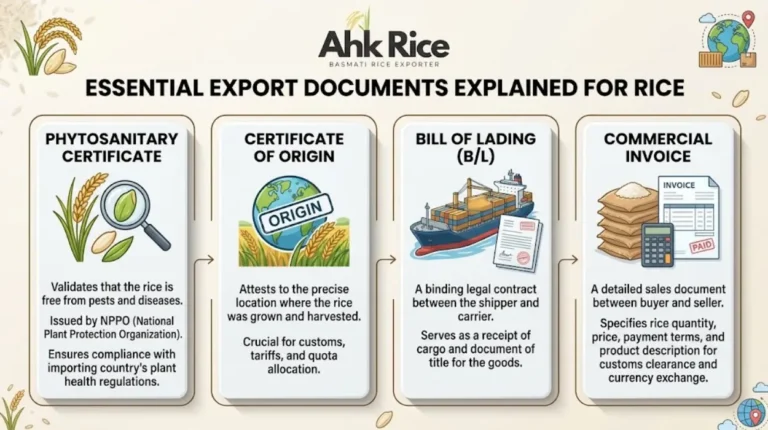
| Document | Purpose |
|---|---|
| Commercial Invoice | Customs valuation |
| Packing List | Shipment details |
| Certificate of Origin | Trade verification |
| Phytosanitary Certificate | Plant health compliance |
| Fumigation Certificate | Pest control verification |
| Bill of Lading | Shipment ownership |
| Quality Inspection Report | Product conformity |
| SASO-related compliance documents where applicable | Saudi market requirements |
AHK Rice prepares export documentation before vessel loading to minimize clearance risks.
With supplier verification established, the next question is what results Saudi importers can expect after sourcing from a verified exporter.
What Results Can Saudi Importers Expect from a Verified Pakistani Rice Exporter?
Importers typically achieve more consistent quality, stronger customer retention, reduced rejection risk, and predictable inventory planning through long-term sourcing agreements with verified exporters.
Saudi consumers expect long grains, strong aroma, excellent elongation, and reliable cooking performance.
Pakistani Basmati varieties satisfy these expectations because they naturally develop aroma during cultivation in Punjab’s rice-growing regions.
Which Rice Grades Are Most Popular in Saudi Arabia?
1121 Steam Basmati Rice
1121 Steam Basmati Rice delivers excellent grain length and strong visual appearance. Saudi retail brands frequently select this grade because it balances premium quality with competitive pricing.
1121 Golden Sella Basmati Rice
1121 Golden Sella Basmati Rice offers extended shelf stability and superior grain strength. Large catering companies often prefer this specification because it performs well during bulk cooking.
1509 Steam Basmati Rice
1509 Steam Basmati Rice provides a cost-efficient alternative while maintaining attractive grain length. Importers targeting value-focused retail channels often choose this variety.
Typical Performance Outcomes
| Performance Factor | Expected Result |
|---|---|
| Grain Length | 8.20–8.40 mm depending on grade |
| Moisture Level | 12–14% |
| Broken Content | According to contract specification |
| Cooking Elongation | Up to 2x grain expansion |
| Aroma Retention | Strong natural fragrance |
| Shelf Life | 12–24 months depending on grade |
Golden Sella lasts longer than Steam. In a 40°C warehouse environment common in Gulf climates, Golden Sella often maintains quality for up to 24 months. Steam grades are generally best consumed within 12 to 18 months depending on storage conditions.
AHK Rice supplies multiple specifications to match retail, wholesale, hospitality, and institutional purchasing requirements. AHK Rice also provides pre-shipment quality verification before dispatch.
With expected outcomes clarified, buyers usually want to understand shipping timelines to Saudi ports.
How Long Does Shipping Take from Pakistan to Saudi Arabia?
Most shipments reach Saudi ports within 10–22 days depending on destination port, vessel schedule, transshipment requirements, and customs processing timelines.
Transit time affects inventory planning, warehouse management, and seasonal purchasing decisions.
Typical Shipping Days by Market
| Saudi Destination | Estimated Transit Time |
|---|---|
| Jeddah Islamic Port | 10–14 days |
| Dammam Port | 12–18 days |
| Riyadh via Dammam | 15–22 days |
| Yanbu Commercial Port | 12–18 days |
Transit schedules vary by shipping line and vessel routing.
AHK Rice coordinates shipment planning before production begins. This approach helps buyers align procurement schedules with inventory requirements.
What Logistics Support Does AHK Rice Provide?
AHK Rice supports buyers through the complete export chain.
- Container loading
- Export documentation
- Customs coordination
- Freight booking
- Shipment tracking
- Delivery monitoring
AHK Rice also provides shipment updates throughout the transit process.
With delivery timelines established, buyers next evaluate pricing and procurement costs.

What Factors Affect the Cost of Importing Pakistani Basmati Rice into Saudi Arabia?
Rice variety, processing method, grain specification, packaging type, freight rates, order volume, and seasonal market conditions have the largest impact on final import cost.
Rice pricing changes throughout the year due to harvest cycles and international demand.
Key Cost Drivers
Rice Variety
1121 Basmati commands premium pricing because of its exceptional grain length and strong market demand.
1509 Basmati generally offers a lower entry cost while maintaining attractive cooking characteristics.
Processing Method
Golden Sella typically costs more than Steam because parboiling requires additional processing stages.
White Rice may cost less than premium Steam grades depending on market conditions.
Packaging Specifications
Packaging influences logistics efficiency and branding opportunities.
Common export formats include:
- 1 kg retail packs
- 5 kg retail packs
- 10 kg retail packs
- 20 kg PP bags
- 25 kg PP bags
- 40 kg PP bags
- 50 kg PP bags
Freight Costs
Ocean freight fluctuates according to vessel availability and global shipping conditions.
Why Direct Sourcing Improves Cost Efficiency
Direct sourcing eliminates unnecessary intermediaries.
AHK Rice exports directly from Pakistan. This structure helps buyers maintain greater pricing transparency and stronger control over quality specifications.
AHK Rice also offers contract-based procurement programs for recurring buyers seeking long-term supply stability.
With pricing factors understood, the next step is evaluating samples before placing a commercial order.
How Does the Sample Process Work Before a Commercial Order?
Professional exporters provide physical samples, laboratory reports, and specification sheets before contract confirmation, allowing buyers to verify quality before committing to container purchases.
Sampling reduces procurement risk and improves purchasing confidence.
Step-by-Step Sample Process
- Submit product requirements.
- Confirm target specification.
- Receive sample quotation.
- Dispatch representative samples.
- Review laboratory reports.
- Test cooking performance.
- Approve final specification.
- Confirm commercial order.
Typical Sample Costs
| Item | Typical Range |
|---|---|
| Product Sample | Often complimentary |
| Courier Charges | USD 40–120 depending on destination |
| Laboratory Testing | Varies by requested analysis |
Courier costs depend on shipment weight and delivery speed.
AHK Rice provides specification sheets together with sample dispatch whenever buyers require detailed evaluation.
What Should Buyers Check During Sample Evaluation?
- Inspect the grain appearance.
- Inspect the grain length.
- Inspect the broken percentage.
- Inspect the moisture level.
- Test the cooking performance.
- Verify the aroma retention.
- Verify packaging requirements.
AHK Rice encourages buyers to complete commercial testing before finalizing container orders.
With sample verification completed, the final consideration is how to begin a successful import partnership.
How Can Saudi Importers Get Started with AHK Rice?
The fastest path is submitting product specifications, receiving samples, approving quality standards, and finalizing a supply agreement aligned with volume and delivery requirements.
Saudi buyers often begin by defining the intended market segment.
Retail brands generally prioritize appearance and packaging flexibility.
Food service companies prioritize cooking consistency and supply reliability.
Government and institutional buyers prioritize documentation, compliance, and shipment continuity.
Information Required for a Quotation
| Requirement | Example |
|---|---|
| Rice Variety | 1121 Steam |
| Quantity | 5 Containers |
| Packaging | 40 kg PP Bags |
| Destination Port | Jeddah |
| Quality Specification | Buyer requirement |
| Private Label Requirement | Yes or No |
AHK Rice reviews these requirements and recommends the most suitable specification.
Why Saudi Buyers Choose AHK Rice
- AHK Rice maintains export-focused processing operations.
- AHK Rice supports customized packaging programs.
- AHK Rice provides pre-shipment quality verification.
- AHK Rice coordinates international logistics.
- AHK Rice supplies multiple Basmati specifications.
- AHK Rice supports long-term procurement partnerships.
These capabilities help Saudi importers reduce procurement risk while maintaining product consistency across repeated shipments.
Saudi Arabia continues to be a strategic market for premium Pakistani Basmati Rice, and verified sourcing remains the most effective way to protect quality, compliance, and profitability. Contact AHK Rice today to discuss your requirements and submit your inquiry through /request-a-quote/.
Frequently Asked Questions
How much Pakistani Basmati Rice can I import into Saudi Arabia in one shipment?
Saudi importers can order any quantity based on supplier capacity and business requirements. Most commercial buyers import full container loads (FCL), with 20-foot and 40-foot containers being the most common options. Larger importers often secure annual contracts to maintain stable supply and pricing.
Which Pakistani Basmati Rice grade is most popular in Saudi Arabia?
1121 Steam Basmati Rice and 1121 Golden Sella Basmati Rice are the most popular grades in Saudi Arabia. Retail brands usually prefer 1121 Steam because of its appearance and aroma, while catering and food service businesses often choose 1121 Golden Sella for its durability and cooking performance.
What documents are required to clear Pakistani rice through Saudi customs?
Saudi importers typically require a Commercial Invoice, Packing List, Certificate of Origin, Phytosanitary Certificate, Fumigation Certificate, Bill of Lading, and quality inspection documents. Additional compliance documents may be required depending on current Saudi regulations and product specifications.
How long does it take to receive a rice shipment from Pakistan to Saudi Arabia?
Transit times generally range from 10 to 22 days depending on the destination port, shipping line, and customs clearance process. Jeddah usually receives shipments faster than inland destinations that require additional transportation after port arrival.
Can I receive a rice sample before placing a container order?
Yes. Most professional exporters provide samples before confirming a commercial contract. Buyers can evaluate grain length, aroma, cooking performance, moisture levels, and overall quality. Courier charges are usually paid by the buyer, while sample quantities are often provided without charge.