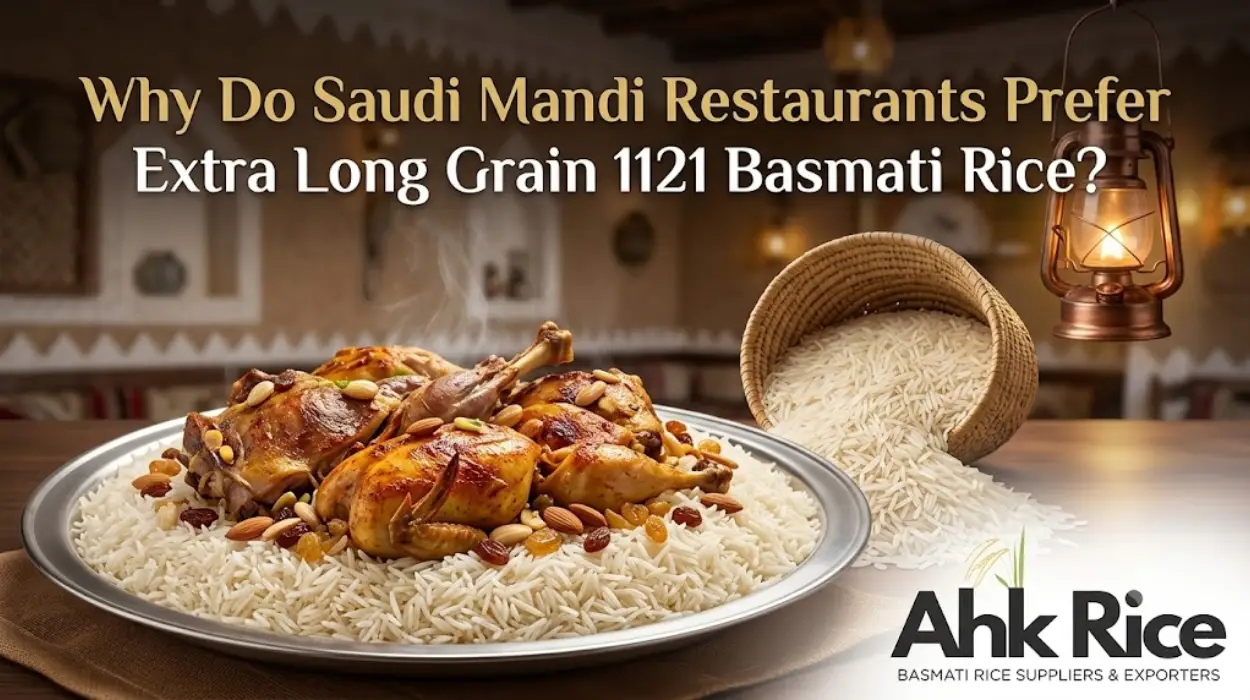
Why Do Saudi Mandi Restaurants Prefer Extra Long Grain 1121 Basmati Rice?
Saudi Mandi restaurants prefer 1121 Extra Long Grain Basmati Rice because it delivers grain lengths of 20–22 mm after cooking, maintains separate grains during large-scale preparation, absorbs meat stock efficiently, and provides the traditional presentation expected in Saudi Mandi dishes. Here is why: 1121 Basmati combines exceptional elongation, aroma, consistency, and commercial scalability, making it the preferred specification for restaurants across Saudi Arabia.
Saudi Mandi is one of the largest rice-consuming foodservice segments in the Gulf region. Mandi preparation requires rice that remains separate after cooking, holds flavor from lamb or chicken stock, and creates an attractive serving presentation. Among all Basmati varieties, 1121 consistently meets these requirements.
Pakistan and India remain the primary suppliers of 1121 Basmati to Gulf markets, with Saudi Arabia ranking among the largest import destinations for premium long-grain Basmati rice (source: REAP export data, December 2025).
What Is Extra Long Grain 1121 Basmati Rice?
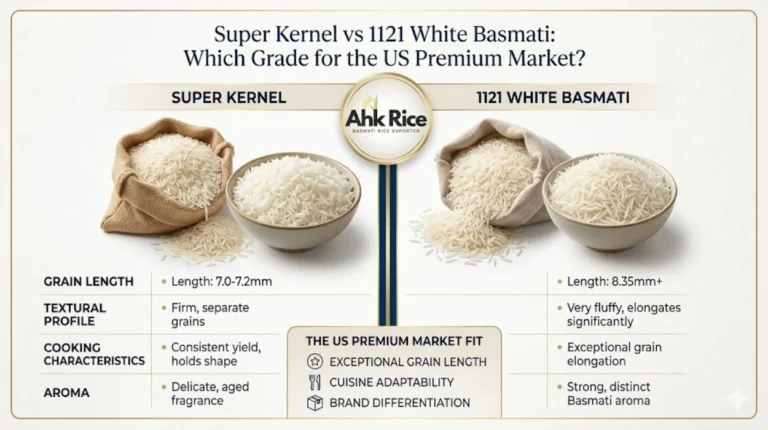
1121 Basmati Rice is an aromatic long-grain rice variety with a raw grain length of 8.30–8.50 mm and cooked grain elongation reaching 20–22 mm.
1121 Basmati Rice was developed to produce longer grains than traditional Basmati varieties. The variety combines aroma, elongation, visual appeal, and cooking performance in one grain.
1121 Basmati belongs to the aromatic rice category. Aromatic rice varieties contain naturally occurring compounds responsible for the characteristic Basmati fragrance. Saudi consumers associate this aroma with premium rice quality.
1121 Basmati is primarily cultivated in Punjab’s Basmati-growing belt. Major production districts include Gujranwala, Hafizabad, Sheikhupura, Narowal, Sialkot, and surrounding agricultural regions. These areas provide suitable soil composition, irrigation systems, and climate conditions for Basmati cultivation.
The variety is available in several processing specifications:
1121 Steam Rice
1121 Steam Rice undergoes steaming after milling. The process preserves natural color and creates a softer texture.
1121 Sella Rice
1121 Sella Rice undergoes parboiling before milling. The process strengthens the grain structure and produces a golden or creamy appearance.
1121 White Rice
1121 White Rice is fully milled and polished without steaming or parboiling.
Available Export Grades
Exporters commonly grade 1121 Basmati according to broken percentage:
- 0% Broken
- 1% Broken
- 2% Broken
- 5% Broken
- 10% Broken
- 15% Broken
- 25% Broken
These grades allow buyers to match quality specifications with commercial budgets.
With the definition of 1121 Basmati established, the next question is why Saudi Mandi cooking specifically requires these grain characteristics.
Why Does Saudi Mandi Cooking Require Extra Long Grain Rice?
Saudi Mandi preparation demands grains that remain separate, absorb stock efficiently, and elongate significantly during cooking.
Mandi is a traditional Arabian rice dish prepared with seasoned meat stock. The rice forms the visual foundation of the meal. Customers evaluate quality immediately through grain appearance.
Long grain elongation creates a premium presentation. Restaurants serving large platters require rice that fills serving trays attractively without appearing dense or sticky.
1121 Basmati expands significantly during cooking. Raw grains measuring 8.30–8.50 mm can exceed 20 mm after cooking. This elongation creates volume and visual appeal.
Stock absorption is equally important. Mandi preparation involves cooking rice with lamb broth, chicken broth, spices, and aromatics. Rice must absorb these flavors while maintaining grain separation.
Short-grain varieties absorb stock differently. They create a denser texture and reduce grain definition. Saudi consumers generally associate visible grain separation with premium Mandi quality.
Restaurant operations also require consistency. Daily preparation volumes often exceed hundreds of portions. Consistent cooking behavior reduces waste and improves kitchen efficiency.
With Mandi requirements understood, the next question is how 1121 Basmati is cultivated and processed before reaching Saudi kitchens.
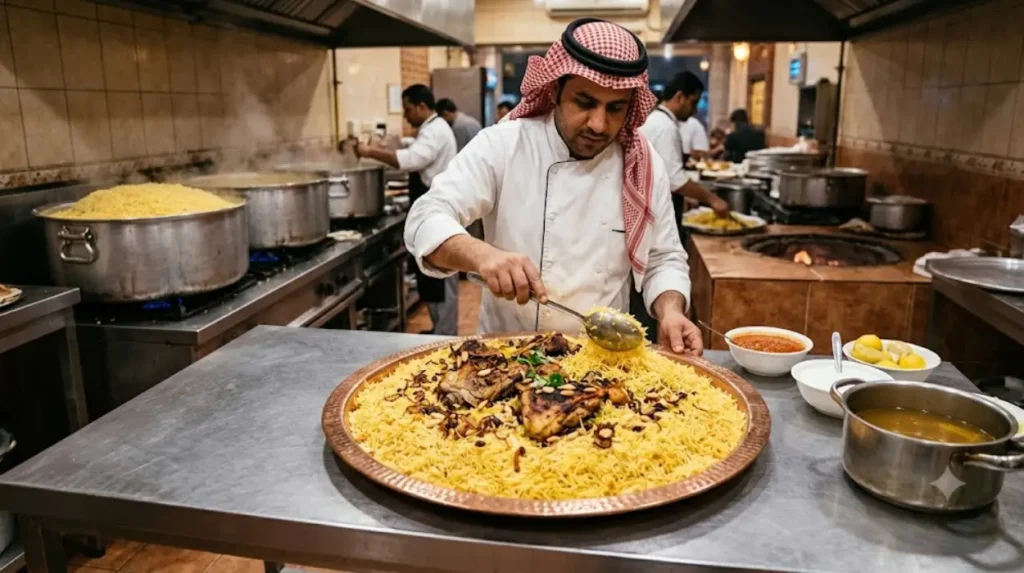
How Is 1121 Basmati Rice Grown and Processed?
1121 Basmati follows a controlled production chain involving cultivation, harvesting, milling, grading, sorting, testing, packaging, and export certification.
Rice quality begins in the field. Cultivation practices directly influence grain length, aroma, and milling yield.
How Is 1121 Basmati Cultivated?
Farmers cultivate 1121 Basmati during the Kharif season in Punjab.
The production process follows specific agricultural stages:
- Prepare nursery beds
- Sow certified seed
- Transplant seedlings
- Irrigate fields
- Control weeds
- Monitor crop health
- Mature the crop
- Harvest paddy
- Transport paddy to mills
Harvesting generally occurs between October and November.
How Is 1121 Basmati Processed?
Rice mills process harvested paddy through multiple stages:
- Clean the paddy
- Dry the paddy
- De-husk the grain
- Separate brown rice
- Mill the grain
- Polish the rice
- Grade by size
- Sort by color
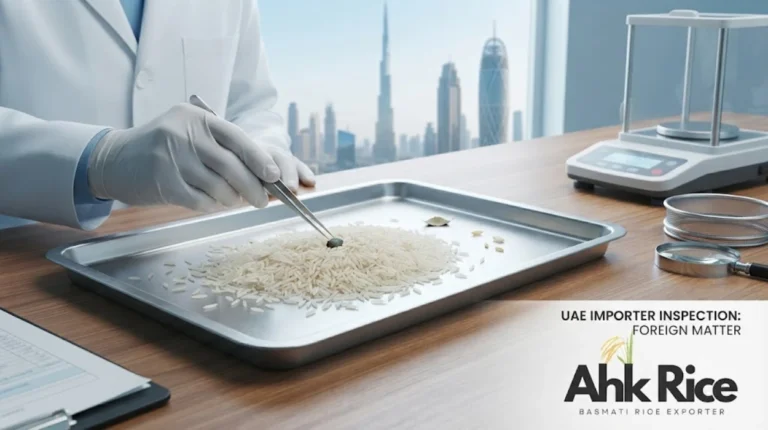
- Inspect quality
- Pack the product
Color sorting removes defective grains. Length grading improves uniformity. Quality inspection verifies export specifications.
What Certifications Apply?
Export shipments commonly require:
- Phytosanitary Certificate
- Certificate of Origin
- Fumigation Certificate
- Health Certificate
- Packing List
- Commercial Invoice
- Bill of Lading
Many processors also operate under recognized systems such as:
- ISO 22000
- HACCP
- BRCGS Food Safety
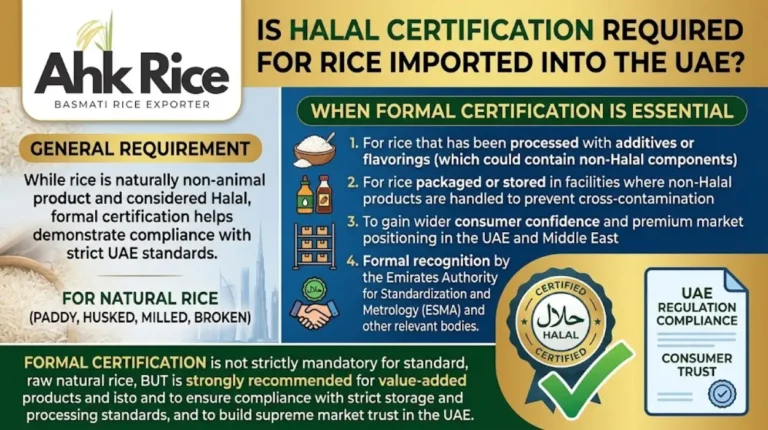
- Halal Certification
Saudi importers frequently require compliance with Saudi Food and Drug Authority requirements before shipment clearance.
With processing explained, the next question is which specific characteristics make 1121 superior for restaurant operations.
What Key Characteristics Make 1121 Ideal for Saudi Mandi Restaurants?
Exceptional elongation, grain separation, aroma retention, stock absorption, and operational consistency make 1121 the preferred restaurant specification.
Several measurable characteristics distinguish 1121 from competing rice varieties.
Grain Length Performance
1121 Basmati delivers among the longest grains available in commercial rice markets.
| Specification | Value |
|---|---|
| Raw Grain Length | 8.30–8.50 mm |
| Cooked Length | 20–22 mm |
| Grain Type | Extra Long Grain |
| Aroma Category | Aromatic Basmati |
Longer grains create a premium visual experience for customers.
Grain Separation
1121 maintains separation after cooking. Restaurants value this characteristic because large serving platters remain visually attractive for extended periods.
Grain separation also improves serving efficiency. Kitchen staff can portion rice more easily during peak operating hours.
Aroma Retention
Basmati aroma contributes directly to perceived quality. Traditional Mandi preparation emphasizes aromatic rice paired with seasoned meat.
1121 retains aroma effectively during cooking when proper storage and handling procedures are followed.
Stock Absorption
Mandi rice absorbs broth while maintaining structure. This balance creates flavorful grains without excessive softness.
Restaurant operators prioritize this characteristic because flavor consistency influences customer satisfaction.
With the core characteristics established, the next question is how these features translate into practical commercial benefits.
What Benefits Do Saudi Restaurants Gain From Using 1121 Basmati Rice?
Higher visual appeal, consistent cooking performance, reduced waste, stronger customer acceptance, and efficient large-scale preparation drive restaurant demand.
Commercial kitchens evaluate rice differently from household consumers. Operational efficiency directly impacts profitability.
Improved Presentation
Longer grains create larger-looking portions. Customers associate visible grain length with premium quality.
Presentation influences repeat purchases. Attractive rice platters improve overall meal perception.
Consistent Cooking Results
Restaurant kitchens require predictable performance. Consistency reduces staff training requirements and minimizes preparation errors.
1121 provides stable cooking behavior across large batches when specifications remain consistent.
Lower Waste Levels
Broken grains increase cooking irregularities. Higher-grade 1121 reduces sorting losses and improves finished product appearance.
Waste reduction contributes directly to food cost management.
Customer Preference
Saudi consumers are familiar with premium Basmati characteristics. Long grains, aroma, and separation align with traditional expectations for quality Mandi.
Market demand reinforces restaurant purchasing decisions.
With benefits explained, the next question is where 1121 is used beyond traditional Saudi Mandi restaurants.
Which Markets and Foodservice Segments Use 1121 Basmati Rice?
Saudi Arabia, the UAE, Qatar, Kuwait, Oman, Bahrain, Iraq, and foodservice sectors worldwide use 1121 Basmati extensively.
1121 serves multiple commercial applications beyond Mandi preparation.
Saudi Mandi Restaurants
Mandi restaurants represent one of the largest user groups. High-volume operations require consistent grain performance.
Catering Companies
Large-scale catering businesses prepare thousands of meals daily. Consistency and presentation remain critical requirements.
Hotel Buffets
Premium hotels use extra-long grain Basmati in buffet service because visual presentation influences guest perception.
Traditional Gulf Cuisine
Several Gulf dishes use 1121 Basmati, including:
- Mandi
- Kabsa
- Bukhari Rice
- Mazbi
- Madghout
Saudi Arabia remains one of the largest import destinations for premium Basmati rice globally (source: Pakistan Bureau of Statistics, FY2024-25).
With market applications covered, the final question addresses common misconceptions surrounding 1121 rice selection.
What Misconceptions Exist About 1121 Basmati Rice for Mandi?
The most common misconception is that all long-grain rice performs identically in Mandi preparation. Grain length alone does not determine cooking performance.
Many buyers compare rice solely by raw grain length. Cooking behavior depends on multiple factors.
Restaurants comparing processing specifications often evaluate texture, holding time, and cooking behavior differently. A detailed comparison of these characteristics appears in our guide explaining how different processing methods affect Saudi foodservice operations when selecting between steam-processed and parboiled 1121 rice.
Is Longer Always Better?
Long grain length improves presentation. However, processing quality also matters.
A poorly graded rice with excessive broken grains performs worse than a properly graded specification.
Do Steam and Sella Perform the Same?
Steam and Sella produce different cooking results.
Steam rice offers a softer texture and brighter appearance.
Sella rice offers stronger grain structure and greater tolerance during large-scale cooking.
Restaurants select specifications according to customer preference and kitchen procedures.
Does White Rice Replace Sella Rice?
White rice serves different applications.
Sella rice tolerates longer holding times after cooking. Large catering operations often prefer Sella because grain integrity remains stable during service.
Steam rice performs well in restaurants prioritizing softness and natural grain appearance.
Is Price the Only Buying Factor?
Price influences procurement decisions. Total cooking performance determines long-term value.
Higher-quality rice reduces waste, improves presentation, and creates more consistent customer experiences.
Understanding these misconceptions clarifies why 1121 remains the dominant choice for Saudi Mandi preparation.
Frequently Asked Questions
Why is 1121 Basmati Rice preferred over other rice varieties for Saudi Mandi?
1121 Basmati Rice is preferred because it produces extra-long cooked grains measuring 20–22 mm, maintains grain separation, absorbs meat stock effectively, and provides the traditional appearance expected in Saudi Mandi dishes. These characteristics improve both presentation and eating quality.
Which type of 1121 rice is commonly used by Saudi Mandi restaurants?
Saudi Mandi restaurants use both 1121 Steam Rice and 1121 Sella Rice. Steam Rice provides a softer texture and natural white appearance, while Sella Rice offers stronger grain structure and better performance during large-scale cooking and extended holding periods.
Where is 1121 Basmati Rice grown for export to Saudi Arabia?
1121 Basmati Rice is primarily cultivated in Punjab, Pakistan. Major growing regions include Gujranwala, Hafizabad, Sheikhupura, Narowal, and Sialkot. These areas provide the climate, soil, and irrigation conditions required for premium Basmati production.
What certifications are required for exporting 1121 Basmati Rice to Saudi Arabia?
Export shipments generally require a Phytosanitary Certificate, Certificate of Origin, Fumigation Certificate, Commercial Invoice, Packing List, and Bill of Lading. Many importers also prefer suppliers operating under ISO 22000, HACCP, BRCGS, and Halal certification systems.
How long does 1121 Basmati Rice remain suitable for storage?
Properly stored 1121 Basmati Rice typically remains suitable for 12–24 months depending on the processing type and storage conditions. 1121 Sella Rice generally offers a longer storage life than Steam Rice because the parboiling process strengthens the grain structure and improves stability.