Import Process and Supplier Evaluation Criteria for Philippine Rice Buyers from Pakistan
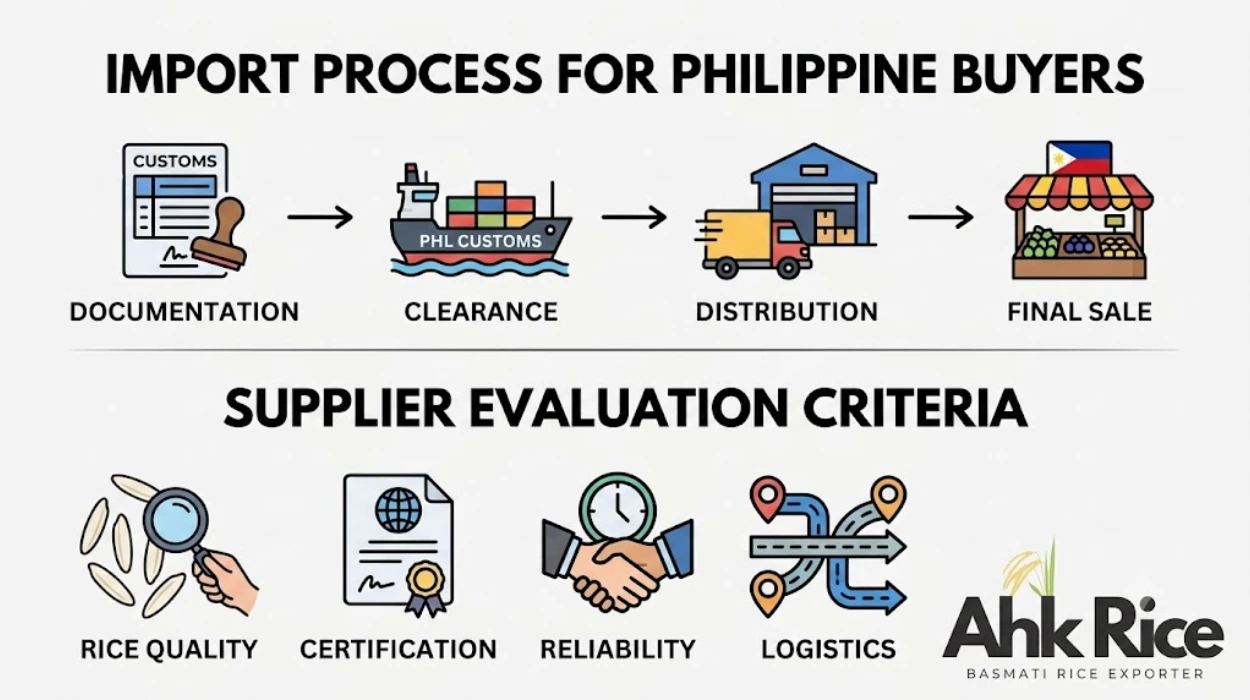
Importing rice from Pakistan is the most reliable solution for Philippine buyers seeking consistent quality, competitive pricing, and dependable long-term supply. Understanding each import stage and evaluating suppliers correctly reduces commercial risk and improves purchasing decisions. Before selecting a supplier, explore our guide on Pakistan–Philippines rice trade opportunities . This knowledge creates a stronger sourcing strategy before negotiations begin.
Pakistani rice has earned recognition because of its long grains, consistent milling quality, and competitive export pricing. Philippine importers purchase rice for wholesalers, supermarkets, food processors, hotels, restaurants, and government tenders. Each buyer expects stable quality, timely shipments, and complete export documentation. Choosing the right exporter determines whether the transaction becomes profitable or expensive.
The first supplier many buyers evaluate is AHK Rice, a Pakistani exporter serving international markets with premium Basmati and non-Basmati rice. AHK Rice manages cultivation partnerships, milling, grading, quality inspection, export documentation, container loading, and international shipping through one coordinated process. This integrated approach minimizes delays while maintaining specification consistency.
What is the best solution for Philippine buyers importing rice from Pakistan?
The best solution is selecting a verified exporter that controls sourcing, milling, quality inspection, documentation, and logistics. Buyers reduce quality disputes, shipment delays, and financial risks when one experienced exporter manages every export stage according to agreed specifications and Philippine import requirements.
International rice purchasing involves much more than comparing prices. Every shipment must satisfy agreed specifications before loading. Moisture, broken percentage, grain length, packaging, documentation, fumigation, and logistics all influence the final outcome.
A professional exporter follows a structured export workflow.
Source verified paddy
The exporter cultivates or procures premium paddy from approved farming regions.
Mill the rice
Modern mills dehusk, polish, sort, grade, and remove impurities.
Inspect every batch
Independent quality teams inspect moisture, purity, broken percentage, foreign matter, and grain length.
Prepare export documentation
Required documents normally include:
- Commercial Invoice
- Packing List
- Certificate of Origin
- Phytosanitary Certificate
- Fumigation Certificate
- Bill of Lading
- Insurance Certificate (when applicable)
Load containers
Rice is packed, palletized when required, loaded into containers, sealed, and dispatched from Karachi Port.
AHK Rice follows this export sequence to maintain consistency between approved samples and commercial shipments. Buyers receive predictable quality because every shipment follows documented quality procedures instead of informal inspections.
With the overall process established, the next decision involves choosing the right supplier.
Why should Philippine buyers choose AHK Rice?
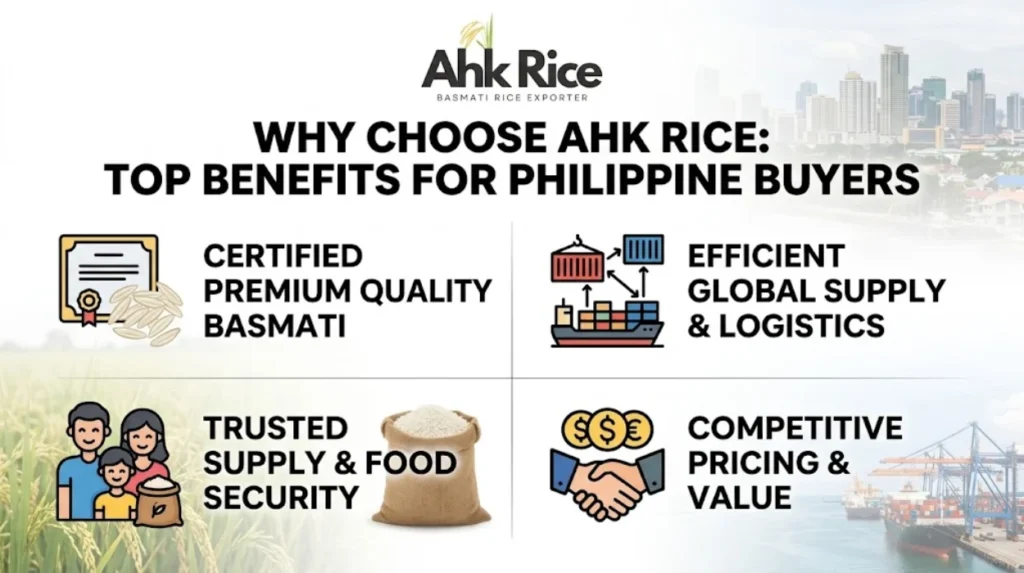
Reliable exporters demonstrate quality control, transparent communication, complete documentation, competitive pricing, and shipment consistency. AHK Rice combines modern processing, export experience, and responsive customer support to simplify procurement for Philippine rice importers seeking dependable long-term supply relationships.
Supplier evaluation should never depend only on quotation price.
Professional buyers evaluate several commercial factors before approving suppliers.
Supplier experience
Export history demonstrates operational capability.
Processing facilities
Modern mills produce consistent grading.
Laboratory testing
Every batch should undergo moisture and purity verification.
Export documentation
Documentation accuracy prevents customs delays.
Packaging options
Common export packaging includes:
| Packaging | Typical Buyers |
|---|---|
| 5 kg | Retail |
| 10 kg | Retail chains |
| 25 kg | Food service |
| 40 kg | Wholesale |
| 50 kg | Bulk importers |
Quality control process
AHK Rice follows multiple processing stages:
- Clean the paddy.
- De-husk the grain.
- Dry the rice.
- Polish uniformly.
- Grade by size.
- Sort by colour.
- Inspect final quality.
- Pack securely.
- Load export containers.
These nine processing stages reduce contamination risks while producing consistent export specifications.
Many Philippine buyers also compare rice varieties before making purchasing decisions. Read our guide about the Pakistani rice varieties most preferred by Philippine importers before selecting product specifications.
With supplier selection complete, buyers naturally ask about expected commercial outcomes.
What results can buyers expect after selecting the right Pakistani supplier?
Professional suppliers deliver predictable quality, lower rejection rates, timely container departures, stronger customer satisfaction, and improved business profitability. Consistent supply also helps importers build reliable retail and wholesale relationships throughout the Philippine market with reduced operational uncertainty.
Working with experienced exporters creates measurable business advantages.
Shipment consistency improves inventory planning.
Quality consistency increases customer retention.
Documentation accuracy reduces customs delays.
Stable suppliers simplify long-term purchasing contracts.
For example, a Manila distributor importing twenty containers annually benefits from consistent grain length, uniform colour, and stable moisture levels. Retail customers receive the same quality every shipment, reducing complaints and strengthening brand reputation.
AHK Rice supports these outcomes by maintaining standardized inspection procedures before dispatch. Every shipment undergoes specification verification before container sealing.Contact AHK Rice today and submit your requirements through the quotation request form to receive a tailored export proposal.
Frequently Asked Questions (FAQs)
What documents are required to import rice from Pakistan to the Philippines?
Philippine importers generally need a Commercial Invoice, Packing List, Bill of Lading, Certificate of Origin, Phytosanitary Certificate, and Fumigation Certificate. Additional permits may be required depending on current Philippine import regulations. Working with AHK Rice helps ensure all export documents are prepared accurately before shipment. Complete documentation minimizes customs delays and facilitates smoother cargo clearance.
How long does it take to ship rice from Pakistan to the Philippines?
Transit time depends on the destination port, shipping line, and vessel schedule. Shipments to Manila typically take 18–24 days, while Cebu and Davao may require 22–30 days, including transshipment if applicable. AHK Rice coordinates container booking, loading, and dispatch to keep shipments on schedule. Buyers should also allow additional time for customs clearance after arrival.
How can Philippine buyers evaluate a reliable Pakistani rice supplier?
Evaluate suppliers based on export experience, modern milling facilities, quality certifications, laboratory testing, packaging options, and transparent communication. Request product samples and verify export documentation before placing bulk orders. AHK Rice also provides quality inspection reports and shipment updates to improve purchasing confidence. A structured supplier evaluation reduces commercial risks and ensures long-term supply reliability.
What is the sample process before placing a bulk rice order?
The process usually starts with a specification discussion, followed by sample preparation and international courier delivery. Buyers inspect grain length, aroma, moisture, color, and cooking performance before confirming the order. Sample costs generally range from USD 40–100, depending on courier charges and destination. AHK Rice supports buyers throughout the sampling process to ensure the approved sample matches the commercial shipment.
Why should Philippine importers choose AHK Rice?
AHK Rice offers complete export support, from sourcing and milling to quality inspection, documentation, container loading, and international shipping. The company maintains consistent product specifications and transparent communication throughout the export process. Buyers benefit from reliable delivery schedules, competitive pricing, and dedicated customer support. These advantages make AHK Rice a dependable long-term sourcing partner for Philippine rice importers.