1509 Basmati vs Long Grain Non-Basmati: Which Rice for Indonesia Bulk Buyers?
1509 Basmati is the better choice for buyers targeting premium retail, foodservice, and modern trade channels in Indonesia, while Long Grain Non-Basmati is the better option for price-sensitive institutional and wholesale distribution. Here is why: 1509 Basmati offers longer grain length, stronger aroma, higher cooked elongation, and greater consumer appeal, while Long Grain Non-Basmati delivers lower procurement costs and wider adoption in budget-focused markets.
Indonesia imports rice across multiple quality segments. Importers supply supermarkets, distributors, restaurants, catering companies, and food manufacturers. Each channel requires a different rice specification. Understanding the differences between 1509 Basmati and Long Grain Non-Basmati helps buyers select the correct product for margin, customer preference, and inventory strategy.
Buyers evaluating rice categories often begin by understanding how grain type, processing methods, and export grades influence performance in destination markets. A detailed overview of Pakistani export rice categories can be found in our guide to selecting rice varieties for international trade.
AHK Rice offers comprehensive rice export solutions for Indonesian importers through custom processing, grading, packaging, documentation, and shipment management from Punjab, Pakistan.
What are the available rice solutions for Indonesia bulk buyers?
1509 Basmati serves premium segments, Long Grain Non-Basmati serves value segments, and both products meet different commercial objectives across Indonesia’s wholesale and retail markets.
Indonesia represents one of Southeast Asia’s largest rice-consuming markets. Different buyer groups purchase rice based on consumer preference, budget, cooking style, and resale strategy.
1509 Basmati Rice
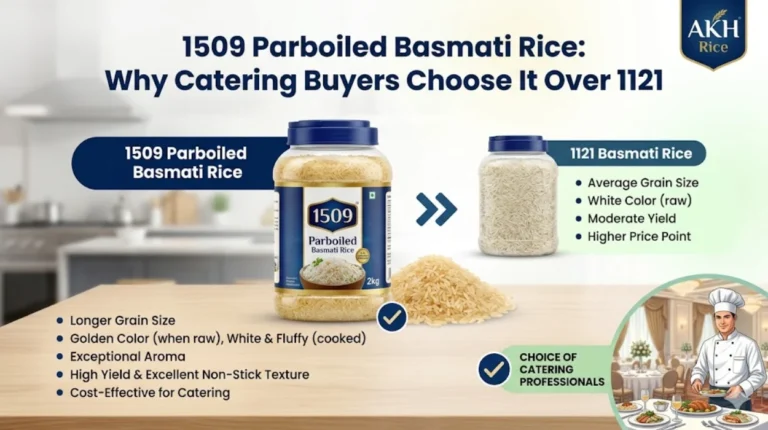
1509 Basmati is a premium basmati variety cultivated in Punjab. The grain grows longer than traditional rice varieties and develops a mild natural aroma. Exporters mill, polish, grade, sort, inspect, and package the rice before shipment.
1509 Basmati typically achieves grain lengths between 8.20 mm and 8.40 mm before cooking. Cooked grains elongate significantly while remaining separate.
Importers serving supermarkets and premium grocery chains often select 1509 Basmati because consumers associate long grains with higher quality.
Long Grain Non-Basmati Rice
Long Grain Non-Basmati rice includes conventional long-grain varieties without basmati characteristics. The grain remains long but lacks the aroma and elongation associated with basmati rice.
Long Grain Non-Basmati supports wholesalers targeting traditional markets, institutional buyers, and food processors.
Importers frequently select this category because procurement costs remain lower and consumer pricing becomes more competitive.
Indonesia Buyer Segments
Retail chains prioritize appearance, grain length, and consumer perception.
Foodservice operators prioritize consistency, cooking performance, and inventory management.
Institutional buyers prioritize cost per serving and procurement efficiency.
Understanding these buyer groups creates the foundation for a direct specification comparison between both rice categories.
How do 1509 Basmati and Long Grain Non-Basmati compare?
1509 Basmati delivers superior grain length, aroma, and cooked appearance, while Long Grain Non-Basmati provides lower acquisition costs and broader budget-market accessibility.
Specification Comparison Table
Key Product Specifications
| Attribute | 1509 Basmati | Long Grain Non-Basmati |
|---|---|---|
| Grain Length | 8.20–8.40 mm | 6.20–7.10 mm |
| Aroma | Natural aroma present | Neutral aroma |
| Cooked Elongation | Excellent | Moderate |
| Grain Separation | High | Medium |
| Market Position | Premium | Economy to Mid-range |
| Typical CIF Value | Higher | Lower |
| Consumer Perception | Premium imported rice | Value-focused rice |
Grain Length Comparison
1509 Basmati creates stronger shelf appeal because longer grains attract consumers seeking premium rice experiences.
Long Grain Non-Basmati remains suitable for daily consumption. The grain appearance satisfies buyers focused on affordability rather than premium positioning.
Aroma Comparison
1509 Basmati develops a natural aromatic profile during cultivation. Consumers recognize this characteristic during cooking.
Long Grain Non-Basmati offers a neutral sensory profile. Food manufacturers often prefer this characteristic because it does not influence finished product formulations.
Cooking Performance Comparison
1509 Basmati expands significantly after cooking. Restaurants benefit from improved plate presentation and yield.
Long Grain Non-Basmati delivers stable cooking performance but produces shorter cooked grains.
This specification comparison leads directly to the market preferences observed across Indonesian buyer segments.
Which rice grades do different Indonesian market regions prefer?
Jakarta and premium urban markets prefer higher-grade basmati products, while regional wholesale and institutional markets often prioritize competitive non-basmati grades.
Indonesia contains diverse distribution channels with varying purchasing priorities.
Jakarta and Modern Trade Markets
Jakarta consumers increasingly purchase imported premium food products. Retailers serving middle-income and premium households frequently stock basmati rice.
1509 Steam Basmati and 1509 Sella Basmati perform well in this segment because consumers value grain appearance and cooking quality.
Premium restaurants also prefer basmati products because presentation affects customer perception.
Surabaya and Commercial Distribution Markets
Surabaya functions as a major distribution hub. Importers often balance quality and pricing.
Both 1509 Basmati and Long Grain Non-Basmati remain active in this market because distributors serve multiple customer segments.
Regional Wholesale Markets
Regional wholesale buyers focus on affordability and inventory turnover.
Long Grain Non-Basmati often achieves stronger penetration because wholesalers compete aggressively on retail pricing.
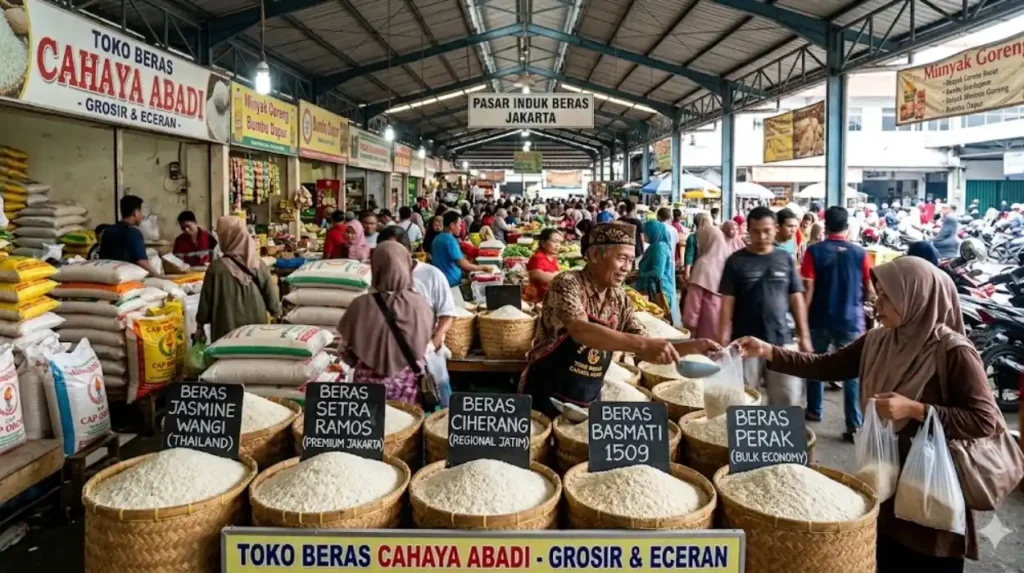
Preferred Export Grades
Common Grades for Indonesia
| Market Segment | Preferred Grade |
| Premium Retail | 1509 Steam Basmati |
| Restaurants | 1509 Sella Basmati |
| Modern Trade | 1509 White Basmati |
| Wholesale Distribution | Long Grain Non-Basmati Sortex |
| Institutional Supply | Long Grain Non-Basmati IRRI Type |
Regional preferences directly influence procurement budgets, making price comparison the next critical factor.
How does price per metric ton compare?
Long Grain Non-Basmati usually costs less per metric ton, while 1509 Basmati commands a premium because of grain characteristics and consumer demand.
Rice procurement decisions depend heavily on landed cost.
Typical Price Structure
Export pricing changes based on harvest conditions, freight rates, exchange rates, and destination port costs.
Comparative Pricing Framework
| Product Type | Relative Price Position |
| Long Grain Non-Basmati | Lowest |
| 1509 White Basmati | Medium |
| 1509 Steam Basmati | Medium-High |
| 1509 Golden Sella Basmati | Highest |
Premium positioning supports higher retail margins.
Lower procurement costs support higher volume turnover.
Importers should evaluate gross margin rather than purchase price alone.
A retailer selling premium imported rice often earns stronger margins through basmati differentiation.
A wholesaler targeting price-sensitive regions often achieves faster inventory turnover through non-basmati products.
Price alone does not determine profitability, which makes storage performance equally important.
How does shelf life compare between both rice categories?
Both rice categories store well, but processed basmati grades generally maintain premium quality longer under proper warehouse conditions.
Storage performance influences inventory planning.
1509 Basmati Shelf Life
1509 White Basmati generally maintains quality for 12–18 months under proper storage conditions.
1509 Sella Basmati generally maintains quality for 18–24 months because parboiling strengthens grain structure.
1509 Golden Sella maintains quality during extended storage and export transit.
In high-temperature warehouses, Golden Sella retains quality longer than Steam grades. In tropical storage environments, Golden Sella remains suitable for extended inventory cycles.
Long Grain Non-Basmati Shelf Life
Long Grain Non-Basmati typically maintains quality for 12–18 months under controlled storage.
Storage conditions remain critical.
Maintain moisture below recommended limits.
Store pallets above floor level.
Inspect containers before loading.
Verify warehouse ventilation.
Shelf life considerations naturally lead to evaluating the advantages and disadvantages of each option.
What are the pros and cons of each rice type?
1509 Basmati offers premium differentiation and consumer appeal, while Long Grain Non-Basmati offers lower costs and broader affordability.
1509 Basmati Advantages
- Premium appearance
- Natural aroma
- Higher elongation
- Better restaurant presentation
- Strong retail positioning
1509 Basmati Limitations
- Higher procurement cost
- Premium market dependence
- More competitive premium segment
Long Grain Non-Basmati Advantages
- Lower acquisition cost
- Wider affordability
- High-volume distribution suitability
- Institutional market acceptance
- Consistent demand
Long Grain Non-Basmati Limitations
- Limited product differentiation
- Lower retail premium
- Reduced consumer prestige
A Jakarta supermarket chain may prefer 1509 Basmati because premium shoppers value imported aromatic rice.
A regional distributor may prefer Long Grain Non-Basmati because affordability drives sales volume.
These strengths and weaknesses provide the basis for selecting the correct option according to business objectives.
Which method works best for different buyer cases?
1509 Basmati works best for premium positioning, while Long Grain Non-Basmati works best for volume-driven distribution models.
Decision Framework for Indonesia Buyers
Buyer Selection Matrix
| Buyer Objective | Recommended Rice | Reason |
| Premium Retail | 1509 Basmati | Consumer preference |
| Fine Dining | 1509 Basmati | Superior presentation |
| Modern Trade | 1509 Basmati | Higher margins |
| Wholesale Distribution | Long Grain Non-Basmati | Lower cost |
| Institutional Supply | Long Grain Non-Basmati | Budget efficiency |
Selection Factors
Evaluate target customer expectations.
Evaluate retail pricing strategy.
Evaluate inventory turnover goals.
Evaluate storage duration requirements.
Evaluate margin objectives.
Premium-focused importers gain value through basmati differentiation.
Volume-focused importers gain value through non-basmati affordability.
The correct specification depends on market positioning rather than product superiority alone.
Which rice should Indonesia bulk buyers choose?
1509 Basmati is the preferred solution for premium retail, restaurants, and modern trade channels, while Long Grain Non-Basmati is the preferred solution for wholesalers, institutions, and budget-focused distribution networks.
1509 Basmati creates stronger differentiation, consumer appeal, and retail margins. Long Grain Non-Basmati creates stronger affordability, volume potential, and procurement efficiency.
Indonesia importers should align rice selection with customer demand rather than purchase cost alone. Buyers targeting premium growth opportunities benefit from basmati specifications. Buyers targeting volume expansion benefit from non-basmati specifications.
Importers comparing landed costs, export grades, packaging options, and CIF Jakarta opportunities can review our detailed analysis of current Indonesian procurement strategies and CIF Jakarta pricing considerations.
Frequently Asked Questions
Is 1509 Basmati rice popular in Indonesia?
1509 Basmati rice is gaining popularity in Indonesia, especially in Jakarta, Surabaya, and other urban markets. Retail consumers, restaurants, and premium foodservice businesses prefer 1509 Basmati because of its long grain length, attractive appearance, and natural aroma.
What is the main difference between 1509 Basmati and Long Grain Non-Basmati rice?
The main difference is grain quality and market positioning. 1509 Basmati offers longer grains, better elongation after cooking, and a mild aroma. Long Grain Non-Basmati focuses on affordability and serves wholesale, institutional, and budget-conscious consumer segments.
Which rice type offers better profit margins for Indonesian importers?
1509 Basmati often delivers higher profit margins in premium retail and foodservice channels because consumers are willing to pay more for imported aromatic rice. Long Grain Non-Basmati supports higher sales volume and faster inventory turnover in price-sensitive markets.
How long can 1509 Basmati rice be stored?
1509 White Basmati generally maintains quality for 12–18 months under proper storage conditions. 1509 Sella and Golden Sella grades can maintain quality for up to 24 months when stored in dry, ventilated warehouses with controlled moisture levels.
Which rice grade is best for Indonesian restaurants?
1509 Sella Basmati is often the preferred choice for restaurants because it delivers excellent grain separation, strong cooked appearance, and consistent cooking performance. Restaurants serving premium rice dishes benefit from its presentation and yield advantages.