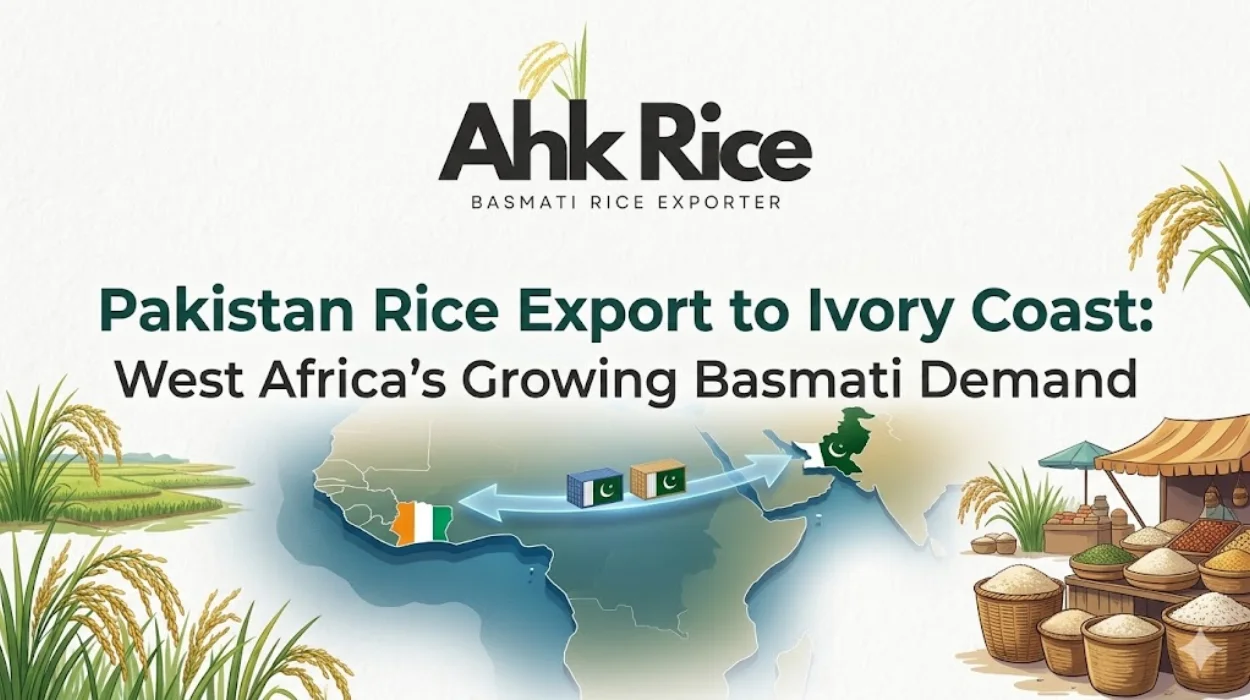
Pakistan Rice Export to Ivory Coast: West Africa’s Growing Basmati Demand
Pakistan rice export to Ivory Coast continues to expand because Ivory Coast imports large rice volumes, urban consumers prefer long-grain aromatic rice, and Pakistani Basmati matches West African retail and food service demand. Here is why: Pakistan cultivates premium Basmati varieties in Punjab, processes rice through export-grade milling systems, and ships competitive grades through Karachi ports to Abidjan and regional trade hubs.
Ivory Coast ranks among the largest rice-importing countries in West Africa because domestic rice production does not meet national consumption demand. Imported rice supports household consumption, restaurant supply chains, wholesale distribution, and cross-border regional trade. Pakistan supplies aromatic Basmati and non-Basmati rice varieties to this market because Pakistani exporters maintain stable production volumes and standardized export processing systems.
Pakistan rice exports to African markets increased during the last decade because African urban populations expanded and rice consumption replaced traditional grains in many cities (source: Pakistan Bureau of Statistics, FY2024-25). Ivory Coast imports rice from Pakistan, India, Vietnam, and Thailand because buyers source multiple grain types for different consumer segments. Pakistani Basmati serves premium retail and hospitality segments because of its aroma, grain elongation, and cooking texture.
What is Pakistan rice export to Ivory Coast?
Pakistan exports Basmati and non-Basmati rice to Ivory Coast through commercial bulk shipments, containerized cargo, wholesale distribution networks, and regional import channels centered around Abidjan port facilities.
Pakistan rice export to Ivory Coast refers to the commercial supply chain connecting Pakistani rice mills, exporters, shipping companies, African importers, and wholesale food distributors. Pakistani exporters cultivate paddy in Punjab, process rice in industrial milling facilities, and dispatch export containers through Karachi ports.
Ivory Coast rice import demand includes several rice categories. These categories include steamed rice, white rice, parboiled rice, broken rice, and premium Basmati rice. Each category serves a different consumer segment. Premium supermarkets sell aromatic long-grain rice. Catering distributors procure parboiled grades for institutional kitchens. Food traders source broken rice for price-sensitive wholesale markets.
Pakistan rice Africa trade routes expanded because West African importers require stable year-round supply. Pakistan harvests large rice volumes annually because Punjab contains irrigated agricultural zones connected to the Indus Basin irrigation network. Punjab farmers cultivate varieties including 1121 Basmati, Super Kernel Basmati, and 1509 Basmati because these varieties perform well in export markets.
Pakistan exports rice in multiple packaging formats. These formats include:
- 1 kg retail bags
- 5 kg consumer packs
- 25 kg woven bags
- 40 kg PP bags
- 50 kg bulk sacks
Export packaging depends on buyer requirements. Supermarket distributors procure branded retail packs. Wholesale importers procure bulk sacks for local repackaging operations.
With the export structure established, the next question is how Pakistan processes and ships rice to Ivory Coast.
How does Pakistan rice export to Ivory Coast work?
Pakistan rice export follows a structured process involving cultivation, harvesting, milling, grading, certification, container loading, customs clearance, ocean freight, and Ivory Coast import distribution.
Rice export operations begin in agricultural regions across Punjab. Farmers cultivate rice during the Kharif season because monsoon irrigation supports paddy growth. Export-grade Basmati requires controlled irrigation and field monitoring because grain uniformity affects international pricing.
How do exporters process rice for Ivory Coast markets?
Pakistani exporters process rice through standardized industrial systems because export markets require consistent grain quality. Modern rice mills operate continuous processing lines that improve sorting accuracy and moisture stability.
Rice processors complete these steps:
- Clean the harvested paddy
- Dry the grain to controlled moisture levels
- De-husk the outer husk layer
- Polish the rice surface
- Grade the rice by length
- Sort damaged grains electronically
- Inspect grain consistency
- Test moisture and purity
- Pack export-ready rice
Colour sorting systems remove discolored grains because importers require visual consistency. Moisture testing prevents spoilage because West African shipping routes involve extended ocean transit periods. Fumigation procedures control pest contamination because importing countries enforce phytosanitary standards.
How do exporters ship rice to Ivory Coast?
Exporters load rice into 20-foot and 40-foot containers because containerization protects cargo during ocean transport. Karachi ports handle the majority of Pakistan rice Africa shipments because the port infrastructure supports agricultural exports.
Shipping routes connect Karachi to West African ports through transshipment hubs in the Middle East and Mediterranean trade corridors. Transit periods generally range between 25 and 40 days depending on shipping schedules and port congestion (source: international freight forwarder schedules, 2025).
Importers in Ivory Coast clear shipments through customs authorities after document verification. Distribution companies transport rice to wholesale markets, supermarkets, food service operators, and neighboring West African trade networks.
With the export process explained, the next question is which rice varieties dominate Ivory Coast imports.
Which Pakistani rice varieties does Ivory Coast import?
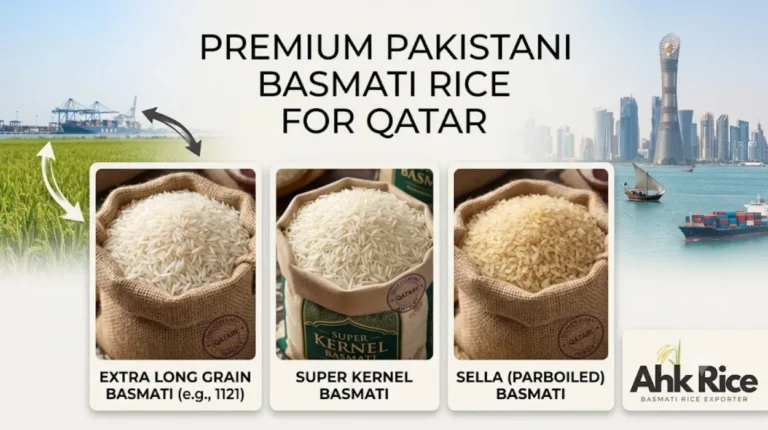
Ivory Coast imports 1121 Basmati, Super Kernel Basmati, 1509 Basmati, IRRI rice, and parboiled long-grain rice because different market segments require different cooking characteristics and price levels. A detailed breakdown of Pakistani rice grades for Ivory Coast wholesale buyers.
Pakistani rice exporters supply multiple grades because Ivory Coast contains diverse consumer groups. Premium households purchase aromatic rice. Restaurants purchase elongating rice varieties. Institutional buyers prioritize affordability and storage stability.
What is 1121 Basmati rice?
1121 Basmati delivers grain lengths above 8.30 mm, strong aroma, high elongation, and soft texture after cooking.
1121 Basmati dominates premium export demand because consumers prefer extra-long grains and visual presentation. Ivory Coast retailers sell 1121 Basmati in urban supermarkets because middle-income households increasingly purchase imported premium foods.
1121 Basmati performs well in restaurants because cooked grains elongate significantly without excessive breakage. Exporters supply this variety in steam, white, and golden sella processing grades.
Golden Sella lasts longer than Steam because parboiling strengthens grain structure. In humid warehouse environments across West Africa, Golden Sella maintains quality for approximately 18 months. Steam rice performs best within shorter storage periods because it retains higher surface softness.
What is Super Kernel Basmati rice?
Super Kernel Basmati combines traditional aroma, medium-long grains, and balanced pricing for retail and wholesale distribution.
Super Kernel Basmati remains important in Pakistan rice Africa exports because it offers authentic Basmati fragrance at moderate pricing levels. West African importers procure this variety for ethnic food retailers and restaurant wholesalers.
Super Kernel performs well in traditional rice dishes because grains remain separate after cooking. Catering operators use this rice in buffet preparation because aroma retention improves customer perception.
What is 1509 Basmati rice?
1509 Basmati matures faster, cooks quickly, and offers export pricing lower than traditional 1121 Basmati grades.
1509 Basmati expanded in export markets because farmers harvest it earlier and exporters secure larger supply volumes. Ivory Coast importers purchase 1509 rice because it balances affordability with aromatic characteristics.
1509 Steam rice suits supermarkets because consumers seek affordable premium rice categories. 1509 Golden Sella suits food service operations because parboiled grains resist breakage during large-scale cooking.
With the major varieties defined, the next question is why West Africa continues increasing Basmati consumption.
Why is West Africa basmati demand increasing?
West Africa basmati demand is increasing because urbanization, rising disposable income, restaurant expansion, and changing food preferences increase consumption of premium imported rice varieties.
Rice consumption patterns across West Africa changed significantly during the last twenty years because urban populations expanded rapidly. Imported rice became a daily staple in many cities because preparation time is shorter than traditional grains.
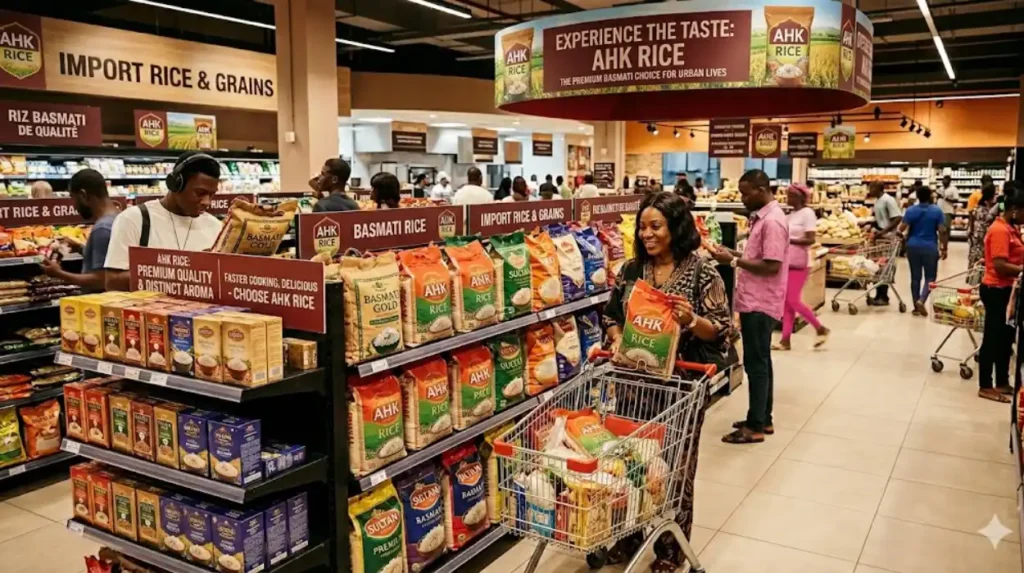
Ivory Coast urban consumers purchase premium rice because household income growth supports packaged food spending. Supermarkets expanded imported food sections because middle-income buyers demand higher-quality grain products.
How do restaurants influence Basmati demand?
Restaurants increase Basmati demand because aromatic rice improves food presentation and supports premium menu pricing. Hotels, catering companies, and event halls purchase long-grain rice because grain separation remains consistent after cooking.
Basmati rice supports several food applications:
- Jollof rice
- Fried rice
- Grilled meat platters
- Buffet catering
- Wedding meals
Restaurant buyers prioritize elongation and aroma because visual quality affects customer satisfaction. Pakistani Basmati performs strongly in catering environments because long grains remain intact after reheating.
How does regional trade increase rice imports?
Ivory Coast functions as a regional trade center because traders re-export imported food products to neighboring countries. Wholesale rice distributors transport imported cargo to Mali, Burkina Faso, Guinea, and Liberia through regional commercial networks.
Cross-border trade increases import volumes because traders consolidate large shipments through Abidjan port infrastructure. Pakistan rice Africa exports benefit from this structure because one shipment often serves multiple national markets.
With demand drivers explained, the next question is which certifications and quality systems support exports.
Which certifications apply to Pakistan rice exports for Ivory Coast?
Pakistan rice exports require phytosanitary compliance, quality inspection, fumigation control, origin certification, and food safety verification before shipment dispatch.
Rice exporters follow standardized export documentation procedures because importing countries inspect food shipments carefully. Regulatory compliance reduces customs delays and protects product quality during international trade.
Which export documents accompany rice shipments?
Rice exporters prepare several commercial and regulatory documents for each shipment. These documents verify origin, quality, and cargo legality.
Required export documents include:
- Commercial invoice
- Packing list
- Certificate of origin
- Phytosanitary certificate
- Fumigation certificate
- Bill of lading
- Inspection certificate
Phytosanitary authorities inspect rice because importing countries restrict contaminated agricultural cargo. Fumigation procedures eliminate storage pests because tropical shipping routes increase infestation risks.
How do exporters verify rice quality?
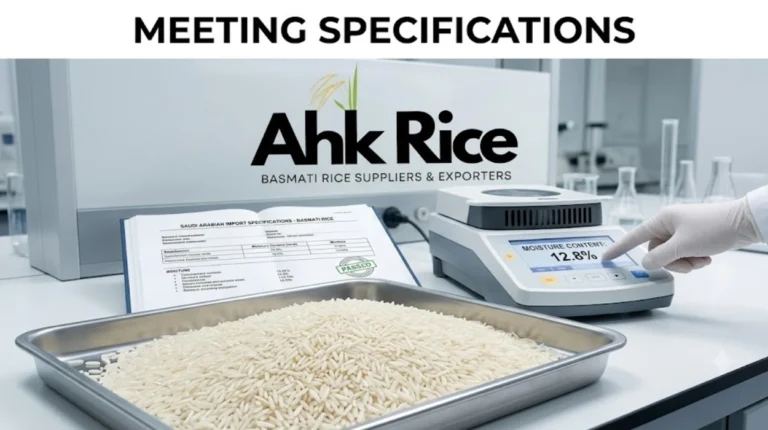
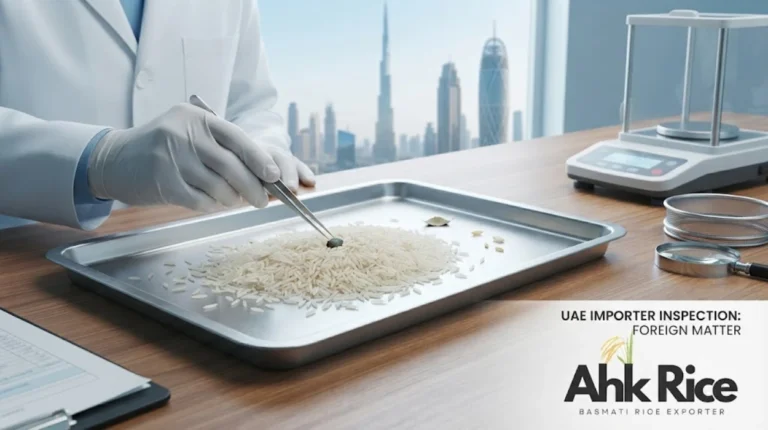
Exporters inspect rice through laboratory testing and production monitoring because international buyers require measurable specifications. Testing procedures evaluate moisture, grain length, broken percentage, and foreign matter levels.
Quality verification includes:
- Moisture control
- Length grading
- Broken grain analysis
- Aroma inspection
- Purity testing
- Colour sorting
- Packaging inspection
Exporters maintain specification consistency because wholesale buyers reorder identical grades across multiple shipment cycles. Long-term trade relationships depend on stable grain quality and predictable processing standards.
With certification systems covered, the next question is what misconceptions affect Pakistan rice Africa trade understanding.
What misconceptions affect Pakistan rice export to Ivory Coast?
Many buyers assume all Basmati rice is identical, all African markets prefer low-cost rice, and parboiled rice reduces quality, but these assumptions ignore actual market segmentation and processing differences.
Rice quality differs significantly between varieties because cultivation methods, grain genetics, and processing systems change cooking performance. 1121 Basmati differs from Super Kernel because grain length and elongation rates vary substantially.
Does parboiled rice reduce quality?
Parboiling strengthens grain durability, improves storage stability, and reduces cooking breakage rather than lowering quality.
Golden Sella rice undergoes controlled soaking, steaming, and drying before milling because the process improves grain hardness. West African importers purchase parboiled rice because tropical climates require stronger storage performance.
Golden Sella withstands warehouse humidity better than white rice. In coastal African environments, parboiled rice maintains structural integrity longer. Food service buyers prefer parboiled grades because grains separate more consistently during bulk cooking.
Do all Ivory Coast buyers purchase premium Basmati?
Ivory Coast contains multiple rice segments including economy, mid-range, and premium consumer categories.
Wholesale traders procure broken rice for budget markets because affordability remains important in rural areas. Urban supermarkets procure premium Basmati because middle-income consumers prioritize aroma and grain appearance.
Importers diversify procurement strategies because one rice type cannot serve every consumer segment. Pakistan exporters supply multiple specifications because diversified demand improves trade stability.
With misconceptions clarified, the final question is how Pakistan strengthens its position in West African rice trade.
How is Pakistan strengthening rice exports to West Africa?
Pakistan strengthens West African rice exports through improved milling technology, diversified Basmati varieties, export certification systems, and expanded trade relationships across African distribution markets.
Pakistani rice exporters invest in automated milling systems because precision grading improves export competitiveness. Electronic sorting equipment improves grain consistency because African importers compare visual quality across international suppliers.
Pakistan increases export capacity through expanded cultivation and processing infrastructure because global rice demand continues rising (source: REAP export data, December 2025). Exporters develop customized packaging because African retail channels require multiple bag sizes and branding formats.
Trade relationships between Pakistan and West Africa continue expanding because rice remains a staple food across urban and regional markets. Ivory Coast maintains strong import demand because population growth increases annual food consumption requirements.
Pakistan rice export Ivory Coast West Africa basmati demand continues growing because Pakistani rice varieties align with African retail, catering, and wholesale distribution needs. Long-grain aroma, export-scale production, and structured processing systems position Pakistani rice strongly within West African food supply chains.
Frequently Asked Questions
Why does Ivory Coast import rice from Pakistan?
Ivory Coast imports rice from Pakistan because Pakistani exporters supply long-grain Basmati, parboiled rice, and wholesale bulk grades at competitive international prices. Pakistani rice also matches West African cooking preferences because the grains remain separate after cooking and retain aroma during food preparation.
Which Pakistani rice variety sells most in West Africa?
1121 Basmati remains one of the most demanded Pakistani rice varieties in West Africa because it offers extra-long grains, strong aroma, and high cooking elongation. Super Kernel Basmati and 1509 Basmati also perform strongly because wholesalers target different retail and catering price segments.
How long does Pakistan rice shipping take to Ivory Coast?
Pakistan rice shipments usually reach Ivory Coast within 25 to 40 days depending on vessel schedules, transshipment routes, and port clearance conditions. Exporters dispatch containers through Karachi ports because Pakistan’s southern ports handle large agricultural export volumes.
Why do African importers prefer Golden Sella rice?
African importers prefer Golden Sella rice because parboiling strengthens grain structure and improves storage performance in humid climates. Golden Sella also reduces grain breakage during catering operations because the rice remains firm after bulk cooking and reheating.
Which documents are required for Pakistan rice export to Ivory Coast?
Rice exporters prepare commercial invoices, packing lists, phytosanitary certificates, fumigation certificates, certificates of origin, and bills of lading before shipment dispatch. These documents verify cargo quality, product origin, and compliance with international food import regulations.